
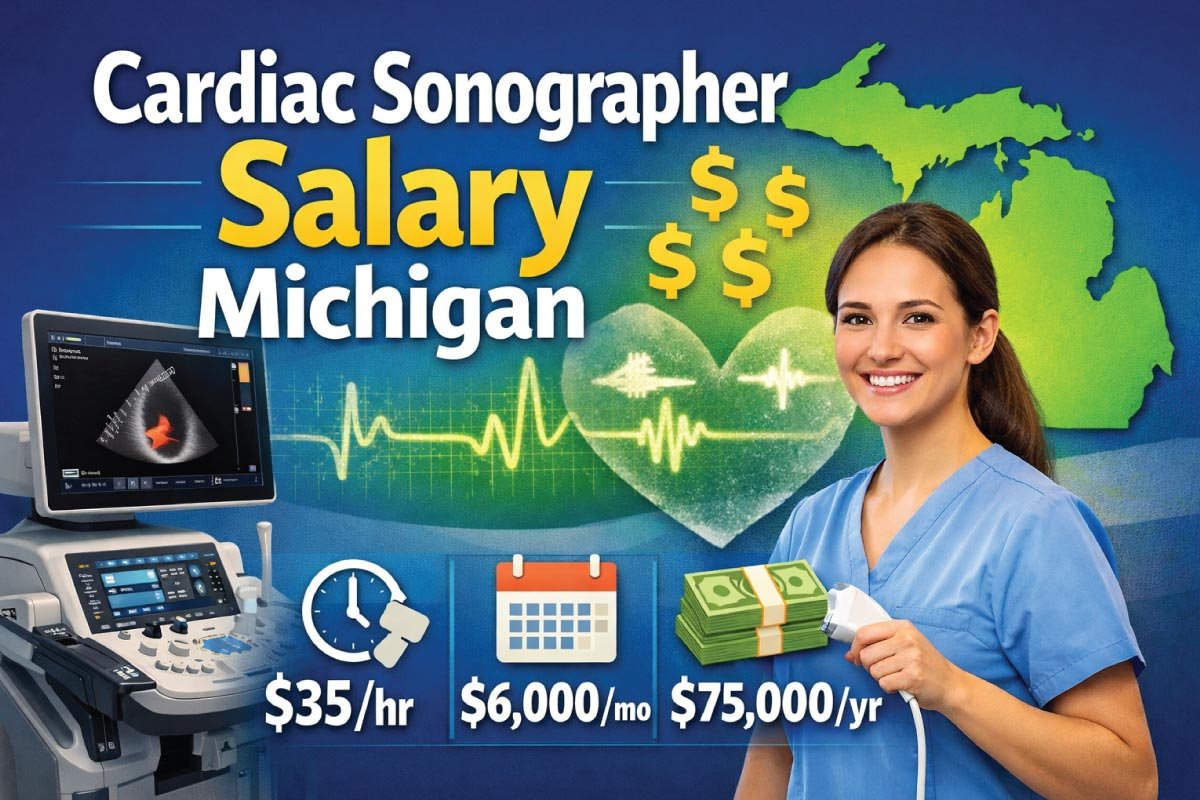
Diagnostic cardiac sonographers are highly skilled medical professionals who use ultrasound technology to create detailed images of the heart and blood vessels. These images help physicians diagnose cardiovascular conditions, monitor treatment progress, and evaluate patient outcomes. Michigan, with its large healthcare systems, research hospitals, and expanding cardiology departments, offers solid career opportunities for cardiac sonographers.
In this in‑depth guide, you will learn what cardiac sonographers in Michigan earn — including hourly, monthly, and yearly salary ranges — along with factors affecting pay, city‑by‑city comparisons, benefits, job demand, and career growth paths.
What Is a Cardiac Sonographer?
A cardiac sonographer — sometimes called an echocardiographer — is a specialized ultrasound professional who evaluates heart structure and function. Using ultrasound equipment and Doppler technology, they capture live images of the heart, valves, and blood flow.
Key duties include:
- Performing transthoracic and Doppler echocardiograms
- Preparing and positioning patients for scans
- Documenting and analyzing cardiac images
- Communicating results with cardiologists
- Maintaining ultrasound equipment
Because heart disease is a leading cause of illness, cardiac sonographers play a critical role in modern healthcare. Their skill set requires technical precision, patient communication skills, and clinical judgment.
Michigan Cardiac Sonographer Salary Overview
Cardiac sonographers in Michigan earn salaries that are competitive with national averages, especially when accounting for cost of living. Salaries vary widely depending on experience level, certifications, city, and employer type.
Michigan Salary Snapshot
| Pay Type | Typical Salary Range |
|---|---|
| Hourly Salary | $40 – $57 per hour |
| Monthly Salary | $6,900 – $9,500 per month |
| Yearly Salary | $83,000 – $115,000 per year |
Keep in mind these figures are estimates, and individual offers may differ based on experience, credentials, and negotiation.
Cardiac Sonographer Hourly Salary in Michigan
Hourly wages are especially important if you are evaluating part‑time work, overtime opportunities, travel assignments, or shift differentials.
Average Hourly Salary
Most cardiac sonographers in Michigan earn between $40 and $57 per hour, with opportunities to earn higher in specialized clinical areas.
Hourly Pay by Experience Level
| Experience Level | Hourly Salary |
|---|---|
| Entry‑Level (0–2 years) | $32 – $40 |
| Early Career (3–5 years) | $40 – $47 |
| Mid‑Career (6–9 years) | $47 – $52 |
| Senior/Experienced | $52 – $60+ |
Sonographers who take on leadership responsibilities, advanced procedures, or night/weekend shifts can earn elevated hourly wages.
Michigan Cardiac Sonographer Monthly Salary
Monthly earnings give a clearer picture of day‑to‑day living and financial planning.
Monthly Salary Breakdown
| Experience Level | Monthly Salary |
|---|---|
| Entry‑Level | $5,500 – $6,900 |
| Mid‑Career | $7,000 – $8,500 |
| Experienced | $8,800 – $10,500 |
| Senior / Supervisor | $10,500+ |
Monthly income increases steadily with experience, additional certifications, and workplace responsibility.
Cardiac Sonographer Yearly Salary in Michigan
Annual income is often the primary way professionals evaluate the financial stability of a career.
Typical Yearly Salary
| Experience Level | Yearly Salary |
|---|---|
| Entry‑Level | $66,000 – $83,000 |
| Mid‑Career | $85,000 – $100,000 |
| Experienced | $101,000 – $115,000 |
| Senior Level | $116,000+ |
Diagnostic cardiac sonographers with expertise in advanced cardiac imaging or supervisory roles can easily earn above the typical range.
Salary by Michigan City
Salaries also vary depending on where you work in Michigan. Larger urban centers with major hospitals tend to pay more than rural facilities with lower patient volume.
Michigan City Salary Comparison
| City | Hourly | Yearly |
|---|---|---|
| Detroit | $45 – $60 | $94,000 – $125,000 |
| Grand Rapids | $42 – $57 | $90,000 – $118,000 |
| Ann Arbor | $44 – $58 | $92,000 – $120,000 |
| Lansing | $40 – $55 | $86,000 – $114,000 |
| Flint | $38 – $52 | $82,000 – $108,000 |
Urban hospital systems — especially academic medical centers — often offer higher salaries due to advanced case complexity and staffing needs.
Pediatric Cardiac Sonographer Salary in Michigan
Pediatric cardiac sonographers specialize in imaging the hearts of infants and children. Because childhood heart conditions require advanced skill and patient care sensitivity, pediatric roles often pay a premium.
Pediatric Sonographer Salary Table
| Experience Level | Hourly | Monthly | Yearly |
|---|---|---|---|
| Entry‑Level | $38 – $45 | $6,500 – $7,700 | $78,000 – $93,000 |
| Mid‑Career | $46 – $55 | $8,000 – $9,700 | $96,000 – $117,000 |
| Experienced | $56 – $65 | $9,800 – $11,300 | $118,000 – $136,000 |
Pediatric specialization can add thousands of dollars in annual earnings due to the advanced training required.
Factors That Affect Salary in Michigan
Several key factors influence how much cardiac sonographers make in Michigan:
1. Experience Level
Experience remains the biggest salary driver. New graduates earn lower starting wages, while seasoned sonographers earn significantly more over time.
2. Certifications
Certification increases credibility and pay. Common certifications include:
- Registered Diagnostic Cardiac Sonographer (RDCS)
- Registered Cardiac Sonographer (RCS)
- Cardiac Sonography certifications from ARRT or CCI
Holding multiple or advanced credentials can boost salary and job prospects.
3. Employer Type
Salary varies by workplace setting:
| Employer Type | Pay Level |
|---|---|
| Large Hospitals | High |
| Specialty Heart Centers | High |
| Outpatient Imaging Centers | Moderate |
| Mobile Imaging Services | Moderate + Travel Premium |
Large hospitals and cardiac specialty centers typically offer the best pay packages.
Benefits Beyond Salary
In addition to base pay, cardiac sonographers often receive valuable employment benefits such as:
- Health, dental, and vision insurance
- Paid vacation and personal leave
- Retirement savings plans (401k, pensions)
- Continuing education support
- Certification reimbursement
- Shift differentials (night and weekend premiums)
These benefits significantly strengthen the overall compensation package.
Job Demand for Cardiac Sonographers in Michigan
Michigan has an aging population and a growing demand for cardiovascular services, leading to increased opportunities for skilled cardiac sonographers. As cardiovascular disease remains a leading health concern, the demand for diagnostic imaging professionals continues to grow.
Healthcare staffing reports estimate steady growth in cardiac imaging jobs for years to come as Michigan hospitals expand services and adopt newer technologies.
How to Increase Your Salary
If you want to maximize your earning potential as a cardiac sonographer in Michigan, consider the following strategies:
1. Earn Advanced Certifications
Obtaining advanced or specialty certifications, such as pediatric, vascular, or cardiac subspecialties, increases your professional value. Employers often prefer certified sonographers for complex cases, which can lead to higher salaries, better job security, and more opportunities for career advancement.
2. Pursue Leadership or Supervisor Roles
Moving into leadership or supervisory positions allows experienced sonographers to oversee staff, manage workflows, and support quality assurance. These roles typically offer higher pay, performance bonuses, and added benefits while providing long-term career stability and professional growth.
3. Seek Travel or Contract Positions
Travel or contract sonography roles often pay higher hourly rates due to staffing shortages and short-term needs. These positions frequently include tax-free housing stipends, travel reimbursements, and flexible schedules, making them financially attractive for experienced professionals.
4. Gain Multi-Modality Skills
Developing skills in multiple imaging modalities, such as vascular ultrasound, stress echocardiography, or advanced Doppler techniques, increases your versatility. Multi-modality sonographers are in higher demand and often earn premium pay due to their broader clinical expertise.
Registered Cardiac Sonographer vs General Sonographer Salary
Cardiac sonographers in Michigan generally earn more than general sonographers due to the specialized nature of their work.
| Role | Hourly Salary | Yearly Salary |
|---|---|---|
| General Sonographer | $30 – $45 | $62,000 – $92,000 |
| Cardiac Sonographer | $40 – $57 | $83,000 – $115,000 |
| Pediatric Cardiac Sonographer | $38 – $65 | $78,000 – $136,000 |
Specialization increases demand and earning potential.
Is a Career in Cardiac Sonography Worth It?
Cardiac sonography remains one of the most promising careers in medical imaging — especially in states like Michigan where cardiovascular care demand continues to rise.
Top career benefits include:
- Strong earnings potential
- Growing job demand
- Diverse work environments (hospitals, clinics, research centers)
- Opportunities for continual skill growth
- Meaningful patient impact
Professionals who enjoy combining technical skill with patient care often find this career both financially and personally rewarding.
Educational Path and Certification
Most successful cardiac sonographers follow this educational path:
- Complete an accredited diagnostic medical sonography program
- Gain clinical experience in cardiac imaging
- Earn professional certification (e.g., RDCS, RCS)
- Pursue continuing education and specialty training
Most programs take 2‑4 years depending on degree level (associate, bachelor’s, or advanced certificates).
Realistic Career Earnings Over Time
Many cardiac sonographers see steady income growth throughout their careers.
Earning Timeline
| Years of Experience | Estimated Annual Salary |
|---|---|
| 0–2 Years | $66,000 – $83,000 |
| 3–5 Years | $86,000 – $97,000 |
| 6–10 Years | $98,000 – $110,000 |
| 10+ Years | $111,000+ |
Income increases continue with additional certifications, advanced imaging skills, and leadership roles.
Also Read:
Conclusion
Cardiac sonographers in Michigan enjoy competitive salaries across hourly, monthly, and yearly pay scales. Depending on experience, location, and specialization, diagnostic cardiac sonographers can earn between $40 and $57 per hour, $6,900 to $9,500 per month, and $83,000 to $115,000 or more per year.
Specialized roles such as pediatric cardiac sonographers may earn higher salaries due to advanced clinical skills. Cities like Detroit, Grand Rapids, and Ann Arbor tend to offer higher pay because of larger healthcare systems and advanced heart programs.
With strong job demand, ongoing healthcare growth, and continual advancements in diagnostic imaging technology, cardiac sonography remains a stable, rewarding, and financially attractive career — especially in a healthcare hub like Michigan.
Discover More:

Zak is a dedicated medical and career writer specializing in sonography, healthcare education, and professional development. Through SonographerSalary.com, he shares in-depth insights on sonographer salaries, education pathways, and career tips to help readers build successful futures in medical imaging. His content combines accuracy with practical, easy-to-understand guidance, empowering students and professionals to make confident, informed career decisions.