
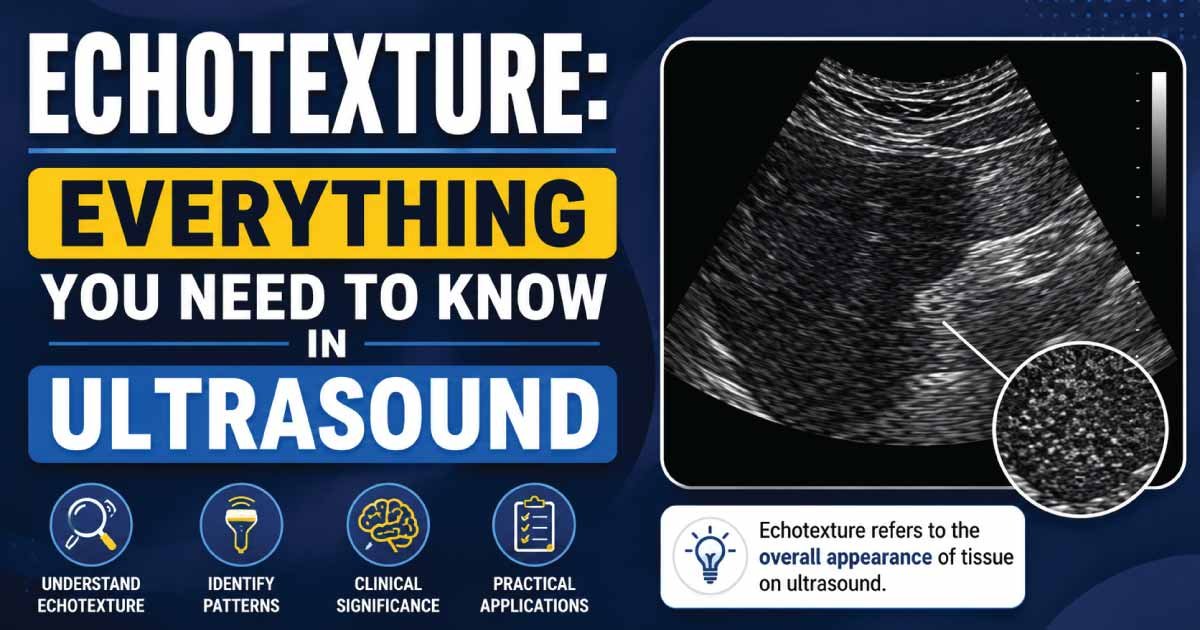
Echotexture describes the internal pattern and appearance of tissues on ultrasound based on how they reflect sound waves. It can be homogeneous or heterogeneous depending on uniformity. Sonographers use echotexture to evaluate organs and detect abnormalities, as changes in pattern may indicate disease, inflammation, or structural variations within the tissue.
Ultrasound is one of the most commonly used medical imaging techniques worldwide. It allows healthcare professionals to examine internal organs, soft tissues, blood vessels, and developing babies without using radiation. During an ultrasound examination, radiologists and sonographers evaluate many characteristics of tissues, including size, shape, echogenicity, blood flow, and echotexture.
If you have reviewed an ultrasound report, you may have seen phrases such as “normal echotexture,” “heterogeneous echotexture,” or “coarse echotexture.” These terms can sound confusing, especially for patients who are unfamiliar with medical imaging terminology.
This complete guide explains what echotexture means, why it is important, how it is evaluated, common echotexture patterns, and what different findings may indicate.
What Is Echotexture?
Echotexture refers to the internal appearance and pattern of tissues seen on an ultrasound image.
It describes how echoes are distributed throughout an organ or tissue after ultrasound waves bounce back to the transducer. Rather than focusing only on brightness, echotexture evaluates the overall texture and uniformity of the tissue.
In simple terms, echotexture is the ultrasound equivalent of a tissue’s “texture” or “pattern.”
For example:
- A healthy organ may have a smooth and uniform echotexture.
- A diseased organ may show an irregular or mixed echotexture.
- Certain tumors can alter normal echotexture patterns.
Because of this, echotexture is an important clue in diagnosing many medical conditions.
How Does Echotexture Work in Ultrasound?
Ultrasound machines send high-frequency sound waves into the body.
When these waves encounter tissues, some are reflected back as echoes. The ultrasound system processes these echoes and creates an image on the screen.
The pattern of reflected echoes forms the tissue’s echotexture.
Factors affecting echotexture include:
- Tissue composition
- Density
- Fat content
- Fibrosis
- Inflammation
- Fluid accumulation
- Tumor presence
Changes in any of these factors can alter the normal appearance of an organ.
Why Is Echotexture Important?
Echotexture provides valuable information about tissue health.
Doctors use echotexture to:
- Evaluate organ structure
- Detect disease
- Identify tumors or cysts
- Assess inflammation
- Monitor chronic conditions
- Guide treatment decisions
Sometimes an organ may appear normal in size but show abnormal echotexture, which can help identify disease at an early stage.
Normal Echotexture
A normal echotexture usually appears:
- Uniform
- Smooth
- Consistent
- Homogeneous
The echoes are evenly distributed throughout the tissue.
Examples of organs that typically have relatively homogeneous echotexture include:
- Liver
- Thyroid gland
- Spleen
- Kidneys
- Testes
A homogeneous echotexture often indicates healthy tissue.
Homogeneous Echotexture
Homogeneous echotexture means the tissue has a consistent appearance throughout the organ.
The ultrasound image shows:
- Even gray shades
- Uniform echo distribution
- Smooth texture pattern
Homogeneous echotexture is usually considered normal.
For example, a liver with homogeneous echotexture generally suggests healthy liver tissue.
Characteristics of Homogeneous Echotexture
- Uniform appearance
- No focal abnormalities
- Consistent tissue pattern
- Well-organized structure
Although homogeneous echotexture is often normal, doctors still consider other findings before making a diagnosis.
Heterogeneous Echotexture
Heterogeneous echotexture means the tissue appears uneven or mixed. Different areas of the organ reflect sound differently, creating varying shades of gray.
A heterogeneous pattern may indicate:
- Inflammation
- Scarring
- Fatty changes
- Infection
- Tumors
- Chronic disease
This finding often requires further evaluation.
Characteristics of Heterogeneous Echotexture
- Irregular appearance
- Mixed brightness levels
- Uneven echo distribution
- Altered tissue structure
The significance depends on the affected organ and the patient’s symptoms.
Coarse Echotexture
A coarse echotexture appears rougher than normal on ultrasound. Instead of a smooth, fine pattern, the tissue displays larger and more prominent echoes.
Coarse echotexture is commonly associated with:
- Chronic liver disease
- Cirrhosis
- Fibrosis
- Long-term inflammation
The finding suggests structural changes within the tissue.
Fine Echotexture
Fine echotexture refers to a smooth, delicate ultrasound pattern. Healthy organs often exhibit a fine echotexture because their tissue structure remains well organized. Fine echotexture is generally considered a positive finding.
Echotexture vs Echogenicity
Many people confuse echotexture with echogenicity. Although related, they describe different ultrasound characteristics.
Echogenicity
Echogenicity refers to the brightness of a structure.
Examples include:
- Hypoechoic
- Hyperechoic
- Anechoic
- Isoechoic
Echotexture
Echotexture refers to the internal pattern and uniformity of tissue.
A tissue may be:
- Bright and homogeneous
- Bright and heterogeneous
- Dark and homogeneous
- Dark and heterogeneous
Both features are important when interpreting ultrasound findings.
Liver Echotexture
The liver is one of the most commonly evaluated organs for echotexture.
Normal Liver Echotexture
A healthy liver typically has:
- Homogeneous echotexture
- Smooth appearance
- Uniform echo distribution
Abnormal Liver Echotexture
Abnormal liver echotexture may result from:
- Fatty liver disease
- Hepatitis
- Cirrhosis
- Fibrosis
- Liver tumors
Changes in liver echotexture often provide early evidence of liver disease.
Thyroid Echotexture
Ultrasound is frequently used to evaluate the thyroid gland.
Normal Thyroid Echotexture
A healthy thyroid generally appears:
- Homogeneous
- Fine-textured
- Uniform
Abnormal Thyroid Echotexture
Abnormal patterns may indicate:
- Thyroiditis
- Hashimoto’s disease
- Graves’ disease
- Thyroid nodules
Heterogeneous thyroid echotexture is commonly seen in autoimmune thyroid disorders.
Also Read:
Kidney Echotexture
Kidney echotexture helps assess renal health.
Normal Kidney Echotexture
Healthy kidneys usually show:
- Uniform tissue structure
- Well-defined anatomy
- Consistent echotexture
Abnormal Kidney Echotexture
Changes may occur due to:
- Chronic kidney disease
- Infection
- Scarring
- Inflammation
Abnormal echotexture often prompts further evaluation.
Breast Echotexture
Breast ultrasound examines tissue composition and texture.
Normal breast tissue contains varying amounts of:
- Fat
- Fibrous tissue
- Glandular tissue
Abnormal echotexture may be associated with:
- Fibrocystic changes
- Benign masses
- Breast cancer
Radiologists evaluate multiple features before determining significance.
Prostate Echotexture
Prostate ultrasound often includes echotexture assessment.
Abnormal prostate echotexture may suggest:
- Benign prostatic hyperplasia (BPH)
- Prostatitis
- Prostate cancer
Additional testing may be needed depending on symptoms and laboratory results.
Factors That Can Change Echotexture
Echotexture refers to the overall pattern and appearance of tissues on ultrasound. Normal echotexture can be altered by various pathological and physiological conditions. These changes help clinicians identify disease processes and guide further diagnostic evaluation.
1. Inflammation
Inflammation can significantly alter normal tissue echotexture by increasing fluid content and cellular activity. This often results in a more heterogeneous or swollen appearance on ultrasound, helping indicate acute or chronic inflammatory processes in the affected area.
2. Fibrosis
Fibrosis occurs due to scar tissue formation following injury or chronic disease. This increases tissue density and creates a coarse or irregular echotexture. Fibrotic changes often appear brighter and less uniform compared to normal healthy tissue.
3. Fat Accumulation
Excess fat deposition can modify the normal echotexture of organs and soft tissues. Fat tends to increase echogenicity and may make tissues appear more heterogeneous, especially in conditions related to metabolic disorders or obesity.
4. Tumors
Tumors, whether benign or malignant, can disrupt normal tissue architecture and echotexture. They often appear as focal areas of altered echogenicity, ranging from homogeneous to highly irregular patterns depending on their type and internal structure.
5. Infections
Infections can produce both localized and widespread changes in echotexture. These changes may include swelling, fluid collection, or tissue destruction, leading to an irregular or mixed echotexture appearance on ultrasound imaging.
6. Aging
Aging naturally affects tissue composition over time, leading to mild changes in echotexture. These variations are usually subtle but may include increased echogenicity or slight heterogeneity due to gradual structural and metabolic changes in tissues.
Also Read:
How Do Doctors Evaluate Echotexture?
Doctors evaluate echotexture by combining imaging findings with clinical information and laboratory results. This comprehensive approach helps determine whether tissue changes are normal, inflammatory, benign, or potentially malignant.
1. Ultrasound Imaging
Ultrasound is the primary tool for evaluating echotexture in real time. It allows doctors to observe tissue patterns, homogeneity, and structural variations. Differences in brightness and texture help identify abnormal tissue composition and guide further assessment.
2. Doppler Ultrasound
Doppler ultrasound evaluates blood flow within tissues. Changes in vascular patterns can indicate inflammation, infection, or tumor activity. This functional data adds important diagnostic value beyond standard grayscale echotexture evaluation.
3. Patient History
Patient history plays a key role in interpretation. Symptoms such as pain, swelling, or weight loss, along with past medical conditions, help doctors correlate imaging findings with possible underlying diseases for more accurate diagnosis.
4. Laboratory Tests
Laboratory tests support imaging findings by identifying infections, inflammation, or organ dysfunction. Blood markers can confirm suspected conditions and provide additional insight when echotexture changes are non-specific or difficult to interpret on ultrasound alone.
5. Advanced Imaging
Advanced imaging is used when ultrasound results are unclear or require further detail. These techniques provide deeper anatomical and structural information.
- CT scans help evaluate tissue density and lesion extent
- MRI scans offer superior soft tissue contrast
- Contrast-enhanced imaging improves lesion visibility and characterization
6. Biopsy
A biopsy is performed when diagnosis remains uncertain after imaging and tests. A tissue sample is examined under a microscope to confirm the exact nature of the abnormality, helping distinguish benign conditions from malignant disease with high accuracy.
Can Abnormal Echotexture Be Benign?
Yes. Many abnormal echotexture findings are not serious.
Benign causes include:
- Mild fatty infiltration
- Age-related changes
- Temporary inflammation
- Healed infections
The finding must always be interpreted within the broader clinical context.
Also Read:
When Should You Be Concerned About Echotexture Changes?
Medical evaluation is important if abnormal echotexture is associated with:
- Persistent symptoms
- Organ enlargement
- Abnormal blood tests
- Rapid progression
- Suspicious masses
- Significant structural changes
Further testing may help determine the underlying cause.
Treatment for Abnormal Echotexture
Treatment for abnormal echotexture depends on the underlying cause identified through imaging, laboratory tests, and clinical evaluation. Management strategies may range from simple observation to long-term medical care or surgical intervention depending on severity and disease type.
1. Observation
Observation is recommended when echotexture changes are mild and not associated with serious symptoms. Doctors monitor the condition over time with repeat ultrasound scans to ensure there is no progression, allowing many benign cases to remain untreated safely.
2. Medication
Medication is used when abnormal echotexture is caused by infection or inflammation. Antibiotics, anti-inflammatory drugs, or targeted therapies help reduce tissue changes, control symptoms, and restore normal tissue appearance over time when possible.
3. Lifestyle Changes
Lifestyle modifications are important in conditions like fatty liver disease or metabolic disorders. A balanced diet, regular exercise, weight control, and reduced alcohol intake can significantly improve tissue health and help reverse mild echotexture abnormalities.
4. Surgery
Surgery is required in cases where abnormal echotexture is linked to tumors or severe structural disease. Surgical removal of affected tissue helps prevent complications, stop disease progression, and allows further pathological examination for accurate diagnosis.
5. Management of Chronic Disease
Chronic conditions such as liver disease, kidney disorders, or autoimmune diseases often require long-term management. This includes regular monitoring, ongoing medication, and lifestyle adjustments to control disease progression and maintain stable tissue structure over time.
Common Ultrasound Terms Related to Echotexture
You may also encounter these ultrasound terms:
- Echogenicity
- Hypoechoic
- Hyperechoic
- Isoechoic
- Anechoic
- Homogeneous
- Heterogeneous
- Echogenic
- Acoustic Shadowing
- Posterior Enhancement
Understanding these terms can make ultrasound reports easier to interpret.
Conclusion
Echotexture is an important ultrasound term that describes the internal texture and pattern of tissues seen during imaging. It helps healthcare professionals assess organ health, detect abnormalities, and diagnose various medical conditions.
A normal echotexture is usually homogeneous, smooth, and uniform, while abnormal echotexture may appear heterogeneous, coarse, or irregular. Changes in echotexture can result from inflammation, fibrosis, infections, fatty changes, tumors, or chronic diseases.
Because echotexture is only one part of an ultrasound evaluation, doctors consider additional factors such as echogenicity, blood flow, symptoms, laboratory tests, and other imaging findings before making a diagnosis. If your ultrasound report mentions changes in echotexture, discussing the results with your healthcare provider is the best way to understand their significance and determine whether further evaluation is needed.

Zak is a dedicated medical and career writer specializing in sonography, healthcare education, and professional development. Through SonographerSalary.com, he shares in-depth insights on sonographer salaries, education pathways, and career tips to help readers build successful futures in medical imaging. His content combines accuracy with practical, easy-to-understand guidance, empowering students and professionals to make confident, informed career decisions.