
Medical imaging plays a central role in modern healthcare. When you visit a hospital or clinic for diagnostic tests—such as X‑rays, MRIs,
or ultrasounds—you rely on allied health imaging professionals to produce accurate images that physicians use to make life‑saving decisions.
But what exactly does an allied health imaging professional do? How long does it take to train? What can you expect in terms of salary and job outlook? This comprehensive guide answers all those questions and more.
What Is an Allied Health Imaging Professional?
Allied health imaging professionals are trained healthcare workers who operate specialized imaging equipment to create internal images of the human body.
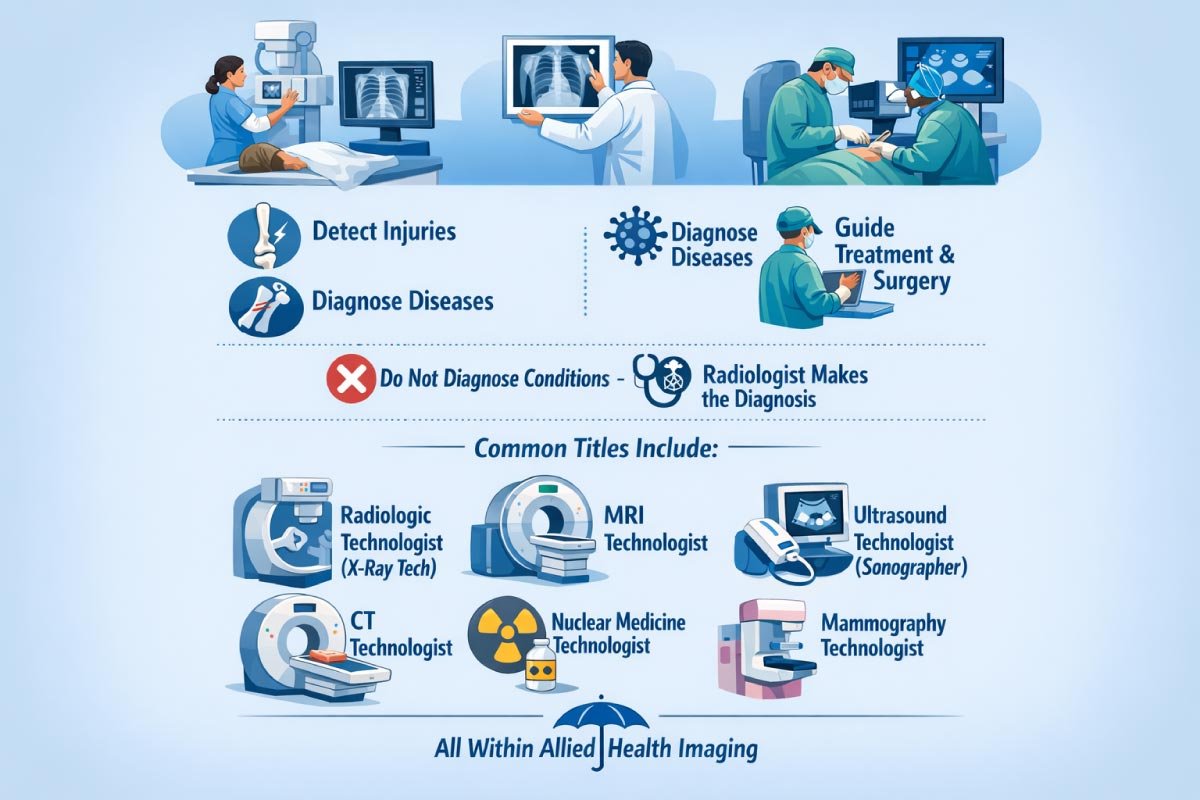
These images help doctors detect injuries, diagnose diseases, monitor treatment, and guide surgical procedures.
They do not typically diagnose conditions—that responsibility lies with a radiologist (a medical doctor). Instead, imaging professionals focus on obtaining high‑quality images safely and efficiently.
Common titles include:
-
Radiologic Technologist (X‑ray Tech)
-
MRI Technologist
-
Ultrasound Technologist (Sonographer)
-
CT Technologist
-
Nuclear Medicine Technologist
-
Mammography Technologist
While job titles vary depending on specialization, all fall under the umbrella of allied health imaging.
Typical Job Responsibilities
Imaging professionals perform diagnostic procedures to capture high-quality medical images. Responsibilities include operating imaging equipment, positioning patients safely,
adhering to radiation and safety protocols, and maintaining accurate records. They collaborate with physicians to interpret results,
ensure patient comfort, troubleshoot technical issues, and uphold strict standards of confidentiality and professionalism.
- Preparing imaging rooms and equipment
- Positioning patients for imaging procedures
- Operating imaging machines (MRI, CT, ultrasound, etc.)
- Ensuring patient comfort and safety
- Applying radiation safety practices
- Processing images and verifying quality
- Maintaining accurate patient records
- Collaborating with radiologists and healthcare teams
- Sanitizing equipment between patients
Their work requires technical expertise, strong attention to detail, excellent communication skills, and commitment to patient care and safety.
Education and Training Pathways
Becoming an imaging professional involves structured education and hands-on training.
Most start with a certificate, diploma, or associate degree in medical imaging, radiography, or sonography.
Advanced roles often require a bachelor’s degree or specialized certifications.
Clinical internships and continuing education ensure proficiency, compliance, and career advancement opportunities.
A. Entry‑Level Requirements
Entry-level positions in imaging typically require completion of an accredited diploma or associate degree program in a relevant modality.
Candidates must gain clinical training hours, demonstrate technical competency, and meet basic health and background checks.
Strong communication skills and foundational knowledge of anatomy, physics, and patient care are also essential.
| Program Type | Typical Duration | Credential Earned | Notes |
|---|---|---|---|
| Certificate Program | 12–18 months | Certificate | Fastest route; focuses on clinical training and core imaging skills |
| Associate Degree | 2 years | A.A.S. / A.S. | Most preferred; includes general education + clinical practicum |
| Bachelor’s Degree | 4 years | B.S. | Best for advanced roles or administrative paths |
| Master’s Degree | 1–2 years (post‑grad) | M.Sc / M.H.S. | For leadership, advanced modalities, education/research |
Accreditation matters: Ensure your program is accredited by JRCERT (Joint Review Committee on Education in Radiologic Technology) or equivalent.
Accreditation affects certification eligibility and employability.
Required Certifications & Licenses
Certifications and licenses are essential for practicing legally and professionally in most imaging careers.
They validate technical competence, safety knowledge, and ethical standards. Requirements vary by country and specialty,
but obtaining recognized credentials enhances credibility, improves job prospects, and often leads to higher salaries and greater career mobility.
Common certifications include:
-
ARRT (American Registry of Radiologic Technologists)
-
ARDMS (American Registry for Diagnostic Medical Sonography)
-
NMTCB (Nuclear Medicine Technology Certification Board)
| Certification | Imaging Modalities Covered | Typical Requirements |
|---|---|---|
| ARRT – Radiography | X‑ray | Graduate ARRT‑accredited program + exam |
| ARRT – MRI | MRI | Specialized MRI training + exam |
| ARDMS – Sonography | Ultrasound | Specialty sequences (abdomen, OB/GYN, vascular) + exam |
| NMTCB | Nuclear Medicine | Coursework + clinical hours + exam |
State licensure is required in many U.S. states and often involves maintaining continuing education credits.
Certification ensures you follow ethical standards, can practice safely, and earn higher wages.
Specializations in Allied Health Imaging
Imaging professionals can specialize in many areas, depending on their interests, technical strengths, and career goals.
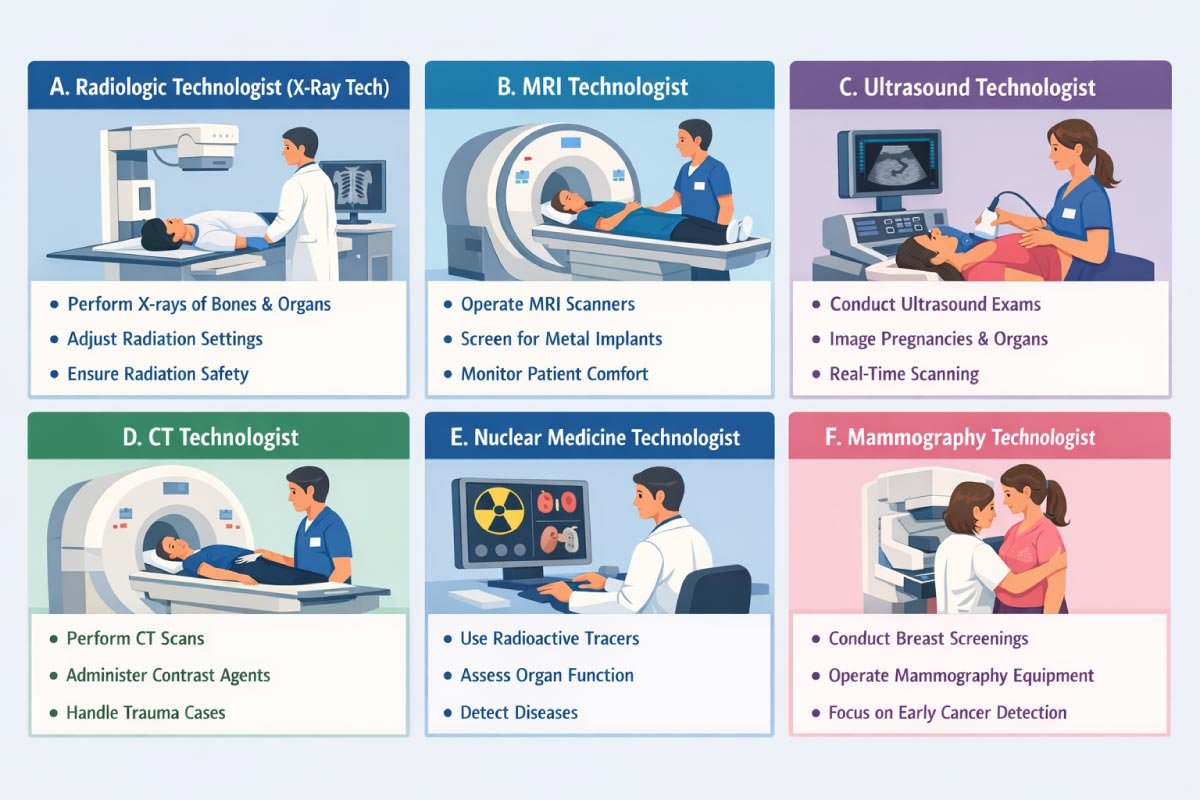
Each specialty focuses on specific technology, patient populations, and diagnostic purposes. Below is an expanded overview of common imaging specializations:
A. Radiologic Technologist (X-ray Tech)
Radiologic technologists use X-ray equipment to capture diagnostic images of bones, joints, and internal organs.
They position patients carefully, adjust exposure settings and ensure radiation safety.
This is often the entry point into imaging careers and provides a strong foundation for advanced modalities.
B. MRI Technologist
MRI technologists operate magnetic resonance imaging scanners to produce highly detailed cross-sectional images of soft tissues, organs, and the brain.
They screen patients for metal implants, explain procedures, and monitor comfort during longer scans.
MRI requires advanced training due to complex technology and safety protocols.
C. Ultrasound Technologist (Sonographer)
Sonographers use high-frequency sound waves to create images of soft tissues, blood flow, and developing fetuses.
They commonly work in obstetrics, cardiology, and abdominal imaging.
This specialty requires strong hand-eye coordination and patient communication skills, as scans are performed in real time.
D. CT Technologist
CT technologists operate computed tomography scanners to generate detailed 3D images of internal structures.
They may administer contrast agents and assist in emergency trauma imaging.
CT is fast-paced and often used in critical care settings, requiring quick decision-making and technical precision.
E. Nuclear Medicine Technologist
Nuclear medicine technologists administer small amounts of radioactive tracers to evaluate organ function and detect disease.
Using specialized cameras, they capture functional images of the heart, thyroid, and other organs.
This role combines patient care with pharmacology knowledge and radiation safety expertise.
F. Mammography Technologist
Mammography technologists specialize in breast imaging to screen for and detect cancer early.
They operate dedicated mammography equipment and ensure patient comfort during sensitive procedures.
This field requires additional certification and emphasizes precision, compassion, and strict quality assurance standards.
Skills Required to Succeed
Success in imaging careers requires a blend of technical expertise and strong interpersonal abilities.
Professionals must master imaging equipment, patient positioning, and safety protocols while maintaining accuracy and attention to detail.
Communication skills, empathy, critical thinking, and adaptability are equally important to ensure high-quality patient care and effective teamwork.
- Technical proficiency with imaging equipment
- Patient care and communication skills
- Critical thinking and problem‑solving
- Attention to safety, especially radiation protection
- Ability to work under time pressure
- Data entry and record‑keeping accuracy
- Teamwork with radiologists and healthcare staff
Strong people skills are particularly important, as imaging professionals often work with patients who are anxious, injured, or in pain.
Career Outlook (Job Growth and Demand)
The career outlook for imaging professionals remains strong as healthcare systems expand and diagnostic technology advances.
Growing aging populations, increased preventive screening, and rising chronic disease rates are driving demand.
Job opportunities are expected to increase steadily, offering stable employment, competitive salaries, and long-term career growth potential.
-
Aging populations require more diagnostic imaging
-
Technological advancements increase imaging utilization
-
Preventive health screenings grow in popularity
According to industry and labor projections (e.g., U.S. Bureau of Labor Statistics), several imaging careers are expected to grow faster than the average for all occupations.
| Job Title | Projected Growth (10 yrs) | Job Openings (Annual Avg.) | Factors Driving Growth |
|---|---|---|---|
| Radiologic Technologist | 6–9% | Moderate | Aging population, diagnostic needs |
| MRI Technologist | 9–13% | High | Non‑invasive imaging demand |
| Sonographer | 10–17% | High | Prenatal care, heart imaging |
| CT Technologist | 8–12% | Moderate | Emergency medicine |
Percentages above are general industry estimates rather than exact figures, as annual data varies by region and year.
Salary Guide: How Much Do Imaging Professionals Make?
Imaging professionals play a vital role in modern healthcare, and their salaries reflect their specialized skills and training.
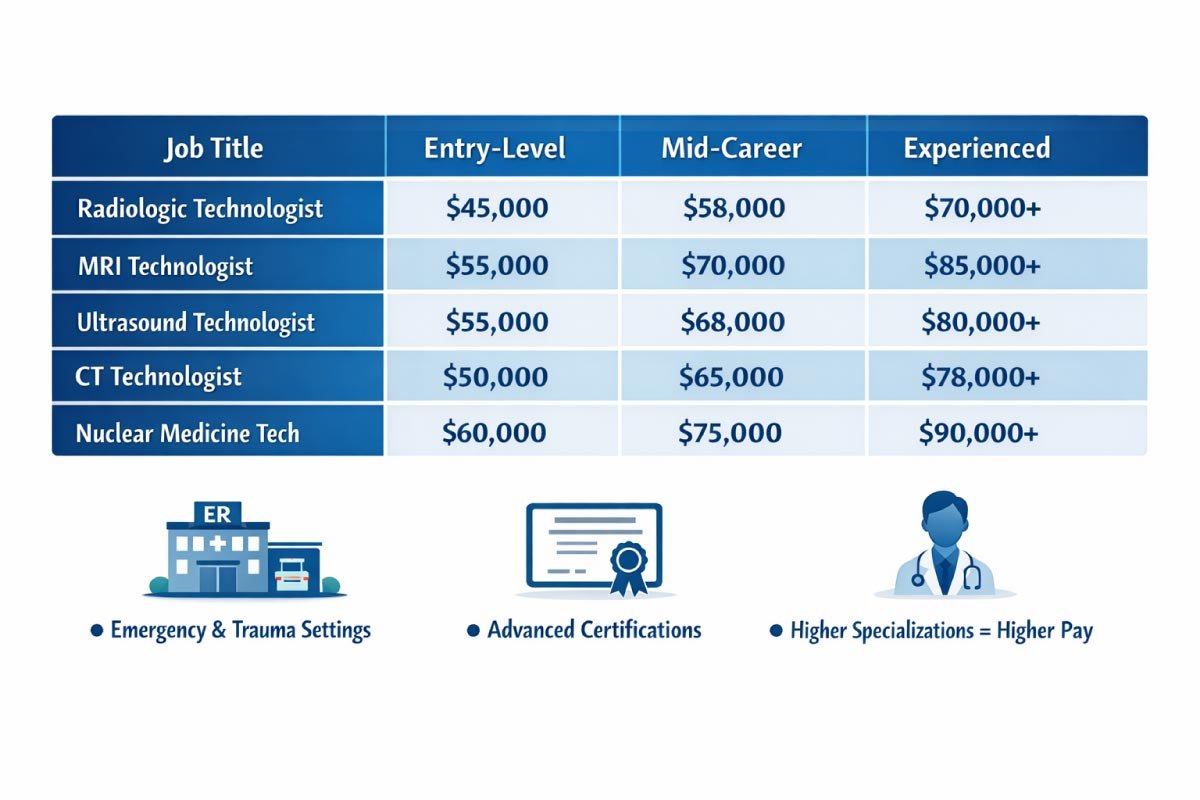
From entry-level technologists to advanced modality specialists, earnings vary based on experience, certification, location,
and workplace setting. This salary guide explores how much imaging professionals make and what factors influence their income.
| Job Title | Entry‑Level | Mid‑Career | Experienced | Notes |
|---|---|---|---|---|
| Radiologic Technologist | $45,000 | $58,000 | $70,000+ | Base imaging |
| MRI Technologist | $55,000 | $70,000 | $85,000+ | Highly specialized |
| Ultrasound Technologist | $55,000 | $68,000 | $80,000+ | Good patient contact |
| CT Technologist | $50,000 | $65,000 | $78,000+ | Emergency/trauma usage |
| Nuclear Medicine Tech | $60,000 | $75,000 | $90,000+ | Requires advanced training |
Highest paying specializations generally require advanced credentials or experience in hospital settings.
Don’t Miss this:
Work Environment and Schedule
The work environment and schedule can greatly influence job satisfaction and performance.
Understanding typical settings, shift patterns, workload expectations, and team dynamics helps you prepare for daily responsibilities.
Whether working standard hours or rotating shifts, knowing what to expect ensures better work-life balance and professional adaptability.
- Hospitals
- Imaging centers
- Outpatient clinics
- Physician offices
- Mobile imaging services
Work schedules vary. Common patterns include:
- Full‑time shifts (8–10 hrs)
- Rotating shifts
- Weekend or evening hours (especially in hospitals)
- On‑call duties in emergencies
The role requires professional conduct, exposure to medical scenarios, and adherence to strict safety standards.
Don’t Miss this:
Tips to Advance Your Career
Advancing your career requires more than technical knowledge—it demands continuous learning, adaptability, and strategic planning.
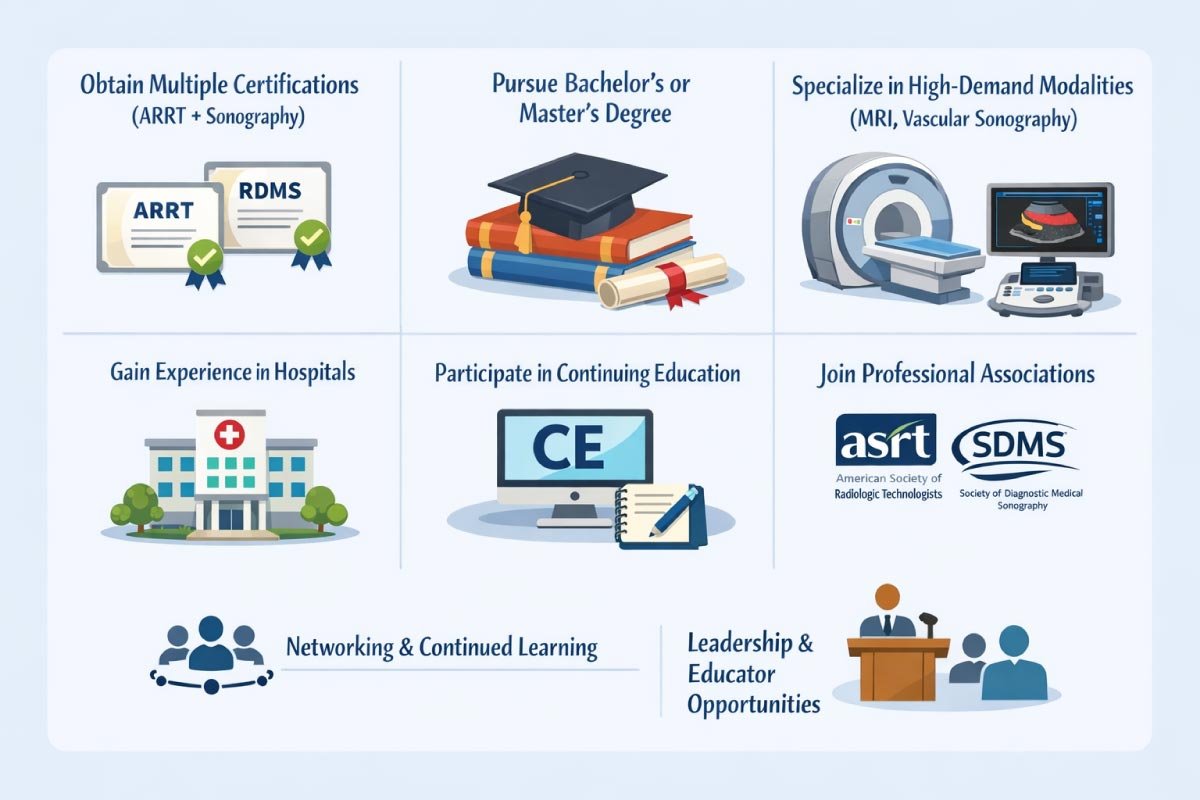
By upgrading your skills, gaining certifications, building professional networks, and seeking mentorship, you can open doors to higher roles and better opportunities.
Smart career moves today create stronger professional growth and long-term success tomorrow.
- Obtain multiple certifications – e.g., ARRT + Sonography
- Pursue a bachelor’s or master’s degree
- Specialize in high‑demand modalities (like MRI or vascular sonography)
- Gain experience in hospitals
- Participate in continuing education
- Join professional associations
-
American Society of Radiologic Technologists (ASRT)
-
Society of Diagnostic Medical Sonography (SDMS)
Networking and continued learning keep you competitive and eligible for leadership or educator roles.
Conclusion
Allied health imaging professionals play a vital role in the healthcare spectrum. They combine technical expertise with patient care, forming the backbone of diagnostic services in every medical facility.
Whether you Are just exploring healthcare careers or considering a switch, imaging professions offer strong job demand, solid salaries, and diverse opportunities for specialization.
If you enjoy science, technology, and helping people, a career in allied health imaging could be a fulfilling journey.
Don’t Miss this:

Zak is a dedicated medical and career writer specializing in sonography, healthcare education, and professional development. Through SonographerSalary.com, he shares in-depth insights on sonographer salaries, education pathways, and career tips to help readers build successful futures in medical imaging. His content combines accuracy with practical, easy-to-understand guidance, empowering students and professionals to make confident, informed career decisions.