
Cardiac sonography is one of the most specialized and rewarding careers in medical imaging. A cardiac sonographer, also known as an echocardiographer, uses ultrasound technology to examine the heart’s structure and function.
These professionals help cardiologists diagnose heart diseases, monitor blood flow, and detect abnormalities without invasive procedures.
Because heart health is a major focus in modern healthcare, skilled cardiac sonographers are in high demand. This demand directly impacts salaries, making cardiac sonography one of the highest-paying ultrasound specialties.
In this guide, we will explore the cardiac sonographer salary chart, including hourly wages, monthly income, yearly salaries, and how factors like experience, location, and specialization influence earnings.
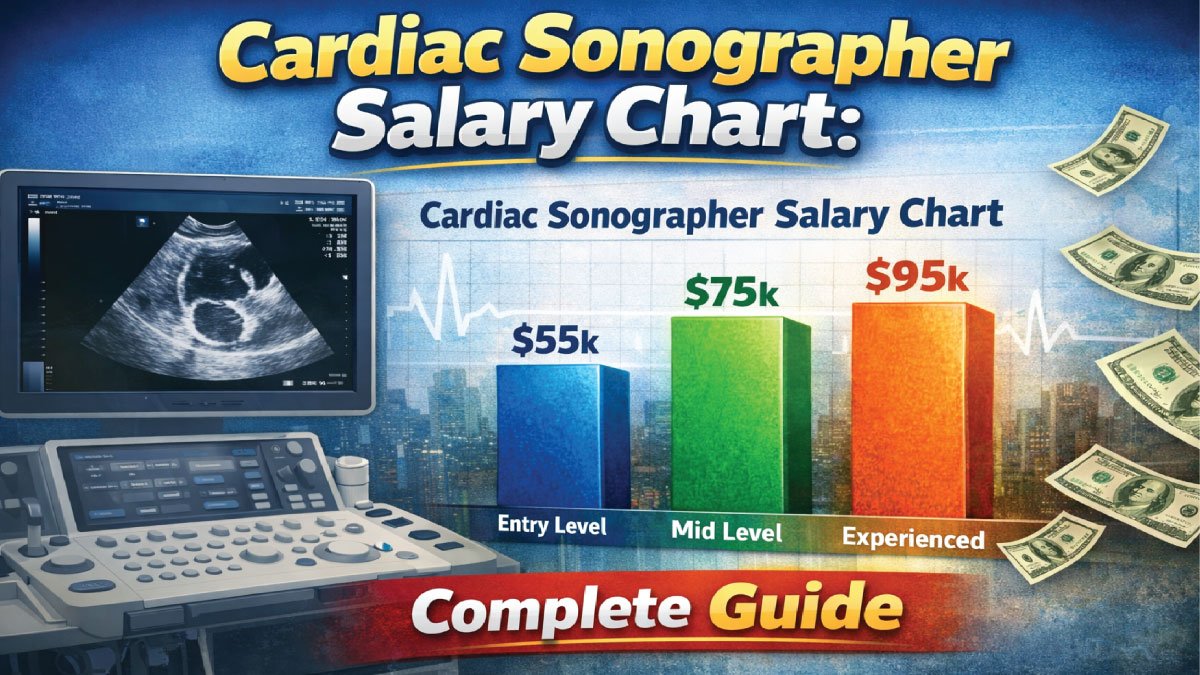
Cardiac Sonographer Salary Chart
Below is a general cardiac sonographer salary chart based on experience level in the United States.
| Experience Level | Hourly Salary | Monthly Salary | Yearly Salary |
|---|---|---|---|
| Entry Level (0–2 years) | $30 – $38 | $5,200 – $6,600 | $62,000 – $79,000 |
| Mid-Level (3–7 years) | $38 – $48 | $6,600 – $8,300 | $79,000 – $100,000 |
| Experienced (8–15 years) | $48 – $60 | $8,300 – $10,400 | $100,000 – $125,000 |
| Senior Cardiac Sonographer (15+ years) | $60 – $72 | $10,400 – $12,500 | $125,000 – $150,000 |
This chart shows that cardiac sonographers can earn six-figure salaries with experience and specialization.
Cardiac Sonographer Salary by Education
Education and professional certifications can significantly increase a cardiac sonographer’s earning potential.
| Education Level | Average Yearly Salary |
|---|---|
| Associate Degree | $70,000 – $85,000 |
| Bachelor’s Degree | $80,000 – $100,000 |
| Advanced Cardiac Certifications | $95,000 – $120,000 |
| Senior Specialist / Supervisor | $110,000 – $145,000 |
Many cardiac sonographers obtain certifications such as Registered Diagnostic Cardiac Sonographer (RDCS) or Registered Cardiac Sonographer (RCS) to advance their careers and increase their salaries.
Cardiac Sonographer Salary by Workplace
The type of healthcare facility where a cardiac sonographer works can affect salary levels.
| Workplace | Average Salary |
|---|---|
| Hospitals | $80,000 – $105,000 |
| Cardiology Clinics | $85,000 – $110,000 |
| Diagnostic Imaging Centers | $82,000 – $108,000 |
| Outpatient Care Centers | $90,000 – $120,000 |
| Medical Laboratories | $78,000 – $100,000 |
Hospitals usually employ the largest number of cardiac sonographers because they treat patients with various heart conditions.
Cardiac Sonographer Salary by State (USA)
Location plays a major role in determining salaries. States with higher healthcare demand and cost of living usually offer higher pay.
| State | Average Salary |
|---|---|
| California | $115,000 – $135,000 |
| New York | $100,000 – $120,000 |
| Texas | $85,000 – $105,000 |
| Florida | $82,000 – $102,000 |
| Washington | $95,000 – $115,000 |
Large metropolitan areas often pay higher salaries because hospitals require skilled professionals to manage high patient volumes.
Cardiac Sonographer Hourly Pay Chart
Many healthcare workers prefer to look at hourly pay instead of yearly salary.
| Career Stage | Hourly Wage |
|---|---|
| Beginner | $30 – $35 |
| Early Career | $35 – $42 |
| Mid Career | $42 – $50 |
| Experienced | $50 – $60 |
| Senior Specialist | $60 – $72 |
Overtime shifts, emergency procedures, and weekend work can increase hourly earnings.
Travel Cardiac Sonographer Salary Chart
Travel cardiac sonographers work temporary assignments in hospitals and clinics across different states. Because they are willing to relocate, they often receive higher compensation.
| Category | Average Pay |
|---|---|
| Hourly Pay | $50 – $75 |
| Weekly Pay | $2,000 – $3,200 |
| Monthly Pay | $8,000 – $13,500 |
| Yearly Pay | $110,000 – $160,000 |
Travel sonographers may also receive benefits such as housing allowances, travel reimbursements, and bonuses.
Read More:
Factors That Affect Cardiac Sonographer Salaries
Several factors influence how much a cardiac sonographer earns.
1. Experience
Experience plays a major role in salary growth. As sonographers gain years of clinical experience, they become more skilled in performing complex heart scans and interpreting results.
2. Certification
Professional certifications can increase credibility and salary potential. Employers often prefer certified cardiac sonographers.
3. Specialization
Advanced cardiac imaging techniques such as stress echocardiography or pediatric echocardiography can lead to higher salaries.
4. Workplace Setting
Large hospitals and specialized cardiac centers often offer higher pay than small clinics.
5. Geographic Location
Urban areas with advanced healthcare systems typically pay more due to higher demand for skilled professionals.
Benefits and Perks for Cardiac Sonographers
Besides competitive salaries, cardiac sonographers usually receive strong employment benefits.
Common benefits include:
- Health insurance
- Retirement plans (401k)
- Paid vacation and sick leave
- Continuing education support
- Flexible work schedules
Some employers also provide professional development opportunities and bonuses for experienced sonographers.
Career Advancement Opportunities
Cardiac sonography offers many opportunities for career growth. With experience and additional training, professionals can move into higher-level positions.
Career advancement options include:
- Lead Cardiac Sonographer
- Echocardiography Supervisor
- Cardiac Imaging Specialist
- Clinical Instructor
- Ultrasound Department Manager
Some experienced sonographers also transition into teaching or healthcare administration roles.
Job Outlook for Cardiac Sonographers
Heart disease remains one of the leading health concerns worldwide. Because of this, cardiac imaging plays a critical role in diagnosis and treatment.
The demand for skilled cardiac sonographers is expected to grow steadily as healthcare systems continue to expand diagnostic imaging services.
Hospitals and cardiology centers are constantly looking for trained professionals who can perform accurate echocardiograms.
This strong demand ensures stable job opportunities and competitive salaries for cardiac sonographers.
Is Cardiac Sonography a Good Career?
Cardiac sonography is considered one of the best specialties in diagnostic medical imaging. It offers strong salaries, career stability, and opportunities for professional growth.
Reasons many people choose cardiac sonography include:
- High earning potential
- Strong job demand
- Opportunity to specialize in heart imaging
- Meaningful role in patient care
- Advancement opportunities in healthcare
For students interested in both technology and medicine, cardiac sonography provides a rewarding career path.
Conclusion
The cardiac sonographer salary chart shows that this profession offers excellent financial potential. Entry-level professionals can earn solid salaries, while experienced specialists often reach six-figure incomes.
Factors such as experience, certification, workplace, and location can significantly influence earnings. Travel cardiac sonographers and specialized experts often earn even higher salaries.
With growing demand for heart imaging and advancements in ultrasound technology, cardiac sonography remains a stable, high-paying, and respected career in healthcare.

Zak is a dedicated medical and career writer specializing in sonography, healthcare education, and professional development. Through SonographerSalary.com, he shares in-depth insights on sonographer salaries, education pathways, and career tips to help readers build successful futures in medical imaging. His content combines accuracy with practical, easy-to-understand guidance, empowering students and professionals to make confident, informed career decisions.