
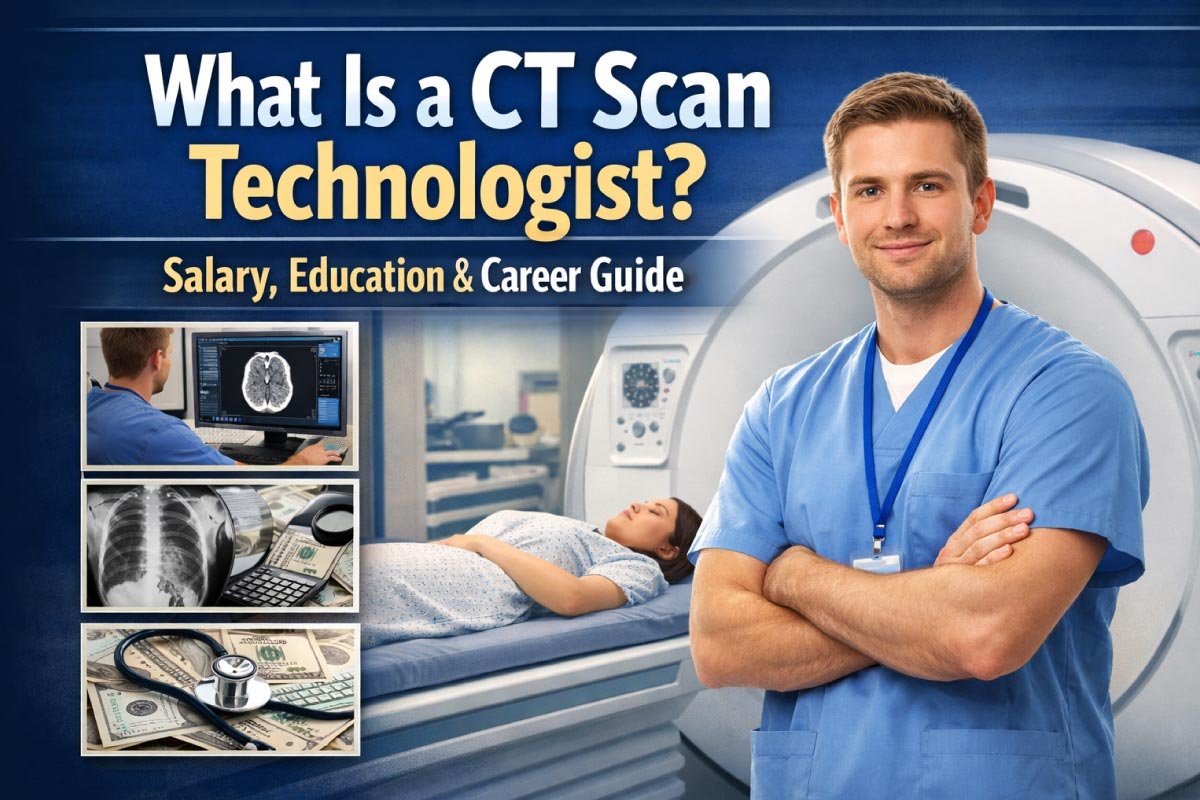
Medical imaging has revolutionized healthcare by providing a window into the human body without invasive surgery.
Among the many professionals who make this possible, CT scan technologists play a vital role.
These allied health professionals operate computed tomography (CT) scanners to help physicians diagnose disease, monitor treatment, and plan procedures.
In this comprehensive guide, we will explore what a CT scan technologist is, what they do, how to become one, how much they earn, and what career opportunities exist in this growing field.
What Is a CT Scan Technologist?
A CT scan technologist, also known as a Computed Tomography Technologist, is a specialized radiologic technologist trained to use CT imaging equipment.
This equipment uses X‑rays and computer technology to create cross‑sectional images (“slices”) of the body.
These images help diagnose conditions such as cancers, fractures, vascular diseases, and internal injuries.
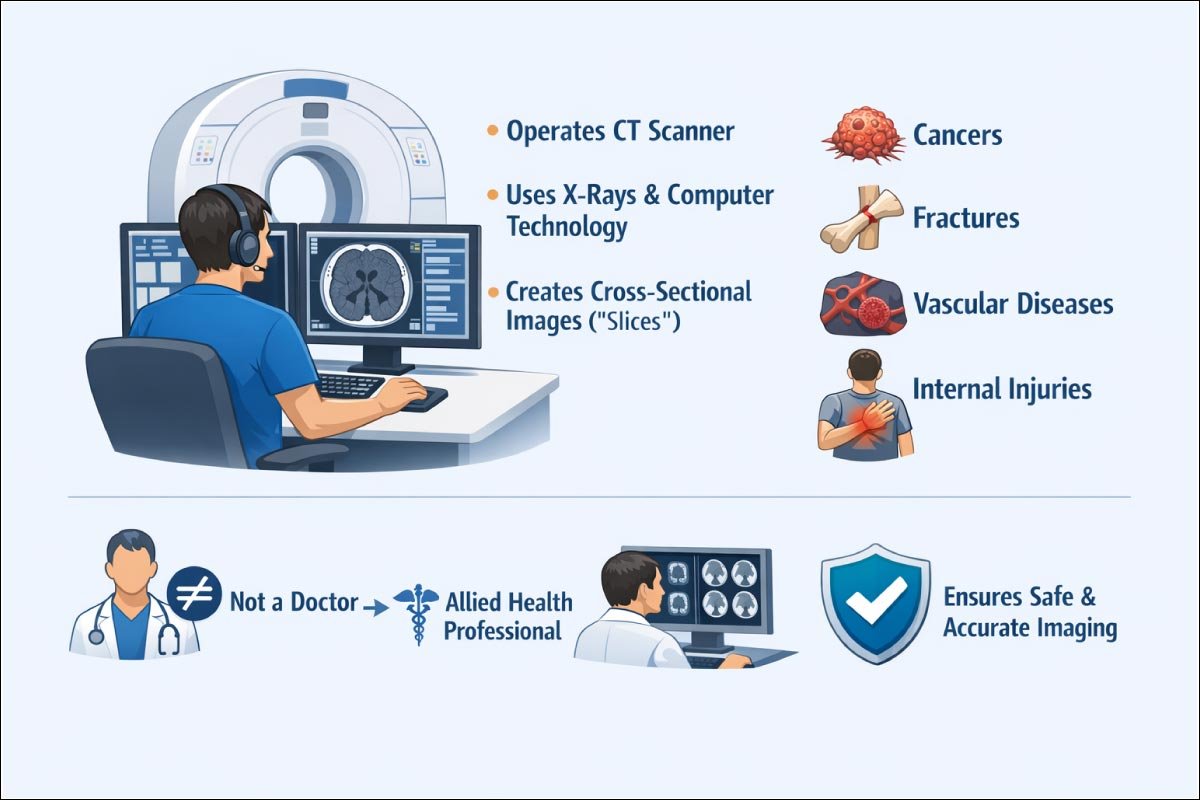
CT technologists are not doctors—they are allied health professionals who work under the supervision of radiologists and other medical specialists.
Their primary responsibility is to ensure safe, accurate imaging that aids clinical decision‑making.
What Do CT Scan Technologists Do?
CT scan technologists are specialized radiologic professionals responsible for creating detailed cross-sectional images of the body.
They combine technical expertise, patient care, and safety protocols to ensure accurate diagnostics.
Their role bridges clinical knowledge, imaging technology, and teamwork, making them essential in modern healthcare.
Key Responsibilities
-
Patient preparation: Explain procedures, collect medical history, and position patients appropriately.
-
Image acquisition: Operate CT scanners to capture detailed internal images.
-
Safety protocols: Apply radiation safety measures to minimize exposure for patients and staff.
-
Image quality: Ensure high‑quality images through proper calibration, positioning, and protocol selection.
-
Patient care: Monitor patients during scans, especially those with injuries, pain, or anxiety.
-
Record keeping: Maintain accurate patient records, imaging data, and regulatory compliance documentation.
-
Team collaboration: Communicate with radiologists, physicians, nurses, and other healthcare personnel.
CT technologists work in diverse settings such as hospitals, diagnostic centers, physician offices, and outpatient imaging facilities.
Skills and Qualities of an Excellent CT Technologist
An outstanding CT technologist combines technical expertise with strong interpersonal abilities.
They must operate sophisticated imaging equipment accurately while ensuring patient comfort and safety.
Critical thinking, attention to detail, and clear communication are essential to produce precise diagnostic images and maintain high standards of care.
-
Technical aptitude: Comfortable with complex imaging equipment, computers, and software.
-
Attention to detail: Ensures high‑quality diagnostic images and accurate records.
-
Communication skills: Ability to explain procedures clearly and empathetically.
-
Critical thinking: Adjust imaging protocols based on patient condition and clinical needs.
-
Patient care: Calm under pressure, especially with trauma patients or those in pain.
Education and Training Pathway
Becoming a CT scan technologist typically follows these steps Becoming a CT scan technologist requires a combination of formal education, hands-on clinical training, and often certification.
This pathway equips professionals with the technical skills, medical knowledge, and patient-care expertise necessary to operate CT imaging equipment safely and accurately in a variety of healthcare settings.
1. High School or Equivalent
The foundation for a career as a CT technologist begins in high school. Emphasis on science and math courses builds the critical thinking and technical understanding necessary for advanced imaging studies.
Early preparation helps students succeed in college-level radiologic technology programs and future clinical training.
2. Radiologic Technology Program
The next step in becoming a CT technologist is enrolling in an accredited radiologic technology program.
These programs provide a strong foundation in anatomy, imaging principles, patient care, and safety protocols.
Classroom instruction is paired with hands-on clinical experience, preparing students to operate imaging equipment confidently and accurately.
-
Associate of Applied Science (AAS) in Radiologic Technology
-
Bachelor of Science (BS) in Radiologic Sciences or Medical Imaging
Programs combine classroom learning with clinical experience.
3. Certification as a Radiologic Technologist
After completing a radiologic technology program, obtaining certification is a crucial step.
Certification validates a technologist’s knowledge and skills, ensuring they meet professional standards in imaging, patient care, and safety.
This credential enhances career prospects and is often required for employment in hospitals and diagnostic imaging centers.
4. Specialized CT Training
After earning general radiologic technologist certification, professionals can advance their expertise by specializing in CT imaging.
Specialized training deepens knowledge of cross-sectional anatomy, advanced imaging protocols, and patient management.
This focused preparation ensures technologists deliver precise diagnostic images while maintaining safety and efficiency in complex clinical environments.
-
Post‑primary certification in CT (e.g., ARRT CT)
-
On‑the‑job training under radiologists
-
Continuing education courses
5. Licensure
In many areas, CT technologists must obtain state or national licensure to practice legally.
Licensure ensures that professionals meet established standards for patient safety, technical competence, and ethical practice.
Requirements differ by region, but obtaining licensure enhances credibility and may be mandatory for employment in hospitals or diagnostic centers.
Certification & Licensure Overview
Certification and licensure are essential for radiologic technologists to ensure professional competence and legal practice.
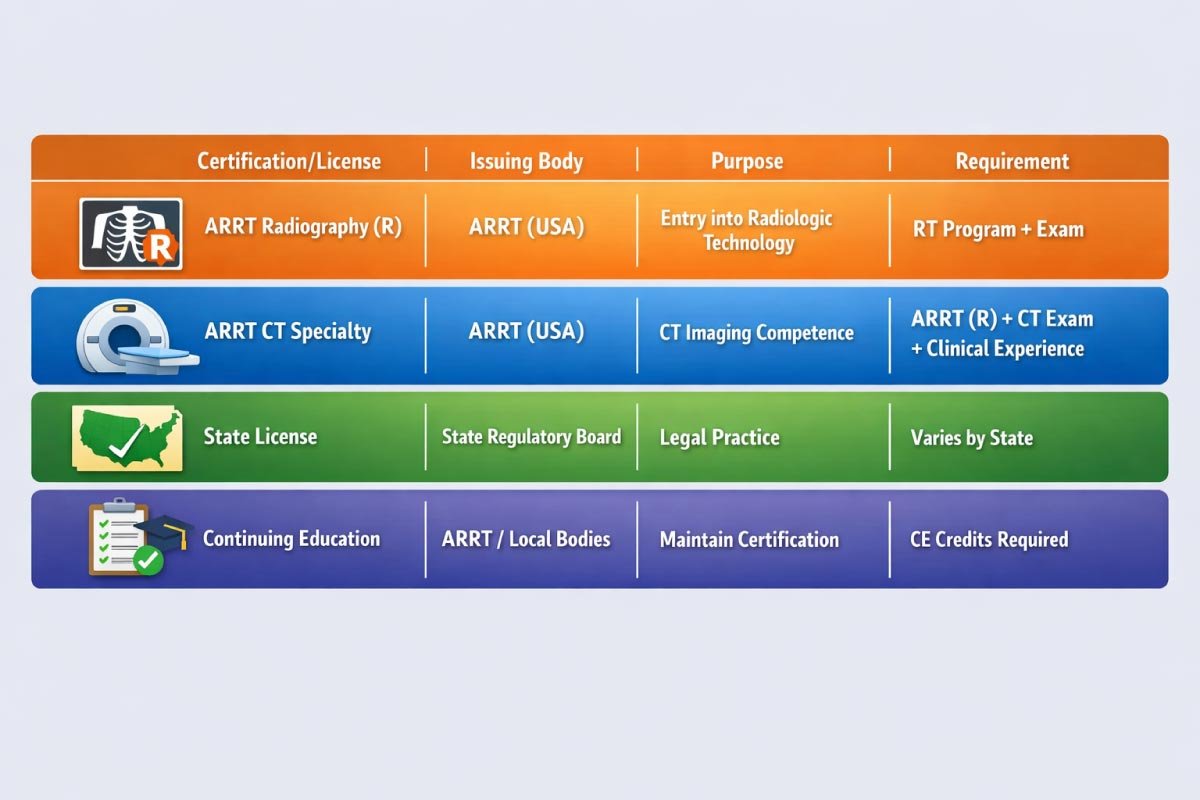
This overview highlights key credentials, including ARRT certifications, state licenses, and continuing education requirements.
Each credential serves a specific purpose, from entry-level qualification to specialty competence, maintaining standards and safeguarding patient care.
| Certification/License | Issuing Body | Purpose | Typical Requirement |
|---|---|---|---|
| ARRT Radiography (R) | ARRT (USA) | Entry into radiologic technology | Graduate accredited RT program + exam |
| ARRT CT Specialty | ARRT (USA) | CT imaging competence | ARRT R + CT exam + clinical experience |
| State License | State Regulatory Board | Legal practice | Varies by state/country |
| Continuing Education | ARRT/Local Bodies | Maintain certification | Periodic CE credits |
How Long Does It Take to Become a CT Technologist?
Becoming a CT technologist requires a combination of education, clinical training, and certification.
The total time depends on your starting point, whether you pursue an associate degree, bachelor’s degree, or post-primary certification.
This guide breaks down each pathway, including classroom study, hands-on experience, and specialized CT training, giving a realistic timeline for entering this rewarding career.
1. High School Graduation and Pre-Requisites (1–2 Years)
Before starting formal radiologic training, students must complete high school or a GED program.
Emphasis on math, physics, and biology is important for understanding imaging principles.
Some candidates may take additional preparatory courses to strengthen technical knowledge.
Completing volunteer work or shadowing in medical imaging can provide early exposure to the CT technologist profession.
2. Associate Degree in Radiologic Technology (2–3 Years)
Most CT technologists start with an accredited associate degree in radiologic technology.
These programs combine classroom instruction with clinical rotations, giving students practical skills in X-ray and patient imaging procedures.
Typically, programs last two to three years, preparing graduates for entry-level radiologic technologist positions and eligibility for certification exams like the ARRT.
3. Bachelor’s Degree Pathway (4 Years)
Some candidates choose a bachelor’s degree in radiologic sciences or a related field.
A four-year program provides advanced training in imaging technology, patient care, and radiation safety.
This pathway can enhance career opportunities and lead to leadership or specialized roles.
Clinical rotations and internships during the degree ensure students gain hands-on experience before certification.
4. Post-Primary CT Certification (6–12 Months)
After becoming a licensed radiologic technologist, professionals must complete specialized CT training to work specifically with computed tomography scanners.
This can include on-the-job training or formal post-primary certification programs.
These programs typically take six months to one year and focus on CT imaging protocols, cross-sectional anatomy, and radiation dose management.
5. Continuing Education and Career Advancement (Ongoing)
Even after initial certification, CT technologists must stay updated on new imaging technologies, safety guidelines, and professional standards.
Continuing education ensures licensure maintenance and opens doors to higher-paying roles, such as lead technologist or imaging department supervisor.
Lifelong learning allows professionals to remain competent and advance in an evolving healthcare environment.
| Pathway | Typical Duration |
|---|---|
| High School to Associate Degree | ~2–3 years |
| High School to Bachelor’s Degree | ~4 years |
| Post‑graduate CT specialization | ~6–12 months |
| Total Time to Practice (typical) | ~2.5 – 5 years |
Income and Salary Expectations
CT technologist income depends on experience, certification, and workplace setting.
Salaries typically rise with career progression, from entry-level roles to senior or managerial positions.
Regional demand, facility type, and specialized credentials can influence earnings, while shift differentials and overtime opportunities may further impact total compensation for these skilled imaging professionals.
| Career Level | Annual Salary (USD) |
|---|---|
| Entry‑Level CT Technologist | $50,000 – $60,000 |
| Mid‑Career (5–10 yrs) | $60,000 – $75,000 |
| Experienced / Senior | $75,000 – $95,000+ |
| Top Tier / Management | $90,000 – $120,000+ |
Note: Salaries fluctuate based on factors like location, demand, weekend/shift differentials, and additional credentials.
Job Outlook and Demand
The demand for CT technologists is rising alongside advances in medical imaging and the needs of an aging population.
These professionals are vital in diagnosing emergencies, cancer, and vascular conditions.
Career opportunities expand as imaging technology evolves, creating stable and rewarding employment prospects in healthcare.
Projected trends include:
-
Growth in outpatient imaging facilities
-
More cross‑training in MRI and ultrasound
-
Increased use of advanced imaging software and AI integration
-
Greater need for technologists in rural and underserved areas
The Bureau of Labor Statistics (or local equivalents) typically projects steady growth for radiologic and CT technologists over the next decade.
Where Do CT Technologists Work?
CT technologists work in diverse healthcare settings, applying their expertise in diagnostic imaging to support patient care.
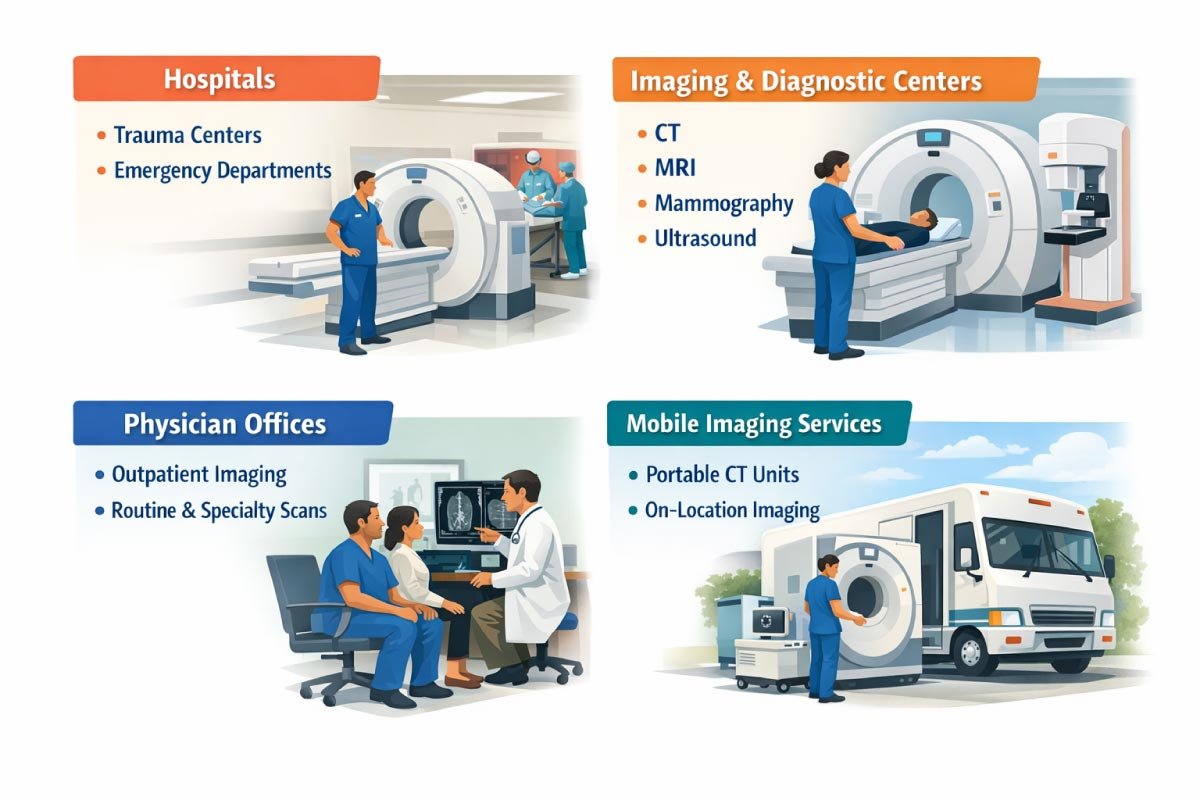
Their roles span hospitals, outpatient centers, and specialized clinics, offering opportunities for collaboration with physicians, radiologists, and other healthcare professionals.
Work environments may vary by pace, patient volume, and specialty focus.
Healthcare Settings
CT technologists are essential in fast-paced and critical healthcare environments.
They provide imaging support in a variety of clinical settings, often working closely with emergency teams, surgeons, and specialists to ensure accurate, timely diagnostics.
Each setting requires adaptability, technical skill, and effective patient communication.
-
Hospitals
-
Trauma centers
-
Emergency departments
Diagnostic and Imaging Centers
Outpatient diagnostic and imaging centers specialize in advanced medical imaging services.
CT technologists in these settings perform scans efficiently while ensuring patient comfort and safety.
These facilities often provide a variety of imaging modalities, allowing technologists to develop broad technical skills and contribute to accurate diagnoses.
Dedicated outpatient imaging facilities focused on:
-
CT
-
MRI
-
Mammography
-
Ultrasound
Physician Offices
CT technologists in physician offices support clinical diagnosis by providing high-quality imaging services in outpatient settings.
These offices often focus on routine or specialty scans, allowing technologists to work closely with physicians and patients, ensuring accurate imaging results while maintaining a comfortable, patient-centered environment.
Mobile Imaging Services
CT technologists working with mobile imaging units provide flexible diagnostic services to hospitals, clinics, and community programs.
These professionals operate portable equipment safely and efficiently, often reaching patients in rural or underserved areas,
expanding access to advanced imaging while maintaining high standards of image quality and patient care.
Career Advancement Opportunities
A career as a CT technologist provides a range of growth opportunities, from mastering advanced imaging techniques to taking on leadership or educational roles. Professionals can expand their expertise, pursue specialty certifications, and contribute to research or management, enhancing both their skills and career prospects in the evolving field of medical imaging.
1. Advanced Modalities
CT technologists can broaden their expertise by learning additional imaging modalities.
Mastery of advanced techniques allows professionals to perform specialized scans, enhance diagnostic capabilities, and increase career versatility.
Expanding into these areas also positions technologists for roles in high-demand departments and complex clinical settings.
Technologists can expand into:
-
MRI
-
PET/CT
-
Interventional Radiology
-
Cardiac CT
2. Leadership and Management
Experienced CT technologists can advance into leadership and management positions, overseeing imaging operations and guiding clinical teams.
These roles involve supervising staff, ensuring workflow efficiency, maintaining quality standards, and coordinating with other departments,
allowing technologists to influence patient care and departmental success while building administrative and managerial expertise.
Experienced technologists can become:
-
Lead Technologist
-
Imaging Supervisor
-
CT Department Manager
3. Education and Training
CT technologists with experience and expertise can transition into educational roles, training the next generation of imaging professionals.
These positions involve developing curricula, supervising clinical instruction, and mentoring students,
allowing technologists to share their knowledge while contributing to the growth and quality of the radiologic technology workforce.
Some professionals move into teaching roles at:
-
Community colleges
-
Radiologic technology programs
4. Sales and Clinical Applications Specialist
CT technologists can leverage their clinical expertise in the medical imaging industry.
Roles such as clinical trainers or sales support specialists involve educating healthcare staff on equipment use, demonstrating imaging systems, and providing technical guidance,
bridging the gap between technology and clinical practice while expanding career opportunities outside traditional healthcare settings.
Also Read:
CT Technologist Daily Workflow Example
A CT technologist’s day blends technical tasks, patient care, and collaboration with the healthcare team.
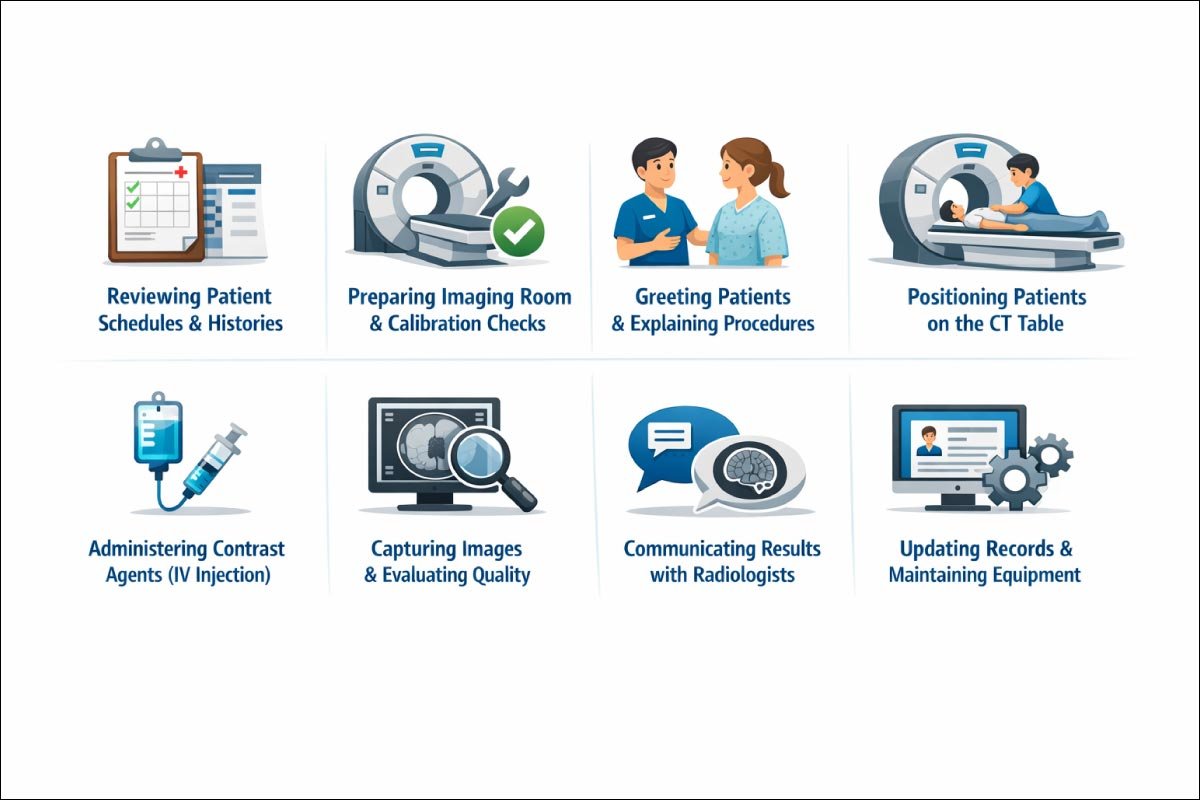
Daily routines involve preparing equipment, guiding patients, performing imaging procedures, and ensuring accurate documentation.
Efficient workflow and attention to detail are critical for high-quality diagnostic imaging and maintaining patient safety throughout the day.
A typical workday might include:
-
Reviewing patient schedules and histories
-
Preparing imaging rooms and calibration checks
-
Greeting patients and explaining procedures
-
Positioning patients on the CT table
-
Administering contrast agents as needed (IV injection)
-
Capturing images and evaluating quality
-
Communicating results with radiologists
-
Updating patient records and maintaining equipment
Also Read:
Challenges and Rewards of the Profession
A career as a CT technologist offers both unique challenges and significant rewards.
Professionals balance patient care, technical precision, and safety, often under time-sensitive conditions.
Despite the demands, the role provides personal fulfillment, professional growth, and the opportunity to make a tangible difference in patient outcomes.
Challenges
-
Exposure to radiation (minimized with safety protocols)
-
Dealing with anxious or difficult patients
-
Standing for prolonged periods
-
Emergency/shift work
-
Balancing speed with precision
Rewards
-
Playing a critical role in patient diagnosis and care
-
High job satisfaction
-
Competitive salary and benefits
-
Variety in daily cases and technology
-
Growth opportunities
Education & Certification Cost Breakdown
Pursuing a career as a CT technologist involves both education and certification expenses.
Costs range from tuition for radiologic technology programs to ARRT exams and ongoing continuing education.
This breakdown provides a clear picture of typical financial investment, helping aspiring professionals plan effectively for their training and credentialing journey.
| Component | Estimated Cost (USD) |
|---|---|
| Radiologic Technology Program Tuition | $5,000 – $30,000+ |
| ARRT Certification Exam | $200 – $300 |
| CT Specialty Exam | $200 – $300 |
| Continuing Education (Annual) | $100 – $500 |
| Total (Typical Range) | ~$6,000 – $32,000+ |
Costs vary widely based on institution and region.
CT Technologist vs Other Imaging Careers
CT technologists hold a unique role among medical imaging professionals.
Comparing CT, X‑ray, and MRI careers highlights differences in modality, radiation exposure, salary, certification, training, and clinical complexity.
This overview helps aspiring imaging specialists understand career distinctions and make informed choices based on their interests, skills, and long-term goals.
| Attribute | CT Technologist | X‑Ray Technologist | MRI Technologist |
|---|---|---|---|
| Modality | Computed Tomography | Radiography (X‑ray) | Magnetic Resonance Imaging |
| Radiation Exposure | Yes | Yes | No |
| Average Salary | Moderate to High | Moderate | High |
| Required Certification | Yes | Yes | Yes |
| Training Time | ~2–4 yrs | ~2–4 yrs | ~2–4 yrs |
| Clinical Complexity | Moderate‑High | Moderate | High |
Also Read:
Tips for Success in the Field
Thriving as a CT technologist requires a combination of technical skill, continuous learning, and strong interpersonal abilities.
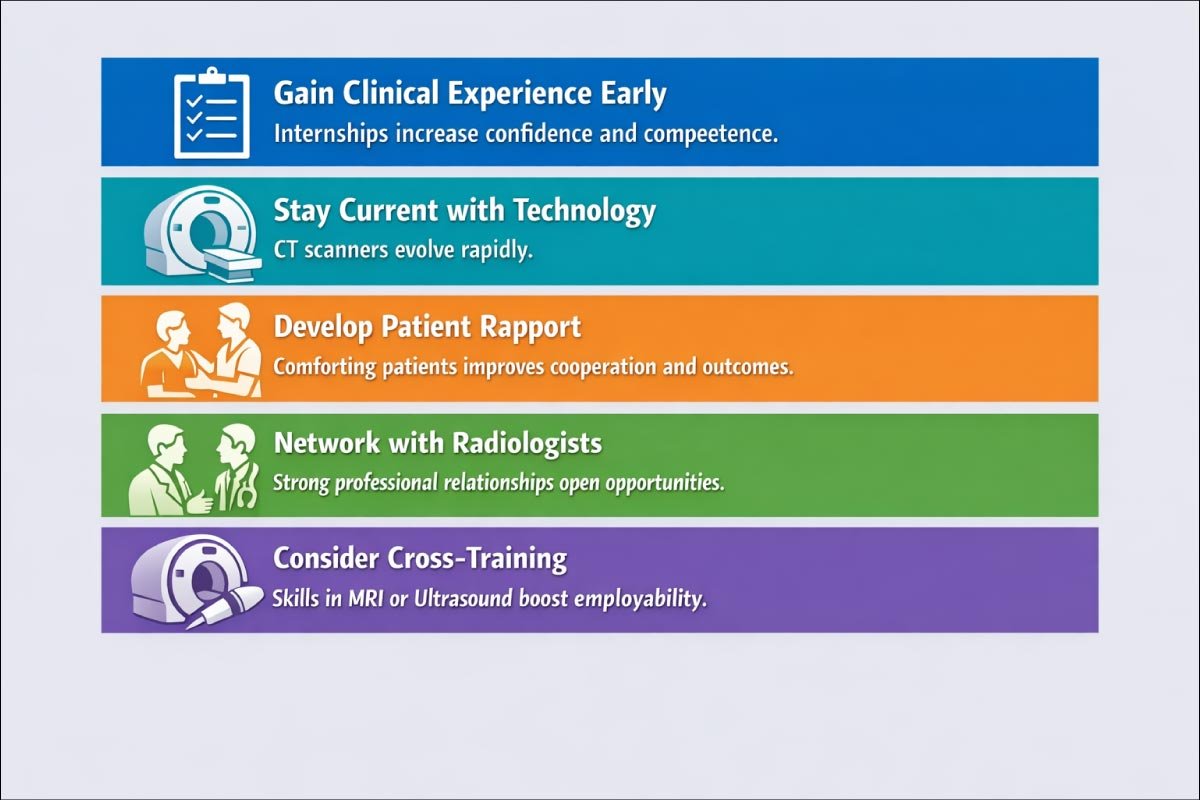
Staying proactive in education, developing patient communication skills, and building professional networks help technologists provide high-quality care, adapt to evolving technology,
and advance their careers in a competitive healthcare environment.
-
Gain clinical experience early: Internships increase confidence and competence.
-
Stay current with technology: CT scanners evolve rapidly.
-
Develop patient rapport: Comforting patients improves cooperation and outcomes.
-
Network with radiologists: Strong professional relationships open opportunities.
-
Consider cross‑training: Skills in MRI or ultrasound boost employability.
Conclusion
Becoming a CT scan technologist is an exciting and rewarding career choice for individuals who enjoy technology, patient care, and diagnostic medicine.
With a solid education, proper certification, and hands‑on experience, you can step into a high‑demand allied health profession that makes a real difference in patients’ lives.
From competitive salaries and stable job growth to diverse work settings and continuing career options, the field of CT imaging offers both challenge and fulfillment.
Whether you’re just starting your education or considering a specialization, the journey to becoming a CT scan technologist is well worth the effort.
Also Read:

Zak is a dedicated medical and career writer specializing in sonography, healthcare education, and professional development. Through SonographerSalary.com, he shares in-depth insights on sonographer salaries, education pathways, and career tips to help readers build successful futures in medical imaging. His content combines accuracy with practical, easy-to-understand guidance, empowering students and professionals to make confident, informed career decisions.