
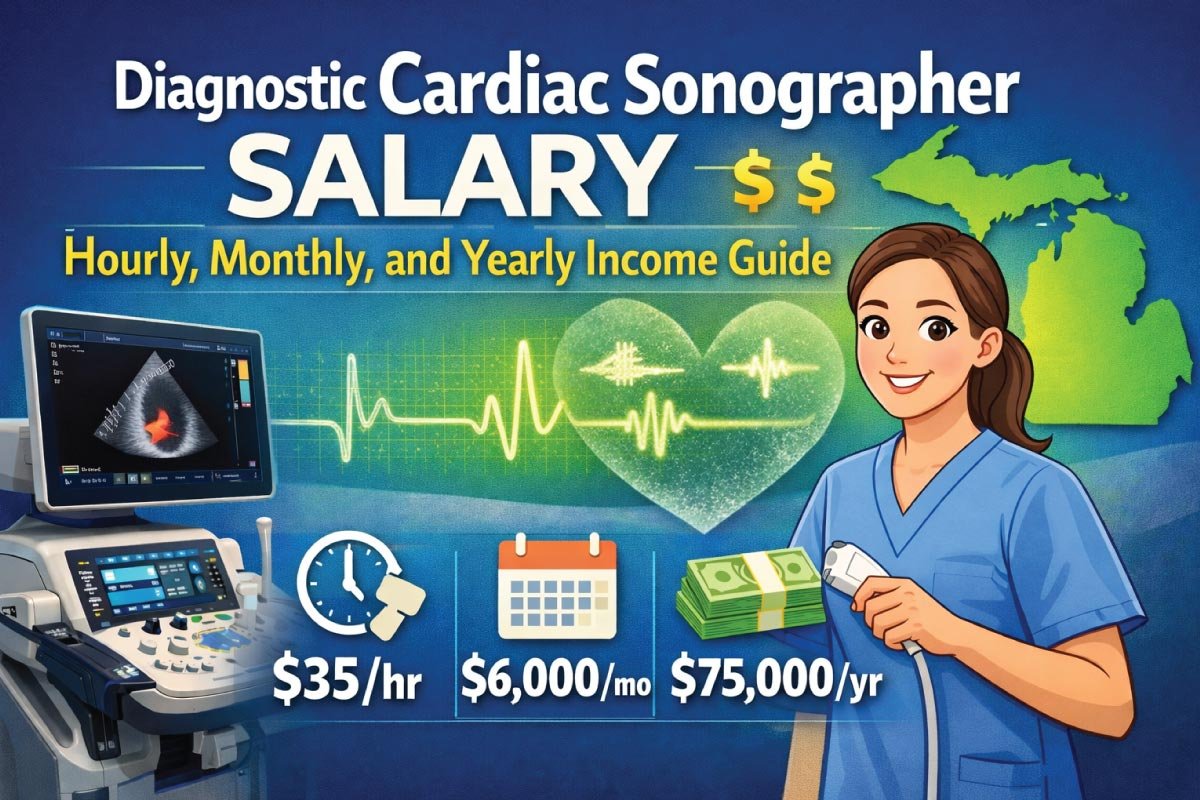
Healthcare technology has evolved rapidly over the past decades, creating high-demand careers for professionals trained in advanced diagnostic techniques. One such role is the diagnostic cardiac sonographer, a specialized ultrasound professional who focuses on imaging the heart and assessing cardiovascular health.
These specialists provide critical information to cardiologists, helping diagnose and monitor heart disease, valvular disorders, congenital heart defects, and other cardiovascular conditions. For individuals considering a career in cardiac imaging, understanding salary expectations is essential.
Diagnostic cardiac sonographers often enjoy competitive pay, strong job security, and opportunities for career growth. This guide explores diagnostic cardiac sonographer salary in detail, including hourly, monthly, and yearly income, salary influencers, career paths, and workplace options.
What Is a Diagnostic Cardiac Sonographer?
A diagnostic cardiac sonographer is a certified professional who performs echocardiograms and advanced heart imaging. They use ultrasound equipment to capture detailed images of the heart’s chambers, valves, and blood flow, helping physicians make accurate diagnoses.
Responsibilities of a diagnostic cardiac sonographer include:
- Conducting transthoracic and transesophageal echocardiograms
- Performing Doppler and stress echocardiography
- Preparing and educating patients before procedures
- Recording, analyzing, and documenting imaging results
- Collaborating with cardiologists and other medical staff to develop treatment plans
Because of the technical skills required and the critical role they play in patient care, diagnostic cardiac sonographers often earn higher salaries than general ultrasound technicians.
Average Diagnostic Cardiac Sonographer Salary
Salaries for diagnostic cardiac sonographers vary depending on experience, location, certifications, and workplace type. However, on average, they are among the higher-paid roles in the medical sonography field.
Salary Overview
| Salary Type | Average Earnings |
|---|---|
| Hourly Salary | $45 – $60 per hour |
| Monthly Salary | $7,800 – $10,400 per month |
| Yearly Salary | $95,000 – $125,000 per year |
This salary range reflects national averages. Professionals with specialized skills or who work in high-demand areas may earn significantly more.
Diagnostic Cardiac Sonographer Hourly Salary
Hourly pay is a critical measure for both full-time and part-time diagnostic cardiac sonographers. It also helps assess overtime or contract-based earnings.
Average Hourly Salary
Most diagnostic cardiac sonographers earn between $45 and $60 per hour, with variation based on experience and geographic location.
Hourly Salary by Experience
| Experience Level | Hourly Salary Range |
|---|---|
| Entry Level (0–2 years) | $35 – $42 |
| Early Career (3–5 years) | $42 – $50 |
| Mid-Career (6–9 years) | $50 – $57 |
| Senior-Level (10+ years) | $58 – $65+ |
Highly experienced sonographers performing advanced procedures like pediatric echocardiography or transesophageal imaging often command higher hourly rates.
Diagnostic Cardiac Sonographer Monthly Salary
Monthly salary provides a clear picture of financial stability and allows healthcare professionals to plan living expenses, savings, and career progression.
Average Monthly Salary
Diagnostic cardiac sonographers generally earn $7,800 – $10,400 per month, depending on their experience and workplace setting.
Monthly Salary by Experience
| Experience Level | Monthly Salary |
|---|---|
| Entry Level | $6,000 – $7,000 |
| Mid-Career | $7,800 – $9,000 |
| Experienced | $9,200 – $10,800 |
| Senior-Level | $11,000+ |
Overtime, shift differentials, and bonuses can further increase monthly earnings.
Diagnostic Cardiac Sonographer Yearly Salary
Annual salary is one of the most important factors in evaluating career potential. It provides insight into long-term earning opportunities and lifestyle expectations.
Average Yearly Salary
Most diagnostic cardiac sonographers earn $95,000 – $125,000 per year, with senior or highly specialized sonographers earning over $130,000 annually.
Yearly Salary by Experience
| Experience Level | Yearly Salary |
|---|---|
| Entry Level | $70,000 – $82,000 |
| Mid-Level | $85,000 – $105,000 |
| Experienced | $110,000 – $125,000 |
| Senior-Level | $130,000+ |
Salary by Geographic Location
Location has a significant impact on diagnostic cardiac sonographer salaries. Metropolitan areas with large hospitals and specialized cardiac centers generally offer higher wages.
City-Based Salary Comparison
| City | Hourly Salary | Yearly Salary |
|---|---|---|
| New York, NY | $55 – $70 | $115,000 – $145,000 |
| Los Angeles, CA | $53 – $68 | $110,000 – $140,000 |
| Houston, TX | $48 – $62 | $100,000 – $130,000 |
| Miami, FL | $47 – $61 | $98,000 – $128,000 |
| Chicago, IL | $50 – $65 | $105,000 – $135,000 |
Salaries in urban hospitals and cardiac specialty clinics are typically higher than in smaller cities or outpatient centers.
Pediatric Diagnostic Cardiac Sonographer Salary
Specializing in pediatric cardiac imaging often results in higher salaries due to the additional skills and patient care responsibilities required.
Pediatric Salary Overview
| Experience Level | Hourly Salary | Monthly Salary | Yearly Salary |
|---|---|---|---|
| Entry-Level | $40 – $48 | $6,800 – $8,000 | $82,000 – $96,000 |
| Mid-Level | $48 – $57 | $8,200 – $9,600 | $98,000 – $115,000 |
| Experienced | $58 – $70 | $10,000 – $12,000 | $120,000 – $144,000 |
Pediatric diagnostic cardiac sonographers often earn a premium for working with younger patients and performing advanced imaging procedures.
Factors Affecting Diagnostic Cardiac Sonographer Salary
Several factors influence earning potential in this field:
1. Experience and Clinical Expertise
More experienced professionals receive higher wages because of their technical proficiency and clinical decision-making skills.
2. Certification and Registration
Certified professionals earn significantly more than non-certified sonographers. Relevant certifications include:
- Registered Diagnostic Cardiac Sonographer (RDCS)
- Registered Cardiac Sonographer (RCS)
- Advanced echocardiography training
Certification demonstrates expertise and reliability, which increases salary potential.
3. Workplace Setting
Salary varies by employer type:
| Workplace | Salary Level |
|---|---|
| Hospitals | Moderate to High |
| Cardiology Clinics | High |
| Outpatient Imaging Centers | Moderate |
| Research Facilities | Moderate |
Hospitals provide stability and benefits, while specialty clinics may offer higher pay due to their focus on cardiac imaging.
4. Geographic Location
Urban hospitals and specialty centers generally pay more due to demand and cost of living differences.
5. Advanced Imaging Skills
Sonographers with advanced skills, such as stress echocardiography, transesophageal echocardiography, or 3D imaging, often earn higher salaries.
Benefits Beyond Salary
Diagnostic cardiac sonographers often enjoy extensive benefits, including:
- Health and dental insurance
- Paid vacation and sick leave
- Retirement plans
- Continuing education reimbursement
- Certification support
- Shift differentials and bonuses
These benefits add to the overall compensation package and make the role financially rewarding.
Career Advancement Opportunities
Diagnostic cardiac sonographers have numerous pathways for career growth:
- Senior cardiac sonographer
- Imaging department supervisor
- Clinical educator or trainer
- Advanced imaging specialist
- Travel or contract sonographer
Professional development through continuing education and specialization increases both income and career satisfaction.
Job Outlook
The demand for diagnostic cardiac sonographers remains strong. Contributing factors include:
- Aging population with higher cardiovascular risk
- Expansion of cardiac centers and hospitals
- Increased prevalence of heart disease
- Advancements in imaging technology
Job security in this field is strong due to high demand for diagnostic imaging services.
Diagnostic Cardiac Sonographer vs General Sonographer Salary
Diagnostic cardiac sonographers earn more than general sonographers because of their specialized training and advanced imaging responsibilities.
| Role | Hourly Salary | Yearly Salary |
|---|---|---|
| General Sonographer | $32 – $45 | $65,000 – $92,000 |
| Diagnostic Cardiac Sonographer | $45 – $60 | $95,000 – $125,000 |
| Pediatric Cardiac Sonographer | $48 – $70 | $100,000 – $144,000 |
Specialization in cardiac imaging leads to higher earning potential and greater career advancement opportunities.
Is Diagnostic Cardiac Sonography a Good Career Choice?
Diagnostic cardiac sonography is an excellent career choice for individuals interested in healthcare technology, patient care, and cardiovascular health.
Advantages include:
- High earning potential
- Strong demand and job security
- Opportunities for specialization
- Career advancement options
- Meaningful patient care impact
Conclusion
Diagnostic cardiac sonographers play a crucial role in assessing heart health and assisting cardiologists in diagnosing cardiovascular diseases. Their expertise in echocardiography and advanced cardiac imaging makes them highly valuable in hospitals, cardiac clinics, and outpatient centers.
On average, diagnostic cardiac sonographers earn $45 – $60 per hour, $7,800 – $10,400 per month, and $95,000 – $125,000 per year. Specializations such as pediatric imaging or advanced echocardiography increase salary potential further.
With high demand for cardiovascular diagnostic services and growing healthcare infrastructure, diagnostic cardiac sonography remains a stable, rewarding, and financially lucrative career. Professionals who pursue this field can expect excellent job security, opportunities for professional growth, and the satisfaction of positively impacting patient lives.
Discover More:

Zak is a dedicated medical and career writer specializing in sonography, healthcare education, and professional development. Through SonographerSalary.com, he shares in-depth insights on sonographer salaries, education pathways, and career tips to help readers build successful futures in medical imaging. His content combines accuracy with practical, easy-to-understand guidance, empowering students and professionals to make confident, informed career decisions.