
In the evolving world of healthcare, diagnostic imaging plays a central role in early detection and treatment planning.
One of the most critical forms of diagnostic imaging—especially for women’s health—is mammography.
At the heart of this specialty is the mammography technologist, a highly skilled healthcare professional responsible for performing breast imaging procedures.
This comprehensive guide will help you understand what a mammography technologist does, the training required, career outlook, salary expectations, and how to enter this rewarding field.
Who Is a Mammography Technologist?
A mammography technologist is a trained medical imaging professional who specializes in mammograms — X‑ray images of the breast used to detect breast cancer and other abnormalities.
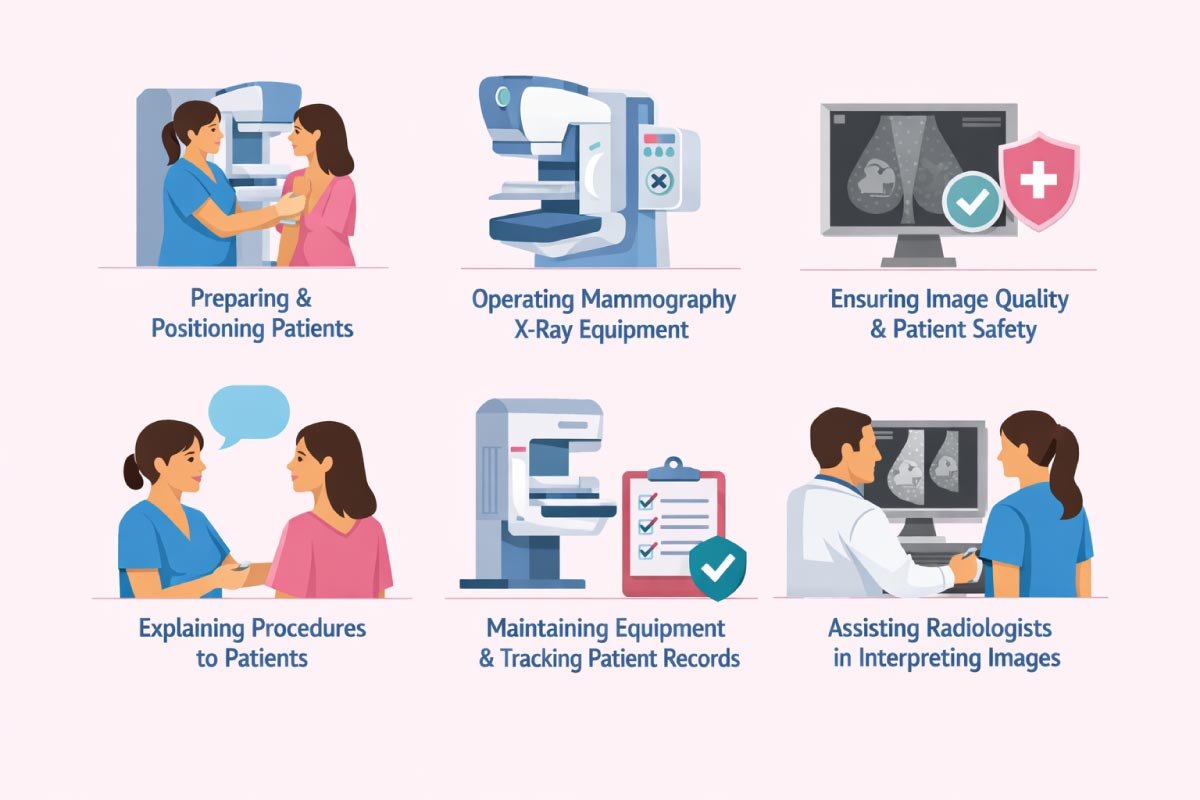
These technologists operate specialized mammography equipment and work closely with radiologists to capture high‑quality diagnostic images.
They often work in hospitals, diagnostic imaging centers, women’s health clinics, and specialized breast imaging facilities.
Key Responsibilities
-
Preparing and positioning patients for mammographic exams
-
Operating specialized mammography X‑ray equipment
-
Ensuring image quality and patient safety
-
Explaining procedures to patients
-
Maintaining equipment and tracking patient records
-
Assisting radiologists in interpreting images
Daily Life of a Mammography Technologist
A mammography technologist’s day involves preparing imaging equipment, positioning patients for breast scans, and capturing high-quality diagnostic images.
They educate and comfort patients, maintain safety standards, and collaborate with radiologists.
Each day balances technical precision, patient care, and detailed record-keeping to support accurate breast cancer detection and treatment.
1.Patient Preparation and Education
Mammography technologists begin by greeting patients warmly, reviewing their medical history, and answering questions.
They clearly explain the mammogram process, including what to expect during the procedure,
how long it will take, and any preparatory steps, helping reduce anxiety and build patient trust.
2.Image Acquisition
Technologists carefully position each patient’s breast to capture high-quality diagnostic images using specialized mammography equipment.
They adjust machine settings, ensure proper angles, and use compression techniques safely to obtain clear images while minimizing discomfort, ensuring accurate results for radiologists to interpret.
3. Quality Control
After capturing images, technologists review them for clarity, proper exposure, and correct positioning.
They identify any artifacts or technical issues and repeat images if necessary, maintaining strict adherence to diagnostic standards
and quality assurance protocols for reliable and accurate mammography results.
4. Record Management
Technologists organize and maintain patient records, entering image files and procedural details into secure computer systems.
Accurate record-keeping supports patient care continuity, ensures compliance with healthcare regulations,
and allows radiologists and other medical staff to quickly access prior imaging for comparison and diagnosis.
5. Patient Support
Providing emotional support is critical, as mammograms can cause anxiety or discomfort.
Technologists communicate compassionately, explain each step, and offer reassurance throughout the procedure,
helping patients feel more comfortable and confident while fostering a positive experience in a sensitive healthcare setting.
Skills & Traits of a Successful Mammography Technologist
Successful mammography technologists combine technical expertise with strong interpersonal skills.
They must be detail-oriented, precise, and knowledgeable about imaging equipment. Empathy, patience, and clear communication are essential for easing patient anxiety,
while critical thinking and problem-solving ensure accurate results and high-quality care in a fast-paced clinical environment.
-
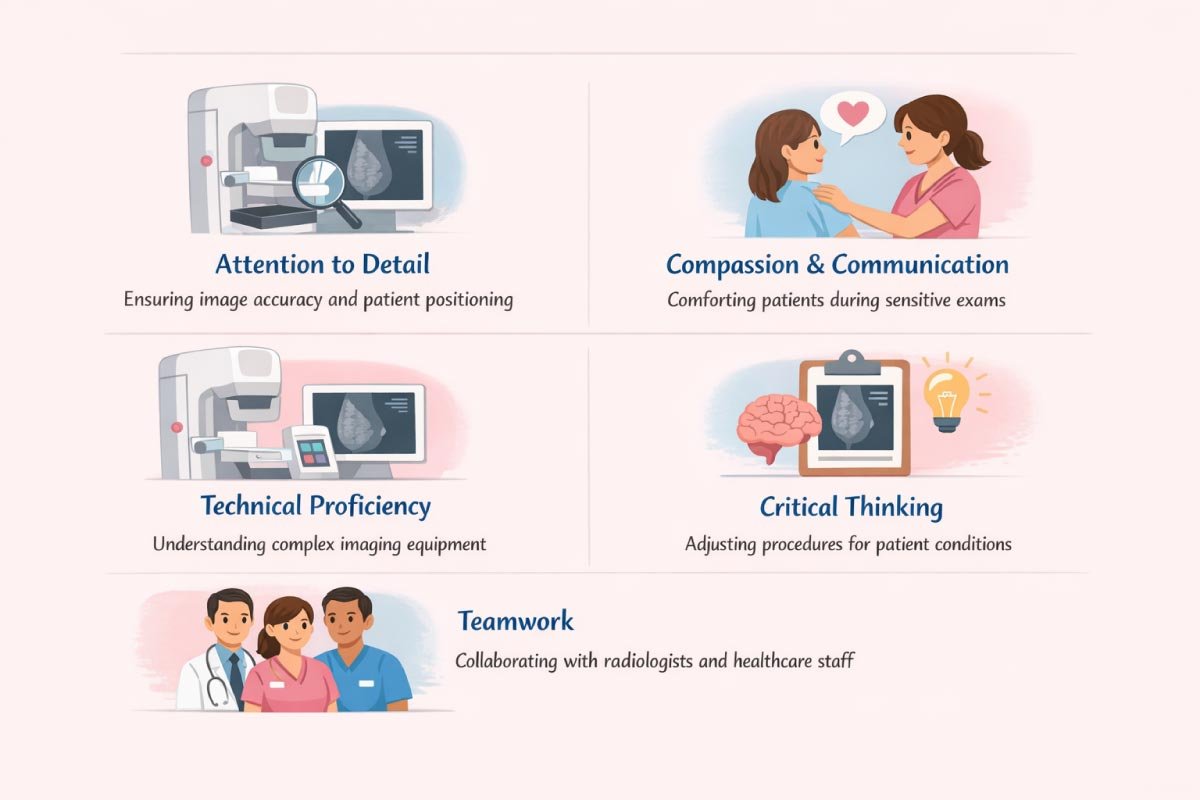
Attention to Detail – Ensuring image accuracy and patient positioning
-
Compassion & Communication – Comforting patients during sensitive exams
-
Technical Proficiency – Understanding complex imaging equipment
-
Critical Thinking – Adjusting procedures for patient conditions
-
Teamwork – Collaborating with radiologists and healthcare staff
Education Requirements
There are several educational pathways toward becoming a mammography technologist, most of which begin in diagnostic medical imaging.
Standard Education Pathways
Becoming a mammography technologist typically begins with completing an accredited radiologic technology program, often at the associate or bachelor’s level.
Coursework includes anatomy, patient care, and imaging principles. Clinical internships provide hands-on experience,
followed by certification in radiography and specialized mammography credentials to ensure competence and professional readiness.
-
Associate Degree in Radiologic Technology – Most common and job‑ready option
-
Bachelor’s Degree in Radiologic Sciences – Preferred for advancement
-
Certificate Programs – For technologists who already have imaging credentials
After education, technologists must complete specific mammography training and clinical hours before certification.
Typical Education Pathway
| Level | Duration | Focus | Outcome |
|---|---|---|---|
| Certificate | 6–12 months | Mammography fundamentals (for certified techs) | Specialized training |
| Associate Degree | 2 years | Radiologic technology & clinical practice | Entry‑level imaging credential |
| Bachelor’s Degree | 4 years | Advanced imaging + healthcare management | Competitive edge for leadership roles |
| Continuing Education | Ongoing | Updated practices, safety, and technology | Maintain certification |
Certification & Licensing
Mammography technologists must obtain professional certification and state licensure to practice.
Certification usually involves passing exams through organizations like the American Registry of Radiologic Technologists (ARRT).
Specialized mammography credentials demonstrate expertise, while state licensure ensures compliance with local regulations, safeguarding patient safety and maintaining high standards of clinical
Key Certifications
-
ARRT (American Registry of Radiologic Technologists) – Mammography specialty credential
-
State Licensure – Some regions require a state X‑ray license
To earn ARRT certification in mammography, candidates must:
-
Complete an accredited imaging or radiologic technology program
-
Complete clinical hours focused in mammography
-
Pass a specialty exam
Certification must be maintained through continuing education and periodic renewal.
How to Become a Mammography Technologist
Becoming a mammography technologist requires a structured approach, combining education, clinical training, and certification.
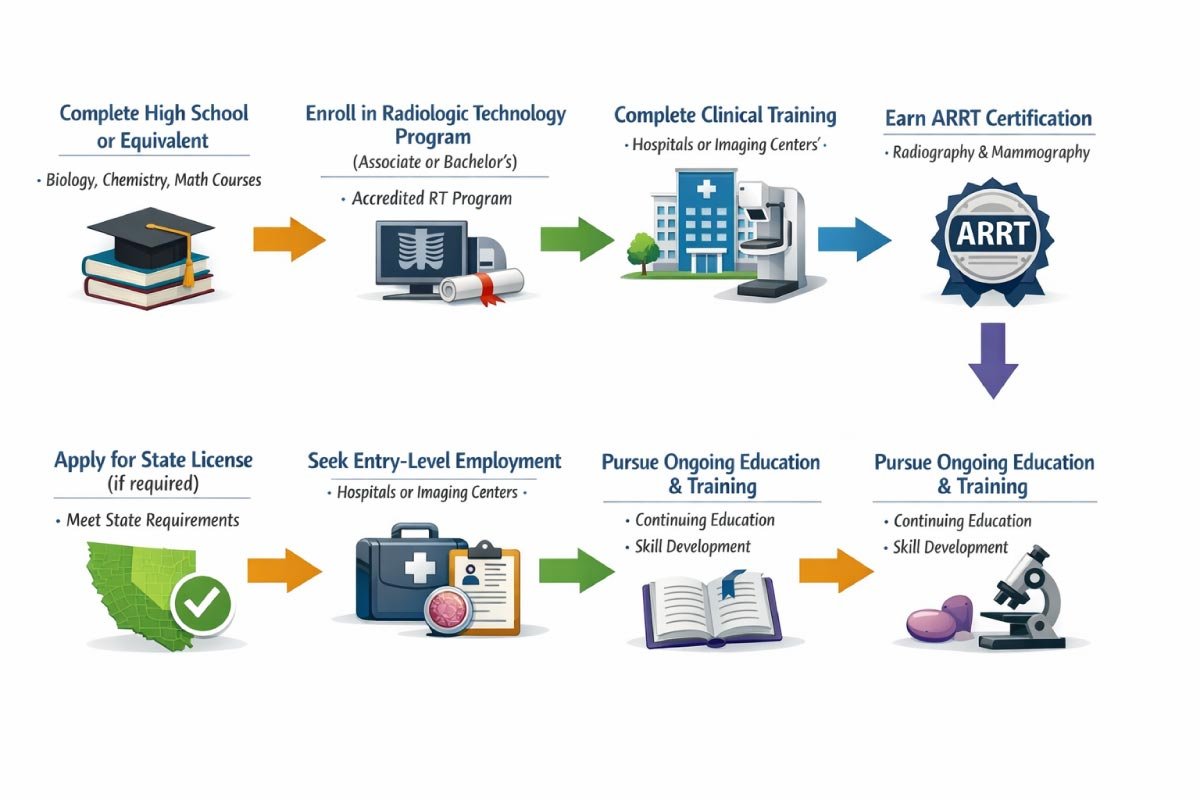
This roadmap outlines the key steps to enter the field successfully and build a foundation for a rewarding career in medical imaging.
1. Complete High School or Equivalent
Focus on science courses such as biology, chemistry, and physics, as well as mathematics.
Strong academic preparation lays the groundwork for understanding radiologic technology concepts, anatomy,
and patient care principles essential for success in further training.
2. Enroll in Radiologic Technology Program
(Associate/Bachelor’s)Choose an accredited Associate’s or Bachelor’s program in radiologic technology.
Coursework includes medical imaging principles, radiation safety, patient positioning, and imaging procedures.
Accredited programs provide the required knowledge and eligibility for professional certification.
3. Complete Clinical Training
– Hospitals or imaging centers Gain hands-on experience in hospitals or imaging centers under supervision.
Clinical rotations allow students to practice patient positioning, operate mammography equipment, adhere to safety protocols, and develop professional communication skills in real-world healthcare settings.
4. Earn ARRT Certification
– General radiography then mammography specialty Obtain certification through the American Registry of Radiologic Technologists (ARRT).
First, get certified in general radiography, then pursue the mammography specialty.
Certification validates competence, enhances employability, and may be required by employers or state regulations.
5. Apply for State License (if required)
Some states require a license to practice mammography. Verify your state’s requirements, submit documentation of education and ARRT certification,
and pass any additional exams to obtain legal authorization to work as a technologist.
6. Seek Entry‑Level Employment
Apply for positions in hospitals, breast imaging centers, or outpatient clinics. Entry-level roles provide continued learning opportunities, exposure to diverse cases,
and a pathway to career advancement while building professional experience.
7. Pursue Ongoing Education and Training
Stay current with technological advancements, safety protocols, and continuing education requirements.
Regular professional development ensures certification maintenance, skill enhancement, and long-term career growth in the evolving field of mammography.
Also Read:
Salary Expectations
Salaries vary based on region, experience, and work setting. Mammography technologists generally earn higher salaries than general radiologic technologists due to the specialized nature of breast imaging.
Average Salary Ranges (Estimates)
| Experience Level | Annual Salary | Hourly Rate |
|---|---|---|
| Entry‑Level | $45,000 – $55,000 | $21 – $26 |
| Mid‑Career | $55,000 – $68,000 | $26 – $33 |
| Experienced | $68,000 – $85,000 | $33 – $41 |
| Supervisory/Lead Roles | $85,000 – $95,000+ | $41 – $46+ |
Note: Salaries fluctuate depending on location, demand, certifications, and employer.
Job Outlook & Demand
Healthcare continues to grow due to an aging population and increasing awareness of preventative care.
Mammography remains a cornerstone of breast cancer screening, especially for women over 40.
According to employment data for radiologic and imaging technologists:
-
Projected growth (2024–2034): ~9–10%, faster than average for all occupations (U.S. Bureau of Labor Statistics).
-
Demand is particularly strong in outpatient imaging centers and specialized women’s health clinics.
Also Read:
Work Settings
Mammography technologists perform their duties in a range of clinical environments, each offering unique experiences, patient populations, and workflow demands.
Choosing the right setting can impact daily responsibilities, scheduling, and opportunities for professional growth,
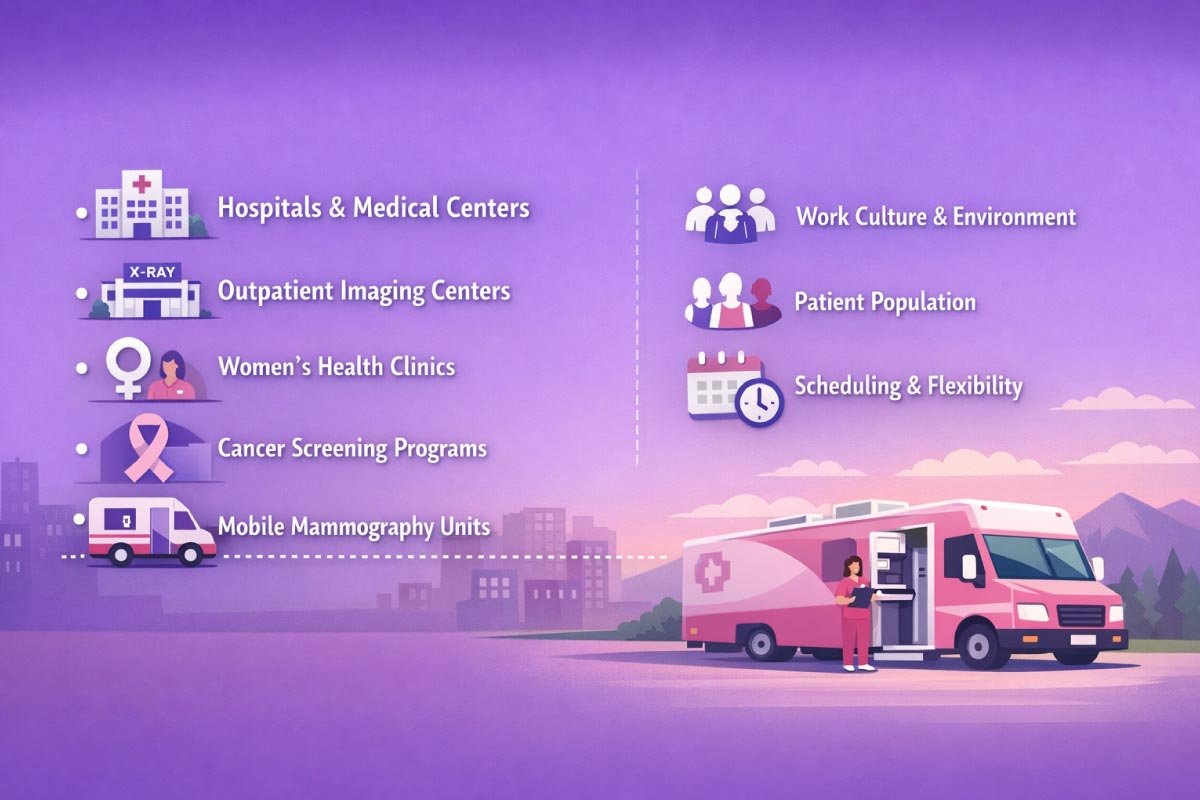
making it important to understand the differences before selecting a workplace.
Common Workplaces
-
Hospitals and medical centers
-
Outpatient imaging centers
-
Women’s health clinics
-
Cancer screening programs
-
Mobile mammography units
Each setting influences work culture, patient population, and scheduling. For example, mobile imaging may involve travel and more flexible hours.
Pros & Cons of the Career
A career as a mammography technologist offers meaningful work, competitive salaries, and opportunities to specialize in breast imaging.
Technologists gain job stability and make a direct impact on patient health.
Challenges include managing patient anxiety, maintaining precision under pressure, and working variable hours in busy clinical settings.
Table: Pros & Cons
| Advantages | Challenges |
|---|---|
| High job satisfaction | Can be emotionally demanding |
| Stable employment | Physically active work |
| Competitive salary | Requires certification & ongoing education |
| Helping in early cancer detection | Involves exposure to radiation (low but present) |
| Flexible work settings | Sensitive patient interactions |
Skills That Boost Your Career
Mammography technologists can advance their careers by developing strong technical proficiency, including expertise in digital imaging and advanced breast imaging techniques.
Communication, patient care, and teamwork skills enhance daily interactions, while continuing education.
and certification in specialized procedures increase opportunities for leadership roles, higher salaries, and professional growth.
-
Advanced imaging skills (e.g., chemosynthesis)
-
Leadership & management training
-
Patient advocacy and communication
-
Quality improvement & safety programs
-
Professional memberships (e.g., ASRT, ACR)
These qualifications can lead to:
-
Lead technologist
-
Clinic coordinator
-
Imaging supervisor or manager
-
Educator or trainer
Continuing Education & Professional Growth
Certification alone is not enough — mammography technologists must stay current with best practices, emerging tech, and safety standards.
Continuing education units (CEUs) may involve:
-
Online courses
-
Workshops and conferences
-
Journal subscriptions
-
Specialty seminars
Maintaining ARRT certification typically requires a mix of CEUs in ethics, safety, and technical updates.
Also Read:
Technology in Mammography
Modern mammography relies on advanced imaging technologies, including digital mammography, 3D chemosynthesis, and computer-aided detection.
These tools enhance image clarity, improve early cancer detection, and streamline workflow.
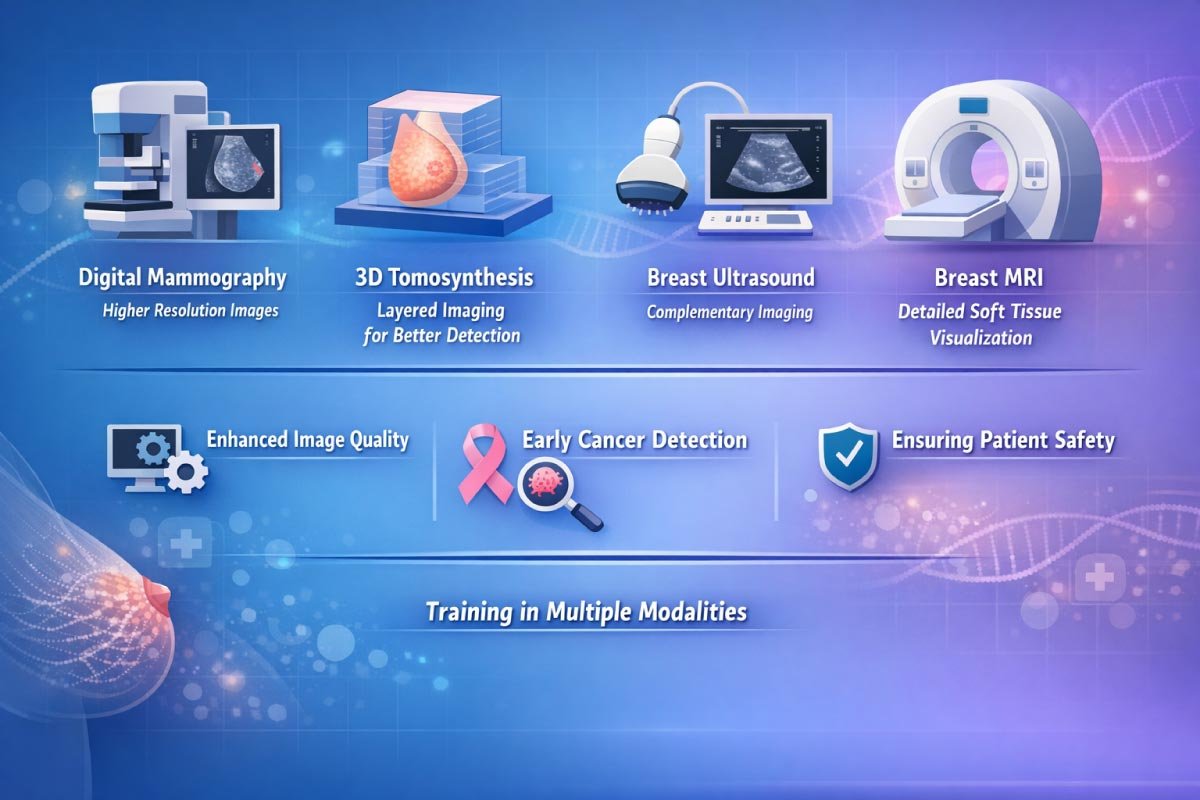
Mammography technologists must stay current with technological advancements, learning to operate, maintain, and optimize equipment while ensuring patient safety and diagnostic accuracy.
Important Technologies
Key technologies in mammography include digital mammography systems, 3D breast tomosynthesis, computer-aided detection (CAD) software, and automated breast ultrasound (ABUS).
These tools improve image quality, enable early cancer detection, and support accurate diagnoses. Proficiency in these technologies allows technologists to deliver precise imaging while enhancing patient safety and care.
-
Digital Mammography – Higher resolution images
-
3D Tomosynthesis – Layered imaging for better detection
-
Breast Ultrasound – Complementary imaging
-
Breast MRI – Detailed soft tissue visualization
Mammography technologists often train in multiple modalities to support comprehensive breast cancer screening services.
Patient Interaction & Compassion
Mammography technologists must combine technical skill with empathy and effective communication.
Guiding patients through procedures, addressing concerns, and easing anxiety are essential for a positive experience.
Compassionate care builds trust, encourages cooperation, and ensures accurate imaging, making patient interaction a vital aspect of professional excellence in mammography.
Mammography technologists often:
-
Reassure nervous patients
-
Explain procedures in simple language
-
Provide emotional support
-
Celebrate early detection
Given the sensitive nature of breast imaging, empathy and communication are fundamental skills.
Also Read:
Final Thoughts: Is This Career Right for You?
A career as a mammography technologist offers stability, meaningful patient interaction, and a deep sense of purpose.
It blends healthcare, technology, and human care — making it ideal for those who enjoy:
- Science and technology
- Direct patient support
- Lifelong learning
- Team collaboration
If you’re passionate about women’s health and want to contribute to early disease detection, this career path may be both fulfilling and future‑ready.

Zak is a dedicated medical and career writer specializing in sonography, healthcare education, and professional development. Through SonographerSalary.com, he shares in-depth insights on sonographer salaries, education pathways, and career tips to help readers build successful futures in medical imaging. His content combines accuracy with practical, easy-to-understand guidance, empowering students and professionals to make confident, informed career decisions.