
A career in medical sonography is becoming one of the most attractive paths in the healthcare industry. Diagnostic medical sonographers play a crucial role in modern medicine by using ultrasound technology to create images of organs, tissues, and blood flow inside the human body.
These images help doctors diagnose medical conditions without invasive procedures. Because of the growing demand for imaging services, many students and healthcare professionals want to understand the sonographer salary chart and how earnings change with experience, specialization, and location.
Salaries for sonographers can vary widely depending on factors such as certification, workplace setting, and geographic region.
In this complete guide, we will explore sonographer salary charts, hourly wages, monthly income, yearly salaries, and factors that influence earnings. If you are considering a career in ultrasound technology or simply want to understand the financial potential of this profession, this guide will give you a clear picture.
What Is a Sonographer?
A sonographer, also called a diagnostic medical sonographer, is a healthcare professional who operates ultrasound equipment to capture images of internal body structures. These images help physicians diagnose and monitor medical conditions.
Sonographers typically work in:
- Hospitals
- Diagnostic imaging centers
- Private clinics
- Maternity centers
- Specialized medical laboratories
They perform different types of ultrasound scans, including abdominal scans, obstetric ultrasounds, vascular studies, and cardiac imaging. Because their work directly supports patient diagnosis, sonographers are considered an essential part of the medical team.
Sonographer Salary Chart
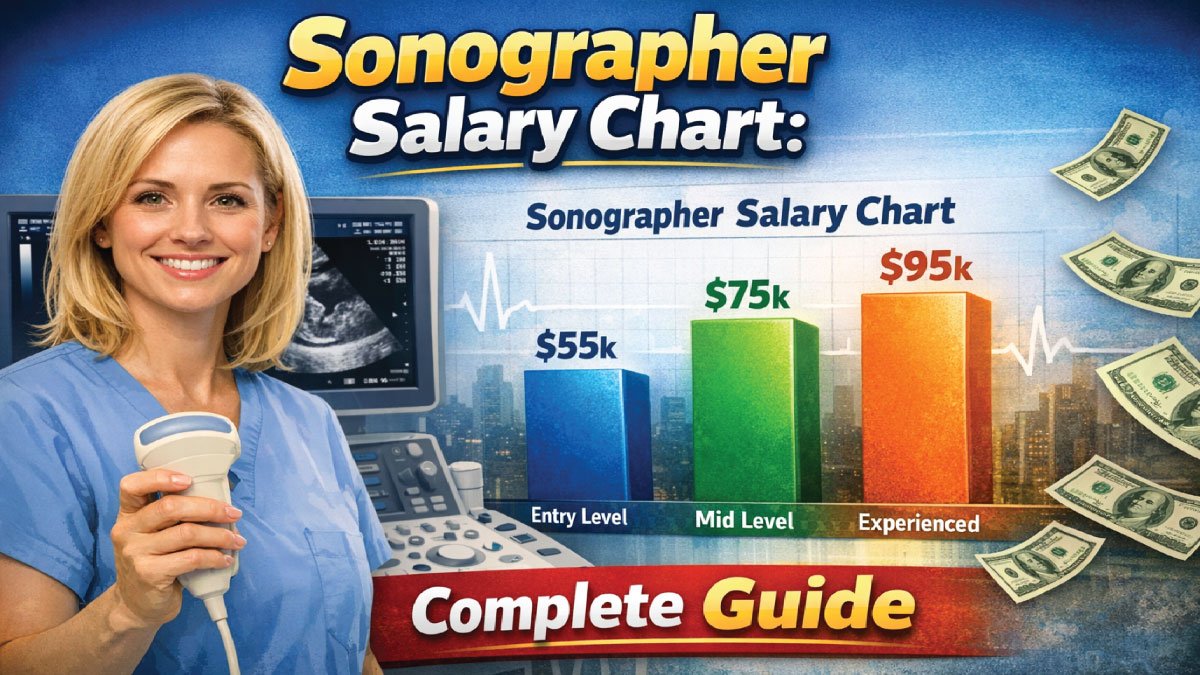
The following chart provides an overview of average sonographer salaries based on experience level in the United States.
| Experience Level | Hourly Salary | Monthly Salary | Yearly Salary |
|---|---|---|---|
| Entry-Level (0–2 years) | $28 – $35 | $4,800 – $6,000 | $58,000 – $72,000 |
| Mid-Level (3–7 years) | $35 – $45 | $6,000 – $7,800 | $72,000 – $93,000 |
| Experienced (8–15 years) | $45 – $55 | $7,800 – $9,500 | $93,000 – $114,000 |
| Senior Sonographer (15+ years) | $55 – $65 | $9,500 – $11,200 | $114,000 – $135,000 |
This sonographer salary chart shows that earnings grow steadily with experience. As professionals gain skills and certifications, they often move into higher-paying roles or specialized fields.
Sonographer Salary Chart by Education Level
Education and certification significantly influence a sonographer’s earning potential. The more advanced the education and credentials, the higher the salary possibilities.
| Education Level | Average Yearly Salary |
|---|---|
| Associate Degree | $65,000 – $80,000 |
| Bachelor’s Degree | $75,000 – $95,000 |
| Advanced Certifications | $90,000 – $115,000 |
| Leadership / Supervisor Roles | $110,000 – $130,000 |
Most sonographers begin their careers with an associate degree in diagnostic medical sonography, but many later pursue additional certifications to increase their salary potential.
Sonographer Salary by Specialization
One of the biggest factors that affect sonographer income is specialization. Some ultrasound fields require advanced training and offer higher pay.
| Sonography Specialty | Average Annual Salary |
|---|---|
| General Sonographer | $75,000 – $90,000 |
| Cardiac Sonographer | $85,000 – $105,000 |
| Vascular Sonographer | $80,000 – $100,000 |
| Pediatric Sonographer | $80,000 – $98,000 |
| OB-GYN Sonographer | $78,000 – $96,000 |
1- Cardiac Sonography
Cardiac sonographers, also called echocardiographers, specialize in imaging the heart. Because heart imaging requires advanced knowledge, salaries are usually higher.
2- Pediatric Sonography
Pediatric sonographers work with infants and children. This role requires patience, specialized techniques, and often pays slightly above average.
3- Vascular Sonography
Vascular sonographers examine blood flow through arteries and veins. Their expertise is essential in detecting blood clots, blockages, and circulatory diseases.
Sonographer Salary by Workplace
Where a sonographer works also impacts earnings. Hospitals typically offer stable salaries, while private clinics and specialized labs may offer higher pay depending on demand.
| Workplace | Average Salary |
|---|---|
| Hospitals | $75,000 – $95,000 |
| Diagnostic Imaging Centers | $80,000 – $100,000 |
| Private Clinics | $70,000 – $90,000 |
| Outpatient Care Centers | $85,000 – $105,000 |
| Medical Laboratories | $78,000 – $98,000 |
Hospitals employ the largest number of sonographers because they provide a wide range of diagnostic imaging services.
Sonographer Salary by State (USA)
Location is another important factor in the sonographer salary chart. Some states pay higher salaries due to higher demand or cost of living.
| State | Average Salary |
|---|---|
| California | $110,000 – $130,000 |
| New York | $95,000 – $115,000 |
| Texas | $80,000 – $98,000 |
| Florida | $78,000 – $95,000 |
| Illinois | $85,000 – $102,000 |
States with large populations and advanced healthcare systems tend to offer better opportunities for sonographers.
Sonographer Hourly Pay Chart
Many healthcare workers prefer to look at salaries in hourly terms. The sonographer hourly pay chart helps illustrate typical earnings.
| Experience | Hourly Wage |
|---|---|
| Beginner | $28 – $32 |
| Early Career | $32 – $38 |
| Mid Career | $38 – $45 |
| Experienced | $45 – $55 |
| Senior Level | $55 – $65 |
Hourly wages often increase with overtime shifts, night shifts, or specialized procedures.
Travel Sonographer Salary Chart
Travel sonographers are professionals who work temporary assignments in different hospitals or clinics across the country. Because they are willing to relocate frequently, they often earn higher salaries.
| Category | Average Pay |
|---|---|
| Hourly Pay | $45 – $70 |
| Weekly Pay | $1,800 – $3,000 |
| Monthly Pay | $7,000 – $12,000 |
| Yearly Pay | $100,000 – $140,000 |
Travel sonographers may also receive additional benefits such as housing allowances, travel reimbursements, and bonuses.
Read More:
Factors That Affect Sonographer Salaries
Several key factors influence how much a sonographer earns. Understanding these factors can help professionals plan their careers and maximize their income.
1. Experience
Experience is one of the biggest salary drivers. As sonographers gain years of hands-on practice, they become more efficient and valuable to healthcare providers.
2. Certification
Professional certifications can significantly increase earning potential. Certifications demonstrate advanced skills and specialization.
3. Specialization
Specialized fields such as cardiac or vascular sonography often offer higher salaries because they require additional expertise.
4. Workplace Setting
Hospitals, imaging centers, and outpatient facilities may offer different pay structures and benefits.
5. Geographic Location
Urban areas and states with high demand for healthcare services usually provide higher salaries.
Benefits and Perks for Sonographers
In addition to competitive salaries, sonographers often receive excellent benefits. These benefits can increase the overall value of the career.
Common benefits include:
- Health and medical insurance
- Retirement plans (401k)
- Paid vacation and sick leave
- Continuing education support
- Flexible work schedules
Some employers also provide bonuses, professional development programs, and tuition reimbursement for advanced certifications.
Career Growth Opportunities for Sonographers
The sonography field offers multiple opportunities for career growth. With experience and additional training, professionals can move into higher-paying roles.
Possible career advancements include:
- Lead Sonographer
- Ultrasound Department Supervisor
- Clinical Instructor
- Imaging Center Manager
- Specialized Sonography Expert
Some sonographers also transition into teaching positions or healthcare administration roles after gaining extensive experience.
Job Outlook for Sonographers
The demand for diagnostic medical sonographers continues to grow. As medical technology advances and the population ages, the need for non-invasive imaging procedures is increasing.
Healthcare experts predict strong job growth for sonographers over the next decade. This makes sonography one of the most stable and rewarding careers in healthcare.
Hospitals, outpatient clinics, and diagnostic centers will continue to hire skilled sonographers to meet the growing demand for imaging services.
Is Sonography a Good Career for Salary?
Yes, sonography is widely considered a high-paying and stable healthcare career. Compared to many other medical professions, it offers a strong salary without requiring extremely long education periods.
Reasons why sonography is a great career choice include:
- Competitive salaries
- High job demand
- Shorter education time compared to many medical careers
- Opportunities for specialization
- Strong job security
For students interested in healthcare and technology, sonography offers a balance between meaningful work and financial stability.
Conclusion
The sonographer salary chart clearly shows that diagnostic medical sonography is a rewarding and financially stable profession. Salaries vary depending on experience, education, specialization, and location, but most sonographers earn competitive wages throughout their careers.
Entry-level sonographers can start with respectable salaries, while experienced professionals and specialists can earn well over six figures. Travel sonographers and advanced specialists often earn even higher incomes.
With increasing demand for medical imaging and continuous advancements in ultrasound technology, the future for sonographers looks bright. For anyone considering a career in healthcare, diagnostic medical sonography offers an excellent combination of job security, career growth, and strong earning potential.

Zak is a dedicated medical and career writer specializing in sonography, healthcare education, and professional development. Through SonographerSalary.com, he shares in-depth insights on sonographer salaries, education pathways, and career tips to help readers build successful futures in medical imaging. His content combines accuracy with practical, easy-to-understand guidance, empowering students and professionals to make confident, informed career decisions.