
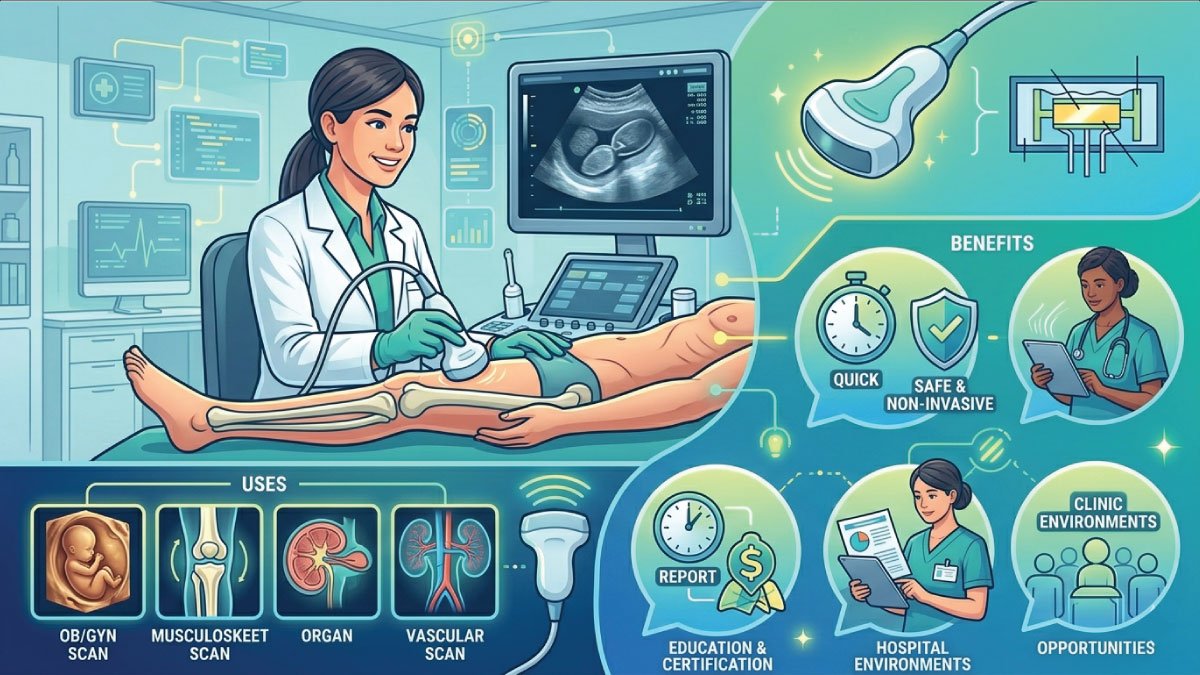
Ultrasound imaging is one of the most widely used and trusted diagnostic tools in modern medicine. Known for its safety, accuracy, and real-time imaging capabilities, this technology plays a vital role in diagnosing and monitoring a wide range of medical conditions.
Whether you are a patient curious about the procedure or someone exploring a career in healthcare, understanding ultrasound imaging can give you valuable insights into its importance.
In this detailed guide, we will explore what ultrasound imaging is, how it works, its types, benefits, applications, and career opportunities in the field.
What Is Ultrasound Imaging?
Ultrasound imaging, also known as sonography, is a medical technique that uses high-frequency sound waves to create images of structures inside the body. Unlike X-rays or CT scans, ultrasound does not use radiation, making it a safer option for many patients, including pregnant women.
The process involves a device called a transducer, which emits sound waves into the body. These waves bounce off internal organs and tissues, and the returning echoes are converted into visual images on a monitor. This allows healthcare professionals to examine organs, blood flow, and even moving structures like a beating heart.
How Does Ultrasound Imaging Work?
The working principle of ultrasound imaging is based on sound wave reflection. When the transducer is placed on the skin, it sends sound waves into the body. Different tissues reflect these waves differently:
- Soft tissues reflect a moderate amount of sound waves
- Fluid-filled areas reflect very little
- Dense tissues or bones reflect more sound waves
The ultrasound machine processes these echoes and forms a real-time image. This real-time capability makes ultrasound especially useful for monitoring movement, such as fetal development or heart function.
Types of Ultrasound Imaging
Ultrasound imaging is not a one-size-fits-all technology. There are several types, each designed for specific medical purposes. Each type uses the same basic sound wave principle but is adapted to examine different parts of the body more effectively. Choosing the right type ensures accurate diagnosis, better imaging quality, and improved patient outcomes in various medical situations.
1. Diagnostic Ultrasound
This is the most common type used to view internal organs such as the liver, kidneys, pancreas, and uterus. It helps doctors identify abnormalities, tumors, or infections. In addition, diagnostic ultrasound is widely used in routine health checkups to monitor organ function, detect cysts, and evaluate pain causes. Its non-invasive nature and quick results make it a first-line imaging choice.
2. Obstetric Ultrasound
Widely known for pregnancy scans, this type monitors the development of a fetus. It helps determine the baby’s growth, position, and overall health during pregnancy. Obstetric ultrasound also allows doctors to estimate the due date, check amniotic fluid levels, and detect congenital abnormalities early. Regular scans provide reassurance to parents and help ensure a safe and healthy pregnancy journey.
3. Doppler Ultrasound
Doppler ultrasound measures blood flow in vessels. It is often used to detect blockages, clots, or circulation issues in arteries and veins. This type of ultrasound is especially important in diagnosing cardiovascular conditions, such as deep vein thrombosis or narrowed arteries. It can also assess blood flow to organs, helping doctors make accurate decisions about treatment and patient care.
4. 3D and 4D Ultrasound
These advanced forms provide more detailed images. 3D ultrasound creates three-dimensional images, while 4D adds motion, allowing real-time viewing of movement. These technologies are commonly used during pregnancy to capture clearer images of the baby’s face and movements. They also assist in detecting structural abnormalities more precisely, improving diagnostic accuracy and enhancing patient understanding.
5. Transesophageal and Transvaginal Ultrasound
These specialized ultrasounds involve inserting the transducer into the body for closer and clearer images of specific organs, such as the heart or reproductive system. Transesophageal ultrasound provides detailed images of the heart, while transvaginal ultrasound offers better views of the uterus and ovaries. These methods are highly effective when external imaging does not provide sufficient detail.
Common Uses of Ultrasound Imaging
Ultrasound imaging is used across multiple medical fields due to its versatility and safety.
1- Pregnancy Monitoring
One of the most common uses is monitoring fetal development. It helps detect any abnormalities and ensures the baby is growing properly.
2- Diagnosing Medical Conditions
Doctors use ultrasound to diagnose issues related to:
- Abdominal organs like the liver and gallbladder
- Kidneys and urinary tract
- Thyroid gland
- Reproductive organs
3- Heart and Blood Flow Analysis
Doppler ultrasound helps evaluate blood circulation and detect cardiovascular problems.
4- Guiding Medical Procedures
Ultrasound is often used to guide procedures such as biopsies, injections, or fluid drainage, ensuring precision and safety.
Benefits of Ultrasound Imaging
Ultrasound imaging offers several advantages that make it a preferred diagnostic tool in modern healthcare. Its combination of safety, efficiency, and accuracy allows doctors to diagnose and monitor conditions with ease. From routine checkups to emergency evaluations, ultrasound provides reliable results without exposing patients to risks commonly associated with other imaging techniques.
1. Safe and Radiation-Free
Unlike other imaging methods, ultrasound does not use harmful radiation, making it ideal for repeated use and sensitive patients. This is especially important for pregnant women and children who require frequent monitoring. Because it relies on sound waves instead of ionizing radiation, ultrasound significantly reduces long-term health risks while still delivering accurate and detailed diagnostic images for medical evaluation.
2. Non-Invasive and Painless
Most ultrasound procedures are simple and painless, requiring minimal preparation. Patients typically feel no discomfort during the scan, aside from slight pressure from the transducer. There are no needles, incisions, or recovery time involved, making it a stress-free experience. This convenience encourages more people to undergo necessary diagnostic tests without fear or hesitation.
3. Real-Time Imaging
The ability to view live images helps doctors assess movement, such as blood flow or fetal activity. Real-time imaging is particularly useful during procedures like biopsies or injections, where precision is crucial. It also allows healthcare providers to observe organ function instantly, improving diagnosis accuracy and enabling immediate medical decisions during examinations or treatments.
4. Cost-Effective
Compared to CT scans or MRI, ultrasound is more affordable, making it accessible to a wider population. Its lower cost benefits both patients and healthcare systems, especially in developing regions. Despite being budget-friendly, it still provides reliable diagnostic information, reducing the need for more expensive tests and helping patients manage their healthcare expenses more effectively.
5. Quick Results
Ultrasound scans are usually completed within minutes, and results are often available quickly. This speed is essential in emergency situations where immediate diagnosis is required. Faster results mean quicker treatment decisions, improving patient outcomes. Additionally, shorter scan times increase efficiency in hospitals and clinics, allowing more patients to be examined in less time.
Limitations of Ultrasound Imaging
While ultrasound is highly useful, it does have some limitations.
- It may not provide clear images of structures behind bones or air-filled organs
- Image quality depends on the skill of the technician
- Obesity or excessive body fat can affect image clarity
Despite these limitations, ultrasound remains an essential diagnostic tool in healthcare.
Preparation for an Ultrasound Scan
Preparation depends on the type of ultrasound being performed, as different body areas require specific conditions for clear imaging. Following the correct guidelines helps improve image quality and ensures accurate diagnosis. Patients should always follow the instructions given by their healthcare provider to avoid delays, repeat scans, or unclear results during the procedure.
1- For Abdominal Ultrasound
Avoid eating for 6–8 hours before the scan to reduce gas in the stomach, which can interfere with clear imaging of internal organs. In some cases, you may be asked to drink water to fill the bladder slightly. Proper preparation allows better visualization of organs like the liver, gallbladder, pancreas, and kidneys for accurate diagnosis.
2- For Pelvic Ultrasound
You may need a full bladder for better imaging, as it helps push the intestines aside and provides a clearer view of pelvic organs. Patients are usually advised to drink several glasses of water before the scan and avoid urinating until the procedure is complete, ensuring more precise and detailed ultrasound images.
3- For Other Scans
Follow specific instructions provided by your healthcare provider, as preparation varies depending on the type of ultrasound. Some scans require no preparation at all, while others may involve dietary restrictions or medication adjustments. Carefully following these instructions ensures the procedure runs smoothly and reduces the chances of needing a repeat examination.
What to Expect During the Procedure
During an ultrasound scan:
- You will lie on an examination table
- A gel is applied to the skin to improve sound wave transmission
- The technician moves the transducer over the area being examined
- Images appear on a screen in real time
The procedure usually takes 15 to 45 minutes and does not require recovery time.
Role of an Ultrasound Technician (Sonographer)
Ultrasound imaging is performed by trained professionals known as sonographers. They play a critical role in capturing accurate images and assisting doctors in diagnosis.
Responsibilities
- Operating ultrasound equipment
- Preparing patients for procedures
- Capturing and analyzing images
- Maintaining equipment and records
Skills Required
- Strong attention to detail
- Technical knowledge
- Communication skills
- Compassion and patient care
Career Opportunities in Ultrasound Imaging
Ultrasound imaging offers promising career opportunities in the healthcare industry.
Education Requirements
To become a sonographer, you typically need:
- An associate or bachelor’s degree in diagnostic medical sonography
- Certification from a recognized medical board
Specializations
Sonographers can specialize in areas such as:
- Obstetrics and gynecology
- Cardiac sonography
- Vascular sonography
- Abdominal imaging
Salary and Growth
The demand for ultrasound technicians continues to grow due to advancements in medical technology. This field offers competitive salaries and job stability, especially in hospitals, clinics, and diagnostic centers.
Read More:
Future of Ultrasound Imaging
The future of ultrasound imaging is incredibly promising, driven by rapid technological innovation and growing demand in healthcare. As medical systems evolve, ultrasound is becoming more advanced, efficient, and widely accessible. These improvements are not only enhancing diagnostic accuracy but also transforming how and where patient care is delivered across the world.
Artificial Intelligence Integration
AI is being used to enhance image analysis, helping doctors detect diseases more quickly and accurately. Advanced algorithms can identify patterns that may be difficult for the human eye to notice, reducing diagnostic errors. AI also speeds up reporting, assists in early disease detection, and supports healthcare professionals in making more informed clinical decisions with greater confidence.
Portable Ultrasound Devices
Compact and portable machines are making ultrasound accessible in remote and emergency settings. These handheld devices allow doctors to perform scans at the patient’s bedside, in ambulances, or in rural areas with limited medical facilities. This mobility improves emergency response, enables faster diagnosis, and expands healthcare access to underserved populations around the globe.
Improved Imaging Quality
Advancements in technology are providing clearer and more detailed images, improving diagnosis and treatment planning. Modern ultrasound machines offer higher resolution, better contrast, and enhanced visualization of tissues and organs. These improvements help detect even small abnormalities early, allowing doctors to create more effective treatment plans and improve overall patient outcomes.
Why Ultrasound Imaging Matters in Modern Healthcare
Ultrasound imaging has revolutionized the way doctors diagnose and treat patients. Its ability to provide real-time, safe, and accurate images makes it an essential tool in modern medicine.
From monitoring pregnancies to detecting life-threatening conditions, ultrasound plays a crucial role in improving patient outcomes. Its affordability and accessibility further enhance its importance, especially in developing regions.
Conclusion
Ultrasound imaging is a powerful, safe, and versatile diagnostic tool that continues to shape the future of healthcare. With its wide range of applications, from pregnancy monitoring to disease diagnosis, it remains an essential part of medical practice.
For patients, it offers a painless and reliable way to understand their health. For aspiring professionals, it opens doors to a rewarding and stable career in the healthcare industry.
As technology continues to evolve, ultrasound imaging will only become more advanced, accessible, and impactful in improving lives around the world.
Read More:

Zak is a dedicated medical and career writer specializing in sonography, healthcare education, and professional development. Through SonographerSalary.com, he shares in-depth insights on sonographer salaries, education pathways, and career tips to help readers build successful futures in medical imaging. His content combines accuracy with practical, easy-to-understand guidance, empowering students and professionals to make confident, informed career decisions.