

In the expanding world of healthcare, medical imaging plays a vital role in diagnosing and treating disease.
Among the imaging specialists, vascular sonographers hold a unique and critical role — using ultrasound technology to assess blood vessels and blood flow in the body.
This field blends technical expertise with patient care and is ideal for those who enjoy a mix of hands‑on work and clinical interaction.
In this comprehensive guide, we’ll unpack:
-
What a vascular sonographer is
-
What they do on a day‑to‑day basis
-
Required education, certification, and training
-
Salary expectations and career outlook
-
What skills make you successful in this career
-
Career advancement opportunities
What Is a Vascular Sonographer?
A vascular sonographer is a healthcare professional who specializes in imaging and evaluating the body’s circulatory system — including arteries, veins, and lymphatic vessels — using ultrasound technology.
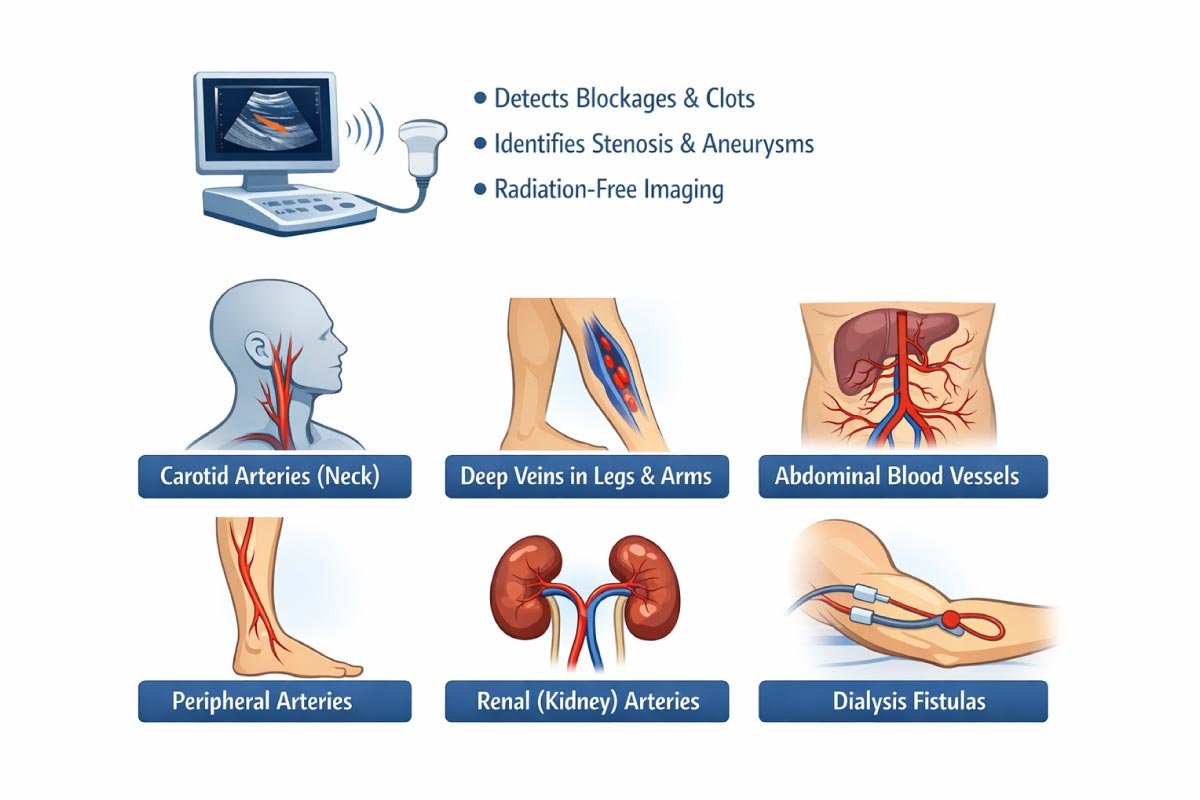
Ultrasound uses high‑frequency sound waves to create images in real time. In vascular sonography,
these images help clinicians detect blockages, clots, narrowing of vessels (stenosis), aneurysms, and other conditions that impact blood flow.
Unlike x‑rays or CT scans, ultrasound does not use ionizing radiation, making it a safer option for many patients.
Key Focus Areas
Vascular sonographers specialize in imaging and assessing blood flow within the body’s vessels.
Their work helps detect blockages, clots, or abnormalities that can affect overall circulation.
Accurate evaluation of these areas is critical for diagnosis, treatment planning, and monitoring patient health.
Vascular sonographers often examine:
-
Carotid arteries (neck)
-
Deep veins in legs and arms
-
Abdominal blood vessels
-
Peripheral arteries
-
Renal (kidney) arteries
-
Fistulas in dialysis patients
What Does a Vascular Sonographer Do?
Vascular sonographers use ultrasound technology to examine blood vessels, helping diagnose circulatory problems and monitor treatment progress.
They collaborate closely with physicians, prepare patients for imaging, and ensure high-quality diagnostic images.
Their work plays a vital role in preventing serious vascular complications.
1- Clinical Duties
Clinical duties of a vascular sonographer focus on patient care, precise imaging, and accurate data collection.
They ensure patients are comfortable, use specialized equipment to assess vascular health, and document findings meticulously.
Their work supports diagnosis, treatment planning, and ongoing monitoring of circulatory conditions.
-
Prepare and position patients for imaging.
-
Operate ultrasound equipment to scan blood vessels.
-
Capture accurate images and measurements of blood flow.
-
Use Doppler ultrasound to analyze velocity and direction of blood flow.
-
Identify abnormalities such as blockages, aneurysms, or disease.
-
Record and organize diagnostic information.
2- Patient‑Centered Duties
Vascular sonographers prioritize patient well-being while performing diagnostic procedures.
They communicate clearly, address concerns, and create a calm environment to reduce anxiety.
Ensuring comfort and safety is essential, as is offering emotional support to patients who may be experiencing pain or stress during their vascular examinations.
-
Explain procedures to put patients at ease.
-
Ensure patient comfort and safety.
-
Support patients emotionally, especially those in pain or distress.
3- Collaboration
Vascular sonographers often work as part of a multidisciplinary healthcare team.
They coordinate with physicians and specialists to share insights, ensure accurate diagnoses, and contribute to treatment planning.
Effective communication and teamwork are essential to deliver high-quality patient care and achieve optimal clinical outcomes.
-
Work closely with radiologists, vascular surgeons, cardiologists, and physicians.
-
Provide detailed reports for doctors to inform treatment plans.
This combination of technical skill, communication, and clinical judgment makes vascular sonography both challenging and rewarding.
Vascular Sonographer vs. Other Sonography Specialties
Ultrasound imaging encompasses several specialties, each focusing on different parts of the body.
Vascular sonographers specialize in blood vessels and circulation, while others may focus on the heart, abdomen, or pregnancy.
Understanding these differences helps clarify the unique skills, responsibilities, and work environments of each sonography field.
1- Ultrasound Specialties Comparison
This table provides a concise comparison of key ultrasound specialties, highlighting their focus areas, typical patient groups, and essential skills.
From vascular to abdominal imaging, each field requires specific expertise, such as Doppler techniques for blood flow or fetal measurements in obstetrics, guiding career choices in sonography.
| Specialty | Focus Area | Typical Patients | Primary Skills |
|---|---|---|---|
| Vascular Sonography | Blood vessels and flow | Adults with vascular disorders | Doppler, vascular anatomy |
| Obstetric Sonography | Pregnancy and fetal imaging | Pregnant women | Fetal measurements, obstetric anatomy |
| Cardiac Sonography | Heart structure and function | Cardiac patients | Echo imaging, cardiac physiology |
| Abdominal Sonography | Organs (liver, kidneys, gallbladder, pancreas) | General diagnostic imaging | Organ imaging, pathology identification |
Vascular sonography often requires deeper knowledge of blood flow dynamics and Doppler techniques.
Discover More:
Education Requirements
Education is a crucial step toward a successful career in vascular sonography.
Proper training builds strong foundations in anatomy, ultrasound physics, and vascular imaging techniques.
Accredited academic programs also provide supervised clinical experience, ensuring graduates develop the technical competence and professional confidence needed in real-world healthcare settings.
Typical Educational Path
1. High School Diploma or Equivalent
A strong academic foundation is essential before entering a vascular sonography program.
High school education helps students develop basic scientific knowledge, analytical thinking, and communication skills.
Early preparation in relevant subjects improves readiness for advanced medical coursework and supports long-term success in diagnostic imaging careers.
2. Associate or Bachelor’s Degree
Pursuing a formal degree provides in-depth education and practical training required for vascular sonography.
These programs combine classroom instruction with hands-on clinical experience, helping students master imaging techniques, patient care, and medical terminology.
Graduates gain the qualifications needed to enter the profession with confidence and credibility.
3. Clinical Training / Internship
Clinical training allows students to apply classroom knowledge in real healthcare settings.
Through supervised practice, they develop scanning accuracy, patient interaction skills, and professional confidence.
This hands-on experience is essential for mastering vascular imaging techniques and preparing for certification exams and entry-level employment.
4. Certification (highly recommended)
Professional certification demonstrates competence, credibility, and commitment to high clinical standards.
It validates a sonographer’s knowledge of vascular imaging, safety protocols, and diagnostic accuracy.
Earning certification also improves job prospects, employer confidence, and long-term career advancement within competitive healthcare environments.
Completing a structured program ensures a strong foundation in anatomy, physiology, ultrasound physics, instrumentation, and patient care.
5- Education Pathway Overview
This table outlines the common education pathways for aspiring sonographers, showing required study time and typical coursework at each level.
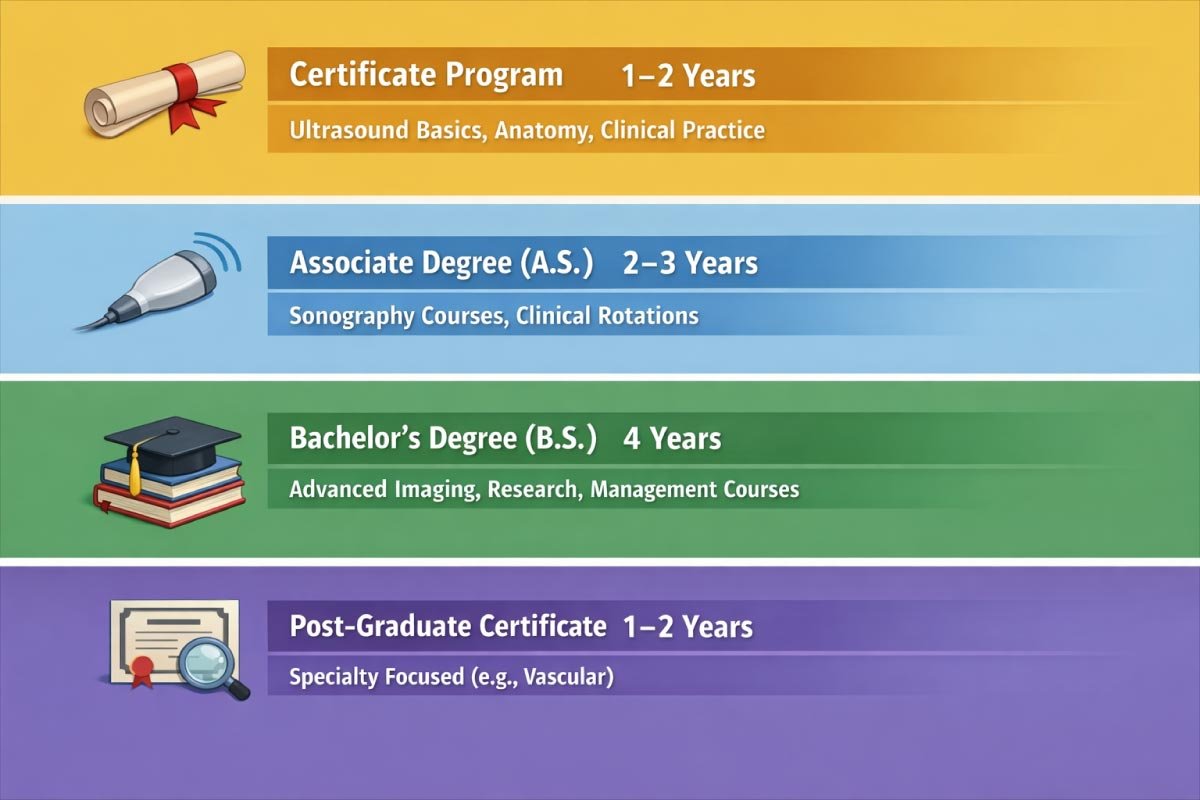
From certificate programs to bachelor’s degrees, these options allow students to choose a route that matches their career goals, specialization interests, and desired level of clinical training.
| Education Level | Time to Complete | Typical Coursework |
|---|---|---|
| Certificate Program | 1 – 2 years | Ultrasound basics, anatomy, clinical practice |
| Associate Degree (A.S.) | 2 – 3 years | Sonography courses, clinical rotations |
| Bachelor’s Degree (B.S.) | 4 years | Advanced imaging, research, management courses |
| Post‑Graduate Certificate | 1 – 2 years | Focused on specialty (e.g., vascular) |
Most vascular sonographers complete an associate degree or a certificate program combined with clinical hours.
Discover More:
Certification and Licensure
Certification and licensure help ensure vascular sonographers meet professional and ethical standards.
These credentials confirm technical competence, patient safety awareness, and clinical knowledge.
While requirements vary by region, obtaining recognized certification greatly enhances employability, professional credibility, and opportunities for career growth within the healthcare field.
Certification
Although certification requirements vary by country and institution, in the U.S. and many other regions,
the American Registry for Diagnostic Medical Sonography (ARDMS) is widely recognized.
Key Credentials
-
RDMS (Registered Diagnostic Medical Sonographer)
-
General credential that requires exams in physics and specialties.
-
-
RVT (Registered Vascular Technologist)
-
Vascular‑specific credential demonstrating proficiency in vascular imaging.
-
Certification proves competence and significantly improves job prospects and earning potential.
Licensure
Licensure and certification play an important role in professional credibility for sonographers.
While only some states require formal licensure, most employers strongly prefer nationally recognized certifications.
The table below compares major credentials, their governing organizations, specialization focus areas, and the career advantages they offer within diagnostic medical sonography.
Certification Overview
| Credential | Governing Body | Focus | Benefits |
|---|---|---|---|
| RDMS | ARDMS | General sonography | Greater job mobility, credibility |
| RVT | ARDMS | Vascular sonography | Employer preference, clinical expertise |
| CCI Vascular (optional) | CCI | Vascular specialty | Additional credential, can enhance specialization |
Salary and Outlook
Salary and job outlook are major considerations when choosing a healthcare career. Vascular sonography offers competitive earnings and long-term stability due to the growing need for diagnostic imaging.
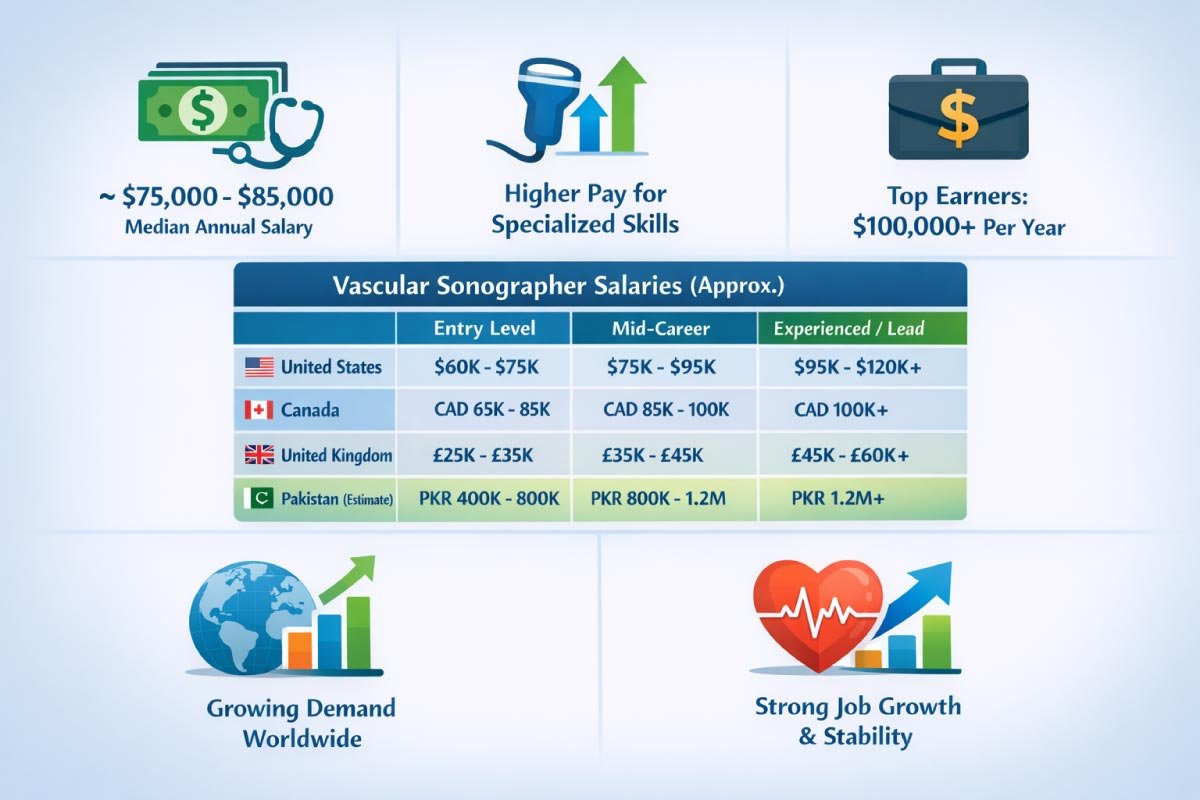
Demand continues to rise as populations age and vascular diseases become more common worldwide.
Average Salary Data
Understanding salary ranges helps aspiring vascular sonographers evaluate career potential and financial stability.
Earnings vary based on specialization, experience level, geographic location, and healthcare setting.
Reviewing current wage estimates provides realistic expectations and highlights the long-term earning opportunities available within this growing diagnostic imaging profession.
-
Median annual salary for diagnostic medical sonographers: ~$75,000 – $85,000 USD
-
Vascular sonographers often earn slightly more due to specialized skills
-
Experienced professionals or leaders (e.g., lead sonographers) can exceed six figures (>$100,000 USD)
(Note: Salaries vary by country. In Pakistan, the range may be lower due to regional healthcare economics — around PKR 600,000 – 1,200,000 annually for experienced sonographers — but these figures can fluctuate with employer and location.)
Vascular Sonographer Salary Snapshot (Approx.)
This table provides a snapshot of vascular sonographer salaries across different regions and career stages.
From entry-level to experienced roles, earnings vary by location, reflecting factors like demand, cost of living, and healthcare infrastructure.
Understanding these trends helps guide career planning and financial expectations in sonography.
| Region | Entry Level | Mid‑Career | Experienced / Lead |
|---|---|---|---|
| United States | $60,000 – $75,000 USD | $75,000 – $95,000 USD | $95,000 – $120,000+ USD |
| Canada | CAD 65,000 – CAD 85,000 | CAD 85,000 – CAD 100,000 | CAD 100,000 + |
| United Kingdom | £25,000 – £35,000 | £35,000 – £45,000 | £45,000 – £60,000+ |
| Pakistan (estimate) | PKR 400,000 – 800,000 | PKR 800,000 – 1,200,000 | PKR 1,200,000 + |
Job Growth Outlook
Healthcare demand is rising globally due to aging populations, increased screening, and a focus on early detection of vascular diseases like stroke and heart disease.
Employment for sonographers is projected to grow faster than average compared to other occupations, making this a stable and future‑proof career choice.
Discover More:
Skills That Make You Successful
Excelling as a vascular sonographer combines technical expertise, critical thinking, and strong interpersonal abilities.
Beyond mastering imaging techniques, professionals must interpret results accurately, communicate effectively with patients and medical teams, and adapt to fast-paced healthcare environments to provide high-quality care.
Technical Skills
Vascular sonographers rely on precise technical abilities to capture and analyze diagnostic images.
Mastery of ultrasound and Doppler equipment, combined with deep anatomical knowledge, ensures accurate assessments.
Strong technical competence allows sonographers to troubleshoot equipment, maintain quality standards, and support effective clinical decision-making.
-
Proficiency with ultrasound and Doppler technology
-
Ability to troubleshoot equipment issues
-
Strong understanding of anatomy and physiology
-
Accuracy in image capture and interpretation
Soft Skills
Success in vascular sonography requires more than technical ability.
Strong interpersonal skills enhance patient care, foster teamwork, and support accurate clinical outcomes.
Sonographers must communicate clearly, demonstrate empathy, think critically, and remain calm under pressure to ensure both patients and medical teams receive the best possible support.
-
Excellent communication with patients and healthcare teams
-
Empathy and patience (many patients are anxious or in pain)
-
Critical thinking and problem‑solving
-
Ability to work under pressure
Work Environments
Vascular sonographers have diverse career settings, ranging from hospitals to specialized clinics. Workplaces vary in pace, patient population, and scope of practice.
Understanding these environments helps professionals choose roles that match their skills, lifestyle preferences, and career goals, while contributing effectively to patient care.
-
Hospital radiology departments
-
Outpatient imaging centers
-
Private physician offices (e.g., cardiology, vascular surgery clinics)
-
Research facilities
-
Mobile imaging services
Some sonographers may have on‑call responsibilities, especially in hospital settings.
Career Advancement & Specializations
A career in vascular sonography offers opportunities to expand expertise, take on leadership roles, and explore specialized areas.
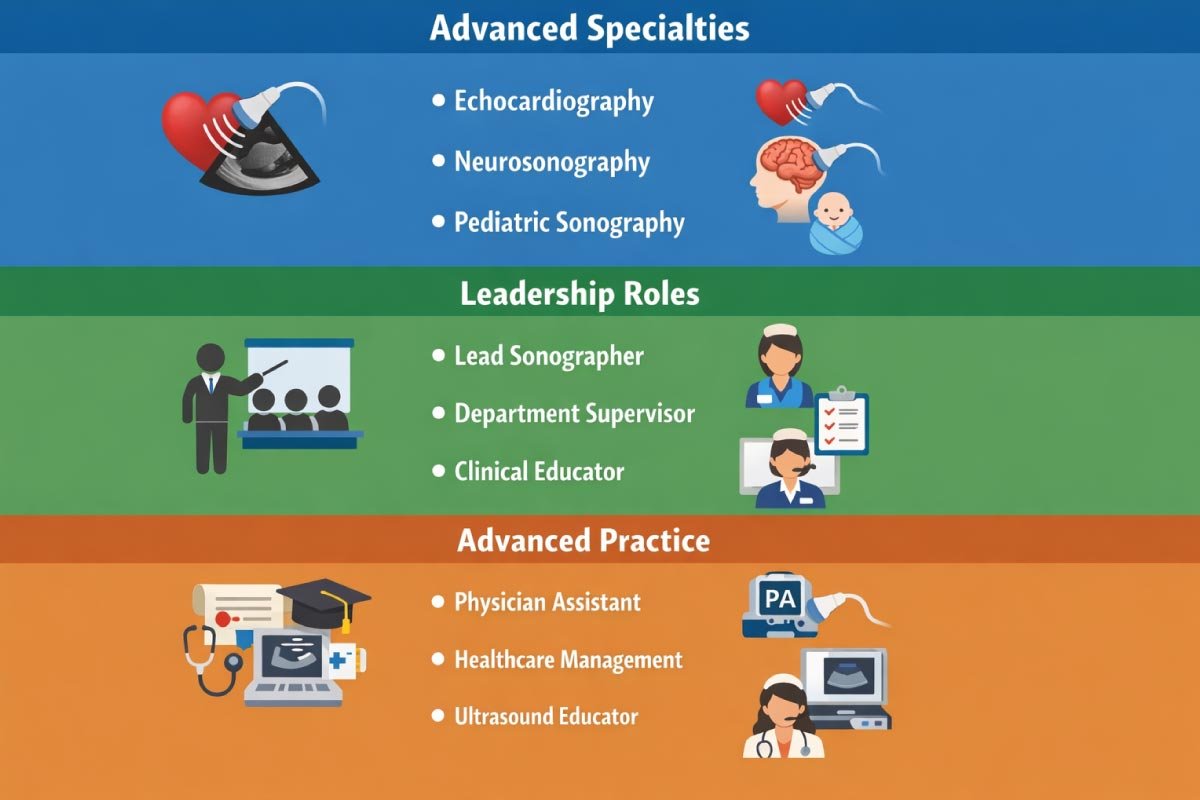
Professionals can pursue advanced certifications, teach in academic programs, or contribute to research.
Continuous learning and skill development help sonographers grow professionally and increase their impact in healthcare.
1- Advanced Specialties
Vascular sonographers can further specialize in areas that require additional expertise and training.
These advanced fields allow professionals to focus on specific patient populations or organ systems,
enhancing diagnostic skills and career opportunities while contributing to highly specialized patient care.
-
Echocardiography (cardiac ultrasound)
-
Neurosonography
-
Pediatric sonography
2- Leadership Roles
Experienced vascular sonographers can transition into leadership positions, guiding teams, mentoring junior staff, and shaping department operations.
These roles require a combination of clinical expertise, management skills, and effective communication, offering opportunities to influence patient care quality and advance the profession.
-
Lead Sonographer
-
Sonography Department Supervisor
-
Clinical Educator / Trainer
3- Advanced Practice
Vascular sonographers can pursue advanced practice roles by obtaining further education or certifications.
These positions allow professionals to expand their responsibilities, influence healthcare delivery, and take on leadership or teaching roles,
combining clinical expertise with broader healthcare knowledge to shape patient care and train the next generation.
-
Physician Assistant
-
Healthcare management
-
Ultrasound educator or instructor
Discover More:
Pros and Cons of the Career
A career as a vascular sonographer offers rewarding opportunities but also some challenges.
Understanding the advantages and potential drawbacks helps aspiring professionals make informed decisions,
balancing lifestyle, career growth, and personal satisfaction in a dynamic and patient-focused healthcare field.
Pros
- High demand and stable employment
- Strong salary potential
- Meaningful patient contact
- Non‑invasive diagnostic modality
- Opportunities for specialization and growth
Cons
- May require evening or on‑call shifts
- Physically demanding (long hours standing)
- Requires continuous education and certification maintenance
Conclusion
A career as a vascular sonographer offers a powerful blend of healthcare impact, job stability, and technical challenge.
If you enjoy working with advanced imaging tools and supporting patients through diagnosis and care, this specialty can be deeply rewarding.
With growing global demand for vascular diagnostics, strong salary prospects, and pathways for further advancement, it remains a compelling choice for aspiring healthcare professionals.

Zak is a dedicated medical and career writer specializing in sonography, healthcare education, and professional development. Through SonographerSalary.com, he shares in-depth insights on sonographer salaries, education pathways, and career tips to help readers build successful futures in medical imaging. His content combines accuracy with practical, easy-to-understand guidance, empowering students and professionals to make confident, informed career decisions.