

The field of medical imaging plays a pivotal role in modern healthcare. Among its professionals, sonographers — also called ultrasound technologists — are essential for diagnosing, monitoring, and guiding treatment for countless health conditions.
But while many sonographers work full-time in hospitals or clinics, a growing number choose a per diem pathway.
In this blog post, we’ll unpack everything you need to know about per diem sonographers — what they are, how the role differs from traditional full‑time sonography jobs,
the education and certification requirements, day‑to‑day responsibilities, pay and benefits, career prospects, and tips on getting started.
What Is a Per Diem Sonographer?
A per diem sonographer is a diagnostic medical imaging professional hired on a casual, as‑needed basis rather than as a full‑time or part‑time employee.
“Per diem” is Latin for “per day,” and in employment terms it means working shifts that are scheduled when and as needed by the healthcare facility.
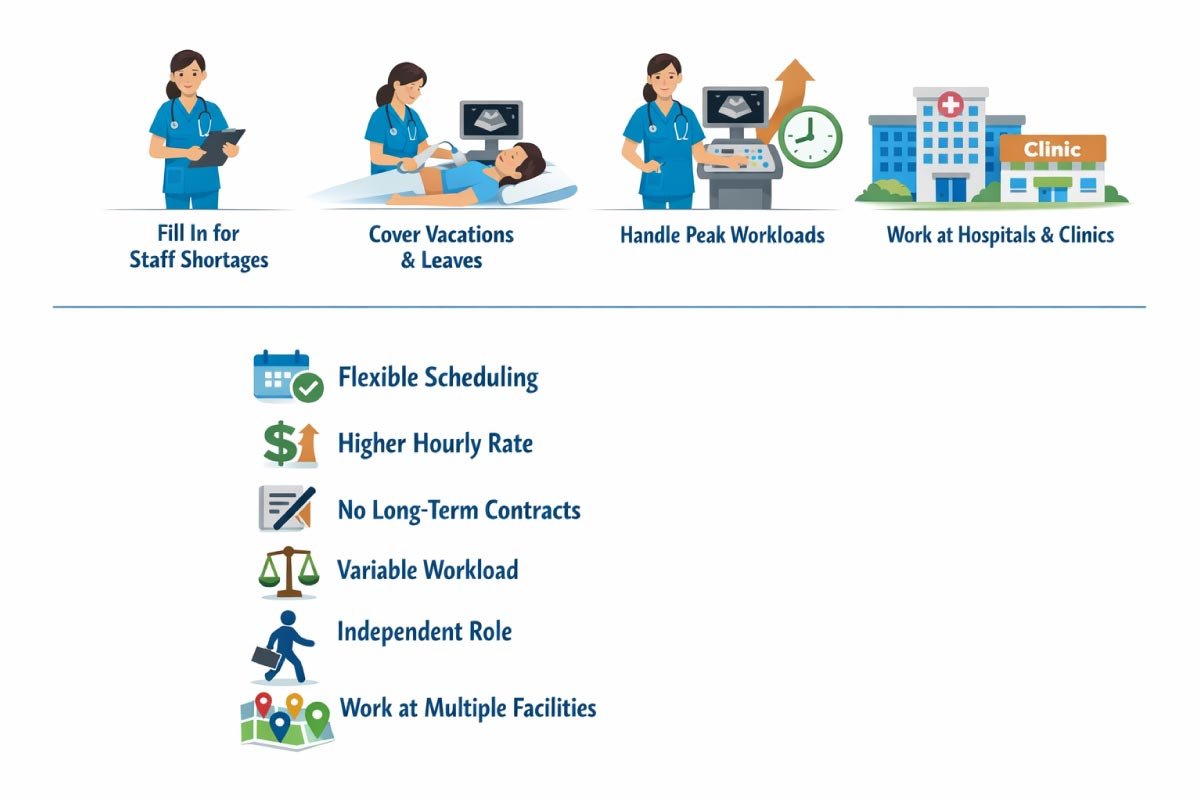
Per diem sonographers fill in for staff shortages, cover peak workloads, step in during vacations or leaves, and help clinics and hospitals maintain efficiency without long‑term staffing commitments.
Key Characteristics of Per Diem Sonographers
Per diem sonographers are adaptable, self-motivated, and skilled at quickly integrating into new clinical environments.
They excel in time management, patient communication, and technical proficiency. Flexibility, reliability,
and the ability to handle diverse cases independently are essential traits for success in this dynamic, on-demand work setting.
-
Flexible scheduling — work only when you choose.
-
Higher hourly rate — often greater than staff employees to compensate for lack of benefits.
-
No long‑term contracts — you accept shifts as available.
-
Variable workload — may be consistent or sporadic depending on facility needs.
-
Independent role — may work for multiple facilities if permitted.
How Does a Per Diem Sonographer Differ from a Traditional Sonographer?
A per diem sonographer works on an as-needed, flexible schedule, often covering shifts in multiple facilities,
while a traditional sonographer holds a full-time or part-time permanent position with set hours and benefits.
Per diem roles offer higher hourly rates but typically lack benefits and job security.
Per Diem vs. Full‑Time Sonographer
| Feature | Per Diem Sonographer | Full‑Time/Part‑Time Sonographer |
|---|---|---|
| Employment Type | Casual, as‑needed | Permanent (FT/PT) |
| Schedule | Flexible, varies weekly | Set schedule |
| Benefits (Insurance, PTO) | Usually not included | Typically included |
| Hourly Pay | Often higher | Lower hourly rate but stable |
| Job Security | Variable | Higher |
| Facility Commitment | Work at one or several locations | Usually tied to one facility |
| Overtime | Only if schedule agreed | Potential based on hours |
Job Responsibilities
Sonographers perform diagnostic imaging procedures using ultrasound equipment to capture images of organs, tissues, and blood flow.
They prepare patients, operate machinery, analyze preliminary results, and collaborate with physicians to aid diagnosis.
Additional duties include maintaining equipment, documenting findings, and ensuring patient comfort and safety throughout the procedure.
Common responsibilities include:
-
Preparing and maintaining ultrasound equipment
-
Explaining procedures and answering patient questions
-
Performing diagnostic ultrasound examinations, including:
-
Abdominal scans
-
Obstetric and gynecologic scans
-
Vascular Doppler studies
-
Small parts & musculoskeletal imaging
-
-
Capturing high‑quality images for interpretation
-
Ensuring patient comfort and safety
-
Documenting and reporting findings
-
Adhering to facility policies and imaging standards
In many settings, per diem sonographers must also handle administrative tasks — like charting, ordering imaging media, or communicating results — with minimal supervision.
Education and Training Requirements
A career as a sonographer requires formal education in diagnostic medical sonography, typically through an accredited associate or bachelor’s degree program.
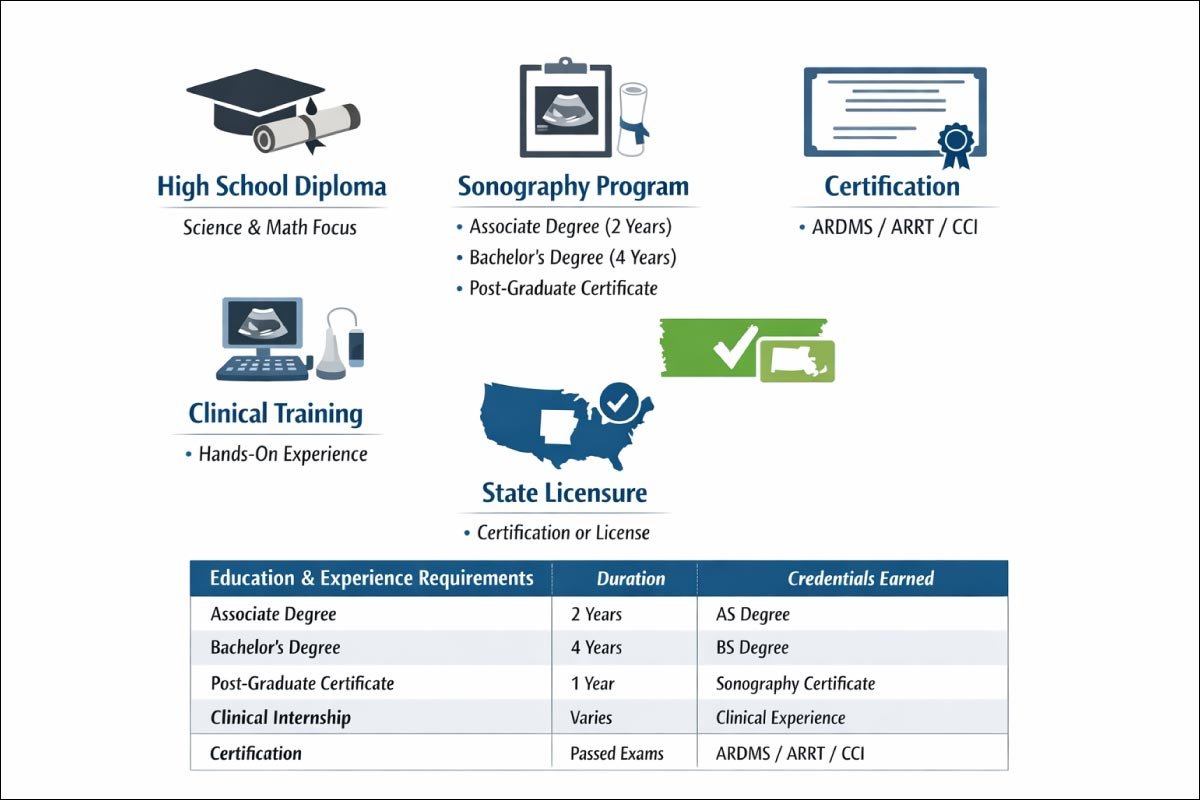
Coursework includes anatomy, physiology, physics, and medical imaging technology, complemented by supervised clinical experience.
Ongoing training and continuing education are essential to maintain certification and stay current with advancements.
Typical Pathway to Becoming a Sonographer
Becoming a sonographer usually begins with completing a high school diploma with a focus on science and math.
Next, aspiring professionals pursue an accredited sonography program—either an associate or bachelor’s degree—followed by hands-on clinical training.
Certification and state licensure finalize the pathway to practice.
-
High School Diploma or Equivalent
Essential prerequisite. -
Sonography Program
Choose an accredited program such as:-
Associate Degree in Diagnostic Medical Sonography (2 years)
-
Bachelor’s Degree (4 years)
-
Post‑Graduate Certificate (for those already in allied health)
-
-
Clinical Training / Internship
Hands‑on experience is part of accredited programs and critical for skill development. -
Certification
Most employers require professional certification, commonly from:-
American Registry for Diagnostic Medical Sonography (ARDMS)
-
American Registry of Radiologic Technologists (ARRT)
-
Cardiovascular Credentialing International (CCI)
-
-
State Licensure
Some states require licensure; others accept certification.
Education & Experience Requirements
| Level | Typical Duration | Credentials Earned |
|---|---|---|
| Associate Degree | 2 years | Associate of Science (AS) |
| Bachelor’s Degree | 4 years | Bachelor of Science (BS) |
| Post‑Graduate Certificate | 1 year | Certificate in Sonography |
| Clinical Internship | Varies | Clinical hours + experience |
| Certification | Passed Exams | ARDMS / ARRT / CCI |
Certification — Why It Matters
Certification validates a professional’s skills and knowledge, ensuring they meet industry standards for safety and quality care.
It enhances credibility, increases job opportunities, and often leads to higher pay. Many employers and states require certification,
making it a crucial step for career advancement and professional recognition.
Common Certifications
-
RDMS (Registered Diagnostic Medical Sonographer) — abdomen, obstetrics & gynecology
-
RDCS (Registered Diagnostic Cardiac Sonographer) — heart imaging
-
RVT (Registered Vascular Technologist) — vascular ultrasound
Certification typically requires:
-
Completion of an accredited sonography program
-
Passing one or more examinations
-
Adhering to continuing education requirements
Many hospitals, imaging centers, and outpatient clinics strongly prefer or require certified sonographers, especially for per diem work where independence is expected.
Career Path and Specializations
This career offers multiple pathways and opportunities for specialization. Professionals can advance from entry-level roles to senior or supervisory positions, or focus on niche areas such as cardiovascular, musculoskeletal, or obstetric imaging.
Additional certifications and continuing education enhance expertise, opening doors to research, education, or management roles.
-
Abdominal Sonography
-
Obstetrics and Gynecology
-
Cardiac (Echocardiography)
-
Vascular Sonography
-
Musculoskeletal Ultrasound
-
Pediatric Sonography
Specialization can increase demand and pay potential.
Salary & Compensation
Unlike salaried positions, per diem sonographers are usually paid hourly. While they may not receive traditional benefits (health insurance, paid time off),
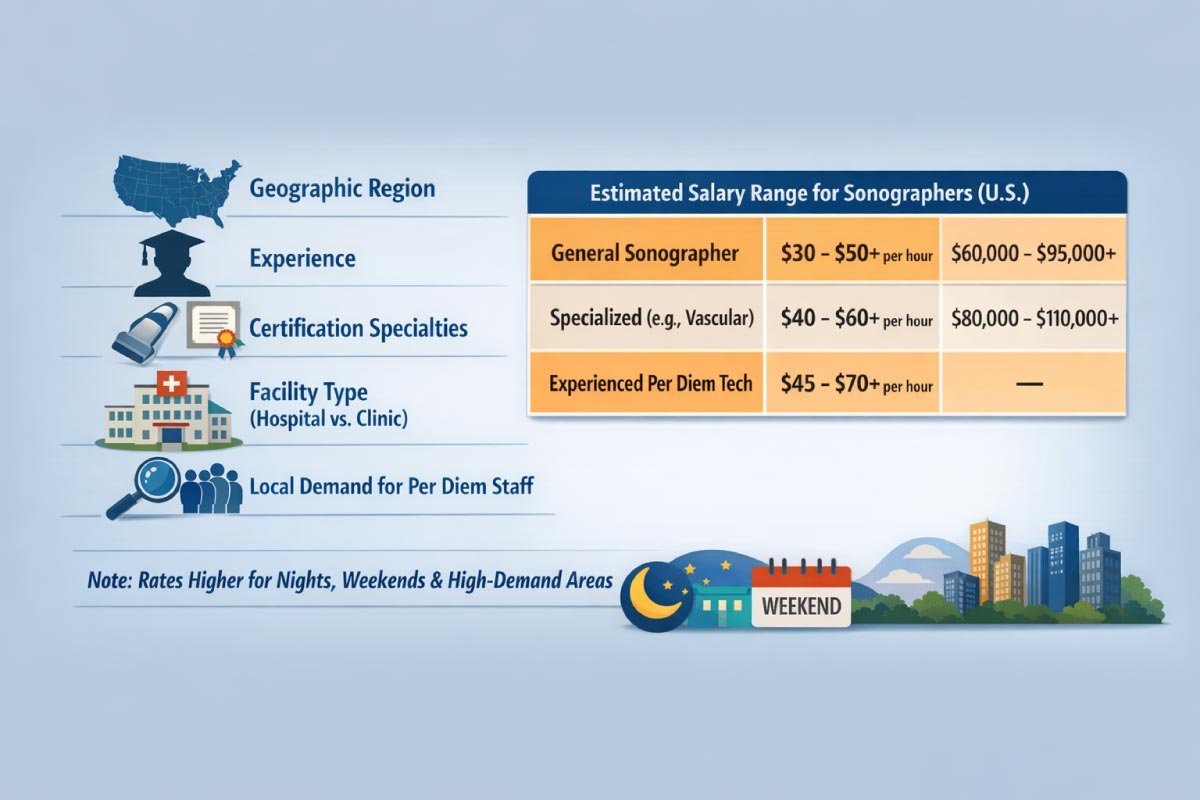
their hourly rate is often significantly higher than full‑time counterparts due to flexibility and short‑notice availability.
Salary varies based on:
-
Geographic region
-
Experience
-
Certification specialties
-
Facility type (hospital vs. outpatient clinic)
-
Local demand for per diem staff
Estimated Salary Range for Sonographers (U.S.)
| Sonographer Role | Typical Hourly Rate (Per Diem) | Annual Salary (Full‑Time Equivalent) |
|---|---|---|
| General Sonographer | $30 – $50+ per hour | $60,000 – $95,000+ |
| Specialized (e.g., vascular) | $40 – $60+ per hour | $80,000 – $110,000+ |
| Experienced Per Diem Technologist | $45 – $70+ per hour | — |
Note: Per diem rates may rise if working nights, weekends, holidays, or in high‑demand markets. Full‑time salaries may include benefits that improve overall compensation beyond hourly wage alone.
Discover More:
Benefits & Drawbacks of Per Diem Work
Per diem work offers flexibility, allowing professionals to choose schedules that fit their lifestyle.
It often provides higher hourly pay compared to full-time roles and the opportunity to gain experience in diverse settings.
Workers can take breaks between assignments and avoid long-term commitments or office politics.
Pros
-
Flexibility — choose your schedule
-
Higher hourly pay — to offset lack of benefits
-
Varied work environment — experience multiple facilities
-
Work‑life balance — adjust hours based on personal needs
Cons
-
No guaranteed income — shifts depend on facility needs
-
Limited or no benefits — no paid time off, retirement contributions
-
Variable work — may experience gaps between shifts
-
Potential travel requirements — moving between sites
Typical Work Environment
Professionals in this field typically work in hospitals, clinics, outpatient centers, and specialized imaging or diagnostic facilities.
The environment is fast-paced and often involves close patient interaction, use of advanced medical equipment, and collaboration with healthcare teams.
Shifts may include evenings or weekends, depending on the facility’s operational needs.
-
Hospitals
-
Private imaging centers
-
Outpatient clinics
-
Mobile imaging services
-
Specialty centers (cardiac or vascular)
Work settings may be fast‑paced. Per diem professionals should be ready to adapt to different equipment, team workflows, and patient populations.
Discover More:
Tips for Succeeding as a Per Diem Sonographer
Per diem sonography offers flexibility, variety, and control over your schedule, but success requires strategy, professionalism,
and continuous skill development. Here’s how to maximize your effectiveness and appeal in this role:
1. Get Certified Early
Obtaining credentials such as the ARDMS (American Registry for Diagnostic Medical Sonography) or specialty certifications enhances your marketability.
Certified sonographers are often preferred by hospitals, imaging centers, and agencies, and may command higher pay rates. Early certification also opens doors to more competitive per diem opportunities.
2. Build Strong Clinical Skills
Excellence in imaging techniques, patient interaction, and professionalism ensures repeat assignments and strong references.
Being able to confidently handle different modalities, troubleshoot equipment, and adapt to diverse clinical settings increases your reputation as a reliable per diem technologist.
3. Be Flexible
Per diem positions thrive on adaptability. Offering availability during weekends, evenings, holidays, or short-notice shifts makes you highly desirable.
Flexibility allows you to access a wider variety of assignments and increases the likelihood of consistent, high-paying work.
4. Network
Developing relationships with staffing agencies, radiology managers, and fellow sonographers can lead to unadvertised or preferred shifts.
Professional connections often provide early notifications about openings, offer endorsements, and help establish your reputation in the local sonography community.
5. Keep Continuing Education
Healthcare technology and sonography modalities evolve rapidly. Participating in workshops, webinars,
and refresher courses ensures you stay current on best practices, emerging equipment, and updated imaging protocols.
Continuing education enhances both your competency and attractiveness to employers.
6. Track Your Shifts & Credentials
Organize records of completed shifts, licensing, and certification renewals. This not only demonstrates professionalism but also streamlines onboarding at new facilities.
Accurate documentation can prevent compliance issues, support accurate pay tracking, and help when negotiating higher rates.
7. Maintain a Professional Reputation
Reliability, punctuality, and strong interpersonal skills are critical. Per diem positions often rely on trust and prior performance.
Consistently demonstrating professionalism encourages repeat assignments, referrals, and long-term relationships with facilities and agencies.
8. Be Adaptable to Different Work Environments
Per diem sonographers frequently rotate between hospitals, clinics, and imaging centers. Quickly adapting to new workflows, policies,
and equipment increases efficiency and minimizes onboarding time, making you a valuable asset for multiple employers.
Discover More:
How to Find Per Diem Sonography Jobs
Finding per diem sonography positions requires a strategic approach that combines networking, research, and targeted applications.
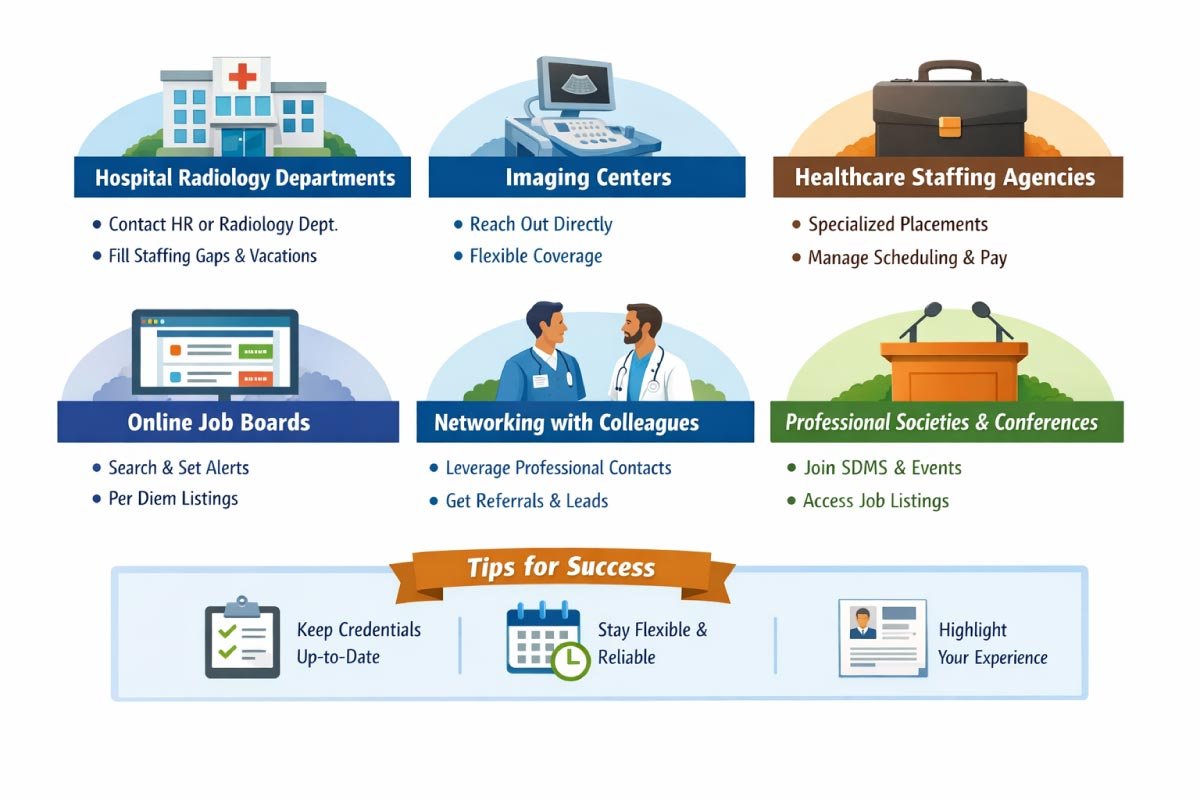
These roles offer flexibility, often allowing technologists to select shifts across different facilities. Here’s a breakdown of the most common avenues:
1- Hospital Radiology Departments
Many hospitals maintain a pool of per diem sonographers to cover staffing gaps, vacations, or high patient volume.
Contacting the radiology or human resources departments directly can reveal available shifts. Larger hospitals may post these roles internally,
so establishing a relationship with department managers can provide an advantage.
2- Imaging Centers
Standalone imaging centers often hire per diem sonographers for flexibility during peak hours or temporary coverage needs.
Smaller centers may not advertise publicly, so reaching out directly via email or phone can help you access opportunities that aren’t listed on job boards.
3- Healthcare Staffing Agencies
Specialized staffing agencies match sonographers with per diem opportunities across hospitals and clinics.
Agencies handle scheduling, pay rates, and credential verification, simplifying the job search.
Building a relationship with multiple agencies increases the variety of shifts and locations available.
4- Online Job Boards
Websites like Indeed, LinkedIn, and specialized medical job boards frequently list per diem sonography positions.
Creating a profile, setting job alerts, and applying promptly can help secure flexible assignments. Many platforms allow filtering specifically for per diem, contract, or part-time roles.
5- Networking with Colleagues
Professional contacts can be one of the most effective ways to find per diem work. Fellow sonographers, supervisors, or radiologists may know of temporary openings.
Informing your network that you’re seeking per diem shifts often leads to referrals and opportunities not publicly advertised.
6- Professional Societies & Conferences
Membership in organizations like the Society of Diagnostic Medical Sonography (SDMS) or attending regional conferences provides access to job boards, newsletters, and networking events.
These platforms often advertise temporary or per diem positions, while also offering professional connections that can lead to future opportunities.
7- Tips for Maximizing Success
When pursuing per diem roles, maintain up-to-date credentials, flexible availability, and a professional resume highlighting experience across modalities.
Staffing agencies and facilities often favor technologists who are reliable, adaptable, and capable of quickly integrating into new work environments.
Future Outlook
The future outlook for this field is promising, driven by technological advancements, growing healthcare needs, and an aging population.
Opportunities are expanding across clinical, research, and specialized roles, offering career stability, competitive salaries,
and professional growth. Staying updated with skills and certifications will be key to long-term success.
-
Aging population
-
Increased use of non‑invasive imaging
-
Expansion of outpatient diagnostic services
This means continued opportunities for both traditional and per diem sonographers, especially those with specialty skills and certifications.
Discover More:
Conclusion
A per diem sonographer enjoys a flexible and potentially lucrative career path, ideal for professionals seeking autonomy and variety in their work lives.
While this role lacks the stability and benefits of traditional full‑time positions, the higher hourly pay, flexible scheduling,
and opportunity to work in diverse clinical environments make it compelling for many sonographers.
Whether you’re just entering the field or considering a change from full‑time work, understanding the education requirements, certification options,
day‑to‑day responsibilities, and compensation structure will help you make an informed career choice.

Zak is a dedicated medical and career writer specializing in sonography, healthcare education, and professional development. Through SonographerSalary.com, he shares in-depth insights on sonographer salaries, education pathways, and career tips to help readers build successful futures in medical imaging. His content combines accuracy with practical, easy-to-understand guidance, empowering students and professionals to make confident, informed career decisions.