
If you are thinking about becoming a sonographer in 2026 or you are already working in the field and want to know how salaries are trending—this guide breaks everything down in the simplest, most realistic way. Sonography is one of the fastest growing allied health careers in the United States, and with the rising demand for diagnostic imaging, salaries continue to move upward every year.
In this 2026 salary guide, you will learn how much sonographers make hourly, monthly, and yearly, what factors influence pay, and which specialties and states offer the best income. Think of this as the type of honest, helpful advice you’d get from someone who has actually worked in the field.
Why Sonography Salaries Are Increasing in 2026
The healthcare industry is shifting rapidly. The U.S. population is aging, chronic diseases are increasing, and doctors rely more on imaging for quick and accurate diagnosis. Because ultrasound is non-invasive, safe, and fast, hospitals prefer it over other imaging technologies when possible.
Three big reasons salaries are climbing in 2026:
1. Shortage of trained sonographers
The number of experienced sonographers retiring is increasing every year, but new graduates are not entering the workforce fast enough to replace them. This shortage creates a major staffing gap in hospitals and clinics, naturally pushing salaries higher due to stronger demand.
2. Rise in imaging demand
Healthcare providers are ordering more ultrasound exams than ever before, especially in cardiac, vascular, OB-GYN, and general abdominal imaging. As patient volumes keep growing, hospitals rely heavily on skilled sonographers to handle the workload, increasing both demand and overall compensation packages.
3. High specialization growth
Advanced specialties like pediatric echocardiography, high-risk OB, and vascular sonography require rare skill sets and additional training. Since very few sonographers pursue these advanced paths, demand for specialized expertise keeps rising, and major hospitals offer significantly higher salaries to attract and retain qualified professionals.
Also Read Our Latest Guide 💡 Diagnostic Medical Sonographer Salary is rising in 2026! Discover hourly, monthly, and yearly earnings, top-paying states, and high-demand specialties. Whether you’re starting or experienced, this guide breaks down everything clearly. Read the full post to see how you can maximize your income and career growth.
Sonographer Salary in USA 2026 (Overview)
Below is the estimated average salary for diagnostic medical sonographers in the United States for the year 2026. These numbers reflect national trends based on hospitals, outpatient centers, and imaging clinics.
| Salary Type | Average Earnings (2026) |
|---|---|
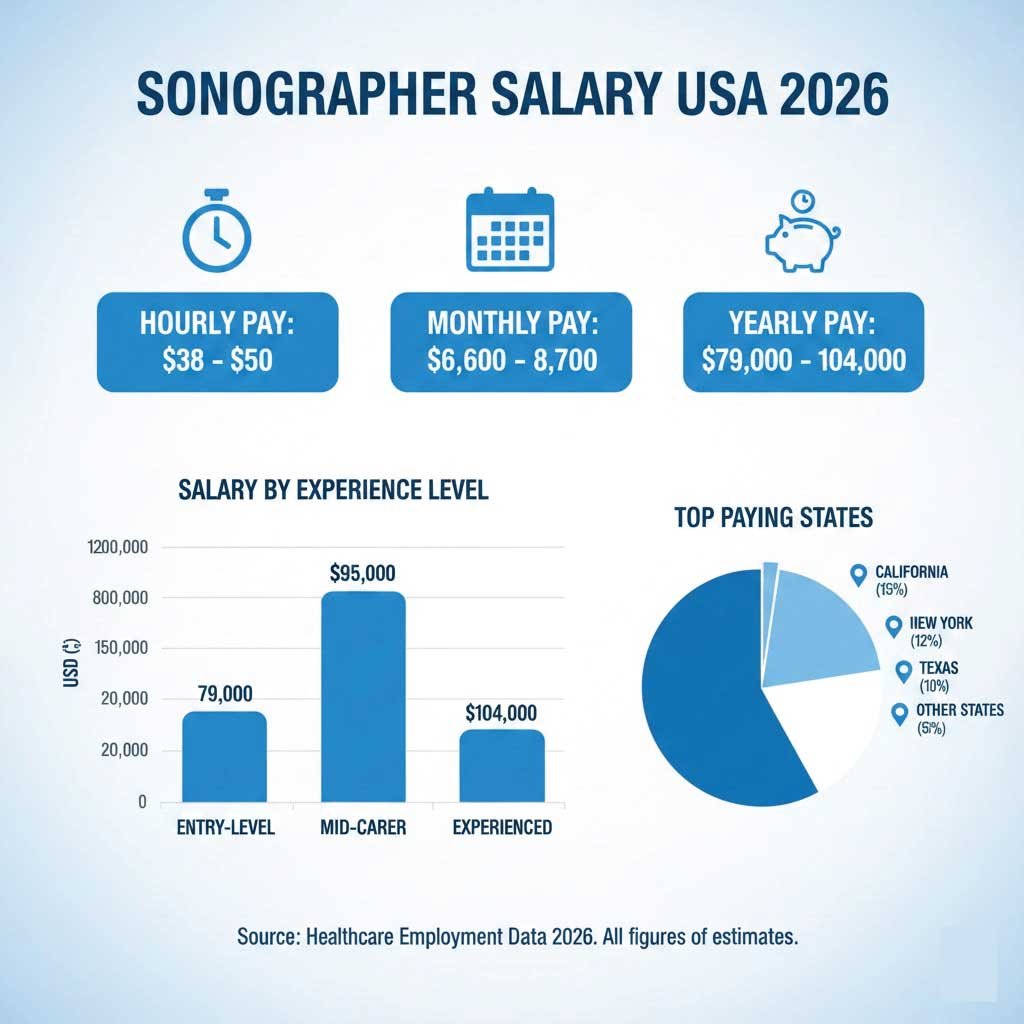
| Hourly Pay | $38 – $50 per hour |
| Monthly Pay | $6,600 – $8,700 per month |
| Yearly Salary | $79,000 – $104,000 per year |
These are averages—some specialties and states go way beyond this range. You’ll see those details below.
Hourly Salary for Sonographers in USA (2026)
Most sonographers are paid hourly, especially those working in hospitals, imaging centers, and PRN/part-time roles. The average hourly wage in 2026 ranges from $38 to $50 depending on experience, location, and specialty.
Entry-Level Sonographers (0–1 year)
$32 – $37 per hour
New graduates usually start lower but still earn a strong starting wage.
Experienced Sonographers (3–7 years)
$40 – $48 per hour
These sonographers become confident in scanning speed, accuracy, and patient handling.
Highly Specialized Sonographers (7+ years)
$48 – $60+ per hour
Echo, vascular, and high-risk OB techs often cross the $60/hr mark, especially in busy hospitals.
PRN Sonographers (Per Diem Pay)
PRN workers can earn $70–$90 per hour because they fill last-minute shifts and work without benefits.
Also Read Our Latest Guide💡 Sonographer Salary Per Hour is growing steadily in 2026! Learn how much sonographers earn hourly based on experience, specialty, and location. From entry-level to highly specialized roles, this guide gives you the full breakdown. Read the full post to plan your career and maximize earnings.
Monthly Salary for Sonographers in USA (2026)
If you prefer thinking in monthly numbers, here is how annual sonography earnings translate into monthly income.
| Experience Level | Monthly Salary (2026) |
|---|---|
| New Grad | $5,500 – $6,300 |
| Mid-Level (3–5 years) | $6,800 – $7,800 |
| Experienced (6+ years) | $8,000 – $9,400 |
| Specialized Sonographers | $9,500 – $12,000 |
Monthly salary can increase significantly with:
On-call pay
Overtime shifts
Weekend differentials
Holiday pay
PRN coverage
In reality, many sonographers take home more than their base salary because imaging departments usually need extra help during busy weeks.
Yearly Salary for Sonographers in USA (2026)
The average yearly salary for a diagnostic medical sonographer in 2026 falls between $79,000 and $104,000. However, top-earning professionals in specialized fields can make well above this range.
Average Yearly Income by Experience
Entry-Level: $68,000 – $76,000
Mid-Level: $82,000 – $94,000
Senior-Level: $95,000 – $110,000
Specialized Echo/High-Risk OB: $105,000 – $135,000
Highest Paying Work Environments
Some work settings pay significantly more than others:
Hospitals — Highest pay due to demand and shift differentials
Outpatient cardiology — High hourly pay for echo techs
Specialty clinics — Great pay with consistent schedules
Travel sonography — The highest earning potential
Also Read Our Latest Guide 💡 Texas Cardiovascular Sonographer Salary offers competitive pay in 2026! Discover hourly, monthly, and yearly earnings, plus factors affecting income in Texas hospitals and clinics. From entry-level to specialized echo techs, this guide helps you understand your earning potential. Read the full post for complete details.
Travel Sonographer Salary in USA (2026)
Travel sonographers continue to see massive income growth. Demand is high, and contracts pay more due to staffing shortages.
Travel Sonographer Earnings (2026)
Hourly: $60 – $90
Weekly: $2,500 – $3,800+
Monthly: $10,000 – $15,000
Yearly: $130,000 – $180,000+
Travel ultrasound techs also receive:
Tax-free housing stipends
Meal and travel allowances
Contract completion bonuses
Even new graduates can take travel contracts if they have strong scanning skills and select beginner-friendly assignments.
Salary by Sonography Specialization (2026)
Some specialties consistently pay more because they require advanced training, higher responsibility, and greater skill.
1. Cardiac Sonography (Echo Tech)
Yearly Salary: $95,000 – $135,000
Why It Pays More: Heart imaging is complex, always in demand, and hospitals require skilled echo techs 24/7.
2. Vascular Sonography
Yearly Salary: $90,000 – $130,000
Why It Pays More: Vascular techs handle life-saving scans like DVT studies, carotids, and arterial exams.
3. Pediatric Echocardiography
Yearly Salary: $110,000 – $160,000
Why It Pays More: Extremely specialized. Very few techs are trained to scan newborn and pediatric hearts.
4. High-Risk OB Sonography
Yearly Salary: $100,000 – $140,000
Why It Pays More: Requires both OB imaging expertise and fetal anomaly knowledge.
5. General/Abdominal Sonography
Yearly Salary: $75,000 – $95,000
Why It Pays More: Bread-and-butter of ultrasound, but lower specialization compared to echo and vascular.
Best Paying States for Sonographers in 2026
Some states pay higher due to cost of living, demand, and shortage of trained workers.
Top 10 Best Paying States (2026)
California — $105,000 – $140,000
New York — $100,000 – $135,000
Washington — $95,000 – $130,000
Oregon — $94,000 – $128,000
Massachusetts — $96,000 – $132,000
New Jersey — $92,000 – $125,000
Colorado — $90,000 – $120,000
Illinois — $88,000 – $120,000
Texas — $84,000 – $118,000
Florida — $78,000 – $110,000
States with big hospitals, major heart centers, and high-risk maternal units tend to offer the best salaries.
Also Read Our Latest Guide 💡 California Cardiovascular Sonographer Salary ranks among the highest in the USA for 2026! Explore hourly, monthly, and yearly pay, top hospitals, and specialized echo roles. Whether new or experienced, this guide helps you understand earning potential. Read the full post to maximize your salary insights.
Factors That Affect Sonographer Salary in 2026
Just like any medical career, several factors influence how much you earn.
Experience Level
Experience plays a major role in determining salary because seasoned sonographers scan faster, make fewer errors, and require less supervision. Hospitals value efficiency and accuracy, so professionals with several years of hands-on clinical experience naturally earn higher wages and receive better shift opportunities.
Specialty Certification
Advanced certifications such as RDCS, RVT, RCS, RVS, or RDMS in abdomen or OB/GYN demonstrate a sonographer’s skill and commitment to professional growth. These credentials qualify you for specialized roles, allowing you to command higher pay and access competitive positions in major hospitals.
Location
Geographic location strongly impacts salary because states with a high cost of living or ongoing staffing shortages tend to pay significantly more. Areas with large medical centers or underserved populations also offer competitive compensation to attract skilled sonographers willing to fill essential clinical roles.
Work Setting
The workplace environment influences earnings, with hospitals typically offering higher pay than outpatient clinics. Hospital roles often include on-call duties, night shifts, and weekend rotations, which increase compensation. Busier environments also value efficiency, rewarding sonographers who can handle complex cases confidently and consistently.
Shift Type
Not all shifts pay the same. Working nights, weekends, or holidays usually comes with added differentials that boost overall income by 10–25%. These shifts may be less desirable for some, but they offer excellent earning potential for sonographers seeking higher annual pay.
PRN and Overtime
Many sonographers significantly increase their yearly income by taking PRN (per-diem) roles or picking up extra overtime shifts. Because these shifts often fill urgent staffing gaps, they pay higher hourly rates, allowing motivated professionals to earn $10,000 or more annually in additional income.
Is Sonography a Good Career in 2026?
Absolutely—sonography remains one of the best healthcare careers in 2026 due to:
- Strong salary growth
- Short education path (2–4 years)
- High job security
- Travel opportunities
- Minimal physical risk compared to other medical roles
It’s a profession that gives you both financial stability and meaningful patient interaction, which many people value deeply.
Final Thoughts: Sonographer Salary in USA 2026
Whether you’re a new graduate or an experienced sonographer planning your next step, 2026 offers strong earning potential. With salaries ranging from $38–$50 per hour, monthly earnings rising above $8,700, and yearly income reaching $100,000+, this field continues to grow in both demand and compensation.
If you choose the right specialty, especially cardiac, vascular, or high-risk OB, you can earn significantly above the national average. And if you’re open to travel assignments, the income potential becomes even greater.
Sonography is not just a job, it’s a stable and rewarding medical career with excellent financial upside.
Also Read Our Latest Guide 💡 Travel Sonographer Pay: Hourly, Weekly & Annual is booming in 2026! Learn how travel contracts can boost your income with high hourly rates, weekly earnings, and annual salaries. Discover tips for top-paying assignments. Read the full post to see how travel sonography can maximize your earnings.
FAQs:
How much is a sonographer paid in the USA?
In the USA, sonographers earn a strong and competitive income, typically ranging from $75,000 to $105,000 per year, depending on experience, certification, and location. Major hospitals, cardiac centers, and high-demand states often pay higher rates. Factors like specialization, overtime, and shift differentials can increase total earnings, making sonography one of the most rewarding allied health careers.
What is the highest paid type of sonographer?
The highest-paid sonographers are usually those working in pediatric echocardiography, cardiac sonography, and high-risk OB imaging. These specialties require advanced skills, additional certification, and the ability to handle complex cases. Because few professionals pursue this higher training, demand remains strong, pushing salaries into the $110,000–$160,000 range in many hospitals, especially in large cardiac or maternal-fetal medicine centers.
What country pays sonographers the most?
Countries like Australia, Switzerland, and the United States consistently offer the highest salaries for sonographers. Australia often leads due to strong healthcare funding, competitive pay, and excellent working conditions. Salaries in these countries reflect both high demand and the need for trained specialists, often reaching impressive ranges after experience, specialization, and additional certifications.
How much does a sonographer make per hour?
Sonographers in the USA typically earn $35 to $50 per hour, depending on experience, specialty, and state. Highly skilled professionals—especially those in echo, vascular, or high-risk OB—can earn $55 to $70+ per hour. PRN (per-diem) sonographers often receive even higher rates due to last-minute staffing needs and lack of benefits.
Are sonographers in demand in the USA?
Yes, sonographers are in very high demand across the United States. Rising imaging needs, an aging population, and a shortage of trained professionals have created strong job opportunities nationwide. Hospitals, outpatient clinics, and specialty centers are actively hiring, making sonography a stable and fast-growing healthcare career with long-term security and excellent earning potential.
How do I become a sonographer in the USA?
To become a sonographer in the USA, you must complete an accredited ultrasound program, which may be a certificate, associate, or bachelor-level degree. After graduation, you take credentialing exams such as ARDMS, CCI, or ARRT. Clinical training, strong anatomy knowledge, and hands-on scanning practice are essential for building confidence and securing high-quality job opportunities.
Is sonography a good career path?
Yes, sonography is an excellent career path offering high pay, strong job security, short education requirements, and meaningful patient interaction. It combines advanced technology with direct clinical work, making it ideal for those who enjoy healthcare without pursuing long medical schooling. With numerous specialties and growing demand, it provides long-term stability and advancement opportunities.

Zak is a dedicated medical and career writer specializing in sonography, healthcare education, and professional development. Through SonographerSalary.com, he shares in-depth insights on sonographer salaries, education pathways, and career tips to help readers build successful futures in medical imaging. His content combines accuracy with practical, easy-to-understand guidance, empowering students and professionals to make confident, informed career decisions.