
Choosing a career in healthcare is a big decision, especially if you are looking for a profession that offers stability, strong income potential, and the chance to help people every single day. One career that checks all these boxes without requiring medical school, is becoming an Ultrasound Technician, also known as a Diagnostic Medical Sonographer.
Ultrasound techs use special imaging equipment that sends sound waves into the body. These waves create real-time images of internal organs, tissues, and developing fetuses. Because ultrasounds are safe, painless, and highly accurate, they are used more than ever in hospitals, clinics, and diagnostic centers. This growing demand has made ultrasound techs one of the fastest-growing healthcare careers in the world.
In this complete guide, you will learn:
- What ultrasound techs do
- Required skills and training
- Work environment & daily routine
- Salary ranges in 2026
- Job outlook
- Career specialization options
- Steps to start your ultrasound career
Let’s get started.
What Does an Ultrasound Technician Do?
An ultrasound technician, also called a sonographer, is a medical professional who uses specialized imaging equipment to capture real-time pictures and videos inside the body. These images assist doctors in diagnosing conditions, monitoring pregnancies, guiding treatments, and evaluating organ health. Ultrasound techs combine technical skills with patient care to provide accurate, reliable imaging results.
1. Performing Diagnostic Imaging
Ultrasound technicians perform diagnostic scans on different areas of the body, including the abdomen, heart, blood vessels, pelvic organs, musculoskeletal system, and during pregnancy. They carefully capture images from multiple angles, ensuring clarity and precision. These scans help physicians detect abnormalities, assess organ function, and track fetal development, making accurate imaging essential for patient care.
2. Preparing Patients
Preparing patients involves explaining the procedure, answering questions, and positioning them correctly for the scan. Ultrasound techs apply conductive gel to improve image quality and ensure patient comfort throughout the process. They consider each patient’s needs, accommodate any mobility issues, and provide reassurance, creating a calm environment that reduces anxiety and helps achieve better imaging results.
3. Operating Ultrasound Equipment
Ultrasound technicians operate high-tech imaging machines, selecting appropriate transducers, adjusting settings, and manipulating equipment to obtain optimal images. They understand machine functions, troubleshoot minor issues, and adapt techniques to different patient anatomies. Proper operation is crucial to producing accurate images that physicians rely on for diagnosis, making the tech’s skill and attention to detail vital in healthcare.
4. Reviewing Images
After capturing scans, ultrasound techs carefully review the images to ensure they are clear, complete, and highlight any abnormalities or areas of concern. While they do not provide formal diagnoses, their analysis allows physicians to make informed decisions. Techs must identify when additional images or angles are necessary, ensuring a thorough evaluation of the patient’s condition.
5. Recording Findings
Ultrasound technicians maintain detailed records of each patient’s exam, including medical history, measurements, and observations. Accurate documentation helps physicians track changes over time and supports medical decision-making. Recording findings also ensures compliance with legal and medical standards, contributing to continuity of care and providing a reliable reference for future appointments or treatment planning.
6. Maintaining Equipment
Maintaining ultrasound equipment is a critical part of the job. Techs regularly clean probes, disinfect surfaces, and calibrate machines to ensure safety and accurate performance. Routine maintenance prevents equipment malfunctions and extends lifespan. Following safety protocols protects patients and staff, demonstrating the tech’s responsibility in upholding medical standards and delivering reliable imaging results.
👉 Diagnostic Medical Sonography Requirements are essential for anyone aiming to start a rewarding career in healthcare. This guide covers the key qualifications, training programs, and certifications you need to become a successful ultrasound technician. Whether you are a student or a career changer, understanding these requirements will set you on the right path. Read the full post to discover all the steps!
Key Job Responsibilities of an Ultrasound Tech
| Duty Category | Description | Importance Level |
|---|---|---|
| Imaging Procedures | Conduct ultrasound scans and capture diagnostic images | ⭐⭐⭐⭐⭐ |
| Patient Care | Assist, comfort, and position patients correctly | ⭐⭐⭐⭐ |
| Image Review | Evaluate image quality and make adjustments | ⭐⭐⭐⭐⭐ |
| Reporting | Document observations for doctors | ⭐⭐⭐⭐ |
| Equipment Care | Clean, test, and maintain ultrasound machines | ⭐⭐⭐ |
Skills Required to Become a Successful Ultrasound Tech
To excel as an ultrasound technician, you need a combination of technical knowledge, interpersonal abilities, and physical stamina. These skills help ensure accurate imaging, patient comfort, and effective collaboration with healthcare teams.
Technical Skills
- Understanding anatomy and physiology
- Knowledge of imaging equipment
- Ability to adjust settings for clear imaging
- Understanding ultrasound physics
Soft Skills
- Communication and empathy
- Attention to detail
- Patience with anxious patients
- Critical thinking
- Problem-solving
Physical Skills
- Ability to stand for long hours
- Hand-eye coordination
- Ability to move patients when needed
Work Settings & Daily Routine
Ultrasound technicians work in diverse healthcare settings, from hospitals to specialized clinics. Their daily routines blend patient care, imaging procedures, and equipment maintenance, ensuring smooth workflow and accurate diagnostic results.
- Hospitals
- Imaging centers
- OB/GYN clinics
- Cardiologist offices
- Orthopedic clinics
- General medical practices
- Mobile ultrasound services
A Typical Day Includes:
- Reviewing patient schedules
- Preparing exam rooms and equipment
- Performing multiple ultrasound scans
- Discussing patient history
- Recording measurements and findings
- Collaborating with doctors
- Cleaning and maintaining equipment
Most ultrasound techs work full-time, with some schedules requiring evening or weekend shifts, particularly in hospital settings. Their role demands flexibility, attention, and consistent patient-focused care.
How to Become an Ultrasound Technician
Becoming an ultrasound technician is a rewarding career path that requires specialized training but takes less time than many other healthcare professions. With the right education, clinical experience, and certifications, you can start helping patients and supporting medical teams efficiently.
1. Get the Right Education
Education is the first step toward becoming an ultrasound tech. Depending on your goals, you can pursue degrees or certificates that provide a strong foundation in anatomy, physiology, and imaging technology, preparing you for hands-on clinical experience and future certification.
You can choose:
Associate Degree in Diagnostic Medical Sonography (2 years)
Bachelor’s Degree (4 years)
One-year certificate (for those with prior medical experience)
2. Complete Clinical Training
Clinical training allows students to gain practical experience under the supervision of experienced sonographers. This hands-on learning in hospitals, clinics, or imaging centers helps develop scanning skills, patient care techniques, and professional confidence before entering the workforce.
3. Earn Certification
Certification demonstrates your competence to employers and is often required for practice. It ensures you meet professional standards and are knowledgeable in sonography procedures, patient safety, and ethical practices, enhancing career opportunities and credibility in the medical field.
Most employers require certifications such as:
ARDMS (American Registry for Diagnostic Medical Sonography)
CCI (Cardiovascular Credentialing International)
ARRT Sonography
4. Choose a Specialization (Optional)
While optional, specialization allows ultrasound techs to focus on a specific area of medical imaging, gain expertise, and increase job opportunities. Specialized training helps you become highly skilled in particular patient care areas, making you a valuable asset to healthcare teams.
You can specialize in:
Obstetric & Gynecologic Sonography
Abdominal Sonography
Cardiac Sonography (Echocardiography)
Vascular Sonography
Musculoskeletal Sonography
5. Apply for Jobs
Once education, clinical training, and certification are complete, ultrasound techs can begin their careers in a variety of settings. Job applications should highlight skills, certifications, and clinical experience to secure positions in hospitals, clinics, imaging centers, or private practices.
After completion, you can start working in hospitals, clinics, imaging centers, or private practices.
Salary of an Ultrasound Tech in 2026
Ultrasound techs are paid well because their skills are specialized and high-demand. Salaries vary based on experience, location, and specialization.
Average Salary Breakdown (2026)
| Experience Level | Annual Salary | Monthly Salary |
|---|---|---|
| Entry-Level (0–2 yrs) | $55,000 – $68,000 | $4,500 – $5,600 |
| Mid-Level (3–7 yrs) | $70,000 – $85,000 | $5,800 – $7,000 |
| Senior (8+ yrs) | $90,000 – $110,000 | $7,500 – $9,100 |
Salary by Specialization (Highest Paying)
Some ultrasound specialties earn more due to advanced training and complexity.
Salary by Specialization
| Specialization | Average Salary (2025) | Notes |
|---|---|---|
| Cardiac Sonographer | $90,000 – $115,000 | Highest-paying due to advanced skill |
| Vascular Sonographer | $85,000 – $100,000 | High demand in hospitals |
| OB/GYN Sonographer | $75,000 – $95,000 | Popular and steady demand |
| Abdominal Sonographer | $70,000 – $88,000 | Common in general hospitals |
| MSK Sonographer | $80,000 – $100,000 | Growing in sports medicine |
👉 Sonographer Salary in USA breaks down the earning potential for ultrasound technicians across hourly, monthly, and yearly rates. Learn how experience, specialization, and location impact salaries and discover what you can realistically expect in this growing healthcare field. Read the full post to get detailed insights and plan your career path effectively!
Job Outlook & Future Demand
The demand for ultrasound technicians continues to grow rapidly. Reasons include:
More people need imaging for early diagnosis
Ultrasound is safer than X-ray or CT scans
Aging population needs more medical imaging
Hospitals prefer ultrasound because it’s affordable
Increasing use in emergency and critical care
Job Growth Forecast 2025–2035
The field is expected to grow 15–17%, much faster than average.
Types of Ultrasound Specialties (Career Paths)
Ultrasound technology offers a variety of specialties, allowing techs to focus on specific areas of patient care. Choosing a specialty can enhance expertise, improve job prospects, and increase earning potential while providing more targeted and rewarding clinical experiences.
1. Obstetric & Gynecologic Sonography
This specialty focuses on imaging the female reproductive system and monitoring pregnancies. Ultrasound techs help assess fetal growth, detect abnormalities, and support prenatal care. They also evaluate ovarian and uterine health, providing essential information for obstetricians and gynecologists.
Perform ultrasounds for pregnancies and female reproductive health.
2. Cardiac Sonography (Echocardiography)
Cardiac sonographers use specialized ultrasound equipment to examine heart structures and function. They assess blood flow, detect heart conditions, and assist cardiologists in planning treatments. This high-demand field often offers some of the highest salaries among sonography specialties.
Use ultrasound to examine the heart—one of the highest paying specialties.
3. Vascular Sonography
Vascular sonographers specialize in imaging blood vessels, veins, and arteries. They detect blockages, clots, and other circulation issues, helping prevent strokes or other complications. Their work is critical in diagnosing vascular diseases and guiding interventions.
Check blood flow, arteries, and veins.
4. Abdominal Sonography
Abdominal sonographers evaluate organs including the liver, kidneys, pancreas, and gallbladder. They assist in detecting tumors, stones, or organ enlargement. Accurate imaging in this area helps physicians diagnose digestive or urinary problems and plan effective treatments.
Evaluate organs like the liver, kidneys, pancreas, and gallbladder.
5. Breast Sonography
Breast sonographers focus on imaging breast tissue for cancer screening, diagnosis, and follow-up care. They help identify tumors, cysts, or abnormalities, providing vital support for oncologists and surgeons. Attention to detail and patient comfort is essential in this specialty.
Used for breast cancer detection and follow-up imaging.
6. Musculoskeletal Sonography
This specialty involves imaging muscles, joints, and tendons to diagnose sports injuries, arthritis, or soft tissue problems. Musculoskeletal sonographers collaborate with orthopedic doctors and physical therapists to guide treatment plans and monitor patient recovery.
Used for sports injuries and joint problems.
Comparison of Ultrasound Specialties
| Specialty | Difficulty Level | Training Time | Salary Range |
|---|---|---|---|
| OB/GYN | Easy–Medium | 2 years | $75k–95k |
| Cardiac | High | 3+ years | $90k–115k |
| Vascular | Medium–High | 2–3 years | $85k–100k |
| Abdominal | Medium | 2 years | $70k–88k |
| Breast | Medium | 2 years | $70k–85k |
| MSK | High | 3+ years | $80k–100k |
Is Ultrasound Tech a Good Career?
Absolutely, if you enjoy healthcare, helping people, and using advanced technology. It’s one of the best medical careers that offers:
- Great salary
- Job stability
- A short education path
- Multiple specialties
- A balanced lifestyle
The career is especially appealing if you want to join the medical field without years of schooling or high student debt.
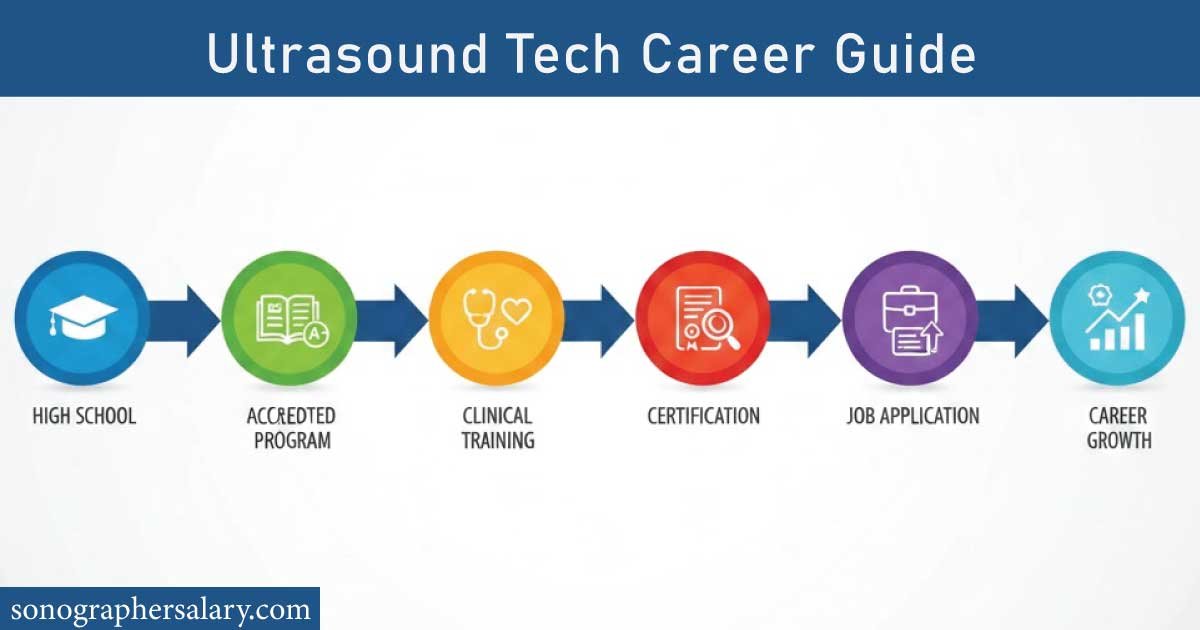
How to Start Your Ultrasound Career (Step-by-Step)
Starting a career as an ultrasound technician requires careful planning, education, and hands-on experience. Following a structured path ensures you gain the skills, certifications, and opportunities needed to succeed in this healthcare field.
1. Finish High School (Science Subjects Help)
Complete high school with a focus on science courses like biology, physics, and chemistry. A strong science foundation prepares you for anatomy, physiology, and imaging coursework in ultrasound programs.
2. Choose an Accredited Ultrasound Program
Select a program accredited by recognized organizations, ensuring high-quality training. Accredited programs provide classroom learning, lab practice, and clinical experience, preparing you for certification and professional practice.
3. Complete Classroom and Clinical Training
Learn ultrasound theory, anatomy, and equipment operation in the classroom, then gain hands-on experience in hospitals or clinics. Clinical training develops practical skills, patient interaction, and confidence in real-world imaging.
4. Earn Your ARDMS or CCI Certification
Obtain certification from ARDMS or CCI to validate your knowledge and skills. Certification is often required by employers, enhances credibility, and opens doors to more job opportunities and higher salaries.
5. Choose Your Specialty
Decide on a focus area, such as obstetric, cardiac, or vascular sonography. Specializing allows you to gain expertise, improve career prospects, and increase earning potential in your chosen field.
6. Apply for Entry-Level Jobs
Start your career by applying for positions in hospitals, clinics, imaging centers, or private practices. Highlight certifications, clinical experience, and technical skills to secure your first professional role.
7. Continue Learning to Increase Your Salary
Engage in continuing education, advanced certifications, or specialized training. Expanding your expertise improves career growth, keeps you updated with technology, and can lead to higher-paying roles or leadership positions.
Final Thoughts
Ultrasound technicians play a vital role in modern healthcare. They help diagnose illnesses, monitor pregnancies, and provide essential information that doctors rely on to make life-saving decisions. With high salaries, strong job growth, and many specialization options, it’s a career worth considering if you want a stable and fulfilling future.
Whether you dream of working in a hospital, a private clinic, or a dedicated imaging center, becoming an ultrasound tech can open the door to a rewarding healthcare career with long-term opportunities.
FAQs:
What qualifications do I need to be an ultrasound tech?
To become an ultrasound tech, you typically need a high school diploma or GED, completion of an accredited sonography program, and professional certification. Courses include anatomy, physiology, and medical imaging, ensuring you have the skills to operate ultrasound equipment and assist in patient care safely and effectively.
What exactly does an ultrasound tech do?
An ultrasound tech, or sonographer, uses specialized imaging equipment to create pictures of internal organs, tissues, and blood flow. They assist physicians in diagnosing medical conditions, explain procedures to patients, maintain imaging records, and ensure equipment is functioning properly, combining technical skills with patient care responsibilities.
How can you become an ultrasound tech?
You can become an ultrasound tech by completing an accredited sonography program, gaining hands-on clinical experience, and earning certification through organizations like the ARDMS. Continuing education and specialization in areas like cardiac or obstetric sonography can enhance career opportunities and earning potential in this growing healthcare field.
How much money can an ultrasound tech make?
Ultrasound tech salaries vary by location, experience, and specialization. Entry-level techs may earn around $55,000 per year, while experienced sonographers in specialized fields can earn $80,000 or more annually. Benefits, overtime, and geographic demand also impact overall income, making it a financially rewarding healthcare career.
How fast can you become an ultrasound tech?
Becoming an ultrasound tech typically takes 1–4 years, depending on the program. Certificate programs can take about 12–18 months, while associate degrees usually take 2 years and bachelor’s degrees 4 years. Clinical training is included, preparing students for certification exams and practical, hands-on experience.
How hard is ultrasound school?
Ultrasound school is challenging but manageable with dedication. It requires mastering anatomy, physiology, and imaging technology, as well as strong attention to detail and patient communication skills. Time management and practical training are key, but supportive programs and clinical experience make success achievable for motivated students.

Zak is a dedicated medical and career writer specializing in sonography, healthcare education, and professional development. Through SonographerSalary.com, he shares in-depth insights on sonographer salaries, education pathways, and career tips to help readers build successful futures in medical imaging. His content combines accuracy with practical, easy-to-understand guidance, empowering students and professionals to make confident, informed career decisions.