
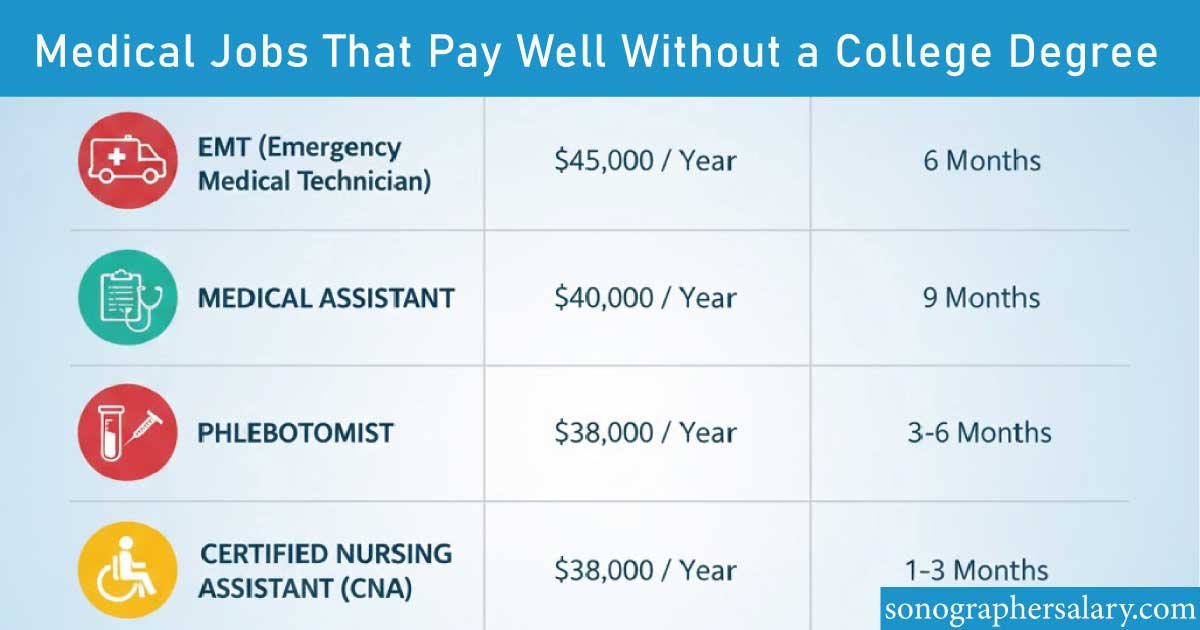
The medical field is often associated with years of rigorous education and expensive degrees. While it’s true that many high-paying roles require formal training, there is a surprising number of medical jobs that allow you to earn a substantial income without a college degree. These roles provide opportunities to enter the healthcare industry quickly, gain practical skills, and even advance into specialized positions over time. Whether you are seeking a career change, a stepping stone into healthcare, or a well-paying job with minimal schooling, exploring these options can be both rewarding and practical. In this guide, we’ll walk you through high-paying medical jobs without a degree, including their requirements, earning potential, and tips for success.
Why Consider Medical Jobs Without a Degree?
Medical jobs without a degree matter because they offer a path into one of the most stable and essential industries in the world without the heavy financial burden of traditional education. Healthcare continues to grow at a rapid pace, driven by an aging population and advancements in technology. By entering through alternative pathways, you can start earning sooner, gain hands-on experience, and still have opportunities for advancement. Additionally, these roles often come with flexible hours, strong job security, and the chance to make a real impact on people’s lives.
Top High-Paying Medical Jobs Without a Degree
1. Medical Assistant
Medical assistants perform administrative and clinical tasks in hospitals, clinics, and private practices. Their duties may include scheduling appointments, taking patient histories, administering medications, and assisting with minor procedures. While some positions prefer certification, many medical assistant roles can be accessed through short-term training programs rather than a degree. On average, medical assistants earn between $35,000 and $50,000 annually, with opportunities to earn more in specialized clinics or high-demand areas.
Salary Comparison by State
| State | Average Annual Salary | Entry-Level |
|---|---|---|
| California | $48,000 | $35,000 |
| Texas | $38,000 | $30,000 |
| New York | $45,000 | $32,000 |
| Florida | $40,000 | $30,500 |
📌 Discover everything about Sonographer Qualifications: from education, training, certifications, to salary expectations! Perfect for aspiring sonographers and healthcare professionals looking to advance their careers. Learn key requirements, career tips, and earning potential—read the full guide now!
2. Phlebotomist
Phlebotomists specialize in drawing blood for tests, transfusions, donations, and research. Training is typically offered through a certificate program lasting a few months. Despite the short training period, phlebotomists are in high demand, particularly in hospitals, laboratories, and blood donation centers. Salaries range from $35,000 to $50,000 per year, with experienced phlebotomists and those in specialized labs earning higher wages.
3. Medical Billing and Coding Specialist
Medical billing and coding specialists are crucial for ensuring that healthcare providers are reimbursed correctly by insurance companies. This role involves translating patient records into standardized codes for billing purposes. Training is typically completed through online or community college certificate programs. While it does not require a degree, certification from organizations like AAPC or AHIMA can increase earning potential. Salaries can range from $40,000 to $60,000 annually, with advanced positions earning more.
4. Emergency Medical Technician (EMT)
EMTs provide urgent care and transportation for patients experiencing medical emergencies. Training programs are relatively short, ranging from 6 months to a year, and focus on practical skills such as CPR, patient assessment, and trauma care. EMTs are often the first line of care in emergencies, making this a high-responsibility, high-demand role. Annual salaries average around $40,000 to $55,000, with paramedics (an advanced EMT role) earning $60,000 or more.
Salary and Certification Levels
| Certification Level | Average Annual Salary | Training Duration |
|---|---|---|
| EMT-Basic | $42,000 | 6 months |
| EMT-Intermediate | $50,000 | 9 months |
| Paramedic | $60,000 | 1–2 years |
📌 Explore Practical Training for Cardiac Sonographers: a complete guide for aspiring and current sonographers! Learn about hands-on experience, clinical skills, and training programs to excel in cardiac imaging. Get expert tips and career insights—read the full guide now!
5. Dental Assistant
Dental assistants support dentists during procedures, manage patient records, sterilize equipment, and provide patient education. Most dental assistant programs can be completed in under a year, and some positions do not require certification, though state licensure may be needed. Salaries average $40,000 to $55,000, with higher wages in specialized dental practices or urban areas.
6. Pharmacy Technician
Pharmacy technicians assist pharmacists with preparing and dispensing medications, managing inventories, and educating patients on proper drug usage. Training can be completed in a few months through certificate programs, and certification can enhance job prospects. Salaries typically range from $35,000 to $50,000, but technicians in hospital or research settings can earn up to $60,000.
7. Home Health Aide (HHA)
Home health aides provide essential care to patients at home, assisting with daily activities such as bathing, dressing, and medication management. Certification is usually required but can be completed in a few weeks. HHAs are in high demand due to an aging population, with salaries ranging from $30,000 to $45,000, and opportunities for advancement into supervisory or specialized care roles.
8. Surgical Technologist
Surgical technologists assist during surgeries, prepare operating rooms, sterilize instruments, and ensure patient safety. Training programs usually last 9 to 12 months and do not require a degree. This career offers strong earning potential, with salaries ranging from $50,000 to $70,000 annually, depending on experience and location.
Salary by Experience
| Experience Level | Average Salary |
|---|---|
| Entry-Level | $50,000 |
| Mid-Level | $60,000 |
| Experienced | $70,000 |
9. Radiologic Technologist Assistant
These professionals support radiologic technologists in taking X-rays, preparing patients, and maintaining imaging equipment. Training is often completed through a certificate program or on-the-job instruction. Salaries average $45,000 to $60,000, and this role can be a stepping stone into full radiologic technology careers with additional education.
10. Medical Transcriptionist
Medical transcriptionists convert voice-recorded medical reports into written documents. Training is usually short-term and available online. Accuracy and attention to detail are essential, but no degree is required. Salaries typically range from $35,000 to $50,000, with remote work opportunities increasing accessibility and flexibility.
Emerging High-Paying Roles Without a Degree
In addition to traditional roles, technology is creating new opportunities for medical careers without degrees. Telehealth coordinators, health IT support specialists, and patient care navigators are growing in demand. These roles often require certifications or short-term training rather than full degrees and offer competitive salaries in the $40,000 to $70,000 range.
Table: Salary Comparison Across High-Paying Medical Jobs Without a Degree
| Career | Average Annual Salary | Training Duration | Certification Required |
|---|---|---|---|
| Medical Assistant | $42,000 | 6–12 months | Optional |
| Phlebotomist | $40,000 | 4–6 months | Optional |
| Billing & Coding Specialist | $50,000 | 6–12 months | Recommended |
| EMT / Paramedic | $50,000 | 6–24 months | Yes |
| Dental Assistant | $45,000 | 9–12 months | Sometimes |
| Pharmacy Technician | $42,000 | 4–6 months | Optional |
| Home Health Aide | $35,000 | 2–12 weeks | Yes |
| Surgical Technologist | $60,000 | 9–12 months | Yes |
| Radiologic Tech Assistant | $52,000 | 6–9 months | Sometimes |
| Medical Transcriptionist | $40,000 | 3–6 months | Optional |
How to Choose the Right Job for You
Choosing a high-paying medical job without a degree involves understanding your interests, strengths, and lifestyle preferences. If you enjoy hands-on patient care, roles like EMTs, HHAs, and surgical technologists may be ideal. If you prefer administrative or tech-focused work, billing and coding or medical transcription might be a better fit. Visiting local healthcare facilities, shadowing professionals, and researching certification programs can help you make an informed decision.
Education and Certification Considerations
Even without a degree, certification or specialized training is often essential for credibility and higher pay. Programs vary in duration and intensity but typically focus on practical skills needed for day-to-day responsibilities. Certifications such as CPT for billing, ARRT for radiology assistants, and CPR/AED for EMTs can make candidates more competitive and increase earning potential.
Common Mistakes to Avoid
Many people entering medical careers without degrees make avoidable mistakes. Choosing a job solely based on pay without considering responsibilities, underestimating physical or emotional demands, and neglecting certification requirements are common pitfalls. Additionally, failing to gain hands-on experience or network within the healthcare community can limit long-term growth.
Table: Certification and Training Requirements
| Career | Certification | Training Duration | Notes |
|---|---|---|---|
| Medical Assistant | Optional | 6–12 months | Improves hiring potential |
| Phlebotomist | Optional | 4–6 months | Required in some states |
| EMT | Yes | 6–24 months | Includes practical exams |
| Billing & Coding | Recommended | 6–12 months | Certified Professional Coder (CPC) |
| Surgical Technologist | Yes | 9–12 months | Accredited program preferred |
📌 Discover How Online Sonography Programs Work: a complete guide for aspiring sonographers and healthcare students! Learn about course structure, virtual labs, and clinical requirements to succeed in online sonography education. Get all the details and tips—read the full guide now!
Practical Tips for Success
To excel in a medical job without a degree, focus on gaining practical experience, pursuing certification where possible, and developing soft skills like communication, empathy, and organization. Volunteering in healthcare settings or internships can help build your resume and professional network. Furthermore, staying current with industry trends and technology is crucial, particularly for roles in telehealth or medical IT support.
Table: Expected Job Growth for Medical Jobs Without a Degree
| Career | Projected Growth (2026) | Demand Drivers |
|---|---|---|
| Medical Assistant | 10% | Aging population, clinic expansion |
| Phlebotomist | 14% | Increased diagnostic testing |
| EMT / Paramedic | 9% | Emergency response needs |
| Billing & Coding Specialist | 11% | Healthcare digitization |
| Surgical Technologist | 8% | Increased surgical procedures |
Future Outlook and Advancement Opportunities
High-paying medical jobs without a degree offer opportunities for growth. Many professionals start in entry-level roles and advance through experience, specialized certifications, or additional training. For instance, a medical assistant can progress to office manager or practice coordinator, while an EMT can become a paramedic or emergency response trainer. These pathways demonstrate that even without a degree, long-term career growth is attainable in healthcare.
Mini List: Skills That Increase Earning Potential
Some key skills that enhance income potential across these roles include customer service, electronic health record management, medical terminology proficiency, multitasking, and specialized certifications in areas such as phlebotomy, surgical technology, or billing.
Conclusion
High-paying medical jobs without a degree prove that entering the healthcare field does not always require years of college education. From medical assistants and phlebotomists to EMTs and surgical technologists, there are numerous paths to a rewarding career that balances earning potential, job stability, and personal fulfillment. By understanding each role’s responsibilities, pursuing relevant training or certification, and developing practical and soft skills, you can build a sustainable healthcare career. Remember, success in healthcare is not just about education—it’s about dedication, adaptability, and a genuine desire to help others.
📌 Explore Diagnostic Medical Sonography Requirements: a complete guide for aspiring sonographers and healthcare students! Learn about education, certifications, clinical training, and skills needed to excel in this field. Get expert tips and career insights—read the full guide now!
FAQs:
What is the highest paying medical job without a degree?
The highest-paying medical job without a degree is radiology or surgical technologist, depending on location. Many earn strong salaries after completing a short certification program. These roles allow you to work directly with doctors, assist in important procedures, and build a healthcare career quickly without needing a long academic path.
Which job has the highest salary without a degree?
Outside traditional college paths, MRI technologists and radiation therapists tend to earn the most with only certification or an associate degree. Many workers enter through hospital-run training programs. These careers pay well because they require specialized skills, safety knowledge, and hands-on patient care, even though no bachelor’s degree is required.
What job pays $100,000 without a degree?
Certain medical roles—like radiation therapist, MRI technologist, or cardiovascular technologist—can reach $100,000 with experience, overtime, and certifications. These fields rely on technical skill rather than lengthy education, making them ideal for students who want high income faster. Strong performance and specialization significantly increase long-term earning potential in these careers.
Can you work in medicine without a degree?
Yes, you can work in medicine without a degree through certification programs. Roles such as medical assistant, phlebotomist, EMT, dental assistant, and technician positions allow entry after short training. These jobs build foundational skills, offer patient interaction, and often become stepping stones toward higher-paying medical careers over time.
What is the fastest medical career?
One of the fastest medical careers is EMT (Emergency Medical Technician), which you can complete in a few months. Other quick options include phlebotomy and certified nursing assistants. These short programs teach core skills quickly, allowing students to start working in hospitals, clinics, and emergency services within a very short time.
What is the happiest medical job?
Many surveys show radiation therapists, ultrasound technicians, and dental hygienists report being among the happiest. These careers combine good pay, predictable hours, meaningful work, and lower stress environments. Working closely with patients while maintaining work-life balance often leads to high job satisfaction in these medical professions.
What is the easiest medical field?
The “easiest” medical field depends on personal strengths, but many find phlebotomy, medical assisting, and EKG technician work easier to learn because the training is short and tasks are routine. These roles help beginners enter the healthcare system while building confidence and gaining practical, hands-on experience quickly.
Which is the shortest course in the medical field?
Some of the shortest medical courses include phlebotomy technician, EKG technician, and medical billing and coding, which can be completed in 4–12 weeks. These courses teach essential skills quickly and prepare students for entry-level roles in hospitals or clinics without requiring long-term schooling or high tuition costs.

Zak is a dedicated medical and career writer specializing in sonography, healthcare education, and professional development. Through SonographerSalary.com, he shares in-depth insights on sonographer salaries, education pathways, and career tips to help readers build successful futures in medical imaging. His content combines accuracy with practical, easy-to-understand guidance, empowering students and professionals to make confident, informed career decisions.