
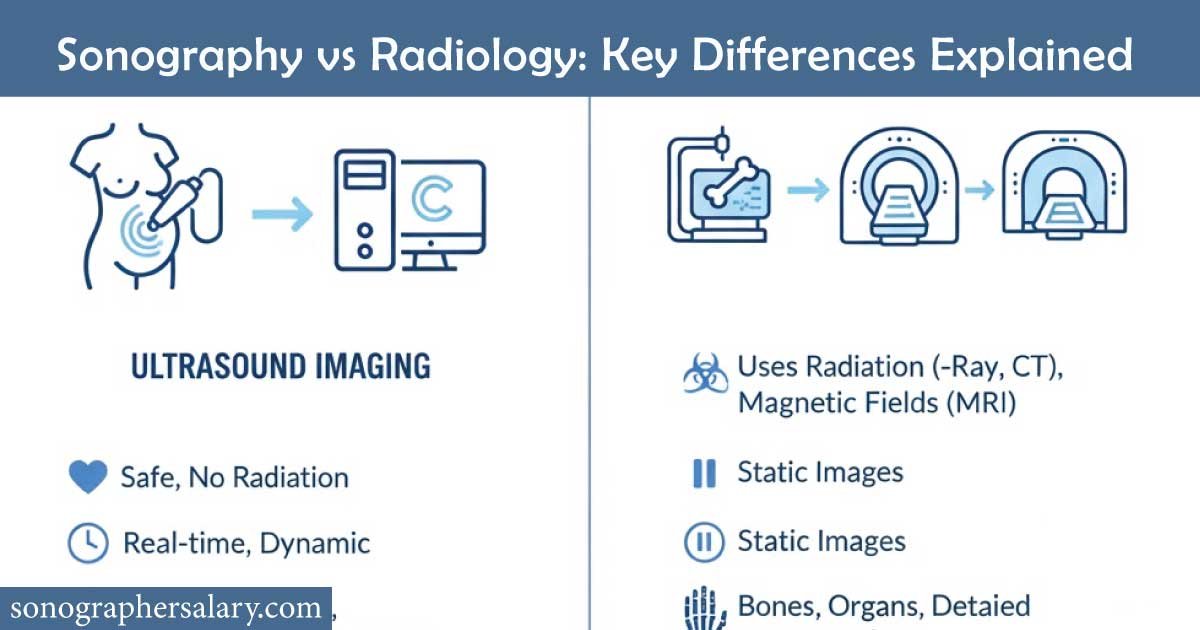
Medical imaging is one of the most essential components of modern healthcare. Whether it’s diagnosing internal injuries, monitoring pregnancies, or detecting complex diseases, imaging allows doctors to see inside the human body without invasive procedures. Two of the most widely used imaging modalities in medicine are sonography and radiology. While these terms are sometimes used interchangeably by patients, they represent distinct practices with unique applications, technologies, and career pathways. Understanding the differences between sonography and radiology can help medical students, aspiring technicians, and patients make informed decisions about education, career, or care options.
In this comprehensive guide, we will break down everything you need to know about sonography and radiology, including their techniques, applications, education requirements, career prospects, common mistakes, and more. By the end of this article, you will have a clear understanding of how these two essential imaging disciplines intersect and diverge.
What Is Sonography?
Sonography, commonly referred to as ultrasound imaging, is a medical imaging technique that uses high-frequency sound waves to produce real-time images of internal organs and tissues. Unlike X-rays, sonography does not expose patients to ionizing radiation, making it a safe and widely used method in areas such as obstetrics, cardiology, and abdominal imaging.
Sonographers, the professionals who perform ultrasound exams, operate specialized machines and interpret the resulting images under the supervision of a physician. Sonography is highly valued for its ability to provide dynamic, moving images that allow doctors to observe organ function, blood flow, and fetal movement.
What Is Radiology?
Radiology is a broader medical field that encompasses various imaging modalities to diagnose and sometimes treat diseases. This includes X-rays, CT scans, MRI scans, PET scans, and interventional procedures. Radiologists are medical doctors who specialize in interpreting these images and guiding patient treatment plans based on their findings.
While sonography falls under the umbrella of diagnostic imaging, radiology is more comprehensive, combining multiple imaging techniques and involving significant interpretation of complex images.
Key Differences Between Sonography and Radiology
To better understand the distinctions, consider the following comparison table:
| Feature | Sonography | Radiology |
|---|---|---|
| Imaging Type | Uses sound waves | Uses ionizing radiation or magnetic fields |
| Safety | Radiation-free, very safe | Involves exposure to radiation in some cases |
| Common Uses | Pregnancy, heart, abdominal organs | Bones, tumors, complex internal structures |
| Professionals | Sonographers (technicians) | Radiologists (medical doctors) |
| Real-Time Imaging | Yes | Typically no (except fluoroscopy) |
| Equipment Cost | Relatively lower | High-end, expensive machines |
| Training Requirements | Associate or bachelor programs | Medical degree + residency |
📌 Top Sonography Training Programs highlight the most effective courses for advancing your medical imaging career. This post covers program features, specializations, and career outcomes. Read the full guide to find the best options and take the next step toward becoming a skilled diagnostic imaging professional.
Applications of Sonography
Sonography has become indispensable in clinical practice. It is especially favored for situations where safety and speed are critical. The most common applications include prenatal imaging to monitor fetal development, cardiac assessments using echocardiography, abdominal imaging for organs like the liver, kidneys, and gallbladder, and vascular studies to assess blood flow.
For example, in obstetrics, sonography allows doctors to track fetal growth, identify congenital anomalies, and even determine the baby’s sex. In cardiology, echocardiography can reveal heart defects, measure chamber sizes, and evaluate blood flow—all in real time.
Applications of Radiology
Radiology, in contrast, offers a wider scope of imaging options for diagnosing complex conditions. X-rays are used to detect fractures or infections in bones, CT scans provide detailed cross-sectional images for trauma or tumor assessment, and MRI scans reveal soft tissue abnormalities such as ligament tears or brain lesions. Interventional radiology even allows for minimally invasive procedures, like stent placement or biopsies, guided entirely by imaging.
Sonography vs Radiology: Education and Career Path
The education and training pathways for these fields differ significantly.
Sonography: Most sonographers pursue an associate or bachelor’s degree in diagnostic medical sonography. Programs typically take 2-4 years and combine classroom instruction with hands-on clinical experience. Certification is often required, with bodies such as the American Registry for Diagnostic Medical Sonography (ARDMS) offering credentials in specialties like obstetrics, cardiac, and vascular sonography.
Radiology: Radiologists are medical doctors, which requires completing a 4-year medical degree followed by a 4-year radiology residency. Sub specialization, such as interventional radiology or pediatric radiology, may require additional fellowship training. Certification is obtained through board exams, such as the American Board of Radiology (ABR) in the United States.
The table below summarizes education requirements:
| Field | Typical Education | Certification | Duration |
|---|---|---|---|
| Sonography | Associate/Bachelor’s in Sonography | ARDMS, CCI, or equivalent | 2–4 years |
| Radiology | Medical Degree + Residency | ABR or equivalent | 8–10 years |
📌 Sonography vs Diagnostic Ultrasound: Expert Complete Guide breaks down the differences, applications, and career paths in medical imaging. This post clarifies techniques, professional roles, and practical uses. Read the full guide to fully understand both fields and make informed decisions for your healthcare career.
Equipment and Technology Differences
Sonography machines are portable, relatively low-cost, and designed to produce live images using sound waves. Radiology equipment varies widely—from traditional X-ray machines to high-end CT and MRI scanners. Radiology equipment often requires specialized facilities, shielding, and significant investment.
| Equipment Type | Sonography | Radiology |
|---|---|---|
| Portability | High | Low (except portable X-ray) |
| Cost | $20,000–$100,000 | $100,000–$3,000,000+ |
| Real-Time Capability | Yes | Mostly no |
| Image Resolution | Moderate | High |
| Safety Measures | Minimal | Requires radiation protection |
Common Mistakes to Avoid in Sonography
Even though sonography is user-friendly, common mistakes can impact diagnostic quality. Poor image quality often results from improper probe positioning, incorrect machine settings, or inadequate patient preparation. Additionally, relying solely on sonography for complex diagnoses without consulting other imaging modalities can lead to misdiagnosis. A combined approach is often best for comprehensive care.
Common Mistakes to Avoid in Radiology
Radiology mistakes can stem from technical issues, interpretation errors, or failure to follow safety protocols. For example, misreading subtle fractures on X-rays, overlooking soft tissue anomalies on CT scans, or underestimating radiation doses can compromise patient outcomes. Continuous training, peer review, and quality control protocols help minimize such errors.
Practical Tips for Aspiring Professionals
If you are considering a career in sonography or radiology, here are some practical tips:
Gain early exposure by shadowing professionals in both fields to understand daily workflows.
Focus on mastering anatomy and physiology, as these are crucial for image interpretation.
Seek certification early, as it enhances credibility and career prospects.
Stay updated with technological advancements, including AI integration and portable imaging devices.
Salary Comparison: Sonography vs Radiology
Compensation can vary depending on location, experience, and specialization. Radiologists generally earn higher salaries due to medical degrees and extensive training, while sonographers enjoy a balance of good pay and shorter educational paths.
| Profession | Average Salary (USA) | Highest Earning Specialty |
|---|---|---|
| Sonographer | $75,000–$95,000 | Cardiac/Echocardiography |
| Radiologist | $300,000–$500,000 | Interventional Radiology |
📌 Understanding Sonography: The Expert Complete Guide dives into the science, techniques, and career opportunities in medical imaging. This post explains how sonography works, its applications, and essential skills. Read the full guide to gain expert insights and confidently start or advance your career in this growing healthcare field.
Future Trends in Medical Imaging
The field of medical imaging is rapidly evolving. Artificial intelligence is being integrated into both sonography and radiology to enhance image interpretation, reduce human error, and speed up workflow. Portable and handheld sonography devices are becoming more accessible, expanding the reach of diagnostic imaging to remote areas. Radiology is seeing innovations in 3D imaging, hybrid PET/MRI scanners, and image-guided minimally invasive procedures. Staying current with these trends is crucial for career growth.
Integrating Sonography and Radiology in Patient Care
In modern clinical practice, sonography and radiology are often complementary rather than competing. A patient may undergo a sonography exam first for real-time assessment and then follow up with CT or MRI for more detailed imaging. Understanding the strengths and limitations of each modality allows healthcare providers to deliver more accurate diagnoses and better patient outcomes.
Comparison Table of Imaging Modalities
| Modality | Best For | Limitations | Safety Level |
|---|---|---|---|
| Sonography | Pregnancy, Heart, Abdominal Organs | Operator-dependent | Very High |
| X-Ray | Bone Fractures, Chest Imaging | Radiation exposure | Moderate |
| CT Scan | Trauma, Tumors, Internal Bleeding | Radiation dose, costly | Moderate |
| MRI | Soft Tissue, Brain, Spine | Expensive, time-consuming | Very High |
| PET Scan | Cancer detection, Metabolic Imaging | Radiation exposure | Moderate |
Mini Integrated List: When to Choose Sonography vs Radiology
Choosing the right imaging modality depends on the situation. Generally, sonography is preferred for:
- Pregnancies and fetal monitoring
- Real-time organ function assessment
- Situations requiring radiation-free imaging
Radiology is preferred when:
- Detailed bone or soft tissue imaging is needed
- Complex diseases or trauma require comprehensive scans
- Image-guided interventions or surgeries are planned
Conclusion
Understanding the differences between sonography and radiology is essential for anyone entering the healthcare field or seeking medical care. Sonography offers real-time, safe imaging ideal for pregnancy, cardiac, and abdominal evaluations, while radiology provides a broad spectrum of high-resolution imaging and interventional capabilities. Both disciplines complement each other, enhancing diagnostic accuracy and patient care. Aspiring professionals should carefully consider education paths, certification, and technological trends to excel in these rewarding careers. By integrating knowledge of both fields, healthcare providers can deliver better diagnoses, safer treatments, and more effective patient outcomes.
📌 Online Medical Imaging Courses provide flexible learning options for anyone looking to start or advance a career in diagnostic imaging. This post explores course types, skills gained, and career prospects. Read the full guide to find the best programs and begin your journey in the healthcare imaging field.
FAQs:
Which one is better, radiology or sonography?
Sonography is better for non-invasive, real-time imaging and pregnancy monitoring, while radiology covers a wider range of imaging techniques, including X-rays, CT scans, and MRI. The choice depends on career goals, interest in technology, patient interaction, and specialization, as both fields offer rewarding medical imaging careers.
Which one pays more, radiology or sonography?
Typically, radiology pays more because it involves higher-level imaging procedures and often requires medical school or advanced certifications. However, specialized sonographers, like cardiac or vascular sonographers, can earn salaries comparable to radiology techs. Pay depends on experience, location, and specialization within either field.
Which is best, a sonologist or a radiologist?
A radiologist is a medical doctor who interprets imaging results, while a sonologist specializes in ultrasound imaging. Radiologists have broader responsibilities and higher earning potential, but sonologists are experts in sonography and provide detailed diagnostic imaging. “Best” depends on your interest, career path, and level of medical training desired.
Is a sonographer a radiology tech?
Yes, a sonographer is a type of radiology tech, focusing specifically on ultrasound imaging. While all sonographers are radiologic technologists, not all radiology techs perform sonography. Sonographers specialize in safe, non-invasive imaging using sound waves to produce detailed internal images for diagnostic purposes.
Can a radiologist do an ultrasound?
Yes, a radiologist can perform an ultrasound, but usually only in specialized cases or smaller clinics. Radiologists are trained in multiple imaging modalities, including ultrasound, X-ray, MRI, and CT scans. However, in most hospitals, sonographers handle the scan, and radiologists interpret the images for diagnosis.
Why do people quit sonography?
People may quit sonography due to physical strain, long hours, or repetitive movements, as scanning patients can be demanding. Other reasons include burnout, limited advancement opportunities, or salary expectations. Despite being rewarding, the field requires dedication, patience, and adaptability, which can lead some professionals to seek alternative medical careers.

Zak is a dedicated medical and career writer specializing in sonography, healthcare education, and professional development. Through SonographerSalary.com, he shares in-depth insights on sonographer salaries, education pathways, and career tips to help readers build successful futures in medical imaging. His content combines accuracy with practical, easy-to-understand guidance, empowering students and professionals to make confident, informed career decisions.