
Diagnostic medical sonography is one of the most important and rapidly growing fields in healthcare. Often referred to as ultrasound technology, sonography uses high-frequency sound waves to create real-time images of the body’s internal organs, tissues, and blood flow. This non-invasive imaging technique helps doctors diagnose, monitor, and treat a wide range of medical conditions safely and efficiently.
A career in diagnostic medical sonography is more than just operating a machine. It is a blend of science, technology, and patient care, requiring both technical expertise and strong interpersonal skills. In this guide, we will explore the essentials of sonography, including its applications, educational requirements, career prospects, specializations, and the skills needed to succeed in this rewarding medical profession.
What Is Diagnostic Medical Sonography?
Diagnostic medical sonography is the practice of using sound waves to produce images of the body’s internal structures. Unlike X-rays, which use radiation, ultrasound is completely safe, making it a preferred option for imaging fetuses during pregnancy, soft tissues, blood vessels, and organs like the liver, kidneys, and heart.
Sonographers, the professionals trained to operate ultrasound equipment, play a crucial role in healthcare. They capture accurate images, identify abnormalities, and provide vital information to physicians for diagnosis. Their work is critical in ensuring patients receive proper care, and they often serve as the first line of detection for many medical conditions.
Roles and Responsibilities of a Diagnostic Medical Sonographer
The job of a sonographer is multifaceted. It requires technical skills, attention to detail, and the ability to work closely with patients. Here’s what sonographers typically do:
Perform ultrasound scans: Sonographers operate ultrasound equipment, adjusting settings to capture the best possible images.
Patient preparation: They explain procedures, position patients correctly, and ensure comfort during the examination.
Image analysis: Sonographers review images for clarity, completeness, and indications of abnormalities.
Collaboration with doctors: They communicate findings to radiologists or physicians, providing crucial information for diagnosis.
Equipment maintenance: Sonographers ensure ultrasound machines are functioning correctly and maintain hygiene standards.
Documentation: They record patient data, examination details, and image interpretations accurately.
This combination of responsibilities highlights that sonography is both a technical and patient-centered profession.
Also Read:
Sonographer Salary Per Hour 2025: Complete Pay Guide
Specializations in Diagnostic Medical Sonography
Sonography offers multiple pathways depending on your interests and career goals. Specializing in a particular area allows sonographers to focus on a specific patient population or type of imaging.
Here’s an overview of common specialties:
| Specialization | Primary Focus | Typical Use Cases |
|---|---|---|
| Abdominal Sonography | Liver, kidneys, pancreas, spleen, gallbladder | Detect tumors, stones, organ enlargement, or damage |
| Obstetric & Gynecologic (OB/GYN) | Female reproductive organs, fetal development | Monitor pregnancies, detect congenital conditions, assess reproductive health |
| Vascular Sonography | Arteries and veins, blood flow | Identify clots, blockages, or vascular diseases |
| Cardiac (Echocardiography) | Heart structure and function | Evaluate heart health, valves, chambers, and blood flow |
| Musculoskeletal (MSK) | Muscles, tendons, ligaments, joints | Diagnose sports injuries, inflammation, or soft tissue damage |
| Small Parts & Superficial Structures | Thyroid, breast, testicles, superficial lumps | Detect abnormalities in small organs and soft tissues |
| Pediatric / Neonatal | Infants and children | Monitor development and diagnose congenital issues |
These specializations provide flexibility in career choices, allowing sonographers to focus on areas they are passionate about.
Educational Requirements
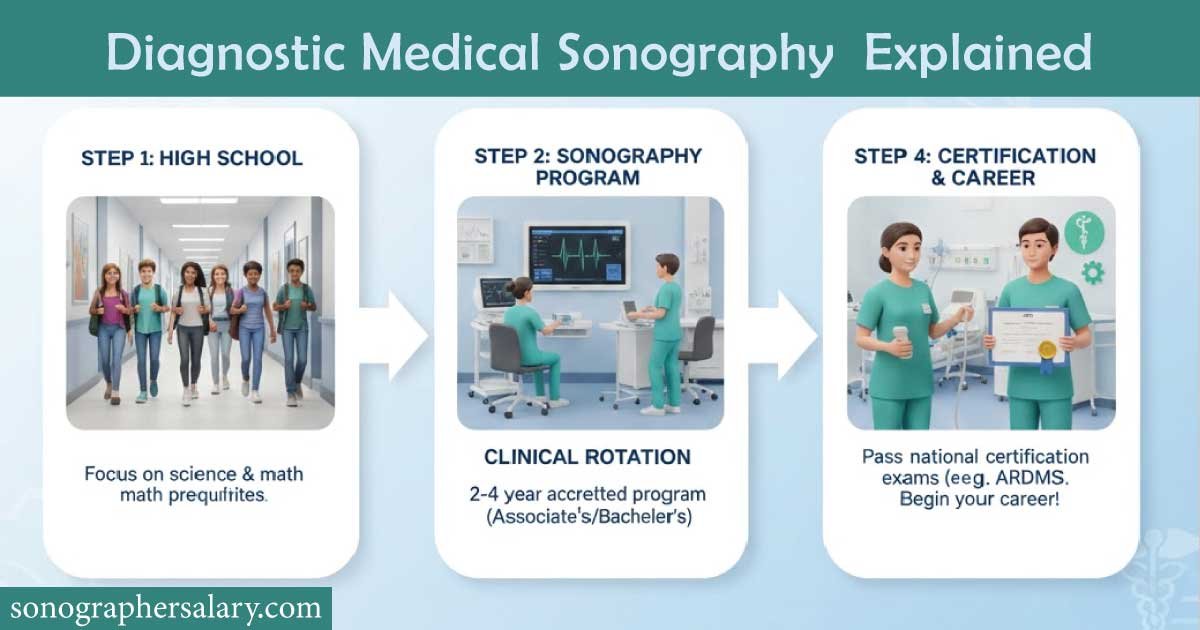
To become a diagnostic medical sonographer, you need a combination of formal education, clinical training, and certification. The path typically includes:
High School Preparation: Focus on science courses like biology, chemistry, physics, and anatomy. Strong math and computer skills are also beneficial.
Accredited Sonography Program: You can pursue an Associate’s degree (most common), a Bachelor’s degree, or a Certificate program if you already work in allied health. Courses cover anatomy, physiology, ultrasound physics, patient care, and clinical training.
Clinical Experience: Hands-on training under supervision is essential to gain practical skills in patient handling, imaging, and analysis.
Certification: While not always mandatory, certifications increase job prospects and credibility. The ARDMS (American Registry for Diagnostic Medical Sonography) offers recognized credentials in general and specialized sonography fields.
Typical Educational Timeline
| Stage | Description | Duration |
|---|---|---|
| High school | Focus on science courses | 4 years |
| Sonography program | Associate’s or Bachelor’s degree with coursework and labs | 2–4 years |
| Clinical rotation | Hands-on experience in a healthcare setting | 6–12 months |
| Certification | Pass ARDMS or equivalent exams | 1–3 months |
Also Read:
Texas Cardiovascular Sonographer Salary Trends 2025
Skills Needed to Excel in Sonography
A career in diagnostic medical sonography demands more than just operating machines. Sonographers must combine technical expertise with medical understanding, problem-solving abilities, and strong interpersonal skills to produce accurate images, ensure patient comfort, and support healthcare teams effectively.
1. Medical Knowledge
A strong foundation in anatomy, physiology, and pathology is crucial for sonographers. They must understand how organs and tissues appear in healthy and abnormal conditions, enabling them to recognize potential medical issues and provide accurate imaging for diagnostic purposes.
2. Attention to Detail
Precision is vital in sonography, as even minor variations in ultrasound images can indicate significant health problems. Sonographers must carefully observe and analyze every image, ensuring that anomalies, abnormalities, or subtle changes are not overlooked during examinations.
3. Technical Proficiency
Operating advanced ultrasound equipment requires technical skill and familiarity with machine settings. Sonographers must know how to adjust transducers, optimize image quality, and troubleshoot equipment issues to capture accurate, diagnostically useful images for physicians.
4. Communication Skills
Clear and compassionate communication is essential. Sonographers explain procedures to patients, alleviate anxiety, and provide guidance during scans. They also collaborate with doctors and nurses, conveying observations and findings to support accurate diagnoses and treatment planning.
5. Physical Stamina
Sonography can be physically demanding. Sonographers spend long hours standing, moving patients, and manipulating equipment. Maintaining endurance, proper posture, and strength is necessary to perform high-quality scans consistently and reduce the risk of fatigue or injury.
6. Ethical and Empathetic Care
Treating patients with respect, empathy, and confidentiality is fundamental. Sonographers encounter individuals in vulnerable situations, and demonstrating ethical behavior and compassion helps build trust, ensures patient comfort, and upholds the professional standards of healthcare practice.
Also Read:
Sonographer Qualifications: Education, Training & Salary (2025)
Career Outlook and Salary
Diagnostic medical sonography offers an excellent career path with strong growth potential. As medical technology advances and healthcare systems expand, the need for skilled sonographers continues to rise. Professionals in this field enjoy both job stability and opportunities for advancement across diverse healthcare settings.
1. Growing Demand
One major factor driving demand is the aging population. Older adults require more frequent diagnostic imaging to monitor chronic conditions, assess organ health, and manage illnesses. This increased reliance on imaging services ensures that qualified sonographers are consistently needed in hospitals, clinics, and outpatient centers.
2. Non-Invasive Imaging Popularity
Healthcare providers increasingly prefer non-invasive imaging methods like ultrasound because they are safe, cost-effective, and efficient. As a result, sonography is replacing more invasive procedures for many diagnostic purposes, making the role of sonographers essential in modern medical practice.
3. Expanding Opportunities
The rise of outpatient clinics, specialty diagnostic centers, and mobile imaging services has created additional career opportunities. Sonographers can now work in diverse settings, including cardiology offices, fertility clinics, research labs, and emergency departments, offering flexibility and specialization within the field.
4. Salary Overview
Salaries in diagnostic medical sonography are competitive compared to other allied health professions. Entry-level sonographers typically earn a solid wage, while experienced and specialized professionals can command significantly higher salaries. Benefits often include health insurance, paid leave, retirement plans, and continuing education support.
5. Career Growth
The job outlook for sonographers is highly favorable. With a growing emphasis on preventive care and early diagnosis, employment is projected to expand faster than average. Individuals who pursue advanced certifications or specialize in high-demand areas may enjoy accelerated career advancement and leadership opportunities.
6. Salary Overview
| Experience Level | Average Annual Salary | Notes |
|---|---|---|
| Entry-Level (0–2 years) | $65,000–$75,000 | Salaries vary by location and specialty |
| Mid-Level (3–5 years) | $75,000–$95,000 | Often includes additional responsibilities or specialized roles |
| Senior-Level (5+ years) | $95,000–$120,000+ | May include leadership roles, teaching, or advanced certifications |
Top earners may work in hospitals, high-demand metropolitan areas, or specialized clinics, while entry-level positions are commonly found in outpatient centers and community hospitals.
Also Read:
How Online Sonography Programs Work in 2025
Advantages of a Career in Sonography
A career in diagnostic medical sonography offers numerous benefits that make it one of the most rewarding healthcare professions. From job stability to patient impact, sonographers enjoy professional fulfillment while playing a crucial role in modern medical care.
1. High Demand & Job Security
The demand for skilled sonographers remains consistently strong due to the growing need for diagnostic imaging. With aging populations, rising chronic health conditions, and increased emphasis on preventive care, sonographers enjoy long-term job security, making this profession a stable and reliable career choice in healthcare.
2. Good Salary & Benefits
Sonographers typically earn competitive salaries, often higher than other allied health professionals. Alongside financial compensation, many employers offer benefits such as health insurance, paid time off, retirement plans, and continuing education support, making the profession financially rewarding and professionally satisfying.
3. Patient Impact
Sonographers play a direct role in patient care by capturing accurate images that guide diagnoses, treatment plans, and monitoring of conditions. Their work can save lives, detect issues early, and provide reassurance, making the job emotionally fulfilling and impactful for both patients and families.
4. Diverse Work Settings
A sonography career provides flexibility with various work environments. Professionals can work in hospitals, outpatient clinics, research laboratories, private imaging centers, or educational institutions. This variety allows individuals to align their career with their personal interests, lifestyle, and desired level of patient interaction.
5. Non-Invasive & Safe
Ultrasound technology is non-invasive and does not use harmful radiation, making it a safe diagnostic option for patients of all ages. For sonographers, this safety aspect reduces occupational risks, while offering a highly ethical and patient-friendly imaging method that is in high demand across healthcare facilities.
Challenges in the Field
While rewarding, sonography does come with challenges:
Physically Demanding Work: Standing long hours and maneuvering equipment can strain the body.
Emotional Stress: Dealing with sick patients and delivering accurate results under pressure can be demanding.
Variable Work Hours: Shifts may include nights, weekends, and on-call duties.
Continuous Learning: Technology evolves rapidly, requiring ongoing education and skill updates.
Despite these challenges, many sonographers find the career highly satisfying due to its impact on patient care and opportunities for growth.
Job Settings for Sonographers
Sonographers work in a variety of healthcare environments:
| Work Setting | Typical Responsibilities |
|---|---|
| Hospitals | Conducting inpatient and emergency scans, collaborating with physicians, teaching students |
| Outpatient Clinics | Routine scans, prenatal imaging, patient follow-ups |
| Diagnostic Imaging Centers | Specializing in specific modalities like vascular, cardiac, or OB/GYN |
| Private Practices | Focused work in specialties such as fertility clinics, cardiology, or orthopedic centers |
| Research & Education | Developing new imaging techniques, teaching future sonographers, conducting clinical studies |
This flexibility allows professionals to choose a work environment that suits their lifestyle and career goals.
📊 California Cardiovascular Sonographer Salary Guide reveals what heart-focused sonographers earn in hospitals, clinics, and outpatient centers across the Golden State. This comprehensive guide breaks down hourly, monthly, and yearly pay while sharing tips to boost income with certifications, experience, and specialized skills. Read on for the full details.
Future of Diagnostic Medical Sonography
The future of sonography is promising. Advances in technology, such as 3D and 4D imaging, elastography, and artificial intelligence-assisted imaging, are improving diagnostic accuracy and efficiency. Sonographers who adapt to new technologies and pursue advanced certifications will have even greater career opportunities.
Additionally, as healthcare becomes more patient-centered, sonographers will play a vital role in early diagnosis, preventive care, and patient education. This profession is likely to remain essential for decades to come.
Conclusion
Diagnostic medical sonography is a rewarding career that combines technical skill, medical knowledge, and compassionate patient care. From capturing crucial images that guide life-saving treatments to helping expectant parents see their unborn child for the first time, sonographers make a tangible difference in healthcare every day.
With strong demand, competitive salaries, diverse career paths, and opportunities for specialization, sonography is an excellent choice for anyone passionate about science, technology, and patient care. Whether you are starting your journey in healthcare or seeking a specialized career, diagnostic medical sonography offers both professional growth and personal fulfillment.
By pursuing education, obtaining certification, and developing essential skills, you can embark on a career that is intellectually challenging, emotionally rewarding, and continuously evolving. If you have a curiosity for the human body, a passion for technology, and a desire to help people, diagnostic medical sonography could be the perfect fit for your future.
FAQs:
What is diagnostic medical sonography?
Diagnostic medical sonography is a medical imaging technique that uses high-frequency sound waves to produce real-time images of internal organs, tissues, and blood flow. It is non-invasive, safe, and widely used to help doctors diagnose, monitor, and treat various conditions, including pregnancy, heart issues, and organ abnormalities.
What qualifications do you need to be a sonographer?
To become a sonographer, you typically need a high school diploma with strong science courses, an accredited sonography program (associate’s or bachelor’s degree), clinical training, and professional certification, such as ARDMS. Strong medical knowledge, technical skills, and patient care abilities are essential for a successful career in sonography.
What is the highest paying job in sonography?
The highest paying jobs in sonography usually involve specialized fields like cardiac sonography (echocardiography), vascular sonography, or pediatric/neonatal sonography. Senior-level sonographers, managers, and educators in large hospitals or specialized clinics also earn top salaries, often exceeding $100,000 annually depending on experience, location, and certifications.
What is the difference between a sonographer and an ultrasound tech?
A sonographer is a highly trained healthcare professional who performs diagnostic imaging, interprets images, and collaborates with physicians. “Ultrasound tech” is an informal term often used interchangeably, but it may imply a more technical role with less clinical judgment. Sonographers have deeper medical training and broader responsibilities in patient care.
What is the difference between ultrasound and sonography?
Ultrasound refers to the technology that uses sound waves to create images, while sonography is the practice or profession of performing and interpreting those imaging studies. In short, ultrasound is the tool, and sonography is the skill and process used by trained professionals to diagnose and monitor medical conditions.
Is diagnostic medical sonography hard?
Diagnostic medical sonography can be challenging because it requires understanding anatomy, physiology, and pathology, mastering technical equipment, and maintaining precision. It also demands physical stamina, attention to detail, and effective patient communication. With proper education, clinical training, and practice, most students can successfully learn and excel in this rewarding career.

Zak is a dedicated medical and career writer specializing in sonography, healthcare education, and professional development. Through SonographerSalary.com, he shares in-depth insights on sonographer salaries, education pathways, and career tips to help readers build successful futures in medical imaging. His content combines accuracy with practical, easy-to-understand guidance, empowering students and professionals to make confident, informed career decisions.