
A cardiovascular sonographer is a highly skilled medical imaging professional who specializes in using ultrasound technology to examine the heart and blood vessels. These professionals play a critical role in diagnosing heart conditions, monitoring ongoing treatments, and assisting cardiologists with accurate medical decisions. Because heart disease remains one of the most common health concerns, cardiovascular sonographers continue to be in high demand across hospitals and diagnostic centers.
One of the biggest reasons people choose this career path is the strong salary potential combined with job stability. In this detailed guide, we will break down cardiovascular sonographer salary from every angle — including annual income, hourly wages, experience-based growth, work settings, state comparisons, certifications, and long-term career outlook.
Average Cardiovascular Sonographer Salary in the United States
On a national level, cardiovascular sonographers earn a solid middle-to-high income compared to many allied healthcare roles. The salary reflects the technical expertise, responsibility, and precision required for this job.
Most cardiovascular sonographers earn between $70,000 and $95,000 per year, with many experienced professionals crossing the six-figure mark through overtime, specialization, or leadership roles.
National Salary Overview
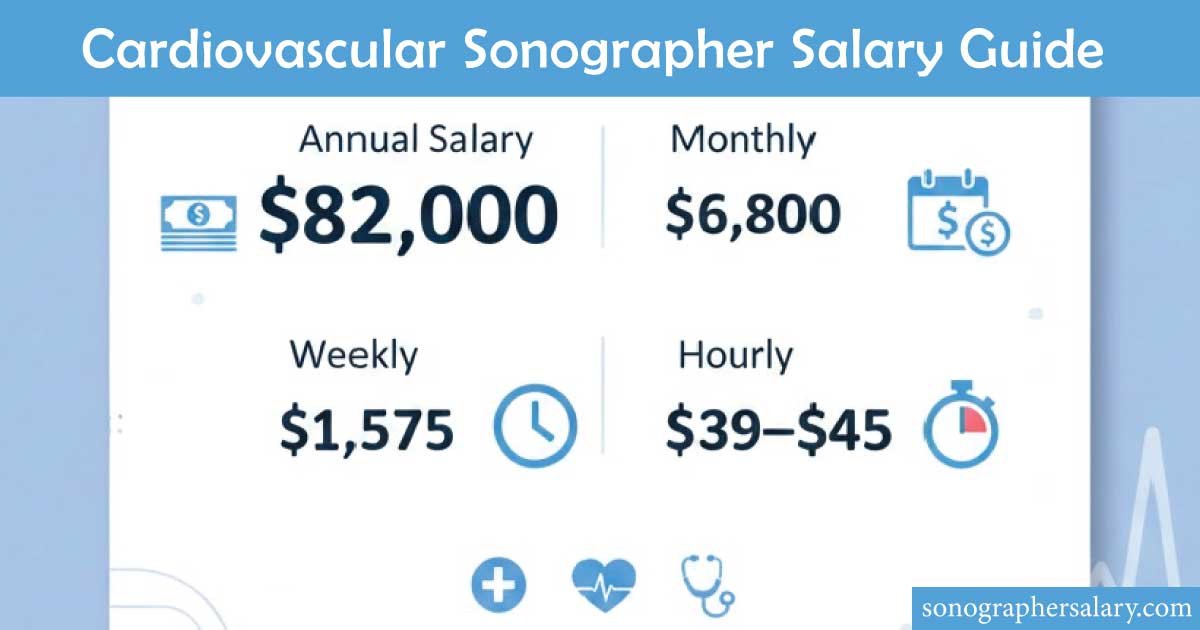
| Pay Type | Average Amount |
|---|---|
| Annual Salary | $82,000 |
| Monthly Income | $6,800 |
| Weekly Income | $1,575 |
| Hourly Wage | $39 – $45 |
These figures can rise significantly depending on experience, certifications, and geographic location.
Also Read: Diagnostic Medical Sonographer Salary: Career Guide
Cardiovascular Sonographer Salary by Experience Level
Experience is one of the most powerful factors influencing salary. As sonographers gain confidence, efficiency, and clinical judgment, employers are willing to pay more for their expertise.
Entry-Level Cardiovascular Sonographer Salary
New graduates or professionals with less than two years of experience usually start at the lower end of the pay scale. While entry-level salaries may seem modest, growth is typically fast.
Focus is on learning procedures and improving image quality
Often work under supervision
May rotate shifts and departments
Entry-Level Salary Range: $55,000 – $68,000 annually
Mid-Level Cardiovascular Sonographer Salary
After gaining a few years of hands-on experience, salaries increase noticeably. Mid-level sonographers handle complex cases with more independence.
Perform advanced cardiac exams
Assist cardiologists during procedures
Train junior staff
Mid-Level Salary Range: $68,000 – $95,000 annually
Senior & Highly Experienced Sonographer Salary
Senior cardiovascular sonographers often take leadership roles, specialize in advanced imaging, or manage departments.
Lead imaging teams
Handle critical patients
Oversee quality control
Senior Salary Range: $95,000 – $115,000+
Also Read: Sonographer Salary Per Hour: Complete Pay Guide
Experience-Based Salary Table
| Experience Level | Annual Salary |
|---|---|
| 0–2 Years | $55,000 – $68,000 |
| 3–5 Years | $68,000 – $82,000 |
| 6–10 Years | $82,000 – $95,000 |
| 10+ Years | $95,000 – $115,000+ |
Hourly Wage for Cardiovascular Sonographers
Most cardiovascular sonographers are paid hourly, especially those working in hospitals. Hourly wages allow additional earning opportunities through overtime and on-call shifts.
Hourly Pay Breakdown
| Experience Level | Hourly Rate |
|---|---|
| Entry-Level | $28 – $34 |
| Mid-Level | $35 – $42 |
| Experienced | $43 – $50 |
| Specialized / Travel | $50+ |
Night shifts, weekends, and emergency call-ins often come with higher hourly rates.
Cardiovascular Sonographer Salary by Work Setting
The type of healthcare facility you work in significantly impacts your income.
Hospital-Based Sonographers
Hospitals typically offer the highest salaries because they handle emergency cases and advanced procedures.
Higher patient volume
Shift differentials
On-call pay
Average Salary: $85,000 – $100,000
Outpatient Clinics & Diagnostic Centers
These facilities offer more predictable schedules but slightly lower pay.
Regular business hours
Fewer emergencies
Lower stress environment
Average Salary: $70,000 – $90,000
Cardiology Offices
Private cardiology practices often pay competitively and provide a balanced work environment.
Average Salary: $78,000 – $92,000
Travel & Mobile Sonography
Travel cardiovascular sonographers earn the highest income but must relocate frequently.
Average Salary: $95,000 – $120,000
Salary by Work Setting Table
| Work Environment | Annual Salary |
|---|---|
| Hospitals | $85,000 – $100,000 |
| Diagnostic Centers | $75,000 – $90,000 |
| Cardiology Clinics | $78,000 – $92,000 |
| Travel Sonography | $95,000 – $120,000 |
Also Read: Texas Cardiovascular Sonographer Salary
Cardiovascular Sonographer Salary by State
Geography plays a major role in determining pay. States with higher living costs and advanced healthcare systems tend to pay more.
Estimated State Salary Comparison
| State | Average Salary |
|---|---|
| California | $95,000 – $110,000 |
| New York | $90,000 – $105,000 |
| Massachusetts | $92,000 – $108,000 |
| Texas | $75,000 – $88,000 |
| Florida | $73,000 – $85,000 |
| Illinois | $78,000 – $90,000 |
| Ohio | $70,000 – $82,000 |
| Georgia | $72,000 – $84,000 |
Urban hospitals usually offer higher salaries than rural facilities.
Cardiovascular vs Cardiac Sonographer Salary
Although often used interchangeably, cardiovascular sonographers typically handle both cardiac and vascular imaging, which can increase pay.
Salary Comparison
| Role | Average Salary |
|---|---|
| Cardiac Sonographer | $75,000 – $90,000 |
| Cardiovascular Sonographer | $80,000 – $100,000 |
| Vascular Sonographer | $78,000 – $95,000 |
Professionals trained in multiple imaging specialties earn more and have greater job flexibility.
Certifications That Increase Salary
Certifications validate skills and significantly boost earning potential.
High-Value Certifications
RDCS (Registered Diagnostic Cardiac Sonographer)
RCS (Registered Cardiac Sonographer)
Vascular Technology Certification
Pediatric Echocardiography Certification
Certified sonographers often earn 10–20% more than non-certified professionals.
Benefits Beyond Base Salary
Beyond competitive income, cardiovascular sonographers receive strong employment benefits that greatly enhance total compensation. These benefits improve financial stability, health security, work-life balance, and long-term career satisfaction, making the profession rewarding both professionally and personally over time.
1- Health and Dental Insurance
Most employers provide comprehensive health and dental coverage, helping cardiovascular sonographers manage medical expenses, preventive care, and emergencies while reducing out-of-pocket costs throughout their careers.
2- Paid Vacation and Sick Leave
Paid vacation and sick leave allow cardiovascular sonographers to rest, recover, and maintain work-life balance without losing income, which is especially important in a physically and mentally demanding healthcare role.
3- Retirement Plans
Employer-supported retirement plans help cardiovascular sonographers build long-term financial security by contributing savings consistently, allowing professionals to plan confidently for life after active clinical work.
4- Overtime Bonuses
Overtime bonuses significantly increase earning potential, especially for sonographers working night shifts, weekends, or on-call hours, making extra effort financially rewarding without changing positions.
5- Continuing Education Support
Many employers support continuing education by covering certification costs and training programs, enabling cardiovascular sonographers to upgrade skills, stay current with technology, and qualify for higher-paying roles.
6- Job Security
Strong demand for cardiac imaging ensures excellent job security, allowing cardiovascular sonographers to enjoy stable employment, career mobility, and consistent opportunities across hospitals and diagnostic centers.
7- Overall Compensation Value
When combined, salary and benefits create a highly competitive compensation package, making cardiovascular sonography a financially stable and sustainable career choice within the healthcare industry.
Job Outlook & Long-Term Career Growth
The future outlook for cardiovascular sonographers is very positive due to increasing heart-related health conditions, an aging population, and greater reliance on non-invasive diagnostic imaging. These factors continue to drive strong demand, long-term job stability, and steady career growth opportunities across healthcare facilities.
Key Growth Factors
- Aging population
- Increased heart disease awareness
- Non-invasive diagnostic preference
- Technological advancements
This career offers long-term stability and consistent salary growth.
Is Cardiovascular Sonography Worth It?
Cardiovascular sonography is absolutely worth pursuing for individuals seeking a stable, well-paying healthcare career with a strong sense of purpose. The field offers impressive earning potential without requiring many years of medical school, allowing professionals to enter the workforce relatively quickly. Demand for cardiovascular sonographers remains consistently high due to rising heart-related conditions and an aging population, which provides excellent job security. The profession is well respected within the medical community, as sonographers play a crucial role in accurate diagnosis and patient care. Most importantly, cardiovascular sonographers make a meaningful impact by helping detect and monitor life-threatening heart conditions, combining technology with compassionate healthcare.
Final Thoughts
The cardiovascular sonographer salary reflects the importance and expertise required in this role. With average earnings ranging from $70,000 to over $100,000, this profession stands out as one of the most rewarding allied healthcare careers available today.
By gaining experience, earning certifications, and choosing the right work setting, cardiovascular sonographers can build a financially stable and personally fulfilling career.
Also Read: California Cardiovascular Sonographer Salary Guide

Zak is a dedicated medical and career writer specializing in sonography, healthcare education, and professional development. Through SonographerSalary.com, he shares in-depth insights on sonographer salaries, education pathways, and career tips to help readers build successful futures in medical imaging. His content combines accuracy with practical, easy-to-understand guidance, empowering students and professionals to make confident, informed career decisions.