
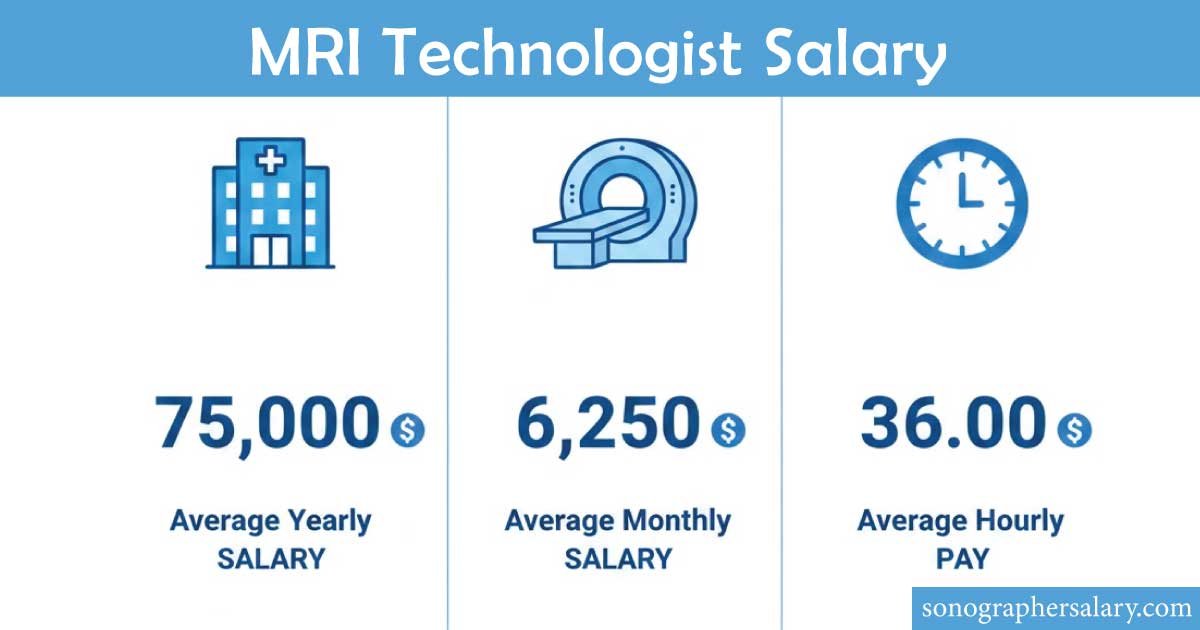
The healthcare field continues to expand, and medical imaging plays a vital role in modern diagnosis and treatment. Among imaging professionals, MRI technologists stand out for their specialized skills, advanced technology, and strong earning potential. If you are researching this career or already working in radiology, understanding the MRI technologist salary can help you plan your future with clarity and confidence.
This guide explains how much MRI technologists earn, how salaries vary by experience, state, and workplace, and how income grows over time using clear explanations and detailed tables for easy understanding.
Who Is an MRI Technologist?
An MRI technologist is a trained healthcare professional who operates Magnetic Resonance Imaging (MRI) scanners to produce detailed images of organs, tissues, and bones. These images assist physicians in diagnosing conditions such as tumors, spinal injuries, neurological disorders, and joint problems.
MRI technologists work closely with patients, radiologists, and physicians, ensuring imaging procedures are accurate, safe, and comfortable. Because MRI uses powerful magnetic fields, technologists must follow strict safety standards and protocols.
Average MRI Technologist Salary in the United States
The average MRI technologist salary in the U.S. is higher than many other allied healthcare roles because this position demands advanced technical skills, specialized training, and strict safety knowledge. MRI technologists work with complex imaging equipment and assist in accurate medical diagnoses, which increases their overall professional value.
Average Salary Overview
| Pay Type | Average Amount |
|---|---|
| Hourly Wage | $32 – $42 |
| Monthly Income | $5,800 – $7,100 |
| Yearly Salary | $70,000 – $85,000 |
Salaries may go well beyond this range depending on experience, location, certifications, and work setting.
Entry-Level MRI Technologist Salary
New MRI technologists entering the workforce typically earn competitive wages, even in their first role. Entry-level professionals often receive steady income growth as they gain hands-on experience, become comfortable with advanced MRI equipment, and learn to work efficiently with patients and medical teams.
Entry-Level Salary Table
| Experience Level | Hourly Pay | Annual Salary |
|---|---|---|
| 0–1 Year | $26 – $29 | $55,000 – $60,000 |
| 1–2 Years | $28 – $31 | $60,000 – $65,000 |
Early-career technologists often see steady salary increases within their first few years, especially after gaining hands-on experience and additional credentials.
MRI Technologist Salary by Experience
Experience plays a major role in long-term earning potential for MRI technologists. As professionals gain hands-on practice, improve scanning accuracy, and manage more complex imaging cases, their value increases. With time, advanced responsibilities and stronger clinical confidence naturally lead to higher and more stable salaries.
Salary by Experience Level
| Experience | Average Annual Salary |
|---|---|
| 0–2 Years | $55,000 – $65,000 |
| 3–5 Years | $75,000 – $90,000 |
| 6–9 Years | $90,000 – $100,000 |
| 10+ Years | $100,000 – $115,000+ |
Senior MRI technologists may also train new staff, handle advanced imaging protocols, or take supervisory responsibilities, which can further increase earnings.
MRI Technologist Salary by State
Location has a significant impact on MRI technologist pay. States with higher living costs and strong healthcare infrastructure generally offer higher salaries.
Highest-Paying States for MRI Technologists
| State | Average Annual Salary |
|---|---|
| California | $100,000 – $115,000 |
| New York | $95,000 – $108,000 |
| Massachusetts | $90,000 – $105,000 |
| Washington | $88,000 – $100,000 |
| New Jersey | $85,000 – $98,000 |
Moderate-Paying States
| State | Average Annual Salary |
|---|---|
| Texas | $70,000 – $82,000 |
| Florida | $65,000 – $78,000 |
| Ohio | $68,000 – $80,000 |
| Arizona | $72,000 – $85,000 |
Urban hospitals often pay more than rural facilities, although some rural locations offer incentives to attract skilled MRI professionals.
MRI Technologist Salary by Work Setting
Different healthcare environments offer different pay structures. Workload, patient volume, and specialization affect compensation.
Salary by Workplace Type
| Work Setting | Average Annual Salary |
|---|---|
| Hospitals | $75,000 – $95,000 |
| Outpatient Imaging Centers | $68,000 – $85,000 |
| Private Clinics | $70,000 – $88,000 |
| Diagnostic Labs | $72,000 – $90,000 |
| Travel MRI Assignments | $100,000 – $130,000 |
Travel MRI technologists often earn higher pay due to short-term contracts, location demand, and flexible assignments.
Also Read:
MRI Technologist Salary by Certification
Certification significantly improves earning potential and job opportunities. Most employers prefer certified professionals.
Certification Impact on Salary
| Certification | Average Salary Increase |
|---|---|
| ARRT (MRI) | +10–15% |
| ARMRIT | +8–12% |
| Advanced MRI Specialization | +15–20% |
Certified MRI technologists are often prioritized for higher-paying roles and leadership positions.
MRI Technologist Salary Compared to Other Imaging Careers
Many healthcare students compare imaging careers before choosing a specialty. MRI technology consistently ranks among the higher-paying options.
Imaging Career Salary Comparison
| Imaging Role | Average Annual Salary |
|---|---|
| X-Ray Technologist | $55,000 – $65,000 |
| CT Technologist | $65,000 – $75,000 |
| MRI Technologist | $70,000 – $95,000 |
| Ultrasound Technologist | $75,000 – $95,000 |
| Nuclear Medicine Technologist | $80,000 – $100,000 |
MRI technologists benefit from advanced technology use and specialized training, which contributes to higher earnings.
Also Read:
Salary Growth Over Time
MRI technologist salaries typically increase steadily throughout a career. Many professionals double their entry-level income within 8–10 years through experience, certification, and strategic job changes.
Salary growth is driven by:
- Increasing demand for MRI imaging
- Aging populations requiring diagnostic scans
- Technological advancements in medical imaging
- Shortage of highly skilled MRI professionals
Education and Salary Relationship
MRI technologists typically begin their careers by completing an associate or bachelor’s degree in radiologic technology, followed by focused MRI training and certification. This educational foundation directly impacts earning potential, as employers value strong technical knowledge and formal credentials. While an associate degree is often enough to enter the field, technologists with bachelor’s degrees may access higher-paying roles, advanced imaging responsibilities, or supervisory positions. Continuing education, workshops, and MRI-specific certifications also contribute to salary growth over time. Overall, investing in education helps MRI technologists remain competitive and steadily increase their income throughout their careers.
Real-World Earnings Example
An MRI technologist working in a large metropolitan hospital with around five years of experience and ARRT certification may earn approximately $88,000 per year. This income reflects steady growth from entry-level wages as skills, speed, and clinical confidence improve. In comparison, a senior MRI technologist with ten or more years of experience working in a high-demand state or specialized facility may earn over $110,000 annually. These real-world examples highlight how location, experience, and certification combine to influence pay, showing that MRI technologist salaries naturally increase as professionals advance within the field.
Also Read:
Final Thoughts on MRI Technologist Salary
The MRI technologist salary reflects the high level of expertise, responsibility, and precision required in this specialized healthcare role. As diagnostic imaging continues to expand, demand for skilled MRI technologists remains strong across hospitals and imaging centers. Competitive wages, steady income growth, and multiple advancement paths make this career financially appealing. Whether you are entering the healthcare field for the first time or considering a specialization within medical imaging, MRI technology offers long-term earning potential and career stability. With proper training and experience, MRI technologists can build a reliable and rewarding professional future.
FAQs:
How much does an MRI technologist earn per hour?
An MRI technologist typically earns between $32 and $42 per hour in the United States. Hourly pay depends on experience, certification, work setting, and location. Technologists working night shifts, weekends, or in high-demand areas often earn higher hourly rates.
Does certification increase MRI technologist salary?
Yes, certification significantly increases MRI technologist salary. Credentials such as ARRT (MRI) or ARMRIT make candidates more competitive and trustworthy. Certified technologists often earn 10–20% higher salaries and have better access to advanced roles and higher-paying facilities.
Which states pay MRI technologists the highest salaries?
States like California, New York, Massachusetts, and Washington pay the highest MRI technologist salaries. These states have strong healthcare systems, higher living costs, and greater demand for advanced imaging services, which leads to higher compensation for skilled MRI professionals.
Can MRI technologists earn over $100,000 per year?
Yes, many MRI technologists earn over $100,000 annually, especially those with extensive experience, advanced certification, or travel assignments. Working in high-paying states, large hospitals, or specialized imaging centers increases the likelihood of reaching six-figure earnings.
How fast does MRI technologist salary grow?
MRI technologist salary grows steadily with experience. Many professionals see noticeable increases within the first 3–5 years. As skills improve and responsibilities expand, income continues to rise, especially for technologists who pursue certifications or move to higher-paying locations.
Is MRI technologist salary higher than other imaging careers?
Yes, MRI technologist salary is generally higher than many other imaging roles such as X-ray or CT technologists. The advanced technology, specialized training, and safety expertise required for MRI procedures contribute to stronger earning potential within the medical imaging field.

Zak is a dedicated medical and career writer specializing in sonography, healthcare education, and professional development. Through SonographerSalary.com, he shares in-depth insights on sonographer salaries, education pathways, and career tips to help readers build successful futures in medical imaging. His content combines accuracy with practical, easy-to-understand guidance, empowering students and professionals to make confident, informed career decisions.