
If you are considering a career in medical imaging, becoming a radiology technologist is a rewarding option. Not only do you play a crucial role in diagnosing and treating patients, but you also enjoy competitive pay and a stable career. Understanding the radiology tech salary and factors affecting earnings is key to planning your career and financial future.
In this guide, we will break down average salaries, education requirements, career growth, and other essential aspects of a radiology technologist’s career.
What is a Radiology Technologist?
A radiology technologist, also known as a radiologic technologist or radiographer, is a healthcare professional who performs diagnostic imaging examinations, such as X-rays, CT scans, and MRIs. They work closely with radiologists and other medical staff to ensure accurate imaging for diagnosing medical conditions.
Radiology techs are trained not only in imaging technology but also in patient care, safety protocols, and medical ethics. This combination of technical and interpersonal skills makes the profession both challenging and rewarding.
Average Radiology Tech Salary in the United States
According to the U.S. Bureau of Labor Statistics (BLS), the average annual salary for radiology technologists in 2025 is approximately $66,000. Salaries, however, can vary widely depending on location, experience, education, and specialization.
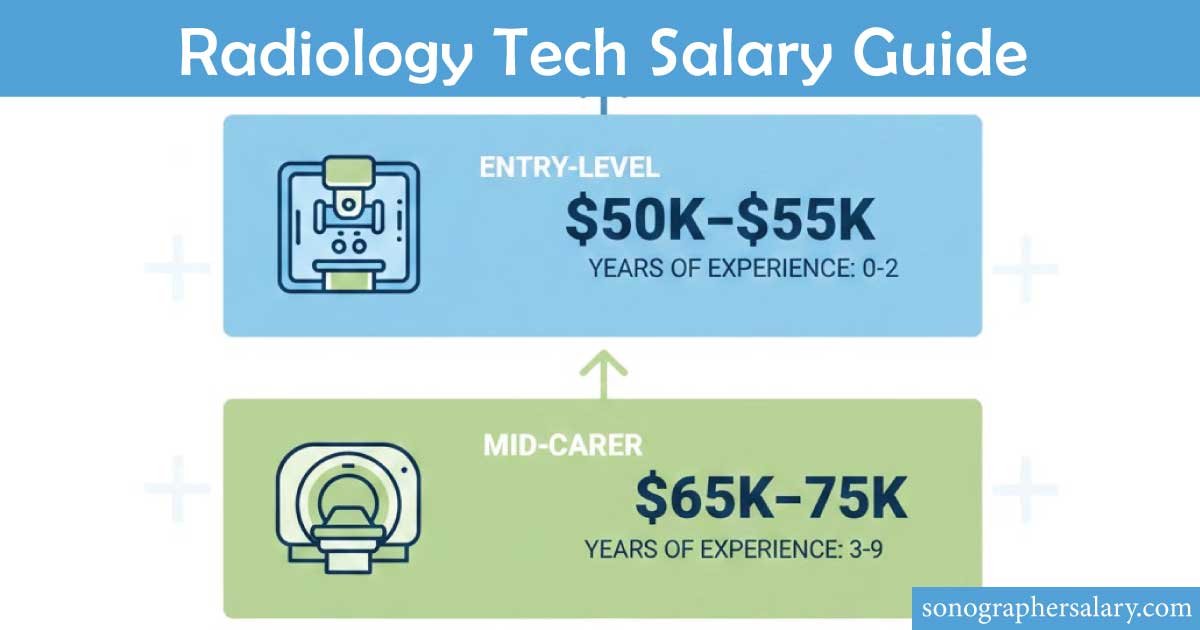
Entry-level radiology techs can expect around $50,000–$55,000 per year.
Mid-career professionals usually earn between $65,000 and $75,000 per year.
Experienced radiology techs with advanced certifications or leadership roles can earn $80,000 or more annually.
Hourly pay ranges from $25 to $40 per hour, depending on the facility and geographic region.
Also Read:
Factors Affecting Radiology Tech Salary
A radiology technologist’s earnings depend on education, experience, certifications, location, and specialization. Knowing these factors helps you strategically plan your career and maximize your income potential in medical imaging.
1. Education and Certifications
Education plays a significant role in determining your salary. Most radiology tech positions require an associate degree in radiologic technology, but bachelor’s degrees or specialized certifications can boost earning potential.
Common certifications include:
ARRT Certification (American Registry of Radiologic Technologists)
CT or MRI specializations
Advanced certifications in mammography or radiation therapy
Professionals with multiple certifications often earn higher salaries due to their expertise in specialized imaging techniques.
2. Experience Level
Experience is another major factor. Entry-level technologists start with lower salaries, but as you gain experience and proficiency, you can command higher pay. A tech with 10+ years of experience often earns significantly more than someone just starting.
3. Geographic Location
Location can have a big impact on salary. Radiology techs in urban areas or regions with a high cost of living generally earn more. For example:
California: $80,000–$95,000 per year
New York: $75,000–$90,000 per year
Texas: $65,000–$80,000 per year
Florida: $60,000–$75,000 per year
Rural areas may offer lower salaries, but often come with lower living costs.
4. Type of Employer
Radiology technologists can work in various healthcare settings, including:
- Hospitals (highest paying)
- Outpatient imaging centers
- Physician offices
- Research institutions
- Mobile imaging services
Hospitals and specialized medical centers typically offer higher salaries compared to small clinics or private offices.
5. Specialization
Specializing in certain imaging modalities can increase earning potential. For instance:
CT or MRI technologists tend to earn more than general X-ray techs.
Interventional radiology specialists or mammography techs can earn even higher wages.
Investing in continuing education and certifications in high-demand areas is a smart career move.
Also Read:
Radiology Tech Salary by State
Here’s a snapshot of average salaries in some top-paying states:
| State | Average Salary | Hourly Rate |
|---|---|---|
| California | $88,000 | $42 |
| Massachusetts | $82,000 | $39 |
| New York | $80,000 | $38 |
| Texas | $73,000 | $35 |
| Florida | $68,000 | $33 |
| Ohio | $65,000 | $31 |
This table highlights how regional demand, cost of living, and healthcare infrastructure influence pay.
Benefits Beyond Salary
Beyond base salary, radiology technologists receive extra benefits like health insurance, paid time off, retirement plans, and continuing education support, all of which significantly enhance their overall compensation.
- Health and dental insurance
- Paid time off and holidays
- Retirement plans (401k or pension options)
- Continuing education reimbursement
- Flexible work schedules in some facilities
Some hospitals and clinics also offer sign-on bonuses, especially in regions facing staffing shortages.
Also Read:
Career Growth and Salary Advancement
Radiology technology offers dynamic career growth. Multiple pathways, including advanced certifications, specialization, management roles, and teaching opportunities, allow technologists to expand skills, increase responsibility, and boost their salary potential.
Pursue Advanced Certifications: Specializing in CT, MRI, or mammography increases expertise and pay.
Move Into Management: Supervisory or lead technologist roles can earn $90,000–$100,000+ annually.
Become an Educator: Teaching radiology tech programs at community colleges or universities offers a stable salary and benefits.
Freelance or Mobile Imaging: Some technologists work as independent contractors, which can significantly increase earnings.
Continuing professional development is key to unlocking higher salaries.
Work-Life Balance and Job Satisfaction
Beyond salary, radiology techs enjoy a career with relatively good work-life balance. Many facilities offer day shifts, and weekend or evening rotations are often compensated with higher pay.
Job satisfaction is typically high because technologists directly contribute to patient care and diagnosis, combining technical skill with human interaction.
Also Read:
How to Increase Your Radiology Tech Salary
A career as a radiology technologist offers a unique blend of technical skill, patient care, and competitive compensation. Radiology techs play a vital role in medical diagnostics, using advanced imaging equipment to help doctors detect and treat conditions, while enjoying opportunities for growth, specialization, and attractive overall salaries.
1- Factors Influencing Salary
Several factors determine how much a radiology technologist can earn, including education, experience, certifications, location, and workplace type. Understanding these variables helps technologists make informed career decisions, pursue specialization opportunities, and strategically maximize their income potential in the healthcare industry.
2- Benefits Beyond Salary
In addition to base pay, radiology technologists receive numerous benefits that enhance total compensation. These include comprehensive health and dental coverage, paid time off, retirement plans, flexible schedules, and continuing education support, making the profession both financially rewarding and professionally satisfying.
3- Career Growth Opportunities
Radiology technology is a dynamic field with multiple pathways for growth. Technologists can advance through specialized certifications, leadership positions, teaching roles, or mobile imaging opportunities, allowing them to enhance skills, take on more responsibilities, and significantly increase their earning potential over time.
Radiology Tech vs. Other Medical Imaging Careers
It’s useful to compare radiology technologist salaries with related medical imaging careers to understand earning potential. Roles such as MRI technologists, CT technologists, ultrasound technicians, and nuclear medicine specialists often offer different pay scales, helping professionals make informed career decisions and plan for higher compensation opportunities.
MRI Technologist: $70,000–$90,000
CT Technologist: $68,000–$85,000
Ultrasound Technician: $65,000–$80,000
Nuclear Medicine Technologist: $75,000–$95,000
Radiology techs with additional certifications or dual modality skills often surpass these ranges.
Also Read:
Final Thoughts
A career as a radiology technologist combines technical expertise, patient care, and competitive pay. Understanding radiology tech salaries and the factors that influence them allows you to make informed career decisions.
Whether you are entering the field, considering specialization, or planning relocation, the potential for salary growth is strong. With the right certifications, experience, and strategic career choices, radiology techs can enjoy a fulfilling, financially stable career in the ever-growing healthcare sector.
FAQs:
1. What is the starting salary for a radiology technologist?
Entry-level radiology technologists typically earn between $50,000 and $55,000 annually. This starting salary can vary depending on the employer, geographic location, and level of education. With experience, additional certifications, and specialization in high-demand imaging areas, technologists can significantly increase their income over time.
2. Does location affect radiology tech salaries?
Yes, location plays a major role in radiology technologist salaries. Urban areas with high demand, such as California, New York, and Massachusetts, generally offer higher pay. Conversely, rural areas may pay less, but the lower cost of living can balance overall financial benefits, making strategic relocation a career consideration.
3. Can certifications increase my salary?
Absolutely. Certifications in specialized imaging areas such as CT scans, MRI, mammography, or interventional radiology significantly enhance earning potential. Employers value technologists with advanced credentials, and these certifications often lead to higher-paying positions, promotions, and expanded responsibilities within hospitals, clinics, or diagnostic imaging centers.
4. What is the highest-paying radiology tech job?
Some of the highest-paying radiology technologist positions are in interventional radiology, MRI, and CT imaging, particularly within hospital settings. Leadership roles, such as lead technologist or department supervisor, also command higher salaries. Specializing in advanced imaging techniques often provides both professional growth and substantial financial rewards.
5. Do radiology techs receive benefits?
Yes. In addition to salary, radiology technologists typically receive a comprehensive benefits package. This often includes health and dental insurance, paid time off, retirement plans, and support for continuing education or professional development. These benefits enhance total compensation and contribute to job satisfaction and long-term career stability.
6. How can I advance my career?
Radiology technologists can advance their careers by pursuing specialized certifications, moving into management or supervisory roles, or teaching at educational institutions. Relocating to high-demand regions and gaining experience in advanced imaging modalities can also increase both career opportunities and earning potential within the healthcare industry.

Zak is a dedicated medical and career writer specializing in sonography, healthcare education, and professional development. Through SonographerSalary.com, he shares in-depth insights on sonographer salaries, education pathways, and career tips to help readers build successful futures in medical imaging. His content combines accuracy with practical, easy-to-understand guidance, empowering students and professionals to make confident, informed career decisions.