
Surgical technology is a rewarding healthcare career that combines hands-on patient care, technical skills, and teamwork in the operating room. A Certified Surgical Technologist (CST) is a surgical tech who has passed a national certification exam, demonstrating expertise and professionalism.
This guide will cover what a CST is, how to become certified, education requirements, clinical experience, exam preparation, salary expectations, and career growth. With this knowledge, you can plan a successful path in surgical technology.
What Is a Certified Surgical Technologist (CST)?
A Certified Surgical Technologist (CST) is a surgical technologist who has earned national certification through the NBSTSA (National Board of Surgical Technology and Surgical Assisting).
CSTs assist surgeons during operations, maintain a sterile environment, handle surgical instruments, and ensure patient safety. Certification sets professionals apart as highly skilled and competent in surgical procedures and operating room protocols.
Benefits of Becoming a Certified Surgical Technologist (CST)
Becoming a CST offers a wealth of professional and personal advantages. From increased job opportunities and higher earning potential to professional recognition and access to specialized surgical fields, certification validates your skills, boosts your credibility, and paves the way for long-term career growth in the healthcare and surgical technology industry.
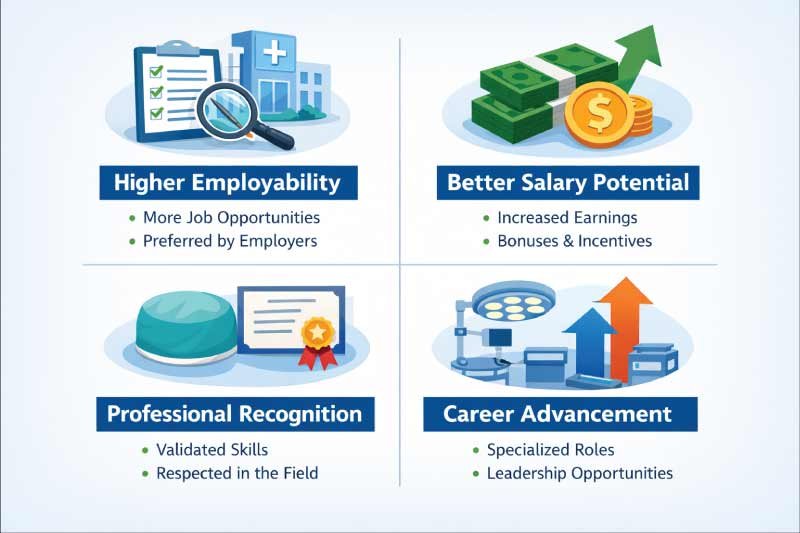
1. Higher Employability:
Hospitals and surgical centers prefer hiring certified surgical technologists because certification demonstrates verified skills and knowledge. Being CST-certified increases your chances of securing a position, as many employers require or strongly favor certified candidates, giving you a competitive edge in the job market.
2. Better Salary Potential:
Certified surgical technologists typically earn more than non-certified peers. Certification reflects your advanced training and expertise, making you eligible for higher-paying positions, bonuses, and incentives. This financial advantage helps reward your dedication and supports long-term career stability and growth.
3. Professional Recognition:
CST certification validates your competence and skill, earning respect from colleagues, supervisors, and patients. It shows a commitment to excellence in surgical care, enhancing your reputation within the healthcare team and reinforcing trust in your professional abilities.
4. Career Advancement:
Certification opens doors to specialized surgical areas and leadership roles. CSTs can pursue advanced opportunities such as surgical specialties, supervisory positions, or education roles, enabling long-term career progression and the ability to make a greater impact in the operating room.
| Benefit | Explanation |
|---|---|
| Job Security | Hospitals prefer certified staff for patient safety |
| Competitive Salary | CSTs earn $5,000–$10,000 more annually on average |
| Career Growth | Leads to specialized roles in cardiac, neuro, or orthopedic surgery |
| Credibility | Certification shows mastery of surgical skills and knowledge |
Job Responsibilities of a CST
Certified surgical technologists play a vital role in the operating room, ensuring surgeries run safely and efficiently. They prepare the environment, assist the surgical team, maintain strict sterility, and handle specialized equipment, all while supporting patient safety and helping surgeons perform procedures with precision and care.
Certified surgical technologists perform critical tasks during surgery:
- Prepare the operating room and sterilize instruments
- Assist surgeons by passing instruments and supplies
- Maintain a sterile environment to prevent infection
- Monitor patient status and ensure safety throughout procedures
- Handle surgical equipment and devices properly
CSTs work closely with surgeons, nurses, and anesthesiologists to ensure smooth surgical operations.
Also Read:
Education Requirements
To become a CST, candidates must complete an accredited surgical technology program. Programs vary in length and depth, combining classroom learning, lab exercises, and clinical rotations to prepare students for certification and a successful career in surgical care.
| Program Type | Duration | Description |
|---|---|---|
| Certificate/Diploma | 9–12 months | Fast-track, hands-on training |
| Associate Degree | 2 years | Includes general education and extensive clinical practice |
| Bachelor’s Degree | 4 years | Advanced study, leadership opportunities, research components |
Programs combine classroom instruction, lab exercises, and supervised clinical rotations.
Skills Needed for Surgical Technologists
Surgical technologists must possess a combination of technical, physical, and interpersonal skills to excel in the operating room. These skills ensure safe and efficient surgical procedures, effective teamwork, and the ability to respond quickly to challenges, making them indispensable members of the surgical team.
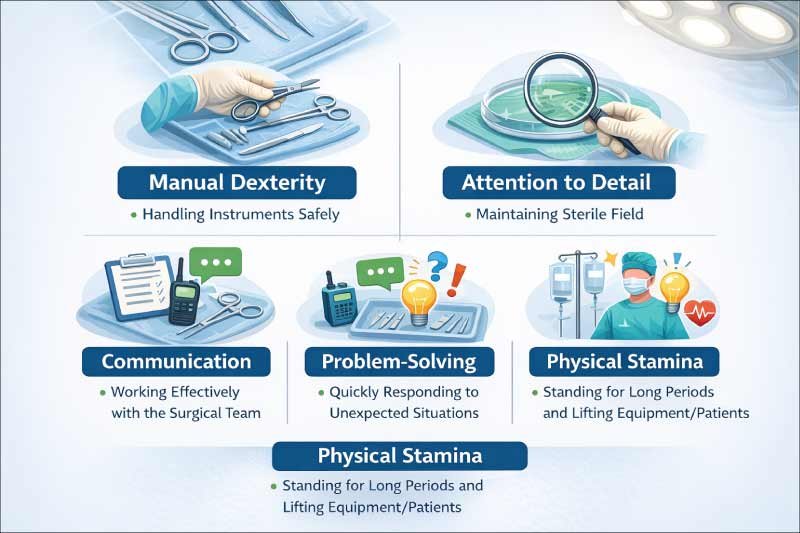
Essential skills include:
Manual dexterity – Handling instruments safely
Attention to detail – Maintaining sterile field
Communication – Working effectively with the surgical team
Problem-solving – Quickly responding to unexpected situations
Physical stamina – Standing for long periods and lifting equipment/patients
Clinical Experience
Clinical experience is a crucial part of CST training, providing hands-on practice in real surgical settings. Through hospital or surgical center rotations, students gain practical knowledge, develop confidence in their skills, and learn to apply sterile techniques and safety protocols under the supervision of experienced surgical staff.
During rotations, students:
- Practice instrument handling
- Participate in real surgeries under supervision
- Learn sterile techniques and patient safety procedures
| Clinical Setting | Focus Area |
|---|---|
| Hospitals | Multi-specialty surgical procedures |
| Outpatient Surgery Centers | Minor surgeries and routine procedures |
| Specialty Clinics | Orthopedic, cardiac, or neuro surgeries |
Applying for the CST Exam
After completing an accredited surgical technology program, aspiring CSTs must apply for the national exam through the NBSTSA. Meeting all requirements—including graduation, clinical hours, and good moral character—ensures eligibility. Passing the exam grants a recognized credential that is often required for employment in hospitals and surgical centers.
- Graduation from an accredited program
- Completion of required clinical hours
- Proof of good moral character and eligibility
The exam is a nationally recognized credential essential for employment in most surgical settings.
Also Read:
Exam Preparation
Preparing for the CST exam requires a solid understanding of surgical procedures, sterile techniques, patient care, and instrumentation. Effective preparation involves reviewing textbooks, clinical notes, and taking practice exams, as well as attending review courses. Focused study and hands-on experience increase the likelihood of passing this essential certification exam.
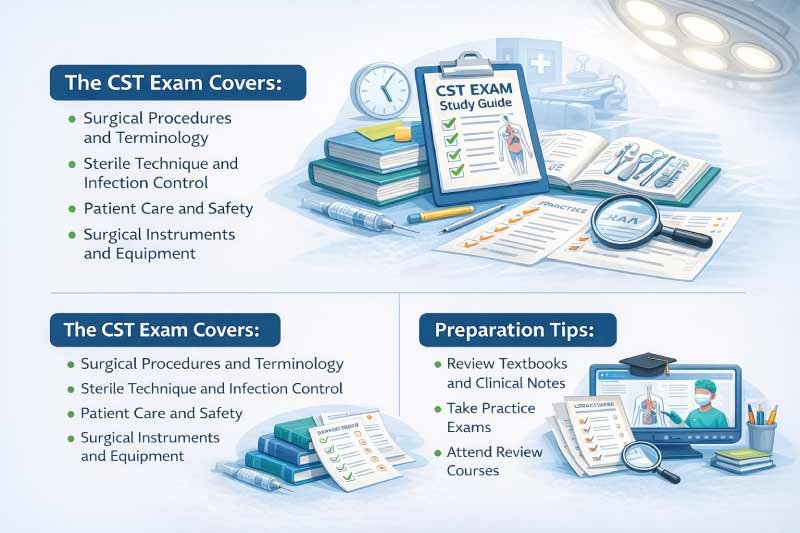
The CST exam covers:
- Surgical procedures and terminology
- Sterile technique and infection control
- Patient care and safety
- Surgical instruments and equipment
Preparation tips:
- Review textbooks and clinical notes
- Take practice exams
- Attend review courses offered by schools or online programs
Passing the CST Exam
The exam consists of multiple-choice questions testing knowledge and clinical judgment. Passing earns you the CST credential, valid for four years.
| Exam Component | Description |
|---|---|
| Surgical Procedures | Knowledge of common surgeries |
| Sterile Technique | Maintaining aseptic environment |
| Instruments & Equipment | Identifying and using surgical tools correctly |
| Patient Safety | Understanding patient monitoring and emergency response |
Maintaining CST Certification
Maintaining CST certification is essential for staying up to date with evolving surgical techniques and best practices. Renewal every four years demonstrates ongoing competence, ensures professional credibility, and allows surgical technologists to continue advancing in their careers while providing safe, high-quality patient care in the operating room.
CST certification must be renewed every 4 years. Requirements include:
- Completing 60 continuing education units (CEUs)
- Staying current with surgical best practices
- Submitting renewal application to NBSTSA
Maintaining certification ensures your skills stay current and enhances career credibility.
Salary Expectations
CST salaries depend on experience, location, and area of specialization. Entry-level technologists earn less, while experienced or specialized CSTs can command higher pay. Certification and additional training often lead to better compensation and career growth opportunities.
| Experience Level | Average Salary (USD) |
|---|---|
| Entry-Level | $45,000–$55,000 |
| Mid-Level | $55,000–$70,000 |
| Experienced | $70,000–$85,000 |
| Specialized CST | $85,000+ |
Specialized CSTs in cardiac, neuro, or orthopedic surgery often earn higher pay.
Also Read:
Work Settings
Certified Surgical Technologists (CSTs) can work in diverse healthcare environments. From hospitals to outpatient centers, specialty clinics, research facilities, and military hospitals, CSTs support a wide range of surgical procedures, gaining valuable experience and contributing to patient care across different medical settings.
| Setting | Description |
|---|---|
| Hospitals | Operating rooms across multiple specialties |
| Outpatient Surgery Centers | Minor and routine surgeries |
| Specialty Clinics | Orthopedic, neuro, cardiac surgeries |
| Research Facilities | Surgical trials and experimental procedures |
| Military/VA Hospitals | Trauma and specialized surgeries |
Career Growth Opportunities
Earning CST certification not only validates your skills but also paves the way for career advancement. Certified technologists can pursue specialized surgical areas, leadership positions, or educational roles. These opportunities allow CSTs to expand their expertise, increase earning potential, and take on greater responsibilities within the surgical team.
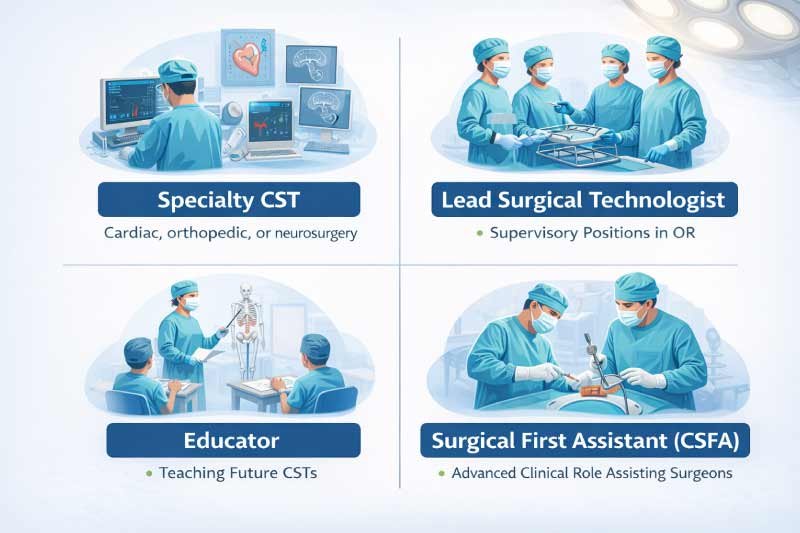
Specialty CST – Cardiac, orthopedic, or neurosurgery
Lead Surgical Technologist – Supervisory positions in OR
Educator – Teaching future CSTs
Surgical First Assistant (CSFA) – Advanced clinical role assisting surgeons
Differences Between CST and Non-Certified Surgical Techs
Certified Surgical Technologists (CSTs) and non-certified surgical techs differ in training, recognition, and career opportunities. Certification impacts employability, salary, professional credibility, and access to advanced roles, making CSTs more competitive and better prepared for long-term growth in surgical settings.
| Feature | CST | Non-Certified |
|---|---|---|
| Certification | Required and nationally recognized | Not required |
| Employability | Higher, preferred by hospitals | Limited |
| Salary Potential | Higher | Lower |
| Career Advancement | Opportunities in specialties | Fewer options |
| Professional Credibility | High | Moderate |
Tips for Choosing the Right Surgical Technology Program
Selecting the right surgical technology program is crucial for your success as a CST. Accredited programs with strong clinical rotations, experienced faculty, and high graduation rates provide the best foundation. Evaluating specialty training options and student support ensures you receive quality education and are well-prepared for certification and future career opportunities.
- Ensure CAAHEP or ABHES accreditation
- Look for programs with hands-on clinical rotations
- Check graduation and exam pass rates
- Consider specialty training options
- Review faculty experience and student support services
Also Read:
Conclusion
Becoming a Certified Surgical Technologist (CST) is a smart investment in your healthcare career. Certification improves job prospects, salary potential, and professional credibility. By completing an accredited program, gaining clinical experience, passing the CST exam, and maintaining certification, you can enjoy a rewarding, stable, and respected career in the operating room.
Also Read:
FAQs:
Why are surgical technologists important?
Surgical technologists are essential members of the operating room team. They ensure surgeries run smoothly by preparing instruments, maintaining sterile conditions, and assisting surgeons. Their expertise helps prevent infections, supports patient safety, and allows the surgical team to focus on delivering effective, precise care.
What is a Certified Surgical Technologist (CST)?
A Certified Surgical Technologist (CST) is a professional who has completed an accredited surgical technology program and passed the national CST exam. Certification validates their knowledge, technical skills, and competency in assisting during surgeries while maintaining sterile environments and ensuring patient safety.
What are the responsibilities of a surgical technologist?
Surgical technologists perform critical tasks in the operating room, including preparing instruments, sterilizing equipment, assisting surgeons by passing tools, maintaining sterility, monitoring patient safety, and handling specialized surgical devices. They work closely with nurses and surgeons to ensure smooth, efficient, and safe surgical procedures.
What does a surgical technologist do?
Surgical technologists support surgical teams by preparing the operating room, sterilizing instruments, and ensuring equipment is ready. During surgery, they assist surgeons, maintain sterile fields, monitor patient safety, and handle instruments. Their role is vital in ensuring procedures are efficient, safe, and successful.
What is the role of a surgical technologist?
The role of a surgical technologist involves assisting in surgeries, preparing sterile instruments, and supporting the surgical team throughout procedures. They ensure patient safety, maintain infection control, and handle equipment properly, making them indispensable for the efficiency, accuracy, and success of surgical operations.
How do you get certification for a surgical technologist?
Certification for surgical technologists is obtained by completing an accredited program and passing the CST exam through NBSTSA. This national certification demonstrates competence, technical skill, and professional knowledge, enhancing employability, career growth, and credibility within hospitals, surgical centers, and specialized healthcare settings.
What is the definition of a surgical technologist?
A surgical technologist is a trained healthcare professional who assists surgeons and operating room staff during surgical procedures. They manage instruments, maintain sterility, prepare the operating room, and support patient safety, ensuring surgeries are conducted smoothly and efficiently while following strict medical protocols.
What is a Certified Surgical Technologist certificate?
The Certified Surgical Technologist (CST) certificate is a credential awarded after passing the national certification exam. It validates a surgical technologist’s skills, knowledge, and professionalism, allowing them to work in hospitals and surgical centers, pursue specialty roles, and maintain professional credibility within the healthcare and surgical industry.

Zak is a dedicated medical and career writer specializing in sonography, healthcare education, and professional development. Through SonographerSalary.com, he shares in-depth insights on sonographer salaries, education pathways, and career tips to help readers build successful futures in medical imaging. His content combines accuracy with practical, easy-to-understand guidance, empowering students and professionals to make confident, informed career decisions.