
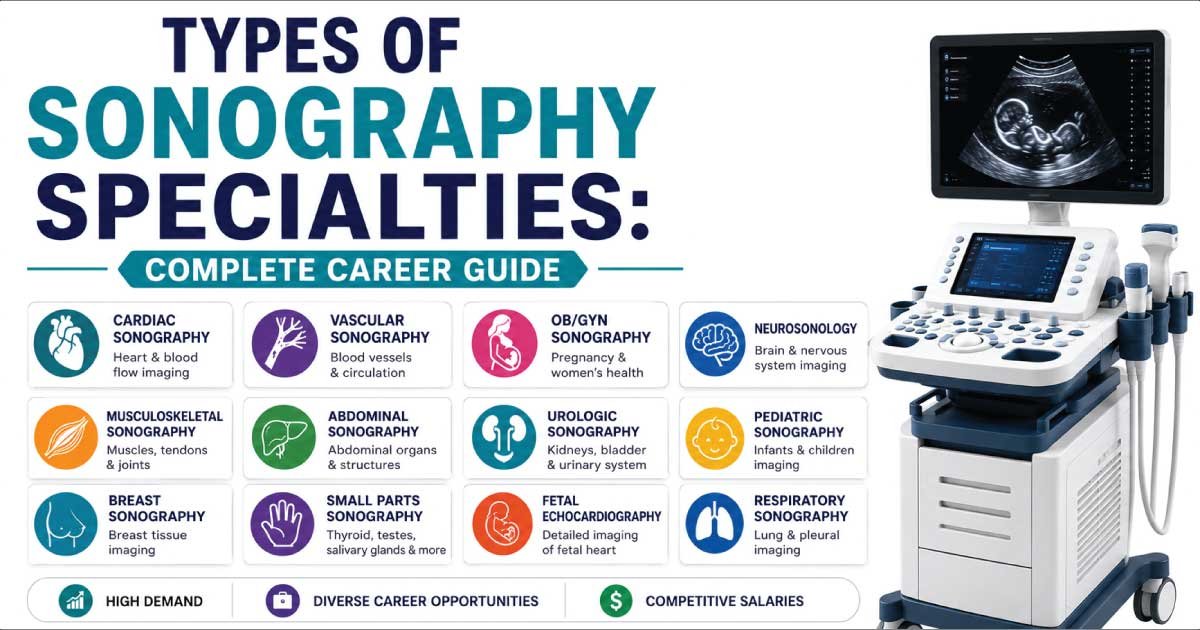
Diagnostic medical sonography is one of the most diverse careers in healthcare. While many people associate ultrasound with pregnancy scans, sonographers actually work in numerous medical specialties that diagnose conditions affecting the heart, blood vessels, abdominal organs, muscles, joints, and even the brain. Each specialty requires unique skills, specialized knowledge, and hands-on experience, allowing professionals to build careers that match their interests and long-term goals.
As healthcare technology continues to advance, the demand for specialized sonographers is growing across hospitals, outpatient imaging centers, physician offices, and specialty clinics. Whether you’re a student exploring career options or a practicing sonographer considering a new certification, understanding the different sonography specialties can help you choose the right path.
This complete guide explains the types of sonography specialties, their responsibilities, education requirements, salary potential, and career outlook to help you make an informed decision.
What Is a Sonography Specialty?
A sonography specialty is a specific area of diagnostic medical sonography that focuses on imaging certain organs, body systems, or patient populations using ultrasound technology.
While all sonographers use ultrasound equipment to produce diagnostic images, specialists receive additional training and certification in their chosen field. Specializing often leads to greater expertise, increased job opportunities, and higher earning potential.
Common factors that influence specialty choice include:
- Personal interests
- Career goals
- Salary expectations
- Work environment
- Patient population
- Demand in the job market
Why Choose a Sonography Specialty?
Specializing in a specific area of diagnostic medical sonography allows professionals to develop advanced expertise, expand career opportunities, and increase their earning potential. Many healthcare employers actively seek specialists because they bring valuable knowledge, improved technical skills, and greater confidence when performing complex ultrasound examinations.
Benefits include:
- Higher earning potential
- Better career advancement opportunities
- Increased job demand
- Advanced technical skills
- Greater professional recognition
- Opportunities to work with specific patient groups
- Access to leadership and teaching roles
Many employers prefer sonographers with specialty certifications because they bring additional expertise to the healthcare team and can perform advanced diagnostic procedures with greater accuracy and efficiency.
Popular Sonography Specialties
Choosing the right specialty depends on your interests, career goals, and the type of patients you enjoy working with. Each specialty offers unique responsibilities, work environments, and opportunities for professional growth.
1. Abdominal Sonography
Abdominal sonography is one of the most widely practiced ultrasound specialties and focuses on evaluating organs within the abdominal cavity. These examinations help physicians diagnose digestive, urinary, and abdominal disorders using safe, non-invasive imaging technology.
Organs Examined
- Liver
- Gallbladder
- Pancreas
- Kidneys
- Spleen
- Abdominal blood vessels
Common Duties
- Perform abdominal ultrasound examinations
- Evaluate organ size and structure
- Detect cysts, tumors, and gallstones
- Assist physicians with diagnosis
Best For
Professionals who enjoy general diagnostic imaging and working with a wide variety of patients. This specialty provides broad clinical experience and strong employment opportunities across many healthcare settings.
2. Obstetric and Gynecologic (OB/GYN) Sonography
OB/GYN sonographers specialize in women’s reproductive health and pregnancy care. Their work supports physicians by monitoring fetal development, evaluating reproductive organs, and identifying potential pregnancy-related complications.
Responsibilities
- Monitor fetal growth
- Perform pregnancy ultrasounds
- Evaluate the uterus and ovaries
- Detect pregnancy complications
- Assist maternal-fetal medicine specialists
Work Settings
- Women’s health clinics
- Hospitals
- Fertility centers
- OB/GYN practices
OB/GYN sonography remains one of the most recognized and rewarding specialties because it combines advanced imaging with meaningful patient care throughout pregnancy and women’s health.
3. Cardiac Sonography (Echocardiography)
Cardiac sonographers use echocardiography to evaluate the heart’s structure, function, and blood circulation. They work closely with cardiologists to diagnose cardiovascular diseases and monitor treatment outcomes.
Responsibilities
- Examine heart chambers
- Evaluate heart valves
- Measure blood flow
- Detect congenital heart defects
- Assess heart function
Why Choose This Specialty?
Cardiac sonography consistently ranks among the highest-paying and fastest-growing ultrasound specialties due to increasing rates of heart disease and the ongoing demand for experienced cardiac imaging professionals.
4. Vascular Sonography
Vascular sonographers specialize in examining arteries and veins using Doppler ultrasound technology. Their diagnostic studies help identify circulatory disorders and support treatment planning for vascular diseases.
Common Duties
- Detect blood clots
- Examine carotid arteries
- Evaluate circulation
- Identify aneurysms
- Assess peripheral vascular disease
Career Benefits
Growing demand for cardiovascular care continues to make vascular sonography an excellent long-term career choice with strong job stability and competitive salaries.
5. Pediatric Sonography
Pediatric sonographers perform ultrasound examinations on infants, children, and adolescents. They use specialized imaging techniques while providing compassionate care to young patients and supporting pediatric healthcare providers.
Responsibilities
- Image abdominal organs
- Evaluate congenital abnormalities
- Monitor childhood diseases
- Perform neonatal ultrasound examinations
Required Skills
- Patience
- Excellent communication
- Gentle patient care
- Strong technical knowledge
Working with children requires specialized scanning techniques, outstanding communication skills, and a compassionate approach that helps young patients feel comfortable during examinations.
Also Read:
6. Neurosonography
Neurosonographers specialize in imaging the brain and nervous system, particularly in newborn infants. Their examinations help physicians identify neurological disorders and monitor brain development during the earliest stages of life.
Responsibilities
- Cranial ultrasound examinations
- Brain blood flow studies
- Neurological imaging
- Neonatal brain assessments
Career Outlook
Although less common than many other specialties, neurosonography offers excellent career opportunities for highly trained professionals with advanced imaging expertise.
7. Breast Sonography
Breast sonographers perform specialized ultrasound examinations that help physicians evaluate breast abnormalities and support the early detection of breast cancer. They also assist with image-guided biopsy procedures when needed.
Responsibilities
- Perform breast ultrasounds
- Evaluate breast masses
- Assist with biopsy procedures
- Monitor treatment progress
Work Environment
- Breast imaging centers
- Hospitals
- Women’s health clinics
- Cancer treatment facilities
This specialty plays a vital role in women’s healthcare by supporting accurate diagnosis, early intervention, and ongoing treatment monitoring.
8. Musculoskeletal Sonography
Musculoskeletal sonographers examine muscles, tendons, ligaments, joints, and other soft tissues using advanced ultrasound imaging. They frequently work with orthopedic surgeons, rehabilitation specialists, and sports medicine physicians.
Responsibilities
- Diagnose sports injuries
- Evaluate tendon tears
- Assess joint disorders
- Guide therapeutic injections
Growing Demand
Sports medicine and orthopedic practices increasingly rely on ultrasound because it provides real-time imaging without radiation exposure while improving diagnostic accuracy and treatment guidance.
9. Emergency and Trauma Sonography
Emergency and trauma sonographers work in fast-paced clinical environments where rapid diagnosis can save lives. They perform focused ultrasound examinations to help physicians quickly assess critically ill or injured patients.
Responsibilities
- Perform FAST examinations
- Detect internal bleeding
- Evaluate abdominal trauma
- Support emergency medical teams
Ideal Workplaces
- Emergency departments
- Trauma centers
- Critical care hospitals
This specialty is ideal for professionals who enjoy working under pressure, making quick decisions, and contributing directly to emergency patient care.
10. Pediatric Cardiac Sonography
Pediatric cardiac sonography combines pediatric imaging with advanced echocardiography to evaluate heart conditions in infants and children. It is one of the most specialized and technically demanding areas of diagnostic medical sonography.
Responsibilities
- Diagnose congenital heart defects
- Evaluate infant heart function
- Monitor pediatric cardiac conditions
- Support pediatric cardiologists
Because of the advanced training and expertise required, pediatric cardiac sonography offers excellent earning potential, strong job demand, and rewarding opportunities to improve the lives of children with heart conditions.
Also Read:
Education Requirements
Becoming a specialized sonographer begins with completing an accredited diagnostic medical sonography program. These programs combine classroom instruction with supervised clinical experience, ensuring students develop the technical knowledge, patient care skills, and hands-on training required to perform diagnostic ultrasound examinations safely and accurately.
1. Educational Pathways
Educational options include:
- Associate Degree
- Around two years
- Most common pathway
- Prepares graduates for entry-level positions
- Bachelor’s Degree
- Four-year program
- Broader education
- Better opportunities for leadership roles
Both degree options provide a strong foundation in ultrasound imaging, anatomy, physiology, and patient care. While an associate degree is the fastest route into the profession, a bachelor’s degree may provide greater opportunities for career advancement and management roles.
2. Certificate Programs
Certificate programs are designed for healthcare professionals who already have experience in a related medical field and want to transition into diagnostic medical sonography. These accelerated programs focus primarily on ultrasound education and supervised clinical practice.
Designed for healthcare professionals who already have a related medical background.
Clinical training is an essential part of every educational pathway.
Hands-on clinical experience allows students to apply classroom knowledge in real healthcare settings while developing the confidence and technical skills needed for professional practice.
Certification for Sonography Specialties
Professional certification demonstrates advanced knowledge and clinical competence within a specific area of sonography. Many employers prefer or require certified professionals because certification reflects a commitment to high standards of patient care and ongoing professional development.
3. Benefits of Certification
Benefits of certification include:
- Better job opportunities
- Higher earning potential
- Professional recognition
- Increased career flexibility
- Eligibility for advanced positions
Earning specialty certifications can improve career prospects, increase salary potential, and open opportunities for leadership or highly specialized imaging roles. Continuing education also helps professionals maintain certifications and stay current with new ultrasound technologies.
Salary Potential by Specialty
Salary potential varies across sonography specialties depending on the complexity of the work, level of specialization, employer, experience, certifications, and geographic location. Highly specialized fields generally offer the greatest earning potential and strongest long-term demand.
4. Salary Comparison
| Sonography Specialty | Earning Potential | Job Demand |
|---|---|---|
| Cardiac Sonography | Very High | Very High |
| Vascular Sonography | Very High | Very High |
| Pediatric Cardiac Sonography | Very High | High |
| Neurosonography | High | Moderate |
| OB/GYN Sonography | High | Very High |
| Breast Sonography | High | High |
| Musculoskeletal Sonography | High | Growing |
| Pediatric Sonography | High | High |
| Emergency Sonography | High | Growing |
| Abdominal Sonography | Moderate to High | High |
Actual salaries vary based on experience, certifications, employer, geographic location, and workplace setting. Developing advanced skills and earning multiple specialty certifications can significantly improve long-term earning potential.
Also Read:
How to Choose the Right Specialty
Selecting the right sonography specialty is an important career decision that should balance personal interests with professional goals. Choosing a field that matches your strengths and lifestyle preferences often leads to greater job satisfaction and long-term career success.
5. Factors to Consider
Before selecting a specialty, consider:
- Your interests and strengths
- Preferred patient population
- Salary goals
- Job availability in your area
- Work-life balance
- Physical demands
- Opportunities for advancement
- Continuing education requirements
Taking time to evaluate these factors can help you choose a specialty that aligns with your career objectives, provides opportunities for professional growth, and supports long-term success in the rapidly evolving field of diagnostic medical sonography.
Career Outlook
The future of specialized sonography is bright. As healthcare providers continue to adopt advanced ultrasound technology and expand diagnostic imaging services, the demand for skilled sonographers is expected to remain strong. Professionals with specialty certifications, clinical experience, and a commitment to lifelong learning are likely to enjoy excellent job security, competitive salaries, and diverse career opportunities.
Conclusion
Understanding the types of sonography specialties is essential for anyone planning a career in diagnostic medical sonography. From abdominal and OB/GYN imaging to cardiac, vascular, pediatric, neuro, and musculoskeletal sonography, each specialty offers unique responsibilities, career paths, and earning potential.
Whether your goal is to work with expectant mothers, diagnose heart disease, assist children, or specialize in sports medicine, there is a sonography field that matches your interests. By completing an accredited education program, earning specialty certifications, and gaining hands-on clinical experience, you can build a successful, rewarding, and future-proof career in one of healthcare’s fastest-growing professions.

Zak is a dedicated medical and career writer specializing in sonography, healthcare education, and professional development. Through SonographerSalary.com, he shares in-depth insights on sonographer salaries, education pathways, and career tips to help readers build successful futures in medical imaging. His content combines accuracy with practical, easy-to-understand guidance, empowering students and professionals to make confident, informed career decisions.