
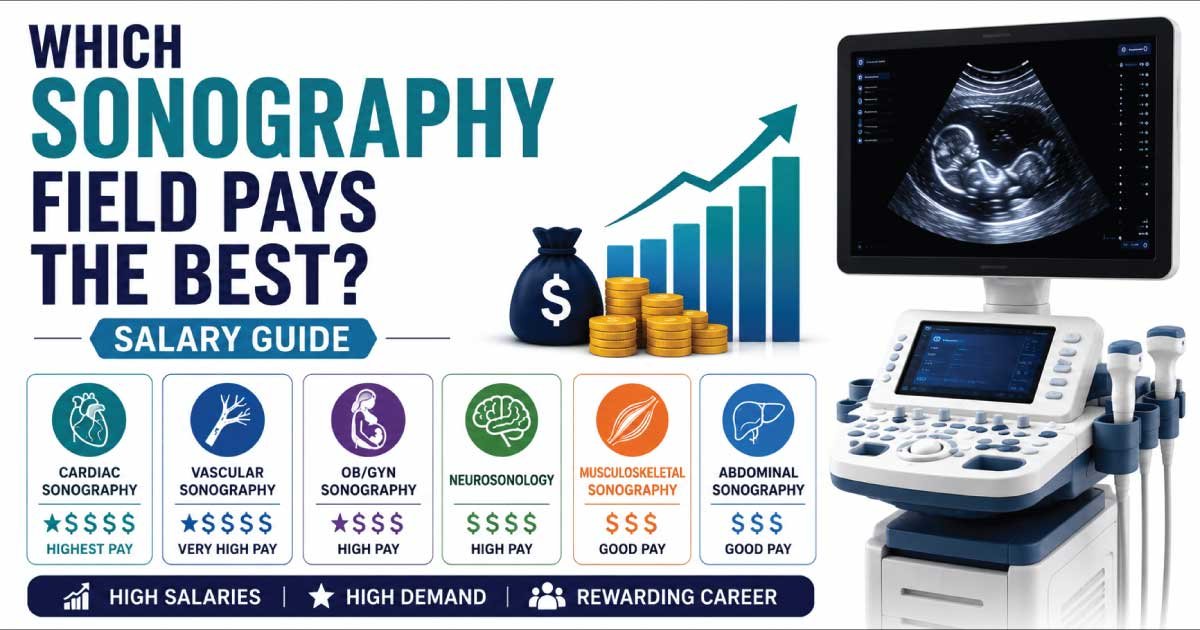
Choosing a sonography specialty is one of the most important career decisions you’ll make as a diagnostic medical sonographer. While every sonography field offers competitive pay, some specialties consistently earn higher salaries because they require advanced skills, specialized certifications, and extensive clinical experience.
If you’re planning to enter the field or are considering earning an additional certification, understanding which sonography specialties pay the most can help you maximize your long-term earning potential. In addition to specialty choice, factors such as location, employer, experience, education, and certifications all influence how much you can earn.
This complete salary guide explains which sonography field pays the best, compares the highest-paying specialties, discusses salary factors, and provides practical tips for increasing your income in the United States.
Does Your Sonography Specialty Affect Your Salary?
Yes. Your specialty is one of the biggest factors influencing your income.
Specialties involving complex anatomy, advanced imaging techniques, or critical patient care generally offer higher salaries than general ultrasound positions. Healthcare employers are willing to pay more for professionals with specialized expertise because these roles require additional training and greater responsibility.
Other factors that influence salary include:
- Years of experience
- Professional certifications
- Geographic location
- Type of healthcare facility
- Shift differentials
- Overtime opportunities
- Travel assignments
Highest-Paying Sonography Fields
Choosing a high-paying sonography specialty can significantly increase your earning potential while providing opportunities to work with advanced medical technology and specialized patient populations. The following sonography fields are consistently recognized for offering excellent salaries, strong job demand, and long-term career growth in the United States.
1. Cardiac Sonography (Echocardiography)
Cardiac sonography is widely considered one of the highest-paying and most in-demand sonography specialties. Cardiac sonographers perform detailed echocardiograms that help physicians evaluate heart structure, function, and blood circulation to diagnose various cardiovascular conditions.
Cardiac sonographers perform echocardiograms to evaluate:
- Heart chambers
- Heart valves
- Blood flow
- Cardiac function
- Congenital heart defects
Why It Pays So Well
Heart disease remains one of the leading causes of hospitalization in the United States, creating strong demand for experienced cardiac sonographers. Professionals with pediatric or fetal echocardiography expertise often earn even higher salaries because of their advanced training and specialized clinical skills.
2. Vascular Sonography
Vascular sonographers specialize in examining arteries and veins using Doppler ultrasound technology. Their diagnostic studies help physicians evaluate circulation, detect vascular disease, and monitor blood flow throughout different parts of the body.
Typical examinations include:
- Carotid arteries
- Peripheral arteries
- Deep vein thrombosis (DVT)
- Blood circulation studies
- Aneurysm evaluations
Why It Pays Well
Growing rates of cardiovascular disease, diabetes, and vascular disorders continue to increase demand for skilled vascular sonographers. This consistent demand contributes to excellent salaries and strong long-term employment opportunities across hospitals and imaging centers.
3. Pediatric Cardiac Sonography
Pediatric cardiac sonography is one of the most specialized and rewarding areas of diagnostic medical imaging. These professionals perform advanced cardiac ultrasound examinations on infants and children with congenital or acquired heart conditions.
Professionals evaluate:
- Congenital heart defects
- Infant heart function
- Pediatric blood flow
- Cardiac abnormalities
Because relatively few sonographers possess these advanced clinical skills, pediatric cardiac sonographers often rank among the highest-paid professionals within the sonography field.
4. Neurosonography
Neurosonographers specialize in ultrasound imaging of the brain and nervous system, particularly in newborn infants. Their examinations help physicians evaluate neurological development and diagnose conditions affecting the central nervous system.
Responsibilities include:
- Cranial ultrasounds
- Brain blood flow studies
- Neurological imaging
- Neonatal assessments
Although neurosonography is less common than other specialties, its highly specialized nature and limited number of qualified professionals contribute to excellent earning potential.
5. Obstetric and Gynecologic (OB/GYN) Sonography
OB/GYN sonographers specialize in women’s reproductive health and pregnancy imaging. They perform ultrasound examinations that monitor fetal development, evaluate pregnancy health, and assist physicians in diagnosing gynecological conditions.
Daily responsibilities include:
- Pregnancy ultrasounds
- Fetal growth monitoring
- Placenta evaluation
- Uterine examinations
- Ovarian imaging
Experienced professionals working in maternal-fetal medicine practices, fertility clinics, or high-risk pregnancy centers often earn above-average salaries because of their specialized expertise.
6. Musculoskeletal Sonography
Musculoskeletal sonographers evaluate muscles, tendons, ligaments, joints, and soft tissues using high-resolution ultrasound imaging. This specialty has experienced rapid growth as orthopedic and sports medicine practices increasingly rely on ultrasound technology.
Musculoskeletal sonographers evaluate:
- Muscles
- Tendons
- Ligaments
- Joints
- Sports injuries
Growing demand from orthopedic surgeons, rehabilitation specialists, and sports medicine physicians continues to create excellent employment opportunities and competitive salaries for musculoskeletal sonographers.
7. Breast Sonography
Breast sonographers specialize in diagnostic breast imaging and work closely with radiologists to evaluate abnormalities detected during physical examinations or mammography. They also assist with image-guided procedures used in breast cancer diagnosis.
Common responsibilities include:
- Breast ultrasounds
- Imaging suspicious masses
- Supporting breast cancer diagnosis
- Guiding needle biopsies
Breast imaging specialists are highly valued in dedicated imaging centers, women’s health clinics, and cancer treatment facilities, where their expertise contributes to early detection and improved patient outcomes.
8. Abdominal Sonography
Abdominal sonographers perform ultrasound examinations of major abdominal organs to help physicians diagnose diseases affecting the digestive and urinary systems. Their work remains essential in hospitals, emergency departments, and outpatient imaging centers.
Abdominal sonographers examine major organs such as:
- Liver
- Gallbladder
- Kidneys
- Pancreas
- Spleen
Although considered a general sonography specialty, experienced abdominal sonographers continue to enjoy excellent employment opportunities, steady demand, and competitive salaries throughout the healthcare industry.
Also Read:
Travel Sonography Can Increase Earnings
Travel sonography is not a separate clinical specialty but is often one of the highest-paying career paths available to experienced ultrasound professionals. Travel sonographers accept temporary assignments in different locations while receiving additional financial benefits beyond their regular salaries.
Travel sonographers frequently receive:
- Higher hourly wages
- Housing stipends
- Travel reimbursement
- Completion bonuses
- Overtime opportunities
For professionals who enjoy flexibility and exploring new locations, travel sonography can produce significantly higher annual earnings than many permanent staff positions while offering valuable clinical experience across multiple healthcare facilities.
Salary Comparison by Specialty
The earning potential of a sonographer depends on several factors, including specialty, certifications, experience, geographic location, and employer type. The table below provides a general comparison of salary potential and demand among popular sonography specialties.
| Sonography Field | Earning Potential | Demand |
|---|---|---|
| Cardiac Sonography | Very High | Very High |
| Vascular Sonography | Very High | Very High |
| Pediatric Cardiac Sonography | Very High | High |
| Travel Sonography | Very High | High |
| Neurosonography | High | Moderate |
| OB/GYN Sonography | High | Very High |
| Breast Sonography | High | High |
| Musculoskeletal Sonography | High | Growing |
| Abdominal Sonography | Moderate to High | High |
Actual salaries vary based on education, years of experience, certifications, employer, geographic location, and workplace setting. Earning advanced credentials and specializing in high-demand fields can significantly increase both salary potential and long-term career opportunities.
What Increases a Sonographer’s Salary?
Choosing a high-paying specialty is only one way to increase your earning potential. Education, certifications, experience, work location, and professional development all play important roles in determining how much a sonographer can earn throughout their career.
1. Earn Specialty Certifications
Earning additional specialty certifications demonstrates advanced clinical knowledge and technical expertise. Employers often prefer certified professionals because they can perform specialized examinations and contribute to higher-quality patient care across multiple imaging departments.
Additional certifications demonstrate advanced knowledge and often qualify you for higher-paying positions.
Specialty certifications also increase your competitiveness in the job market, open opportunities for promotion, and may lead to leadership or supervisory roles with higher compensation.
2. Gain Clinical Experience
Experience is one of the biggest factors influencing a sonographer’s salary. As professionals perform more complex examinations and refine their technical skills, they become increasingly valuable to employers and often qualify for higher-paying positions.
Salary typically increases as you develop technical expertise and handle more complex examinations.
Experienced sonographers are also more likely to mentor junior staff, supervise imaging departments, and perform advanced procedures, all of which can contribute to greater earning potential.
3. Work in High-Demand States
Geographic location has a significant impact on salary levels. States facing shortages of qualified sonographers often offer higher wages, signing bonuses, relocation assistance, and competitive employee benefits to attract experienced professionals.
States experiencing shortages of qualified sonographers often offer better compensation packages.
Researching regional job markets before relocating can help maximize both earning potential and career opportunities while providing access to a wider variety of healthcare employers.
4. Join Large Healthcare Systems
Large hospitals, academic medical centers, and specialty healthcare organizations often provide higher salaries than smaller clinics. They may also offer excellent benefits, continuing education programs, retirement plans, and opportunities for career advancement.
Academic medical centers, trauma hospitals, and specialty hospitals frequently provide higher salaries and better employee benefits.
Working in larger healthcare systems also provides valuable experience with advanced imaging technology and a broader range of complex medical cases.
5. Learn Multiple Imaging Specialties
Becoming certified in multiple sonography specialties increases your versatility and value as a healthcare professional. Employers often prefer multi-specialty sonographers because they can perform a wider range of diagnostic examinations across different departments.
Sonographers certified in more than one specialty are often more valuable to employers and may earn higher wages than those with a single credential.
Expanding your skills through continuing education and additional certifications can improve job security, increase salary potential, and create more opportunities for long-term career advancement.
Also Read:
Which Specialty Is Best for Career Growth?
Selecting the right sonography specialty involves more than comparing salaries. The best specialty is one that matches your interests, strengths, and long-term career goals while offering opportunities for professional development and job satisfaction.
When choosing a specialty, consider:
- Your interests
- Preferred patient population
- Physical demands
- Job availability
- Work schedule
- Advancement opportunities
- Continuing education requirements
Many experienced sonographers recommend choosing a specialty that genuinely interests you rather than focusing only on salary. Combining passion with technical expertise often leads to greater job satisfaction, stronger professional performance, and long-term career success.
Future Outlook
The outlook for specialized sonographers remains excellent. As healthcare providers continue expanding diagnostic imaging services and ultrasound technology advances, demand for professionals with expertise in cardiac, vascular, pediatric, and other specialized imaging fields is expected to remain strong. Those who continue learning, earn additional credentials, and build experience are generally well positioned for higher salaries and long-term career growth.
Also Read:
Conclusion
If you’re wondering which sonography field pays the best, cardiac sonography, vascular sonography, pediatric cardiac sonography, and travel sonography consistently rank among the highest-paying options in the United States. These specialties require advanced skills and specialized training, but they also offer excellent earning potential, strong job security, and rewarding career opportunities.
No matter which path you choose, investing in professional certifications, gaining hands-on experience, and staying current with advances in ultrasound technology can help you maximize your salary and build a successful, long-lasting career in diagnostic medical sonography.

Zak is a dedicated medical and career writer specializing in sonography, healthcare education, and professional development. Through SonographerSalary.com, he shares in-depth insights on sonographer salaries, education pathways, and career tips to help readers build successful futures in medical imaging. His content combines accuracy with practical, easy-to-understand guidance, empowering students and professionals to make confident, informed career decisions.