
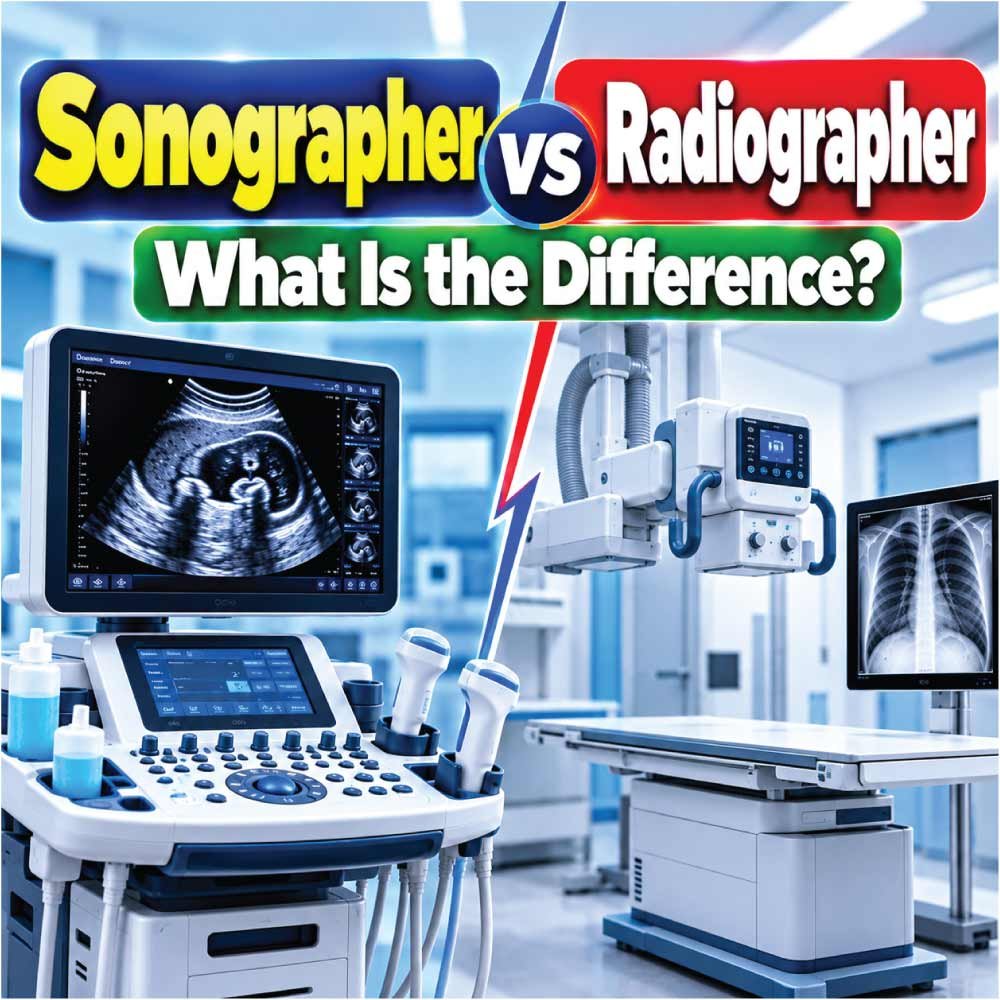
Choosing a career in medical imaging can be confusing because several professions work with diagnostic technology, patients, and healthcare teams. Two terms that often cause confusion are sonographer vs radiographer. Although both careers are part of modern medical imaging, they involve different technologies, responsibilities, training pathways, and day-to-day work.
A sonographer primarily uses ultrasound technology to create images of structures inside the body. A radiographer, sometimes called a radiologic technologist in the United States, primarily uses X-rays and other imaging equipment to produce diagnostic images. Depending on their education and workplace, radiographers may work with conventional radiography, computed tomography (CT), mammography, or other imaging modalities.
The difference is not simply about which machine a professional operates. Sonographers and radiographers interact with patients differently, perform different examinations, and develop different technical skills.
Understanding these differences can help students and career changers decide which field better matches their interests, strengths, and long-term goals.
What Does a Sonographer Do?
A sonographer is a healthcare professional trained to perform diagnostic ultrasound examinations. Ultrasound uses high-frequency sound waves rather than ionizing radiation to produce real-time images of tissues, organs, blood vessels, and developing fetuses.
During an examination, the sonographer positions the patient, selects an appropriate transducer, applies ultrasound gel, and moves the transducer across the body. They adjust imaging parameters and capture images or measurements that may be reviewed by a physician or other qualified healthcare professional.
Sonographers can specialize in different areas of medical imaging, including:
- Obstetric and gynecologic ultrasound
- Abdominal ultrasound
- Vascular ultrasound
- Cardiac ultrasound
- Musculoskeletal ultrasound
- Breast ultrasound
- Pediatric ultrasound
- Emergency or point-of-care ultrasound
The job can involve considerable patient interaction. A sonographer may need to explain the examination, position the patient, maintain privacy, and help the patient remain comfortable while obtaining technically useful images.
How Ultrasound Imaging Works
Ultrasound equipment sends sound waves into the body through a transducer. The waves interact with different tissues and return to the transducer as echoes. The system processes those echoes to create an image.
Because ultrasound does not use ionizing radiation, it is fundamentally different from X-ray-based imaging.
The sonographer’s technical skill is especially important because image quality can depend on transducer positioning, scanning technique, patient anatomy, and equipment settings.
What Does a Radiographer Do?
A radiographer performs medical imaging examinations using equipment designed to produce diagnostic images. The exact scope of practice depends on the country, employer, credentials, and specialization.
In many settings, radiographers perform conventional X-ray examinations. They may also pursue additional training in areas such as CT or mammography.
A typical radiographic examination may involve:
- Reviewing the examination request
- Confirming patient identity and relevant information
- Explaining the procedure
- Positioning the patient
- Selecting imaging parameters
- Operating the equipment
- Checking image quality
- Following radiation-safety procedures
- Documenting the examination
Radiographers work with physicians, nurses, radiologists, and other healthcare professionals. They must produce images that are diagnostically useful while following established safety procedures.
How X-Ray Imaging Differs From Ultrasound
X-rays use ionizing radiation to create images. Different tissues absorb X-rays differently, allowing structures such as bones and the chest to be visualized.
Ultrasound, by comparison, uses sound waves and produces real-time imaging.
This difference affects both the technology and the working practices of the two professions. Radiographers need a strong understanding of radiation protection and exposure principles, while sonographers need strong skills in ultrasound physics, scanning techniques, anatomy, and image optimization.
Sonographer vs Radiographer: Key Differences
The clearest way to understand the distinction is to compare their primary technology, responsibilities, and typical examinations.
| Feature | Sonographer | Radiographer |
|---|---|---|
| Primary technology | Ultrasound | X-ray-based imaging |
| Uses ionizing radiation | No | Yes, when performing X-ray/CT procedures |
| Patient interaction | High | High |
| Image acquisition | Ultrasound scanning | Radiographic positioning and imaging |
| Common examinations | Abdomen, pregnancy, vascular, cardiac | Chest, bones, joints, and other X-ray studies |
| Real-time imaging | Yes | Generally not the primary feature of conventional X-ray |
| Common work settings | Hospitals, imaging centers, clinics | Hospitals, imaging centers, clinics |
| Possible specializations | Cardiac, vascular, OB/GYN, breast, MSK | CT, mammography, trauma, general radiography |
These are broad distinctions rather than universal rules. Professional roles vary between healthcare systems, and some radiographers receive additional education that allows them to work in specialized imaging areas.
Sonographer vs Radiographer: Daily Responsibilities
Both professions combine technical knowledge with patient care, but their workflows are different.
A Sonographer’s Typical Day
A sonographer may spend much of the working day performing examinations directly on patients. Each examination can require active scanning and continuous adjustment of the transducer and imaging settings.
For example, during an abdominal ultrasound, the sonographer may examine organs such as the liver, gallbladder, kidneys, pancreas, and spleen according to the examination protocol.
A vascular sonographer may use Doppler techniques to evaluate blood flow.
A cardiac sonographer, or echocardiographer, performs specialized ultrasound examinations of the heart.
The work therefore requires attention to anatomy, image quality, patient positioning, and scanning technique.
A Radiographer’s Typical Day
A radiographer may perform multiple examinations involving different body regions and clinical situations.
For example, a patient with a suspected fracture may need an X-ray examination. The radiographer positions the relevant body part and obtains the required views while following radiation-protection procedures.
Radiographers may also work in emergency departments, operating rooms, outpatient imaging centers, and other clinical environments.
The pace can vary significantly depending on the workplace. A hospital trauma department may involve very different demands from an outpatient imaging clinic.
Education and Training Differences
Education requirements vary substantially by country, so students should always check the regulations and approved programs in the jurisdiction where they plan to work.
Generally, sonography education focuses heavily on:
- Human anatomy and physiology
- Ultrasound physics
- Patient care
- Scanning protocols
- Image optimization
- Pathology
- Clinical training
- Specialized ultrasound applications
Radiography programs commonly emphasize:
- Anatomy and physiology
- Radiographic positioning
- Radiation physics
- Radiation protection
- Patient care
- Image production
- Radiographic procedures
- Clinical education
Both professions require technical accuracy and clinical judgment within their professional scope.
The important difference is that sonography education is centered on ultrasound acquisition, while radiography education is centered on radiographic imaging and radiation safety.
Sonographer vs Radiographer: Specializations
One major similarity is that both careers can lead to specialization.
Common Sonography Specialties
Sonographers may develop expertise in areas such as:
- Diagnostic medical sonography
- Obstetric sonography
- Gynecologic sonography
- Vascular sonography
- Cardiac sonography
- Breast sonography
- Musculoskeletal sonography
- Pediatric sonography
Each specialty requires knowledge of particular anatomy, examination protocols, pathology, and imaging techniques.
For example, vascular imaging involves Doppler techniques for assessing blood flow, while cardiac imaging requires specialized knowledge of heart anatomy and function.
Common Radiography Specialties
Radiographers may also pursue specialized imaging careers, depending on local professional structures and available training.
Examples include:
- General radiography
- Computed tomography
- Mammography
- Trauma imaging
- Fluoroscopy-related practice
- Interventional imaging support
- Specialized hospital radiography
CT is particularly different from conventional radiography because it uses X-rays to produce cross-sectional images of the body.
Work Environment and Patient Interaction
Both careers involve direct patient care, but the nature of that interaction can differ.
Sonographers often spend an extended period with an individual patient during an examination. They may need to communicate throughout the scan, adjust the patient’s position, and respond to discomfort.
Radiographers may also interact closely with patients, but many examinations are relatively brief. Their responsibilities can include transferring or positioning patients, particularly those experiencing pain or mobility limitations.
Both professionals may encounter patients who are anxious, injured, elderly, or unable to move easily.
Important skills for either career include:
- Clear communication
- Empathy
- Professional boundaries
- Attention to detail
- Physical awareness
- Teamwork
- Patient safety
The ability to communicate effectively can be just as important as technical knowledge.
Physical Demands of Sonography and Radiography
Medical imaging careers are not purely desk jobs. Both can involve standing, moving equipment, positioning patients, and maintaining awkward working postures.
Sonography can be particularly physically demanding because the professional may repeatedly hold and manipulate a transducer while maintaining a specific scanning position. Repetitive movements and prolonged postures can contribute to musculoskeletal strain.
Radiographers may also experience physical demands when positioning patients, moving equipment, assisting individuals with limited mobility, or working in emergency environments.
Students considering either profession should look beyond the technology and understand the physical nature of clinical work.
Radiation Safety: A Major Difference
One of the most important differences between the professions concerns ionizing radiation.
Diagnostic X-ray and CT procedures use ionizing radiation. Radiographers therefore receive specific education in radiation protection and safe imaging practices.
The objective is to obtain the required diagnostic information while minimizing unnecessary exposure.
Ultrasound does not use ionizing radiation. Instead, sonographers work with acoustic energy and must understand ultrasound physics and appropriate equipment operation.
This does not mean ultrasound is simply “safer” in every possible situation or that one imaging method can replace another. Different technologies answer different clinical questions.
For example, an X-ray can be particularly useful for evaluating many bone injuries, while ultrasound can provide real-time information about soft tissues and blood flow.
Also Read:
Sonographer vs Radiographer Salary
Salary is one of the most common reasons people search for sonographer vs radiographer salary, but there is no single worldwide figure that applies to every professional.
Pay can vary according to:
- Country and region
- Education
- Certification or registration
- Clinical specialty
- Experience
- Employer
- Shift schedule
- Hospital versus outpatient setting
- Full-time or part-time employment
A specialized professional may have a different compensation structure from someone working in general imaging.
Students should therefore compare current salary information for their specific country and occupation rather than relying on a generalized online number.
What Can Affect Earnings?
Additional credentials or specialization may expand the types of positions available. Experience can also influence compensation, particularly when combined with specialized technical skills.
Location is another major factor. Healthcare wages, demand, and employment structures differ substantially between countries and even between regions within the same country.
For that reason, salary should be considered alongside education costs, working hours, career progression, job responsibilities, and personal interests.
Also Read:
Career Growth and Advancement
Neither career necessarily ends with entry-level clinical work.
A sonographer may progress toward specialized examinations, senior clinical responsibilities, education, management, quality assurance, or other professional roles depending on the healthcare system.
A radiographer may similarly progress into advanced imaging specialties, leadership, education, department management, or other areas of medical imaging.
Career progression often depends on additional education, experience, credentials, and the opportunities available through an employer or healthcare system.
Which Career Has More Specialization Options?
There is no universal answer because professional structures differ by country.
Sonography offers multiple distinct examination specialties, particularly in cardiac, vascular, obstetric, breast, abdominal, and musculoskeletal imaging.
Radiography can provide pathways into CT, mammography, trauma imaging, and other advanced imaging environments.
The better question for a student is not which profession has “more” options, but which type of imaging and clinical work matches their interests.
Also Read:
Sonographer vs Radiographer: Skills You Need
Although the equipment differs, there is considerable overlap in the personal qualities needed for both careers.
Skills Important for Sonographers
Sonographers benefit from:
- Strong anatomical knowledge
- Hand-eye coordination
- Attention to image detail
- Patient communication
- Technical problem-solving
- Physical endurance
- Ability to work independently within professional protocols
Ultrasound also requires adaptability because the same examination can look different depending on patient anatomy and clinical circumstances.
Skills Important for Radiographers
Radiographers benefit from:
- Accurate positioning skills
- Understanding of anatomy
- Knowledge of radiation protection
- Technical equipment skills
- Communication
- Attention to detail
- Ability to work efficiently in clinical environments
Radiography can also require adaptability when working with trauma patients or people who cannot easily maintain standard positions.
Which Patients Do They Commonly Work With?
Both professionals may work with patients across a wide age range.
Sonographers can perform examinations on:
- Pregnant patients
- Infants and children
- Adults
- Older adults
- Patients undergoing vascular evaluation
- Patients requiring cardiac imaging
Radiographers may image:
- Patients with fractures
- Emergency patients
- Surgical patients
- Outpatients
- Children
- Older adults
- Patients undergoing chest or skeletal imaging
The exact patient population depends heavily on the healthcare facility and professional specialization.
Sonographer vs Radiographer: Which Career Fits You?
Instead of looking for one universally better profession, consider the type of work you actually want to perform.
Sonography may appeal to someone who enjoys hands-on scanning, real-time imaging, detailed anatomy, and extended patient interaction.
Radiography may appeal to someone interested in X-ray imaging, positioning, radiation science, and working across a broad range of clinical situations.
Consider these questions:
- Do you prefer ultrasound or X-ray-based technology?
- Are you interested in real-time imaging?
- How comfortable are you with patient positioning?
- Do you enjoy detailed anatomy?
- Would you like to specialize in cardiac, vascular, or obstetric ultrasound?
- Are CT or mammography interesting to you?
- How do you feel about working with ionizing radiation?
- What education pathway is available where you live?
- What clinical environments appeal to you?
These questions can help turn a general career comparison into a more practical decision.
Sonographer vs Radiographer: Quick Comparison
| Career factor | Sonographer | Radiographer |
|---|---|---|
| Main imaging method | Ultrasound | X-ray-based imaging |
| Ionizing radiation | No | Yes for X-ray/CT |
| Real-time scanning | Core part of work | Not typical for conventional X-ray |
| Patient contact | Often extensive | Often extensive |
| Technical focus | Sound waves and ultrasound imaging | X-ray production and radiographic imaging |
| Examples of specialties | Cardiac, vascular, OB/GYN, breast | CT, mammography, trauma, general radiography |
| Physical activity | Scanning and positioning | Positioning and equipment use |
| Career advancement | Specialty, education, leadership | Advanced imaging, education, leadership |
| Workplaces | Hospitals, clinics, imaging centers | Hospitals, clinics, imaging centers |
The comparison shows that the professions overlap in patient care and medical imaging but differ significantly in technology and clinical workflow.
Frequently Asked Questions
Is a sonographer the same as a radiographer?
No. A sonographer specializes in ultrasound imaging, while a radiographer generally performs X-ray-based imaging and may work in additional imaging specialties after further training.
Does a sonographer use radiation?
Diagnostic ultrasound uses high-frequency sound waves rather than ionizing radiation. This is one of the fundamental technological differences between ultrasound and X-ray imaging.
Can a radiographer become a sonographer?
Potentially, but the pathway depends on the country, employer, professional regulations, and educational requirements. A radiographer may need additional formal education and clinical training in diagnostic medical sonography.
Can sonographers work in hospitals?
Yes. Hospitals are among the workplaces where sonographers can practice. They may work in departments or services involving general, vascular, cardiac, obstetric, emergency, or other ultrasound examinations.
Is sonography harder than radiography?
Difficulty is highly individual. Sonography requires extensive knowledge of anatomy, ultrasound physics, scanning technique, and image optimization. Radiography requires knowledge of anatomy, positioning, radiation physics, safety, and imaging procedures. The demands are different rather than directly comparable.
Can radiographers perform CT scans?
In some healthcare systems, radiographers can work in CT after obtaining the required education, training, and credentials. The exact scope of practice varies by jurisdiction.
Final Thoughts on Sonographer vs Radiographer
The sonographer vs radiographer comparison is ultimately a comparison between two related but distinct medical imaging careers.
Sonographers specialize in ultrasound and spend much of their professional time acquiring real-time images through hands-on scanning. Radiographers primarily work with X-ray-based imaging and may develop additional expertise in areas such as CT or mammography.
Both careers require technical knowledge, patient-care skills, attention to detail, and clinical professionalism. Both can also provide opportunities for specialization and career development.
If you are choosing between them, start by researching the education and credentialing requirements where you intend to work. Then compare the technologies, clinical environments, physical demands, specialties, and long-term career opportunities that matter most to you.
The right choice depends less on the job title and more on the kind of medical imaging work you want to perform every day.

Zak is a dedicated medical and career writer specializing in sonography, healthcare education, and professional development. Through SonographerSalary.com, he shares in-depth insights on sonographer salaries, education pathways, and career tips to help readers build successful futures in medical imaging. His content combines accuracy with practical, easy-to-understand guidance, empowering students and professionals to make confident, informed career decisions.