
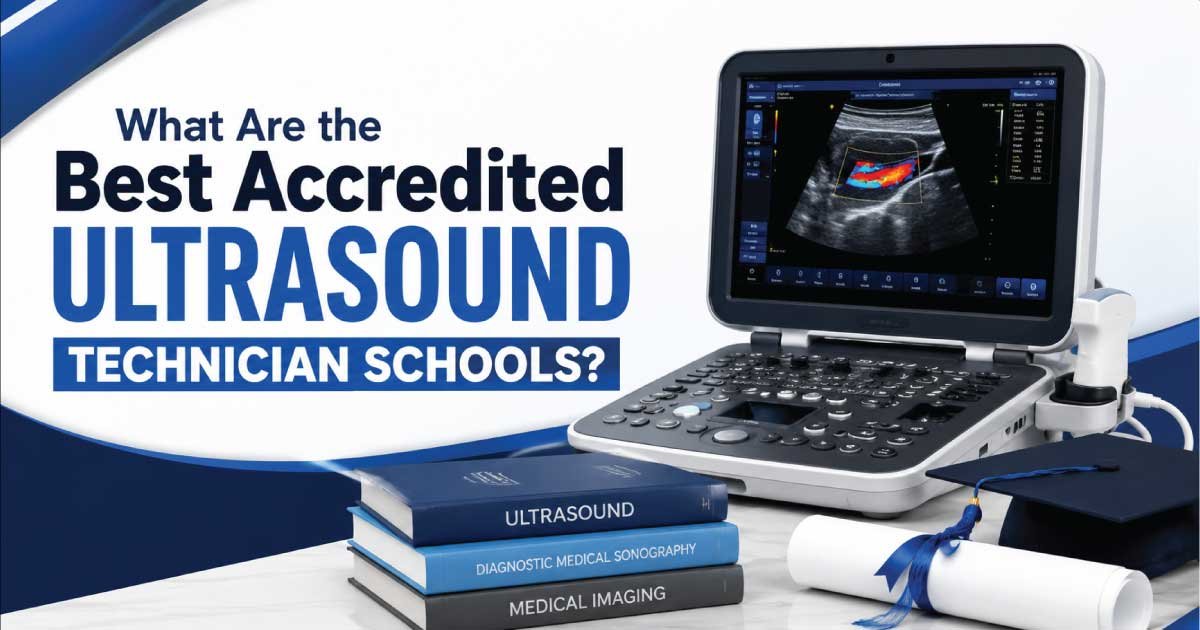
Choosing the right school is one of the most important steps in becoming a successful ultrasound technician—also known as a diagnostic medical sonographer. With healthcare employers placing strong emphasis on education quality and accreditation, students must look beyond tuition costs and location to ensure their program meets national standards. In this in-depth guide, we’ll explore what accreditation means, why it matters, and which accredited ultrasound technician schools are widely considered among the best in the United States.
Understanding the Role of an Ultrasound Technician
Ultrasound technicians play an essential role in modern healthcare by using advanced imaging equipment to produce diagnostic images that assist physicians in detecting, evaluating, and monitoring medical conditions across multiple body systems, while also ensuring patient comfort and accurate data collection throughout procedures.
Ultrasound technicians use specialized imaging equipment to help physicians diagnose and monitor medical conditions. They work closely with patients, operate sonographic machines, capture diagnostic images, and maintain detailed records. Depending on training and specialization, they may focus on areas such as:
- Abdominal sonography
- Obstetric and gynecologic imaging
- Cardiac sonography (echocardiography)
- Vascular sonography
Because ultrasound technicians play a critical role in patient care, employers expect them to graduate from reputable, accredited programs that combine classroom learning with hands-on clinical experience.
Why Accreditation Is So Important
Accreditation is a quality assurance standard that ensures ultrasound technician programs meet nationally recognized educational benchmarks, guaranteeing that students receive proper clinical training, academic instruction, and preparation for certification exams required in professional healthcare environments.
Accreditation ensures that an ultrasound technician program meets nationally recognized educational and professional standards.
Graduating from an accredited school offers several major advantages:
- Eligibility for certification exams – Most employers prefer or require certification from organizations like ARDMS, which often mandates graduation from an accredited program.
- Employer trust – Hospitals and clinics know accredited programs produce competent, job-ready graduates.
- Financial aid access – Federal student aid is typically available only to students enrolled in accredited institutions.
- Transferability of credits – Accredited coursework is more likely to be accepted if you pursue advanced education later.
The two primary accrediting bodies for ultrasound technician programs in the U.S. are Commission on Accreditation of Allied Health Education Programs and Accrediting Bureau of Health Education Schools.
What Makes an Ultrasound Technician School “the Best”?
The best ultrasound technician schools are defined by a combination of accreditation, clinical training quality, faculty expertise, and student outcomes, ensuring graduates are fully prepared for certification exams and successful employment in hospitals, clinics, and diagnostic imaging centers.
When evaluating the best accredited ultrasound technician schools, consider the following criteria:
- Accreditation status (CAAHEP or ABHES)
- Clinical training opportunities with hospitals and medical centers
- Certification exam pass rates
- Faculty experience and credentials
- Student support services, including job placement assistance
- Program specializations offered
Schools that excel in these areas tend to produce graduates who transition smoothly into the workforce.
Best Accredited Ultrasound Technician Schools in the U.S.
Choosing an accredited ultrasound technician school is a crucial step because it directly affects certification eligibility, clinical training quality, and long-term employment opportunities, with top institutions standing out for their strong hospital partnerships, experienced faculty, and consistent graduate success in diagnostic medical sonography.
Below are several well-regarded institutions known for their accredited ultrasound technician programs. Each offers strong academics, hands-on training, and a solid reputation in the healthcare field.
Mayo Clinic College of Medicine and Science
Mayo Clinic College of Medicine and Science offers one of the most prestigious clinical training environments for ultrasound education, providing students with immersive, high-level exposure to advanced medical imaging within a world-renowned healthcare system known for excellence in patient care and diagnostics.
Mayo Clinic’s ultrasound programs are among the most competitive and respected in the country. Students benefit from:
- Direct training within the Mayo Clinic health system
- Access to advanced imaging technology
- High certification exam pass rates
Graduates are highly sought after due to the institution’s global reputation for medical excellence.
Johns Hopkins University
Johns Hopkins University provides highly rigorous medical imaging education through affiliated programs, emphasizing advanced clinical reasoning, research-based learning, and exposure to complex diagnostic cases within one of the most respected academic medical environments in the world.
Johns Hopkins offers diagnostic medical sonography education through affiliated medical imaging programs.
Known for rigorous academics, the program emphasizes:
- Evidence-based medical training
- Exposure to complex and diverse clinical cases
- Strong research-driven curriculum
This environment is ideal for students aiming to work in major hospitals or academic medical centers.
Oregon Institute of Technology
Oregon Institute of Technology is widely recognized for its practical, career-focused approach to ultrasound education, combining strong academic foundations with extensive hands-on clinical training designed to prepare students for immediate workforce entry in diagnostic medical sonography.
Often praised for its hands-on technical education, Oregon Tech provides a CAAHEP-accredited diagnostic medical sonography program that includes:
- Extensive clinical rotations
- Small class sizes
- Strong graduate employment outcomes
The program is particularly attractive to students seeking practical, career-focused education.
University of Iowa
The University of Iowa offers a comprehensive ultrasound education experience within a major academic medical center, giving students access to advanced technology, interdisciplinary collaboration, and extensive clinical training in a research-driven healthcare environment.
The University of Iowa’s ultrasound programs are housed within a major academic medical center, offering students:
- Exposure to cutting-edge medical research
- Interdisciplinary healthcare collaboration
- Comprehensive clinical training
Graduates leave well prepared for certification and advanced clinical roles.
Washburn University
Washburn University provides a high-value accredited sonography program that balances affordability with strong academic instruction and clinical experience, supported by dedicated faculty and established partnerships with healthcare facilities.
Washburn University provides an accredited diagnostic medical sonography program known for:
- Balanced academic and clinical instruction
- Supportive faculty mentorship
- Strong local hospital partnerships
It is often recognized as a high-value option due to its affordability and outcomes.
Read More:
Final Thoughts:
The best accredited ultrasound technician school is one that aligns with your career goals, learning style, and personal circumstances. Accreditation should always be non-negotiable, but beyond that, consider clinical exposure, faculty support, and graduate outcomes.
By choosing a respected, accredited program, you set a strong foundation for a rewarding career in diagnostic medical sonography—one that combines cutting-edge technology, patient interaction, and long-term job security.

Zak is a dedicated medical and career writer specializing in sonography, healthcare education, and professional development. Through SonographerSalary.com, he shares in-depth insights on sonographer salaries, education pathways, and career tips to help readers build successful futures in medical imaging. His content combines accuracy with practical, easy-to-understand guidance, empowering students and professionals to make confident, informed career decisions.