

The healthcare field boasts a wide array of specialized careers — from nurses and physicians to radiologic technologists and sonographers.
One of the most in-demand and rewarding hands-on roles in diagnostic imaging is that of a Diagnostic Medical Sonographer.
In this comprehensive guide, we’ll cover what this profession entails, the education and certification path, salary ranges, job outlook, skills needed, specialties within sonography, and tips for long-term career success.
What Is a Diagnostic Medical Sonographer?
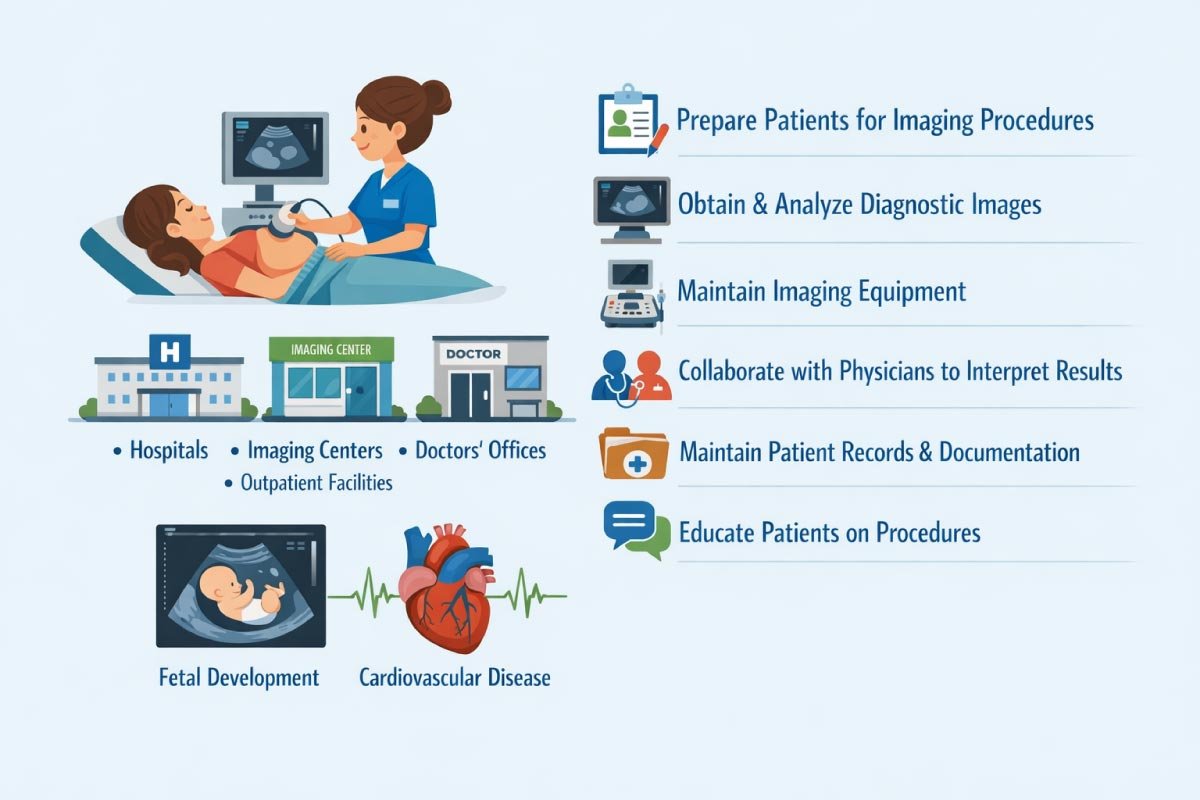
Diagnostic Medical Sonographers (also called ultrasound technicians) are trained healthcare professionals who use high-frequency sound waves to produce internal images of the body.
These images help physicians diagnose and monitor medical conditions. Unlike X-rays or CT scans, ultrasound does not use ionizing radiation, making it safer for frequent use and essential in obstetrics.
Core Responsibilities
-
Prepare patients for imaging procedures
-
Obtain and analyze diagnostic images
-
Maintain imaging equipment
-
Collaborate with physicians to interpret results
-
Maintain patient records and documentation
-
Educate patients on procedures
Sonographers often work in hospitals, imaging centers, doctors’ offices, and outpatient care facilities.
Their role is vital for a range of applications — from assessing fetal development to identifying cardiovascular disease.
How Does Ultrasound Work?
Ultrasound is a widely used diagnostic imaging technique that helps healthcare professionals visualize internal organs and tissues safely.
It operates without radiation and provides real-time images, making it valuable for early diagnosis, monitoring, and guiding medical procedures across various clinical specialties.
Why Sonography Matters
-
Non-invasive
-
Radiation-free
-
Real-time imaging
-
Portable equipment available
Ultrasound is used in many diagnostic areas, including obstetrics/gynecology, abdominal imaging, musculoskeletal imaging, and echocardiography.
Education Requirements
Becoming a Diagnostic Medical Sonographer requires specialized education and training. While requirements can vary by employer,
most sonographers have at least an associate degree or a post-secondary certificate if they already hold a healthcare degree.
Typical Educational Pathways
Typical educational pathways in diagnostic medical sonography offer flexible options for students and healthcare professionals.
These programs vary in duration, academic depth, and clinical exposure.
Choosing the right pathway depends on prior education, career goals, and desired certification outcomes in the evolving field of medical imaging.
| Education Pathway | Duration | Typical Candidates | Outcome |
|---|---|---|---|
| Associate Degree in Diagnostic Medical Sonography | 2-3 years | New students after high school | Prepares for ARDMS/ARDCS exams |
| Bachelor’s Degree in Sonography or Related Field | 4 years | Students seeking advanced coursework | May lead to leadership roles |
| Certificate in Sonography | 1-2 years | Healthcare professionals transitioning careers (e.g., nurses, radiographers) | Focused clinical sonography training |
| Online/Hybrid Programs | Variable | Self-directed learners | Requires in-person clinical training |
Essential Skills for Sonographers
Sonographers require a balanced combination of technical expertise and interpersonal skills to perform accurate examinations.
Their role involves operating advanced imaging equipment, analyzing results, and communicating effectively with patients,
and medical professionals to ensure comfort, clarity, and high-quality diagnostic outcomes.
Key Skills Include:
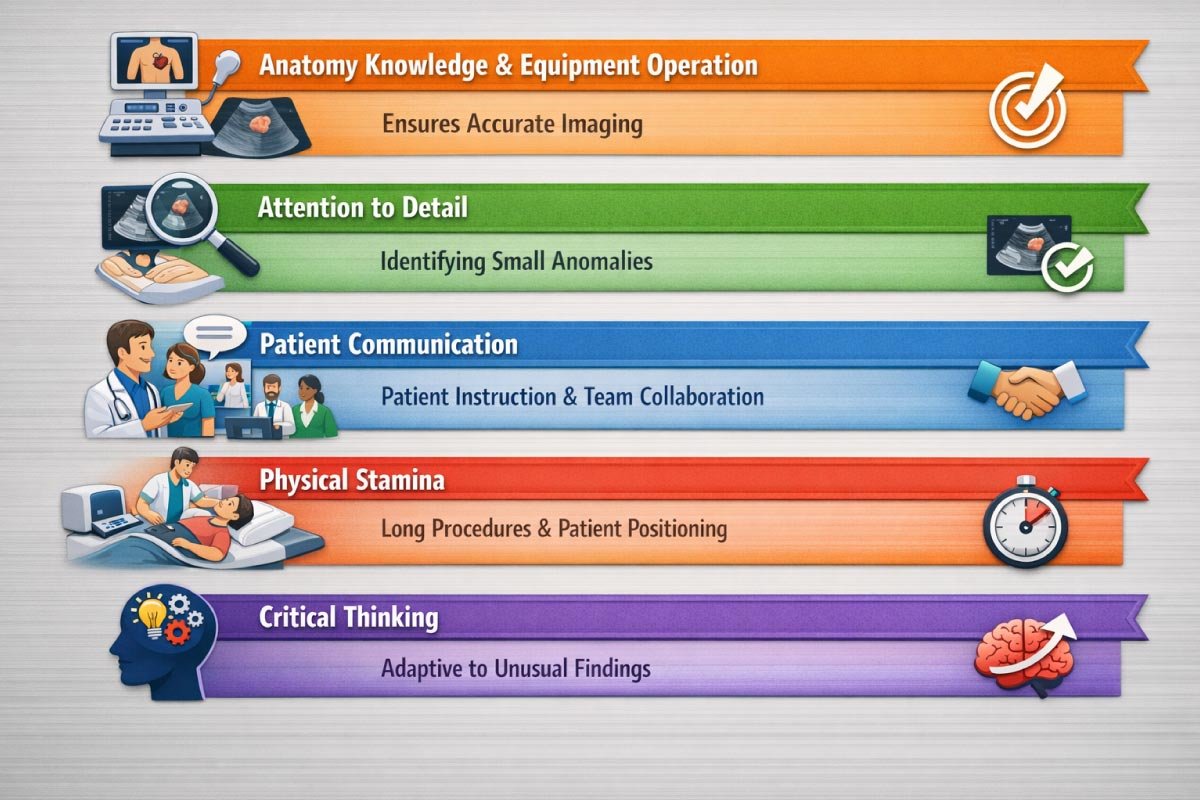
Successful sonographers combine technical expertise with strong interpersonal and analytical abilities.
These essential skills support accurate imaging, patient comfort, and effective teamwork.
Developing both clinical and soft skills enables professionals to adapt to varied cases and maintain high diagnostic standards in fast-paced healthcare environments.
| Skill Type | Examples | Why It Matters |
|---|---|---|
| Technical Skills | Anatomy knowledge, equipment operation | Ensures accurate imaging |
| Attention to Detail | Identifying small anomalies | Improves diagnostic quality |
| Communication | Patient instruction & team collaboration | Builds trust and accuracy |
| Physical Stamina | Long procedures, patient positioning | Supports efficiency |
| Critical Thinking | Adaptive to unusual findings | Enhances patient outcomes |
Sonographers often need to explain procedures, calm nervous patients, and adjust techniques on the fly.
Certification and Licensure
Professional certification helps demonstrate competency, credibility, and commitment to quality patient care in diagnostic medical sonography.
Although regulations vary by region, certified professionals often enjoy better employment opportunities, professional recognition, and career advancement within clinical and hospital settings.
-
ARDMS (American Registry for Diagnostic Medical Sonography)
-
CCI (Cardiovascular Credentialing International)
-
ARRT (American Registry of Radiologic Technologists) — for limited sonography paths
Popular Certifications
Professional certifications validate a sonographer’s knowledge, skills, and clinical competence.
Earning recognized credentials enhances career credibility, employment opportunities, and patient confidence.
These certifications demonstrate adherence to industry standards and confirm specialized expertise in diagnostic medical imaging across different clinical focus areas.
| Certification | Focus Area | Requirements |
|---|---|---|
| RDMS (Registered Diagnostic Medical Sonographer) | General, abdomen, OB/GYN | Pass ARDMS exams |
| RDCS (Registered Diagnostic Cardiac Sonographer) | Cardiac imaging | CCI exam |
| RVT (Registered Vascular Technologist) | Vascular imaging | CCI exam |
Licensure
Some states require a state license to practice sonography. Always check state requirements where you plan to work.
Clinical Training and Internship
Clinical training bridges classroom learning with real-world practice in diagnostic medical sonography.
Through supervised internships, students develop scanning proficiency, patient communication skills, and professional confidence,
while working in healthcare environments that reflect actual clinical demands and diagnostic responsibilities.
-
Hospitals
-
Diagnostic imaging centers
-
Physicians’ offices
-
Specialty clinics
A strong clinical performance is often a deciding factor in employers offering job opportunities after graduation.
Salary Expectations
Earning potential in diagnostic medical sonography depends on multiple professional and regional factors.
Understanding salary ranges helps students and professionals plan career paths, compare specialties,
and evaluate long-term growth opportunities within hospitals, clinics, and specialized diagnostic imaging facilities.
Sonographer Salary Overview (U.S.)
Sonographer salaries in the U.S. vary by experience, specialization, and location.
Entry-level professionals start with competitive wages, while experienced and advanced specialists can earn significantly more.
Understanding typical salary ranges helps guide career planning and expectations in this growing healthcare field.
| Experience Level | Median Annual Salary* |
|---|---|
| Entry-Level (0-2 yrs) | $55,000 – $70,000 |
| Mid-Career (3-7 yrs) | $70,000 – $85,000 |
| Experienced (8+ yrs) | $85,000 – $100,000+ |
| Advanced Specialist | $100,000+ |
*Salaries are approximate averages and will vary in different states and facilities.
Salary by Practice Setting
Sonographer earnings can vary depending on the practice setting.
Hospitals, outpatient clinics, private practices, and mobile positions offer different salary ranges based on responsibilities, patient volume, and location.
Understanding these variations helps professionals make informed career choices and identify opportunities that match their skills and lifestyle preferences.
| Practice Setting | Typical Annual Salary |
|---|---|
| Hospital | $75,000 – $95,000 |
| Outpatient Clinic | $70,000 – $90,000 |
| Private Practice | $65,000 – $85,000 |
| Mobile/Travel Sonographer | $80,000 – $110,000+ |
Travel sonographers often earn higher pay due to flexibility and demand.
Job Outlook and Demand
The demand for skilled sonographers continues to rise as healthcare expands and imaging technology becomes increasingly essential.
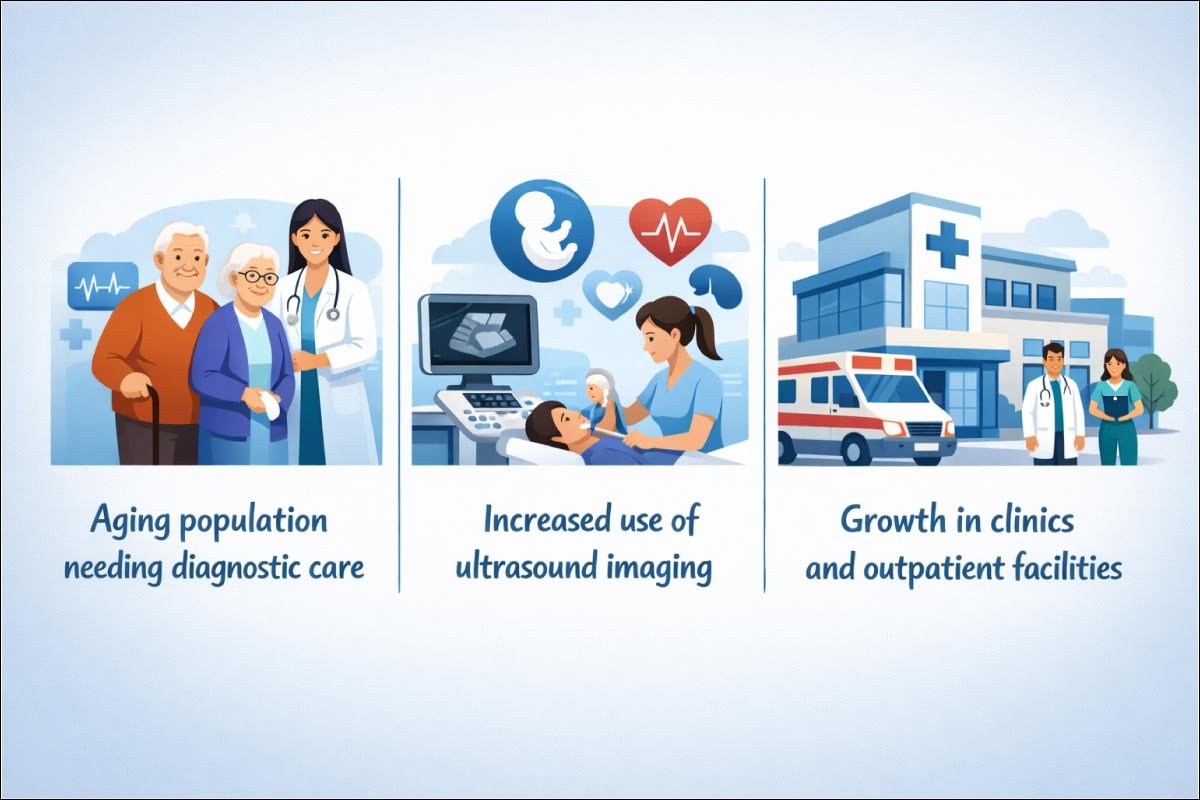
Job growth is fueled by population aging, preventive care initiatives, and the integration of ultrasound across medical specialties,
offering strong employment prospects and career stability for trained professionals.
-
Aging population needing diagnostic care
-
Increased use of ultrasound imaging
-
Growth in clinics and outpatient facilities
Employment Outlook (Next Decade)
The employment outlook for sonographers is highly promising, with job growth projected to outpace the average for healthcare professions.
Rising demand for non-invasive imaging, technological advancements, and an aging population are driving new opportunities,
making sonography a stable and rewarding career choice for the next decade.
| Metric | Projection |
|---|---|
| Job Growth | Much faster than average |
| New Job Openings | Thousands per year |
| Demand Drivers | Aging population, tech use in imaging |
The need for non-invasive, radiation-free imaging is expected to continue driving employment growth.
Specialties Within Sonography
Sonography offers diverse specialty areas beyond general imaging, allowing professionals to focus on specific patient needs or organ systems.
Specializing enhances expertise, career opportunities, and certification prospects.
Each specialty requires targeted knowledge and skills, with credentialing exams ensuring competency in areas such as OB/GYN, cardiac, vascular, pediatric, and musculoskeletal imaging.
| Specialty | Focus Area |
|---|---|
| OB/GYN Sonography | Pregnancy, female reproductive organs |
| Abdominal Sonography | Liver, pancreas, kidneys, gallbladder |
| Cardiac (Echocardiography) | Heart structure and function |
| Vascular Sonography | Blood flow and vascular conditions |
| Musculoskeletal Sonography | Joints, muscles, tendons |
| Pediatric Sonography | Ultrasound for children and infants |
Certification exams typically verify competency in these specialty areas.
Discover More:
Work Environment & Daily Life
Sonographers perform vital imaging work in diverse healthcare settings, balancing technical expertise with patient interaction.
Their daily routines involve operating sophisticated equipment, ensuring patient comfort, and collaborating with medical teams,
making the role dynamic, engaging, and essential to accurate diagnosis and effective patient care.
-
Hospitals (ER, imaging departments)
-
Outpatient diagnostic centers
-
Physicians’ practices
-
Mobile imaging services
Typical Day Includes:
-
Checking equipment calibration
-
Reviewing patient records
-
Preparing patients (positioning, gel application)
-
Capturing high-quality images
-
Documenting findings
-
Communicating results to physicians
Many sonographers work full time, with some weekend or evening shifts depending on employer staffing.
Pros and Cons of a Career in Sonography
A career in sonography offers numerous benefits, including strong job demand, competitive salaries, and the satisfaction of contributing to patient care.
The role provides hands-on, dynamic work across diverse healthcare settings.
Understanding both the advantages and potential challenges helps individuals make informed decisions about pursuing this rewarding profession.
Advantages
| Pros | Why It’s Valuable |
|---|---|
| High Demand | Strong job growth |
| Good Salary | Competitive earnings |
| Meaningful Work | Helps diagnose and manage patient care |
| Hands-On | Active daily workflow |
| Variety of Settings | Hospitals, clinics, travel |
Challenges
| Cons | What to Consider |
|---|---|
| Physically Demanding | Long periods on feet |
| Emotional Strain | Work with sick patients |
| Certification Requirements | Time and exam cost |
| Varied Schedules | Rotations or on-call hours |
Discover More:
How to Become a Sonographer: Step-by-Step
Becoming a sonographer requires a combination of formal education, hands-on training, and professional certification.
This career offers rewarding opportunities in medical imaging, patient care, and diagnostics.
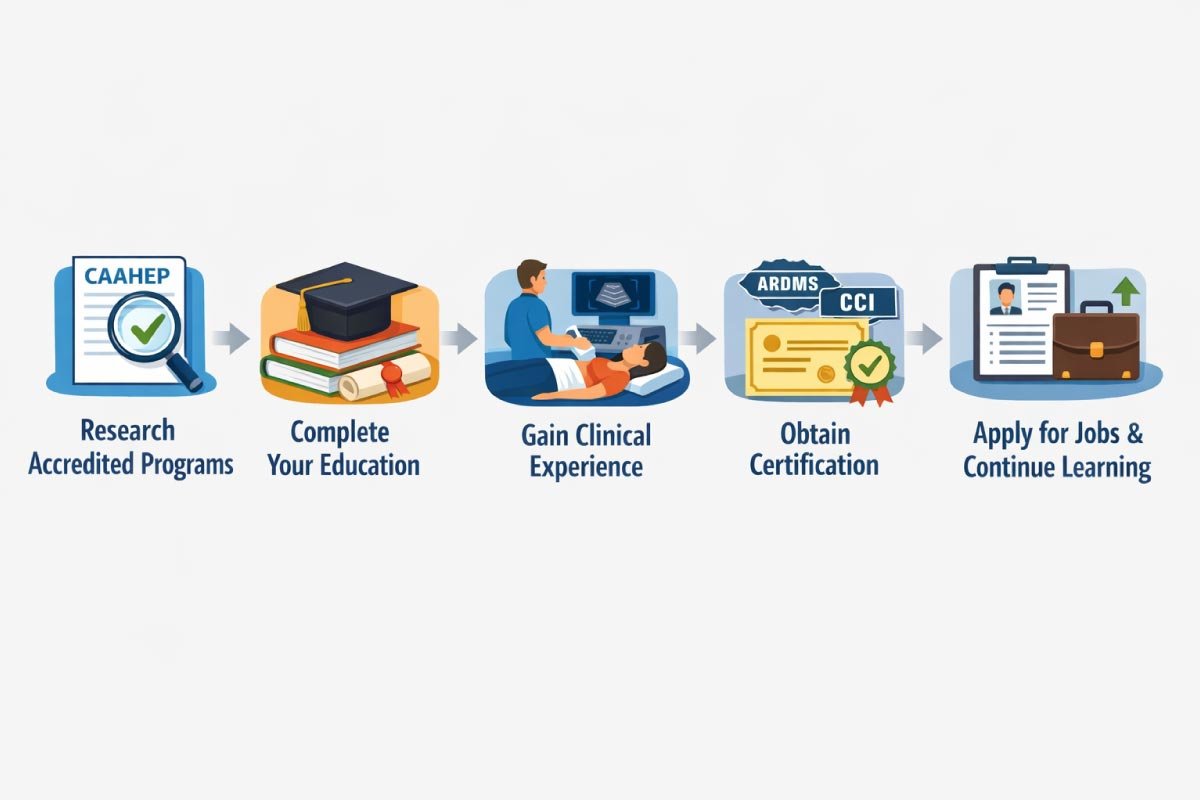
By following a structured path—researching programs, completing education, gaining clinical experience, obtaining certification, and pursuing continuous learning—
you can successfully enter and grow in this in-demand healthcare profession.
1. Research Accredited Programs
Start by identifying accredited sonography programs, such as those recognized by CAAHEP.
Research factors like program length, curriculum, clinical opportunities, and tuition costs.
Accreditation ensures that your education meets professional standards and qualifies you for certification exams.
Consider both associate degrees and certificate programs based on your prior education and career goals.
2. Complete Your Education
Enroll in a degree or certificate program in diagnostic medical sonography.
Coursework includes anatomy, physiology, physics, and patient care techniques.
Programs typically combine classroom learning with laboratory practice, preparing students for real-world sonography applications.
Completing your education provides the foundational knowledge and technical skills required to advance to clinical training and certification.
3. Gain Hands-On Clinical Experience
Participate in clinical rotations to apply your theoretical knowledge in real healthcare settings.
Working under supervision, you will perform ultrasound exams, interact with patients, and learn workflow procedures.
Clinical experience builds confidence, enhances technical competency, and is often a requirement for certification. Aim to document your hours carefully to strengthen your future applications.
4. Obtain Professional Certification
After completing education and clinical training, pursue certification through organizations like ARDMS, CCI, or ARRT.
Prepare thoroughly for exams by reviewing sonography techniques, physics principles, and safety protocols. Certification demonstrates your competence to employers and is often required to practice legally.
Maintaining certification may involve continuing education and periodic renewal exams.
5. Apply for Jobs and Continue Learning
Craft a resume highlighting education, clinical hours, technical skills, and certifications. Seek employment in hospitals, clinics, or specialty imaging centers.
Once employed, consider pursuing advanced education or specialty certifications in areas like vascular, cardiac, or pediatric sonography.
Continuing education supports career growth, skill enhancement, and long-term professional success.
Resources for Aspiring Sonographers
Aspiring sonographers can access a variety of resources to guide education, certification, and career development.
Official websites, accreditation directories, and professional associations provide information on programs, exams, networking, and job opportunities.
Leveraging these resources helps students and professionals make informed decisions and stay current in the evolving field of sonography.
| Resource | Why It’s Helpful |
|---|---|
| ARDMS Website | Certification details |
| CCI Website | Cardiac and vascular certification |
| CAAHEP Program Directory | Accredited education programs |
| Professional Associations | Networking and job boards |
Final Thoughts
Becoming a Diagnostic Medical Sonographer is a fulfilling career choice for those who enjoy working with patients, interpreting medical data, and using advanced technology.
With strong job demand, competitive salaries, and a variety of specialties, sonography offers both stability and professional growth.
Whether you’re changing careers or entering the healthcare field for the first time, sonography provides a meaningful path to make a difference in patient care.
Discover More:

Zak is a dedicated medical and career writer specializing in sonography, healthcare education, and professional development. Through SonographerSalary.com, he shares in-depth insights on sonographer salaries, education pathways, and career tips to help readers build successful futures in medical imaging. His content combines accuracy with practical, easy-to-understand guidance, empowering students and professionals to make confident, informed career decisions.