
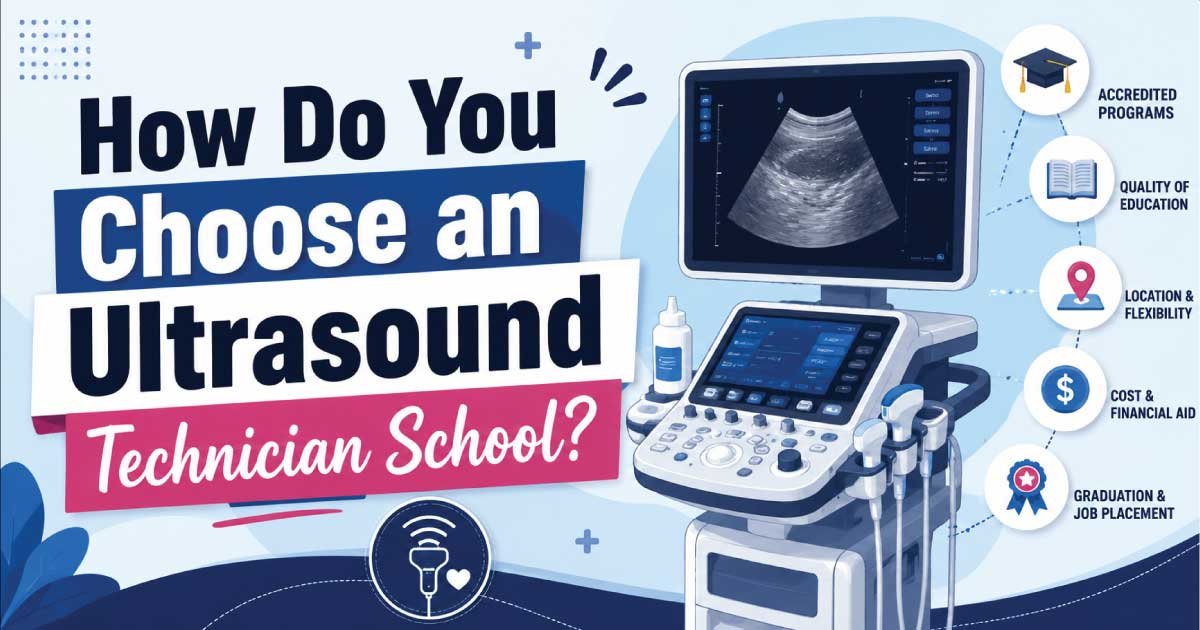
Choosing the right ultrasound technician school is one of the most important decisions you’ll make on your path to a healthcare career. Diagnostic medical sonographers—often called ultrasound technicians—play a vital role in patient care by using imaging technology to help physicians diagnose and monitor medical conditions. Because this profession requires a strong mix of technical skill, medical knowledge, and patient interaction, the quality of your education matters greatly.
With many programs available across community colleges, universities, hospitals, and online-hybrid formats, it can feel overwhelming to know where to begin. This guide walks you through the most important factors to consider when choosing an ultrasound technician school so you can make a confident, informed decision.
Understand What an Ultrasound Technician Does
Before evaluating schools, it’s essential to understand the profession itself. Ultrasound technicians operate specialized imaging equipment that uses sound waves to create images of organs, tissues, and blood flow inside the body. They work closely with patients, explaining procedures and ensuring comfort, while also capturing high-quality diagnostic images for physicians.
Sonographers can specialize in areas such as abdominal imaging, obstetrics and gynecology, cardiac sonography, vascular technology, or musculoskeletal imaging. The school you choose should align with your career interests and long-term goals within the field.
Accreditation Should Be Your Top Priority
Accreditation is a key quality indicator when selecting an ultrasound technician program, as it confirms that the curriculum, training standards, and institutional practices meet nationally recognized healthcare education requirements essential for producing competent and job-ready sonographers in clinical settings.
One of the most critical factors in choosing an ultrasound technician school is accreditation. Accreditation ensures that a program meets established educational and professional standards.
In the United States, the gold standard for sonography programs is accreditation by the Commission on Accreditation of Allied Health Education Programs (CAAHEP). Programs accredited by CAAHEP are reviewed for curriculum quality, faculty qualifications, clinical training, and student outcomes.
Graduating from a CAAHEP-accredited program is often required to sit for professional certification exams and may be preferred—or even mandated—by employers. While some non-accredited programs exist, they can limit your job prospects and certification eligibility, so accreditation should never be overlooked.
Decide on the Right Degree or Certificate Level
Choosing the appropriate educational pathway in sonography is an important decision because different program levels offer varying durations, depths of training, and career outcomes, making it essential to match your selection with your prior education, available time, and long-term professional objectives in healthcare.
Ultrasound technician programs are available at several educational levels, and the right choice depends on your background and career goals.
- Associate Degree programs typically take two years to complete and are the most common entry point into the profession.
- Bachelor’s Degree programs usually take four years and may offer broader training, leadership opportunities, and specialization options.
- Certificate Programs are often designed for individuals who already have a degree or experience in another healthcare field and want to transition into sonography.
When choosing a school, make sure the credential offered aligns with your career timeline, financial situation, and long-term aspirations.
Examine the Curriculum Carefully
A detailed curriculum review is essential when selecting an ultrasound technician program because course content directly affects your technical competence, clinical readiness, and success in certification exams, so it is important to ensure the program balances foundational science, imaging principles, and practical skill development effectively.
Not all ultrasound technician programs offer the same coursework or depth of training. Review the curriculum to ensure it includes both strong theoretical instruction and hands-on learning.
Key subject areas should include:
- Anatomy and physiology
- Medical terminology
- Ultrasound physics and instrumentation
- Patient care and safety
- Pathophysiology
- Specialty-specific sonography courses
A high-quality program will also emphasize critical thinking, image evaluation, and professional ethics. The more comprehensive and current the curriculum, the better prepared you’ll be for clinical practice and certification exams.
Clinical Training and Internships Matter
Clinical training is a crucial part of sonography education because it bridges classroom knowledge with real patient care, allowing students to build confidence, develop technical precision, and learn how to operate imaging equipment effectively in real healthcare environments under professional supervision.
Ultrasound technology is a hands-on profession, and no amount of classroom learning can replace real-world experience. Clinical training is where students learn to apply theory in a medical setting, interact with patients, and operate equipment under supervision.
Ask potential schools:
- How many clinical hours are required?
- Where are clinical sites located?
- Are placements guaranteed or competitive?
- Do students rotate through multiple specialties?
Strong clinical partnerships with hospitals, imaging centers, and clinics are a major advantage. Schools that provide structured, well-supervised clinical experiences tend to produce more confident and job-ready graduates.
Certification and Licensing Preparation
Certification readiness is a major factor when choosing an ultrasound technician program because most employers rely on professional credentials to validate clinical competence, and strong exam preparation ensures students can transition smoothly from education into certified, job-ready sonographers in competitive healthcare environments.
Most employers prefer or require ultrasound technicians to be professionally certified. One of the most widely recognized certifying bodies is the American Registry for Diagnostic Medical Sonography (ARDMS).
When evaluating a school, find out:
- Does the program prepare students for ARDMS or similar certification exams?
- What is the school’s exam pass rate?
- Are review courses or exam prep resources included?
A strong track record of certification success is a good indicator of program quality and instructional effectiveness.
Faculty Experience and Teaching Quality
Instructor expertise plays a crucial role in shaping how effectively students understand sonography concepts and develop hands-on imaging skills, so it is important to choose a program where educators combine real-world clinical experience with strong teaching ability and student-focused guidance throughout the training process.
The instructors at an ultrasound technician school can significantly impact your learning experience. Faculty members should not only be academically qualified but also have substantial clinical experience in sonography.
Look for programs where instructors:
- Are certified and actively engaged in the field
- Have teaching experience and a clear instructional style
- Are accessible for questions, mentoring, and support
Smaller class sizes often allow for more individualized attention, which can be especially valuable when learning technical imaging skills.
Trust Your Career Goals and Instincts
Choosing the right ultrasound technician school is ultimately a personal decision that should reflect your long-term career ambitions, preferred learning environment, and individual strengths, ensuring the program not only meets technical standards but also supports your growth, confidence, and overall success in medical imaging.
Ultimately, the best ultrasound technician school is one that aligns with your personal goals, learning style, and professional ambitions. A program may look impressive on paper, but if it doesn’t feel like the right fit, it may not be the best choice for you.
Take your time, ask questions, compare options carefully, and trust your instincts. Education is a major investment of time and money, and choosing the right school can set the foundation for a rewarding, stable, and meaningful career in medical imaging.
Read More:
Final Thoughts
Choosing an ultrasound technician school is about more than finding a convenient or affordable program—it’s about selecting an educational path that prepares you for real-world clinical practice, professional certification, and long-term career growth. By focusing on accreditation, curriculum quality, clinical training, faculty expertise, and career outcomes, you can narrow your options and make a decision with confidence.
A thoughtful choice today can lead to a fulfilling career where you make a tangible difference in patients’ lives every day.

Zak is a dedicated medical and career writer specializing in sonography, healthcare education, and professional development. Through SonographerSalary.com, he shares in-depth insights on sonographer salaries, education pathways, and career tips to help readers build successful futures in medical imaging. His content combines accuracy with practical, easy-to-understand guidance, empowering students and professionals to make confident, informed career decisions.