
If you are considering a career in medical imaging, the big question naturally appears: How much does a sonographer make? Sonography has become one of the most respected and rewarding healthcare careers in the United States, not only because of its meaningful patient interaction but also because of its strong earning potential. With healthcare expanding, diagnostic testing increasing, and hospitals relying on ultrasound more than ever, the salary outlook for sonographers continues to climb each year.
In this detailed guide, we will break down hourly, weekly, monthly, and yearly earnings for all major types of sonographers. You will also learn about factors that impact pay, how experience changes earnings, salary differences by specialty, and the best states for high-paying opportunities. Everything here is written in a natural, smooth tone so you get a real-world understanding of the field.
Understand the Sonographer’s Role
Before looking at the salary numbers, it’s important to grasp what sonographers actually do. A diagnostic medical sonographer uses ultrasound imaging equipment to capture real-time images of internal organs, tissues, and blood flow. These images help physicians diagnose illnesses, track pregnancies, and monitor critical health conditions.
Sonographers work in:
Hospitals
Outpatient imaging centers
OB/GYN clinics
Cardiology labs
Mobile ultrasound units
Specialty centers such as vascular and pediatric hospitals
The job is hands-on, technical, and deeply patient-centered, which is why hospitals tend to reward professionals who bring both skill and empathy to the table.
➡️ Discover the Secrets: Sonographer Salary in UK: Hourly, Monthly & Yearly
How Much Does a Sonographer Make? (2026 Overview)
In 2026, sonographers in the U.S. earn between $65,000 and $115,000 per year, depending on specialty, location, and experience. The national average salary falls between $82,000 and $92,000, making it one of the most financially stable healthcare careers that does not require medical school.
Here’s a quick breakdown:
Average Hourly Pay: $32 – $45
Average Weekly Pay: $1,300 – $1,800
Average Monthly Pay: $5,500 – $7,800
Average Yearly Pay: $78,000 – $105,000
But this is just the starting point. Sonographer salaries shift widely depending on specialty and work setting — which is exactly what we’re covering next.
Salary by Specialty: Who Earns the Most?
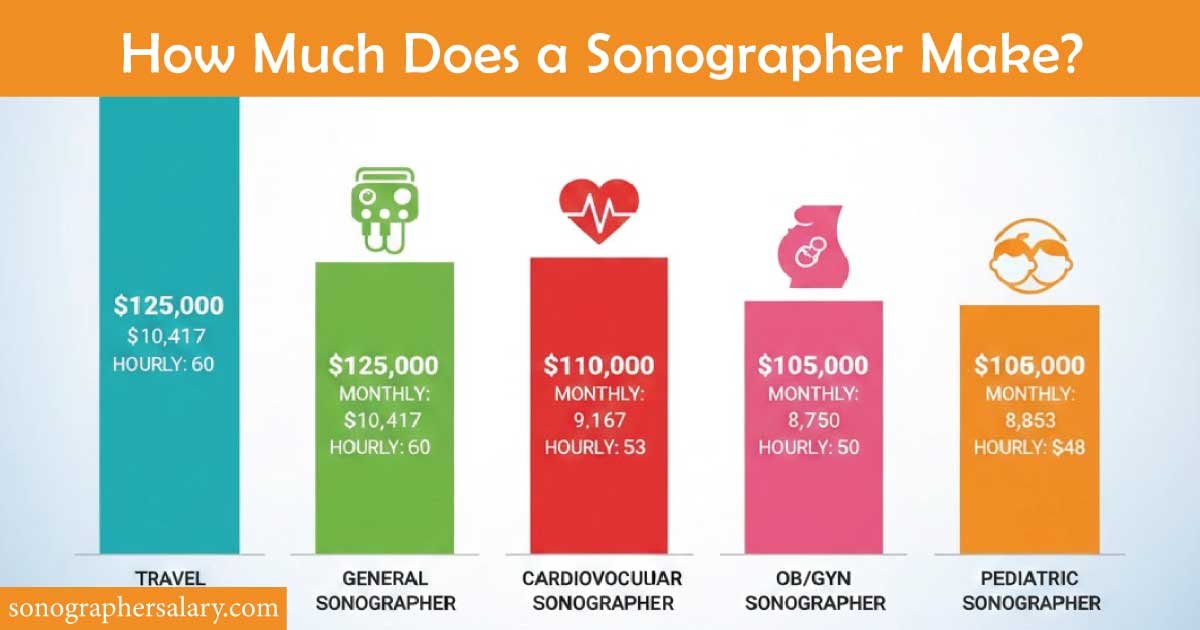
Sonography is not a one-size-fits-all career. There are multiple specialties, and each one impacts how much a sonographer makes. Here’s a breakdown of the most popular types:
1. Cardiovascular Sonographers (Highest Paying)
Cardiac and vascular imaging experts consistently earn the highest wages due to the complexity of their scans and the demand for heart-related diagnostics.
Typical Pay:
Hourly: $38 – $55
Monthly: $6,500 – $9,200
Yearly: $90,000 – $120,000+
Hospitals with large cardiology departments often pay premium rates, especially for sonographers who can perform both adult and pediatric cardiac scans.
2. OB/GYN Sonographers
OB/GYN ultrasound is in extremely high demand nationwide. These professionals perform pregnancy scans, fertility assessments, and women’s health imaging throughout all stages of life.
Typical Pay:
Hourly: $34 – $48
Yearly: $85,000 – $105,000
OB/GYN specialists often have flexible working environments, making this field popular among new graduates.
3. General Diagnostic Medical Sonographers
These professionals perform abdominal, soft tissue, and organ ultrasounds. It is the most common specialization and usually the entry point for most students.
Typical Pay:
Hourly: $30 – $42
Yearly: $70,000 – $95,000
General sonographers who add a second specialty typically see a quick jump in pay.
4. Pediatric Sonographers
Working with infants and children requires advanced skill and patience, so pediatric sonographers often earn higher-than-average rates.
Typical Pay:
Hourly: $36 – $50
Yearly: $88,000 – $110,000
Children’s hospitals usually offer strong benefits and additional training opportunities.
5. Travel Sonographers (Fastest Growing & Very High Paying)
This is one of the most exciting areas in the field right now. Travel assignments send sonographers to high-demand cities where facilities desperately need help.
Typical Pay:
Hourly: $48 – $75
Weekly: $2,500 – $4,000 (with stipends)
Yearly: $130,000 – $170,000
Travel sonography is perfect for professionals looking to earn top-dollar while exploring new places.
➡️ Discover the Secrets: Diagnostic Medical Sonography: Complete Guide
Salary by Experience Level: How Much Does a Sonographer Make in 2026?
Experience plays a major role in determining how much a sonographer earns. As professionals gain skills, efficiency, and confidence in their work, their pay generally increases. Understanding salary trends by experience level can help aspiring sonographers plan their career paths and financial goals. Here’s a detailed breakdown of earnings at different stages of a sonography career.
Entry-Level Sonographers (0–2 Years)
Hourly Pay: $28 – $34
Yearly Pay: $60,000 – $72,000
Entry-level sonographers are usually recent graduates who have completed an accredited diagnostic medical sonography program and obtained their certification, such as the RDMS (Registered Diagnostic Medical Sonographer) credential. Starting salaries may appear modest, but entry-level positions offer significant growth potential.
At this stage, sonographers focus on developing essential skills, including patient communication, image acquisition, and accurate interpretation of sonograms. Employers value professionals who demonstrate precision, adaptability, and a willingness to learn. Many new sonographers rotate through different specialties—obstetric, abdominal, vascular—to gain diverse experience, which can accelerate salary growth.
While pay starts on the lower end, many facilities offer benefits such as health insurance, paid leave, and continuing education stipends. Over the first two years, salaries often rise rapidly as professionals gain speed, accuracy, and confidence. Entry-level sonographers also lay the groundwork for mid-level positions and specialty certifications that lead to higher pay.
Mid-Level Sonographers (3–7 Years)
Hourly Pay: $35 – $45
Yearly Pay: $75,000 – $95,000
By this point in their careers, sonographers have gained substantial hands-on experience and proficiency in multiple imaging modalities. Mid-level professionals often handle more complex procedures and begin to mentor junior staff, improving overall departmental efficiency.
Many mid-level sonographers pursue additional certifications or secondary specialties, such as echocardiography, vascular, or musculoskeletal sonography. Adding a second credential can significantly boost earnings, sometimes by $10,000–$20,000 per year. At this stage, employers recognize the value of experienced sonographers who can maintain high-quality imaging standards while reducing errors.
Mid-level positions often offer more predictable schedules and additional responsibilities, such as training new hires or improving workflow procedures. Opportunities for overtime, on-call shifts, and traveling positions can further increase income. For sonographers committed to long-term growth, this stage of the career is critical for skill expansion and maximizing financial potential.
Senior Sonographers (8+ Years)
Hourly Pay: $40 – $55+
Yearly Pay: $90,000 – $120,000+
Senior sonographers bring extensive expertise in multiple specialties and often assume leadership roles within imaging departments. These roles may include supervising teams, creating work schedules, onboarding students, or maintaining quality control. Senior professionals may also transition into educational roles, teaching in clinical programs or offering continuing education for other sonographers.
Their advanced skills allow them to handle the most complex cases with efficiency and accuracy, making them highly valuable to hospitals and diagnostic centers. Senior sonographers frequently earn performance bonuses, leadership stipends, and higher pay rates for specialized procedures.
Additionally, opportunities such as traveling sonography or consultancy work allow experienced professionals to earn even more. By this stage, a combination of certifications, leadership roles, and specialty expertise ensures both high earning potential and professional recognition. Senior sonographers enjoy not only financial rewards but also a respected position within the healthcare field.
➡️ Discover the Secrets: What Is a Sonographer? The Expert Complete Guide
Salary by State: Highest Paying Locations in 2026
Sonography salaries vary widely by location, influenced by cost of living, demand for healthcare professionals, and urban versus rural settings. Here are the top 10 highest-paying states for sonographers in 2026:
| State | Average Salary |
|---|---|
| California | $105,000 – $130,000 |
| New York | $95,000 – $120,000 |
| Washington | $90,000 – $112,000 |
| Massachusetts | $92,000 – $115,000 |
| Oregon | $88,000 – $110,000 |
| New Jersey | $88,000 – $108,000 |
| Colorado | $85,000 – $105,000 |
| Maryland | $84,000 – $104,000 |
| Texas | $80,000 – $100,000 |
| Illinois | $78,000 – $98,000 |
Urban centers like Los Angeles, San Francisco, New York City, and Seattle pay the highest salaries due to higher living costs and greater demand for sonographers. Rural areas typically offer lower wages but often include affordable living expenses, which can offset salary differences.
What Factors Influence How Much a Sonographer Makes?
Several key factors affect sonography salaries:
1. Specialty
Advanced or complex specialties pay more. Cardiac, vascular, pediatric, and travel sonography are among the highest-paying fields. Additional certifications in these areas can dramatically increase earning potential.
2. Location
Higher-cost-of-living states generally offer larger paychecks. Cities with staffing shortages or high patient volumes may provide sign-on bonuses, shift differentials, or incentive pay.
3. Work Setting
Different environments provide different pay ranges:
Hospitals: Highest base pay, with opportunities for overtime and benefits.
Outpatient Imaging Centers: Stable schedules, moderate pay.
Private OB/GYN Clinics: Flexible shifts, moderate pay.
Travel Contracts: Potential for highest earnings due to demand for mobile sonographers.
4. Certifications
Sonographers with multiple credentials earn significantly more. Common certifications include:
RDMS (Registered Diagnostic Medical Sonographer)
RVT (Registered Vascular Technologist)
RDCS (Registered Diagnostic Cardiac Sonographer)
RCS (Registered Cardiac Sonographer)
RMSKS (Registered Musculoskeletal Sonographer)
Stacking certifications is one of the fastest ways to increase income.
5. Weekend, Night, and On-Call Shifts
Many employers pay extra for:
-
Night or evening shifts
-
Holiday rotations
-
Weekend work
-
24-hour on-call availability
Shift differentials can add several thousand dollars annually to a sonographer’s income.
Is Sonography a Good Career Financially?
Yes — sonography is one of the most stable and high-paying careers in allied health. Benefits include:
Strong job security due to high demand for imaging services
Above-average wages compared to other allied health careers
Opportunities for travel, overtime, and shift differentials
A career path that doesn’t require medical school
Multiple ways to increase earnings via certifications, leadership, and specialties
The U.S. Bureau of Labor Statistics projects steady job growth in diagnostic medical sonography, driven by an aging population and the healthcare industry’s shift toward noninvasive imaging. For those looking for a long-term, financially rewarding career in healthcare, sonography offers significant opportunities.
➡️ Discover the Secrets: Sonography vs Radiology: Complete Expert Guide
How to Earn the Highest Salary as a Sonographer
To maximize earning potential, consider the following strategies:
Add Multiple Specialties – Additional credentials in cardiac, vascular, or pediatric sonography can increase annual pay by $10,000–$25,000.
Work in High-Demand States or Cities – Urban centers pay higher salaries due to cost of living and staffing needs.
Take Travel Contracts – Travel sonographers often earn significantly more than permanent staff, sometimes double the standard salary.
Work Overtime or On-Call – Shift differentials for nights, weekends, or holidays can add $5,000–$15,000 per year.
Become a Lead Sonographer – Leadership positions, including supervising, training, and scheduling, come with higher pay and additional benefits.
Final Thoughts: How Much Does a Sonographer Make?
Sonography is one of the few careers that offers a strong salary, job stability, and meaningful patient impact all without the need for a four-year university degree. Whether you are just entering the field or exploring ways to increase your earnings, the future of diagnostic medical sonography is bright.
So, how much does a sonographer make?
Depending on where you work and your specialty, you can earn anywhere from $70,000 to $130,000+ per year, with travel and cardiac specialists reaching even higher numbers.
If you are looking for a respected medical career with excellent pay and long-term growth, diagnostic medical sonography remains one of the best choices you can make.
➡️ Discover the Secrets: Best Sonography Programs: Your Complete 2026 Guide
FAQs:
Which type of sonographer makes the most money?
Cardiac and vascular sonographers typically earn the highest salaries because their work requires specialized skills in heart and blood vessel imaging. Experience, certifications, and location also affect pay. Advanced specialties often come with higher responsibility and precision, which healthcare facilities reward with better compensation.
Is it hard to become a sonographer?
Becoming a sonographer requires dedication, education, and practice. You must complete an accredited program, gain clinical experience, and often earn certification. While the learning curve can be steep, strong study habits, hands-on practice, and commitment make it achievable. Passion for patient care also makes the journey smoother.
Do sonographers make more than RN?
Sonographers can earn salaries comparable to or slightly higher than registered nurses (RNs), especially in specialized fields or high-demand regions. Pay depends on experience, certifications, and location. While RNs may have more varied roles, sonography offers strong earning potential and opportunities for advancement in diagnostic imaging.
Can sonographers make a lot of money?
Yes, sonographers can earn substantial income, particularly in specialized areas like cardiovascular, pediatric, or neurosonography. Factors such as experience, certifications, work setting, and geographic location can increase earnings. Advanced skills and additional credentials often lead to higher-paying roles in hospitals, clinics, or private practices.
Why do sonographers quit?
Many sonographers leave due to physical strain, long hours, high stress, or burnout. Repetitive motions and patient demands can take a toll. Some also seek better pay or career growth in related fields. Work-life balance challenges are common, making self-care and supportive work environments essential for retention.
How many years does it take to be a sonographer?
Becoming a sonographer typically takes 2–4 years. An associate degree takes about 2 years, while a bachelor’s degree takes 4 years. Clinical internships are included for hands-on experience. Certification preparation may add additional months, but focused study and dedication ensure readiness for a rewarding career.

Zak is a dedicated medical and career writer specializing in sonography, healthcare education, and professional development. Through SonographerSalary.com, he shares in-depth insights on sonographer salaries, education pathways, and career tips to help readers build successful futures in medical imaging. His content combines accuracy with practical, easy-to-understand guidance, empowering students and professionals to make confident, informed career decisions.