
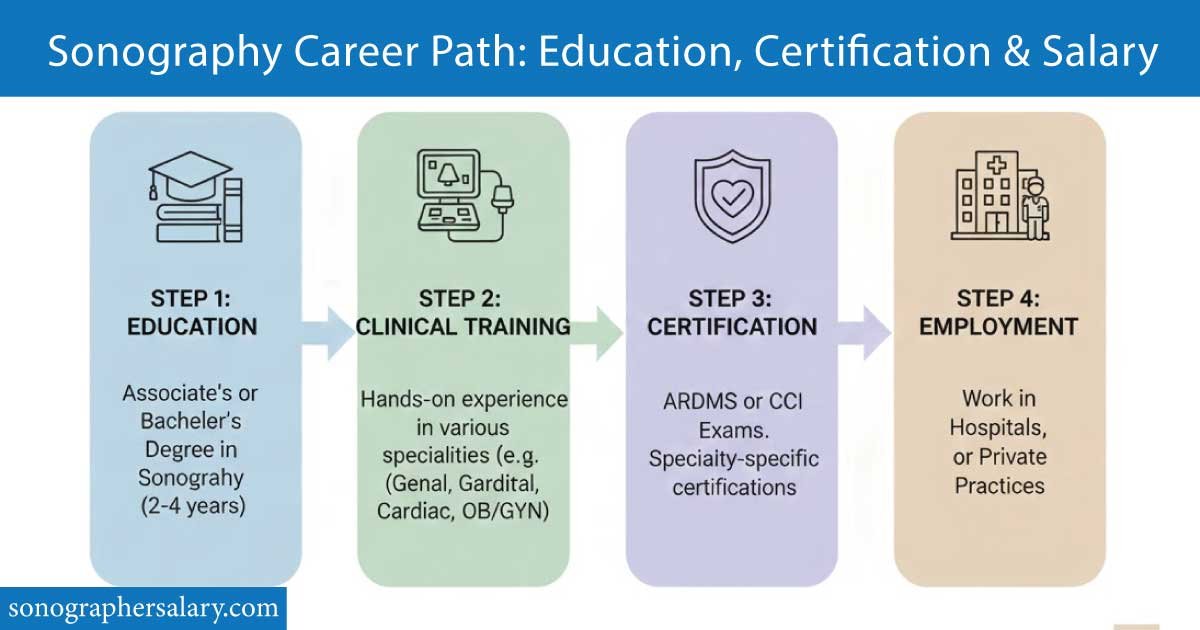
If you are wondering how to become a sonographer, you are probably drawn to a career that blends technology, healthcare, and direct patient impact. Sonography is one of the most respected and fastest-growing fields in allied health. The best part? You can enter this career without medical school, without a decade of schooling, and without the massive debt often associated with healthcare professions.
Sonographers — also known as diagnostic medical sonographers or ultrasound technicians use high-frequency sound waves to capture real-time images of organs, tissues, pregnancies, and blood flow. These images help physicians diagnose disease, guide treatment, and monitor patient progress.
But before you step into the ultrasound room, there’s a clear pathway you need to follow. In this complete guide, we will walk through every step you need to take, how long it actually takes, what education you need, the certifications required, and the career options waiting for you.
This article is written in a natural, human tone to give you a real-world understanding of the journey.
What Does a Sonographer Do?
Before diving into the steps, it’s helpful to understand the role. Sonographers don’t just hold a probe and take pictures, it’s a technical, hands-on, emotionally connected job.
Daily responsibilities include:
Preparing patients for exams
Using ultrasound machines to capture images
Understanding anatomy and pathology
Communicating with doctors and nurses
Writing preliminary reports
Ensuring patient comfort and safety
Working with pregnant women, cardiac patients, trauma cases, and more
Sonographers play a major role in diagnosing life-threatening conditions like heart failure, gallbladder disease, blood clots, and ectopic pregnancies. It’s a career where your skill directly impacts patient outcomes.
📄 Unlock the Truth: Sonography vs Ultrasound: Expert Complete Guide
How to Become a Sonographer: Step-by-Step
Becoming a sonographer can feel like a big task at first, but when broken down into clear steps, the pathway is very manageable. Sonography is a rewarding healthcare career, combining patient interaction, medical knowledge, and cutting-edge technology. Ultrasound professionals are in high demand, making this an excellent career choice with strong job security and earning potential. Here’s a complete, step-by-step guide to becoming a sonographer.
Step 1: Earn a High School Diploma or GED
Every professional journey starts with a solid foundation, and for sonography, that foundation is your high school education. While technically anyone with a diploma or GED can enter sonography programs, certain subjects prepare you better for your training.
Key Subjects to Focus On:
Biology: Understanding human anatomy and physiology is crucial. Biology classes give you a strong grasp of organs, tissues, and bodily functions—knowledge you’ll use daily as a sonographer.
Physics: Ultrasound imaging is based on sound waves, so physics helps you understand wave propagation, frequency, and energy.
Mathematics: Math develops critical problem-solving skills and helps with calculations in imaging measurements and patient data analysis.
Anatomy: Some high schools offer anatomy classes, which give you a head start in recognizing organs and structures before formal sonography training.
Students with strong performance in these subjects often find their sonography coursework more intuitive, as much of the program builds on this foundation.
Step 2: Choose the Right Sonography Education Path
Once your high school requirements are complete, you’ll need to select an education path. Unlike careers that require medical school, sonography offers multiple routes, each with different timelines and goals. Your choice depends on your desired specialty, career advancement, and previous healthcare experience.
Option A: Accredited Associate Degree (Most Common)
Length: 18–24 months
Overview: This is the fastest and most popular route. Programs focus on practical skills, ultrasound physics, anatomy, patient care, and clinical practice.
Pros: Hands-on learning, quick entry into the workforce, ARDMS certification eligibility.
Cons: Limited academic depth compared to a bachelor’s degree, though sufficient for most sonography positions.
Option B: Bachelor’s Degree in Sonography
Length: 4 years
Overview: For students interested in advanced roles, leadership positions, or academic careers, a bachelor’s degree offers more comprehensive training.
Pros: Deeper clinical experience, broader education, higher earning potential, and better opportunities for management roles.
Cons: Longer time commitment and higher tuition costs.
Option C: 1-Year Certificate Program
Length: 12 months
Overview: These programs are ideal for professionals who already have healthcare experience (e.g., nurses, radiologic technologists).
Pros: Quick entry for healthcare professionals seeking to specialize in sonography.
Cons: Limited to those with a prior healthcare background; not suitable for fresh high school graduates.
Why Accreditation Matters
It’s essential to choose a program accredited by CAAHEP (Commission on Accreditation of Allied Health Education Programs). Accreditation ensures:
Quality Education: Courses meet rigorous industry standards.
Certification Eligibility: Only graduates of accredited programs are eligible for ARDMS exams.
Employer Acceptance: Hospitals and imaging centers prefer or require accredited training.
Without accreditation, your certification and employment opportunities could be severely limited.
Step 3: Complete Clinical Training (Hands-On Experience)
Clinical training is the heart of sonography education. This is where you move from textbooks to real-life patient care. Most accredited programs include rotations in hospitals, imaging centers, or specialty clinics.
Key Skills Developed in Clinical Rotations:
Patient Scanning: Learn to operate ultrasound machines on real patients.
Emergency Handling: Gain exposure to urgent and high-pressure situations.
Pathology Detection: Develop the ability to recognize abnormalities in tissues and organs.
Communication: Build patient interaction skills, explaining procedures and providing reassurance.
Technical Mastery: Learn machine settings, image optimization, and proper probe techniques.
Many students consider clinical training the most rewarding part of their education, as it transforms theoretical knowledge into practical expertise.
Step 4: Choose a Sonography Specialty
Sonography is a diverse field with multiple specialty areas. Choosing a specialty early can guide your training focus and future career opportunities. Your specialty often influences your salary and job prospects.
Common Sonography Specialties:
General/Abdominal Sonography: Focuses on organs like the liver, kidneys, and gallbladder.
OB/GYN Sonography: Specializes in pregnancy and reproductive health imaging.
Cardiac Sonography (Echocardiography): Focuses on heart structure and function.
Vascular Sonography: Examines blood vessels and circulation.
MSK Sonography: Focuses on muscles, ligaments, and joints.
Pediatric Sonography: Specialized imaging for children and infants.
Breast Sonography: Focused on breast tissue and detection of abnormalities.
Most beginners start with general or OB sonography and may pursue additional credentials later to boost earning potential.
Step 5: Pass the ARDMS or CCI Certification Exams
Certification is the most critical step in becoming a sonographer. Employers strongly prefer — and often require — certification to ensure competence and professional credibility.
Main Credentialing Organizations:
ARDMS (American Registry for Diagnostic Medical Sonography) Credentials include:
RDMS: Registered Diagnostic Medical Sonographer
RDCS: Registered Diagnostic Cardiac Sonographer
RVT: Registered Vascular Technologist
CCI (Cardiovascular Credentialing International) Popular for cardiac and vascular specialties:
RCS: Registered Cardiac Sonographer
RVS: Registered Vascular Specialist
Benefits of Certification:
Higher pay
Broader job opportunities
Ability to work in hospitals and clinics
Specialization credibility
Professional recognition
Many students take the SPI (Sonography Principles & Instrumentation) exam during their last semester to complete certification requirements.
📄 Unlock the Truth: What Is Sonography? The Expert Complete Guide
Step 6: Get Licensed (Required in Some States)
Unlike nurses or radiologic technologists, not all states require sonographer licensing. However, a few states have mandatory licensing laws:
New Mexico
Oregon
North Dakota
In most states, ARDMS or CCI credentials are sufficient for employment. Still, it’s crucial to verify your state regulations to avoid compliance issues.
Step 7: Apply for Sonography Jobs
Once certified, your career prospects expand significantly. Sonographers are in high demand due to population growth, an aging society, and the increasing reliance on noninvasive imaging.
Common Work Settings:
Hospitals and medical centers
Outpatient imaging centers
OB/GYN clinics
Cardiac and vascular specialty centers
Pediatric hospitals
Private practices
Travel sonography agencies
Travel sonography has gained popularity in 2026 as one of the highest-paying options. Professionals work temporary assignments nationwide, often receiving benefits like travel stipends, housing, and higher hourly rates.
📄 Unlock the Truth: Diagnostic Imaging Courses Online in 2026: Complete Guide
How Long Does It Take to Become a Sonographer?
Becoming a sonographer is a popular choice for students seeking a rewarding healthcare career without the long years of medical school. The total time to become a sonographer varies depending on the education path you choose, but most students complete all requirements in 2–3 years.
Typical Timeline:
High School Graduation: The journey starts with a high school diploma or GED, ideally with a focus on biology, physics, and math.
Associate Degree: The most common route, an accredited associate program typically takes 2 years. Coursework combines classroom learning with hands-on clinical experience.
Clinical Training: Included in most programs, this is where you gain real-world experience scanning patients under supervision.
Certification: After graduation, you’ll spend about 3–6 months preparing for and passing the ARDMS or CCI exams to become a certified sonographer.
If you pursue a bachelor’s degree in sonography, expect about 4 years to complete your education. For those already in healthcare, a 1-year certificate program is available, providing an accelerated path into the field.
How Much Does a Sonographer Earn? (Quick Overview)
One of the major draws of a sonography career is the strong earning potential. Salaries vary based on specialty, location, and experience, but here’s a general overview of national averages:
Hourly: $32 – $45
Monthly: $5,500 – $7,800
Yearly: $78,000 – $105,000
Certain specialties, such as cardiac sonography, or positions like travel sonographers, can earn even more — sometimes $120,000–$170,000+ per year. This makes sonography an attractive option for those who want a high-paying healthcare career without attending medical school for 7–10 years.
📄 Unlock the Truth: High-Paying Medical Jobs Without a Degree
Skills You Need to Become a Sonographer
Being a successful sonographer requires more than technical knowledge. You need a mix of medical expertise, interpersonal skills, and analytical ability. Here are the key skills:
Anatomy Knowledge: A strong understanding of human anatomy is essential to accurately interpret images.
Image Interpretation: Ability to read shades, shadows, and structures on ultrasound images.
Patient Communication: Comforting and reassuring patients, especially those anxious about medical results.
Critical Thinking & Attention to Detail: Quick problem-solving and precise measurements are vital.
Physical Stamina: Scanning can require hours of standing and precise hand movements.
Hand-Eye Coordination: Essential for manipulating the transducer while watching the screen.
Emotional Intelligence: Sonographers often work with patients facing serious health concerns, requiring empathy and patience.
Is Sonography Hard to Learn?
Sonography is challenging, but in a highly rewarding way. The difficulty comes not from complexity alone, but from combining multiple skills: science, physics, anatomy, patient care, and technical scanning techniques.
Students often struggle with:
Ultrasound Physics: Understanding sound waves and image formation.
Anatomy Memorization: Recognizing organs and structures quickly.
Machine Settings: Adjusting equipment for optimal imaging.
Pathology Recognition: Identifying abnormalities on scans.
Clinical Expectations: Working efficiently while maintaining patient care.
With practice, guidance from instructors, and repeated scanning experience, these skills become second nature. Many programs provide labs, tutoring, and supervised clinical time to ensure students succeed.
In short, becoming a sonographer typically takes 2–3 years, offers excellent earning potential, and provides a meaningful career helping patients. While the learning curve is steep, the combination of science, technology, and patient care makes it one of the most rewarding healthcare professions today.
Benefits of Becoming a Sonographer
Choosing a career as a sonographer offers a unique combination of financial rewards, job stability, and meaningful work. Whether you’re a recent high school graduate or a healthcare professional looking to specialize, sonography provides a pathway to a fulfilling and lucrative career. Here’s a detailed look at the key benefits.
1. High Salary Without Medical School
One of the biggest draws of sonography is the earning potential. With an associate degree or certificate program, you can start earning $80,000 or more annually without the long years of medical school or residency. Specialized roles like cardiac or vascular sonography can push salaries into the $120,000–$170,000 range, while travel sonographers often earn even higher compensation with added benefits like housing and travel stipends. This makes sonography a highly attractive option for those seeking a well-paying healthcare career in a short timeframe.
2. Strong Job Stability
Healthcare careers are consistently in demand, and sonography is no exception. The aging population, advances in diagnostic imaging, and growing reliance on noninvasive procedures mean that sonographers are needed in every city and state. Hospitals, outpatient clinics, OB/GYN practices, and specialty centers constantly require trained professionals, making job security one of the strongest benefits of this career.
3. Emotionally Rewarding Work
Sonographers play a direct role in patient care, helping to detect health issues, monitor pregnancies, and evaluate heart or vascular conditions. Many professionals find this work incredibly fulfilling because they can see the immediate impact of their skills, such as identifying an early-stage medical problem or confirming a healthy pregnancy. The personal connection with patients and the knowledge that your expertise contributes to life-saving decisions makes this career emotionally rewarding.
4. Flexible Work Settings
Sonographers enjoy a variety of work environments, offering flexibility that suits different lifestyles. You can work in:
Hospitals – fast-paced, comprehensive care.
Outpatient imaging centers – more predictable schedules.
OB/GYN or specialty clinics – focused patient care.
Travel sonography – temporary assignments nationwide with higher pay.
Part-time or per-diem roles – perfect for balancing personal and professional life.
This flexibility allows sonographers to find roles that match their lifestyle preferences and career goals.
5. Fast Career Growth
Sonography offers clear pathways for advancement. Starting with a general or OB specialty, you can add high-demand certifications like cardiac, vascular, or pediatric sonography to increase your salary quickly. Beyond technical growth, opportunities exist in leadership, travel assignments, and teaching roles. Many professionals also move into equipment sales or applications with medical imaging companies, leveraging their expertise for new income streams.
📄 Unlock the Truth: Master Sonography Programs: Complete Guide
Challenges of the Career
While sonography is rewarding, it comes with challenges:
Long hours on your feet during scanning sessions.
Physically demanding work, requiring endurance and proper technique.
Emotional cases, such as trauma, pregnancy complications, or critical diagnoses.
Fast-paced, high-pressure departments with tight schedules.
Occasional on-call or weekend shifts, depending on the employer.
With proper training, self-care, and time management, most sonographers maintain a healthy balance while enjoying the career’s benefits.
How to Choose the Best Sonography Program
Selecting the right program is crucial for success. Before enrolling, consider:
CAAHEP accreditation – ensures quality education and eligibility for ARDMS certification.
Supervised clinical rotations – essential for hands-on experience.
Graduate employment rate – indicates program effectiveness.
Specialties offered – aligns with your career goals.
ARDMS exam preparation – ensures readiness for certification.
Financial aid availability – helps manage tuition costs.
A strong program builds confidence, practical skills, and a clear path into the workforce.
Career Growth Opportunities
Sonography offers multiple avenues for professional growth:
Specialize in High-Demand Fields – cardiac, vascular, or pediatric sonography often pay the most.
Leadership Roles – become a lead sonographer, supervisor, or department manager.
Travel Sonography – top earners often take temporary assignments nationwide.
Education – teach at colleges or ultrasound programs, shaping the next generation.
Ultrasound Equipment Sales or Applications – work with companies like GE, Philips, or Siemens.
With dedication and continued learning, a sonography career can provide financial security, professional growth, and meaningful work for years to come.
Final Thoughts: Is Sonography the Right Career for You?
If you want a meaningful, stable, and well-paying healthcare career without the stress of medical school, sonography is one of the best paths you can take. The journey is focused, practical, and achievable within a few years and once you enter the field, opportunities open quickly.
To summarize the journey:
Finish high school
Enroll in an accredited sonography program
Complete clinical training
Choose a specialty
Earn ARDMS or CCI certification
Apply for jobs
Continue growing and advancing
Now that you know how to become a sonographer, you have a clear roadmap to begin your ultrasound career with confidence.
FAQs:
How many years does a sonographer take?
Becoming a sonographer typically takes 2–4 years, depending on your education path. An associate degree usually takes 2 years, a bachelor’s degree takes 4 years, and certificate programs for healthcare professionals take about 1 year. Clinical training and certification are included in this timeline.
Is it hard to become a sonographer?
Sonography can be challenging because it combines anatomy, ultrasound physics, patient care, and technical skills. Students often struggle with image interpretation, machine operation, and clinical practice. However, with hands-on training, tutoring, and practice, most students master the skills. It’s rewarding rather than impossible, offering both career satisfaction and strong job prospects.
What are the steps to becoming a sonographer?
Steps include: 1) Complete high school with science courses; 2) Enroll in an accredited sonography program (associate, bachelor’s, or certificate); 3) Complete clinical rotations; 4) Pass ARDMS or CCI certification exams; 5) Obtain state licensing if required; 6) Apply for sonography jobs in hospitals or clinics.
What degree do most sonographers have?
Most sonographers earn an associate degree in diagnostic medical sonography, which typically takes 2 years. Some pursue a bachelor’s degree for advanced roles, leadership positions, or teaching opportunities. Certificate programs are common for healthcare professionals already in the field who want to specialize in ultrasound quickly.
Is sonography better than nursing?
Sonography and nursing are different careers. Sonography offers higher earning potential, shorter training, and specialized imaging work. Nursing provides broader patient care opportunities and higher job flexibility across various healthcare settings. “Better” depends on your interests: choose sonography for imaging-focused work and nursing for holistic patient care.
Which type of sonographer gets paid most?
Cardiac, vascular, and travel sonographers are among the highest-paid. Cardiac sonographers often earn $120,000+ annually, vascular specialists have similar high salaries, and travel sonographers can earn even more with added housing and travel benefits. Specialization, location, and experience significantly impact earning potential.

Zak is a dedicated medical and career writer specializing in sonography, healthcare education, and professional development. Through SonographerSalary.com, he shares in-depth insights on sonographer salaries, education pathways, and career tips to help readers build successful futures in medical imaging. His content combines accuracy with practical, easy-to-understand guidance, empowering students and professionals to make confident, informed career decisions.