
Medical imaging is a critical field in modern healthcare. Behind every clear X‑ray, CT scan, or MRI image is a skilled professional who operates complex imaging machines.
and helps doctors diagnose and treat patients. These professionals are often called Imaging Services Technologists.
In this detailed guide, we will explore:
-
What an imaging services technologist does
-
Salary expectations (Pakistan vs. U.S.)
-
Required education and training pathways
-
Career progression and job outlook
-
Skills, certifications, and typical work environments
Whether you are a student considering this career or looking to make a transition, this article is your complete roadmap.
Who Is an Imaging Services Technologist?
An imaging services technologist is a healthcare professional who operates medical imaging equipment to capture diagnostic images of patients.
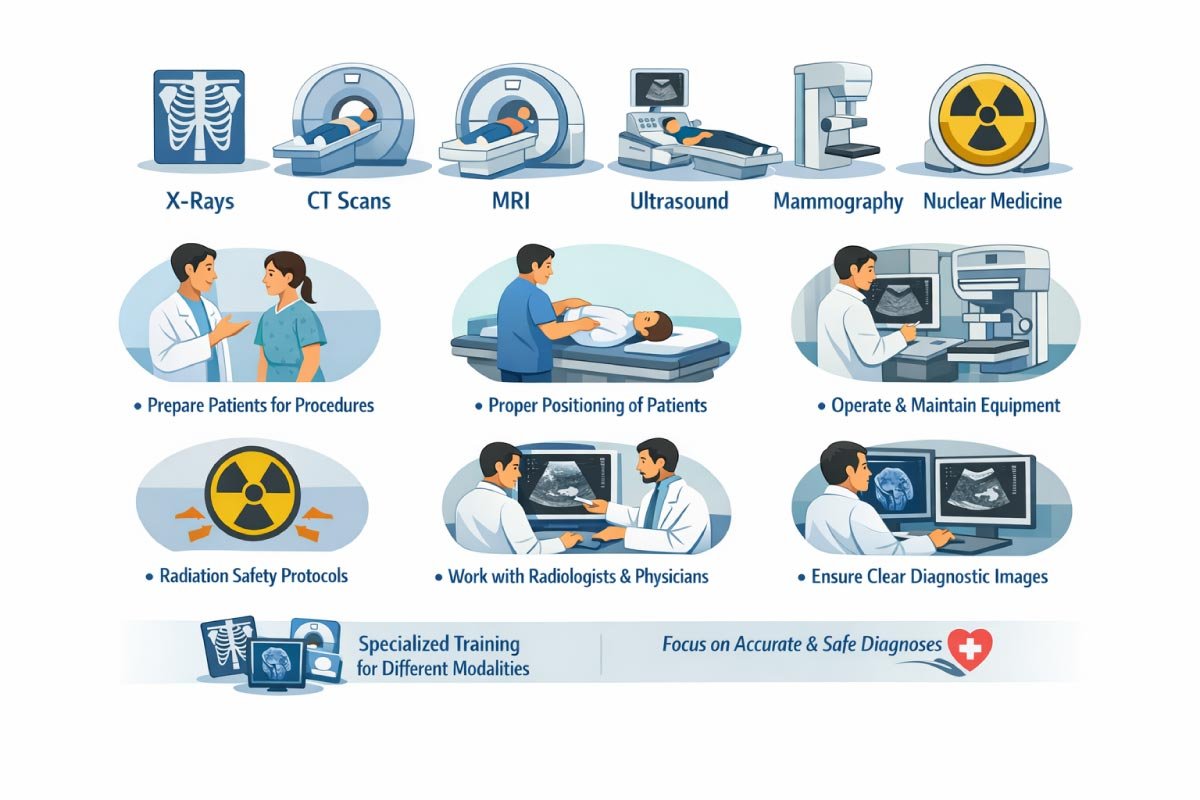
They play a critical role in assisting physicians with accurate diagnoses, ensuring patient safety, maintaining imaging systems, and combining technical expertise with patient care in a clinical setting.
-
X‑rays
-
Computed Tomography (CT) scans
-
Magnetic Resonance Imaging (MRI)
-
Ultrasound
-
Mammography
-
Nuclear medicine procedures (in some cases)
Their role goes beyond pushing buttons:
-
They prepare patients for imaging procedures
-
Ensure proper positioning to capture accurate diagnostic images
-
Operate and maintain imaging machines
-
Follow strict radiation safety protocols
-
Work closely with radiologists and physicians to ensure diagnostic images are clear and useful
Different imaging modalities (X‑ray vs. MRI vs. CT) may require specialized training, but all technologists share the goal of helping diagnose health conditions accurately and safely.
Job Responsibilities — What Do They Do Day‑to‑Day?
Job responsibilities — what they do day‑to‑day — describe the routine tasks and activities a professional performs to keep operations running efficiently.
This can include patient interaction, equipment operation, data recording, team coordination,
and adherence to safety protocols, providing a clear picture of the role’s practical, everyday functions.
1- Core Duties
Core duties are the essential, day-to-day responsibilities of a professional in their role. They include the fundamental tasks that ensure operations run smoothly,
such as performing standard procedures, maintaining equipment, documenting results,
and collaborating with colleagues, forming the foundation of competency and accountability within the profession.
-
Prepare patients and explain procedures
-
Position patients accurately to capture diagnostic images
-
Operate imaging machinery such as MRI, CT, or X‑ray machines
-
Monitor safety and ensure minimal radiation exposure
-
Review preliminary images and ensure quality before radiologist review
-
Maintain equipment and report malfunctions
-
Follow patient records and manage digital imaging systems
2- Advanced Duties (Depending on Modality)
Advanced duties (depending on modality) refer to specialized tasks that a professional may perform based on their specific equipment or field of expertise.
These can include complex imaging procedures, detailed diagnostics, or protocol-specific interventions, requiring higher-level skills, additional training, and precision to ensure accurate results and patient safety.
-
Administering contrast agents
-
Conducting advanced scanning sequences
-
Assisting radiologists with interventional imaging procedures
This role blends technical insight, patient care, safety, and precision — making it both challenging and rewarding.
Required Education & Training Pathways
Required education and training pathways outline the formal steps needed to enter and succeed in a profession.
This includes degrees, certifications, hands-on training, and continuing education.
Understanding these pathways helps aspiring professionals plan their academic journey, meet industry standards, and gain the skills necessary for career advancement.
1- Common Academic Routes
Common academic routes outline the typical educational paths individuals take to enter a profession.
For imaging services technologists, this may include associate or bachelor’s degree programs in medical imaging, radiologic technology,
or related fields, often paired with clinical internships or hands-on training to build practical skills and meet certification requirements.
| Education Level | Typical Pathway |
|---|---|
| High School Diploma | Entry‑level support roles; limited imaging tech jobs |
| Diploma / Certificate | 1–2 year programs focused on imaging procedures |
| Associate Degree | 2‑year accredited radiologic/medical imaging degree |
| Bachelor’s Degree | 4‑year in imaging sciences, radiography, or healthcare |
Most high‑quality jobs require at least an Associate Degree or diploma in medical imaging or radiologic technology, ideally from an accredited program.
2- Certifications & Licensure:
In some countries (especially the U.S.), many employers require professional credentialing from bodies like:
-
ARRT — American Registry of Radiologic Technologists
-
NMTCB — Nuclear Medicine Technology Certification Board
-
Other state or national licensing boards
In Pakistan and other regions, local medical councils or health boards may regulate radiologic training programs and certification.
Salary Overview
A salary overview offers a snapshot of what professionals can expect to earn in a particular role. It highlights average wages, industry standards, and variations by experience, location,
or specialization, giving readers a clear understanding of overall compensation trends and helping guide career planning and financial expectations.
Annual Salary Comparison
Annual salary comparison highlights how earnings vary across experience levels, job titles, locations, or employers within a profession.
It helps professionals and job seekers understand industry standards, identify potential growth opportunities,
and make informed decisions about career moves or negotiations based on realistic compensation benchmarks.
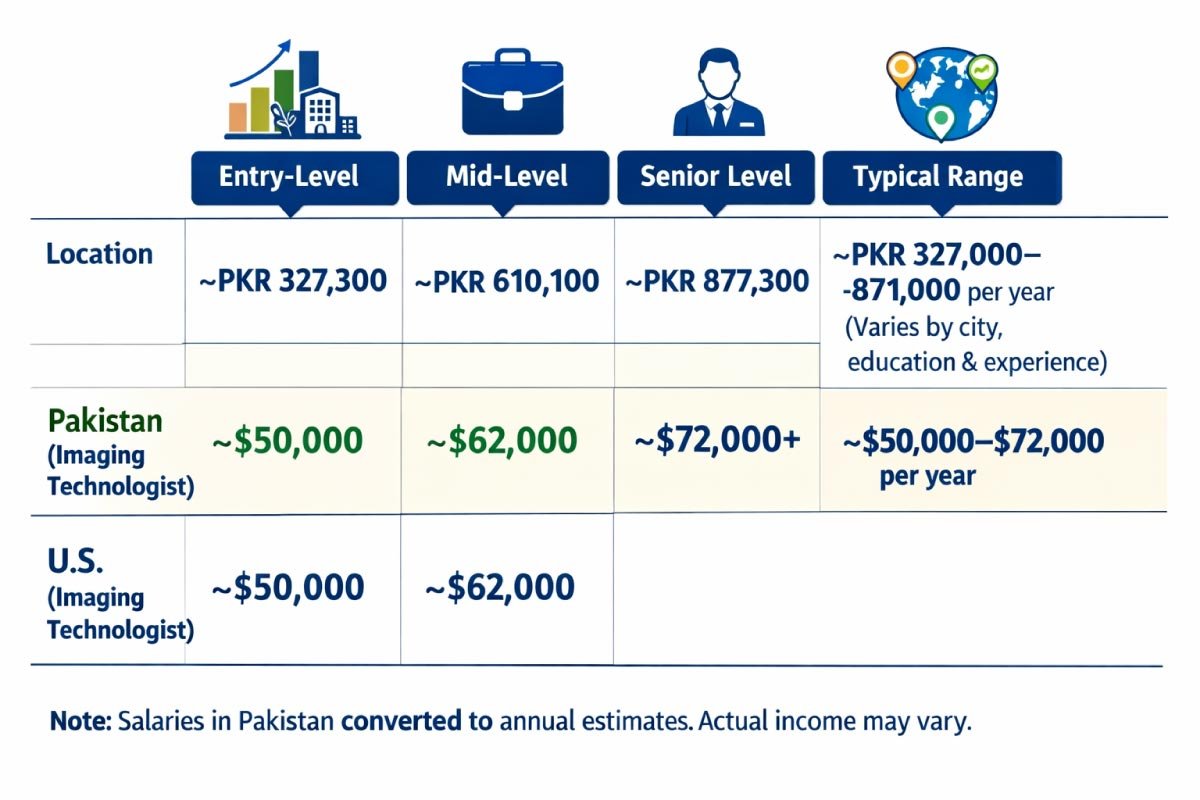
| Location | Entry‑Level | Mid‑Level | Senior Level | Typical Range |
|---|---|---|---|---|
| Pakistan (Imaging Technologist) | ~PKR 327,300 | ~PKR 610,100 | ~PKR 877,300 | ~PKR 327,000–877,000 per year (varies by city, education & experience) |
| U.S. (Imaging Technologist) | ~$50,000 | ~$62,000 | ~$72,000+ | ~$50,000–$72,000 per year |
Note: Salaries in Pakistan are shown converted into total annual figures based on available data, which may vary by source.
In reality, many Pakistani technologists earn monthly salaries in the PKR range shown.
Salary Breakdown
Understanding a salary breakdown is essential for anyone evaluating a career or negotiating compensation.
It provides a clear picture of base pay, bonuses, benefits, and other financial components,
helping professionals make informed decisions about their earning potential and career growth opportunities in their chosen field.
Imaging Technologist Salary by Experience
Imaging technologist salary by experience shows how compensation typically increases with years in the field.
Entry-level professionals may earn a starting wage, while mid-level and senior technologists often receive higher salaries due to expertise, specialized skills,
and leadership responsibilities, providing a clear picture of career growth and earning potential over time.
| Experience Level | Average Salary (PKR per Year) |
|---|---|
| 0‑2 Years | ~327,300 |
| 2‑5 Years | ~464,900 |
| 5‑10 Years | ~610,100 |
| 10‑15 Years | ~751,700 |
| 15‑20 Years | ~799,300 |
| 20+ Years | ~877,300 |
Source: World Salaries Pakistan data
Salary by Education Level
Salary for Imaging Services Technologists often varies based on education level. Technologists with an associate degree typically earn entry‑level salaries,
while those with a bachelor’s degree may command higher pay and faster advancement.
Postgraduate certifications or specialized training in modalities like MRI, CT, or nuclear medicine can further increase earning potential.
Salary by Education (Annual )
Salary by education (annual) illustrates how a professional’s level of formal education can impact their yearly earnings.
Higher degrees or specialized certifications often correlate with increased salaries, reflecting advanced skills, greater responsibilities, and enhanced career opportunities within the field.
| Education | Average Salary (per Year) |
|---|---|
| High School | ~407,300 |
| Diploma/Certificate | ~472,000 |
| Bachelor’s Degree | ~689,900 |
| Master’s Degree | ~847,000 |
Higher qualifications consistently correlate with higher pay.
Job Outlook & Growth
The job outlook for Imaging Services Technologists is strong, driven by advances in medical imaging, an aging population, and growing demand for diagnostic services.
Employment is expected to grow steadily, with opportunities in hospitals, outpatient centers, and specialized clinics.
Technologists with advanced certifications and specialized skills will see the most career growth.
In many regions:
-
Demand for MRI and CT technologists is growing faster than average healthcare occupations
-
Imaging services are essential for early diagnosis, cancer screening, trauma assessment, and ongoing patient monitoring
-
There is ongoing demand for trained professionals in hospitals, private clinics, diagnostic centers, and specialized imaging facilities
According to industry data, growth in imaging services, especially MRI and CT, is projected to be strong in the next decade — often in double‑digit percentages in many areas of the world.
Read More:
Career Tracks & Advancement Opportunities
Imaging Services Technologists have multiple career tracks and advancement opportunities. They can specialize in advanced imaging modalities,
move into supervisory or management roles, or transition into education and training positions for future technologists. Additional certifications, continuing education,
and leadership experience open doors to higher-paying roles and greater professional responsibility within healthcare.
1- Vertical Career Progression
Vertical career progression for Imaging Services Technologists typically begins with entry-level roles in general imaging.
With experience and additional certifications, technologists can advance to specialized modalities like MRI, CT, or nuclear medicine.
Further growth may include senior technologist positions, lead technologist roles, departmental supervision, or management and administrative leadership in imaging services.
-
Junior Technologist → Senior Technologist
-
Lead Technologist / Supervisor
-
Department Manager
-
Educator/Instructor (training technologists)
-
Specialist (e.g., MRI, CT, Mammography)
2- Specialization Areas
Imaging Services Technologists can specialize in various areas to advance their careers and focus on specific patient needs.
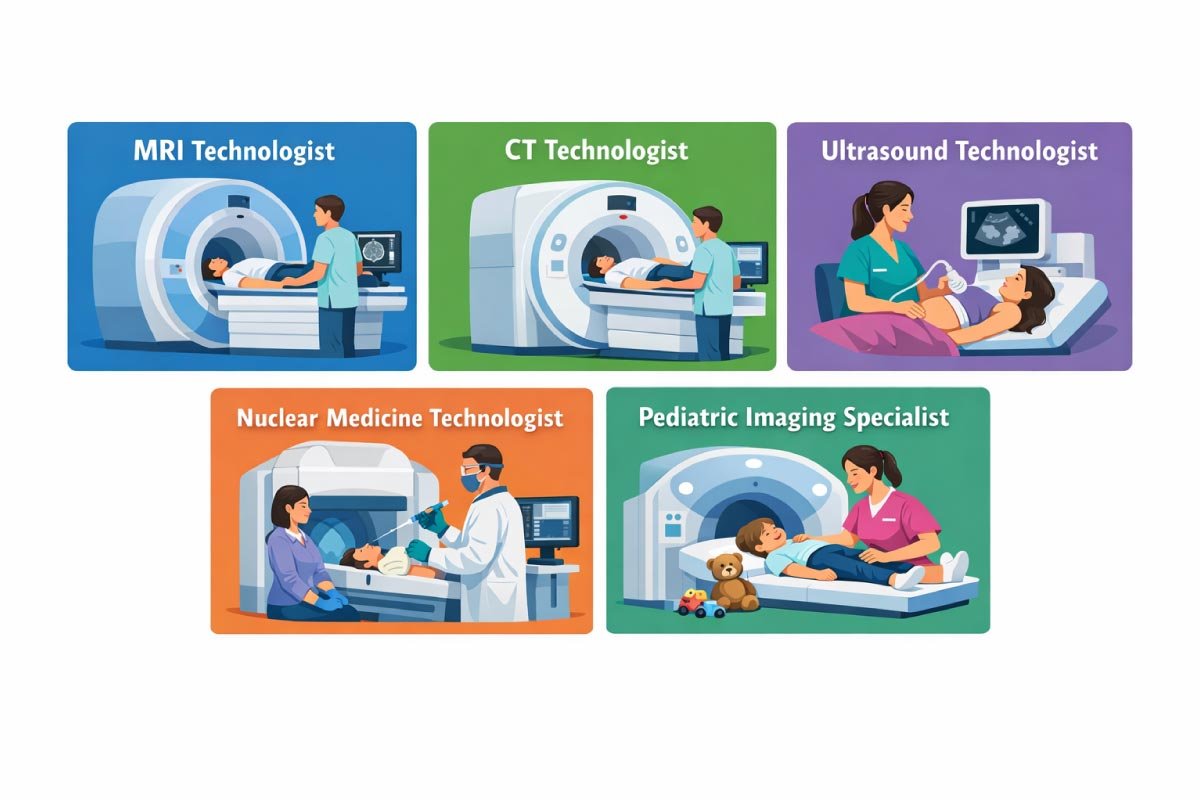
Common specializations include MRI, CT scans, ultrasound/sonography, nuclear medicine, mammography, and interventional radiology.
Each area requires targeted training and certification, allowing technologists to develop expertise and take on more complex imaging procedures.
-
MRI Technologist
-
CT Technologist
-
Ultrasound Technologist
-
Nuclear Medicine Technologist
-
Pediatric Imaging Specialist
Each specialization may have its own credentialing and training requirements, often leading to higher pay and more responsibility.
Read More:
Skills & Traits of a Successful Technologist
A successful Imaging Services Technologist combines technical expertise with personal qualities. Key traits include attention to detail, critical thinking, and problem-solving abilities.
Strong communication, empathy, and teamwork foster positive patient interactions. Adaptability, professionalism,
and a commitment to continuous learning ensure they stay current with evolving medical imaging technologies and best practices.
1- Technical Skills
Imaging Services Technologists must master a range of technical skills to operate complex imaging equipment safely and effectively.
Key skills include proficiency in MRI, CT, X-ray, and ultrasound systems, understanding imaging protocols, maintaining equipment, analyzing images for quality,
and following radiation safety standards. Troubleshooting and staying updated with emerging technologies are also crucial.
-
Understanding imaging physics and anatomy
-
Operating advanced imaging machines
-
Quality control & safety checks
-
Digital imaging systems knowledge
2- Soft Skills
In addition to technical expertise, Imaging Services Technologists need strong soft skills. Effective communication, empathy, and patient care are essential for guiding and comforting patients.
Problem-solving, adaptability, teamwork, and attention to detail help manage complex imaging procedures efficiently while ensuring safety, accuracy, and a positive experience for both patients and colleagues.
-
Strong communication with patients and clinicians
-
Attention to detail
-
Stress resilience
-
Critical thinking
Typical Work Environment
Imaging Services Technologists typically work in hospitals, diagnostic clinics, and specialized imaging centers.
Their environment is fast-paced and technology-driven, requiring attention to detail and patient interaction. Shifts may include evenings, nights,
or weekends, and safety protocols are essential due to exposure to imaging equipment and radiation in certain modalities.
-
Hospitals (emergency departments and inpatient diagnostics)
-
Ambulatory imaging centers
-
Outpatient clinics and specialized facilities
-
Diagnostic labs and research centers
Shifts can vary — including nights, weekends, and on‑call rotations in hospitals, depending on needs.
Read More:
Career Tips for Success
Building a successful career requires more than just technical skills—it’s about strategy, mindset, and continuous growth.
From networking and time management to adaptability and goal-setting, the right approach can accelerate your professional journey.
These career tips offer practical guidance to help you stand out, achieve goals, and thrive long-term.
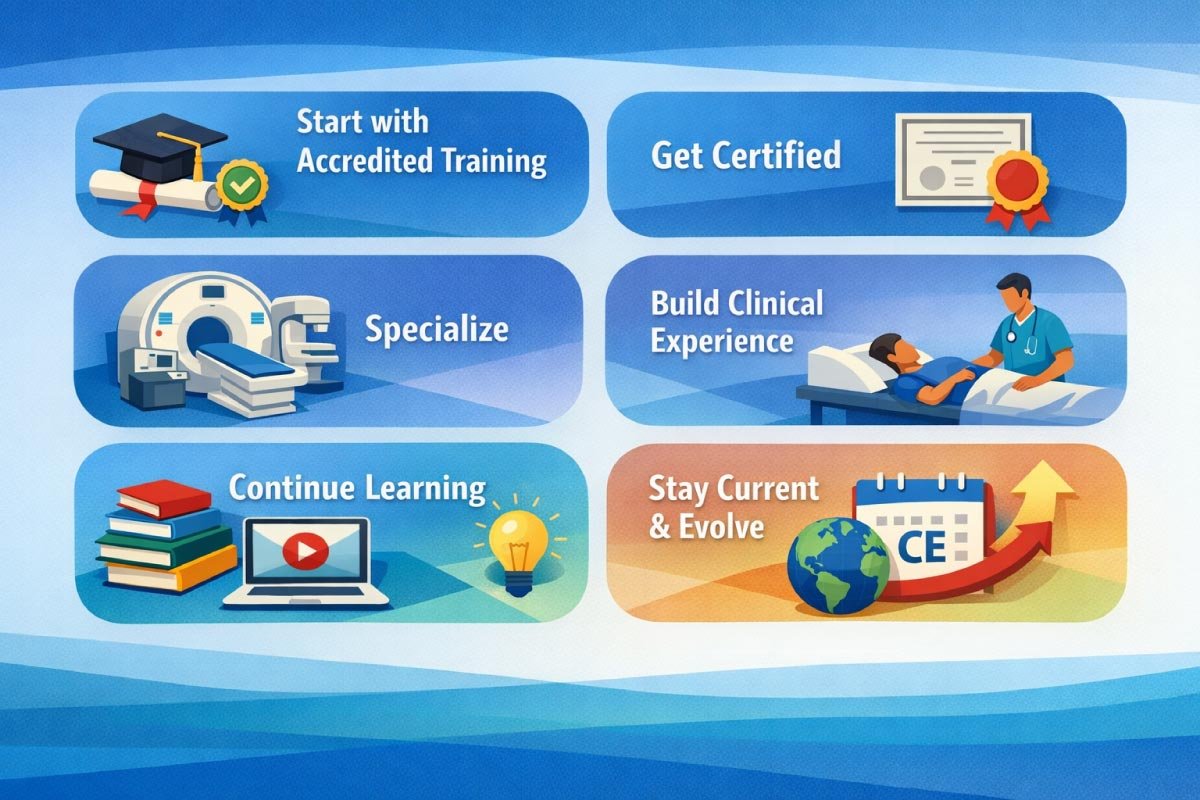
1. Start with Accredited Training
Enroll in programs recognized by national or international imaging organizations.
Accredited training ensures you gain the foundational knowledge required for licensing and certification exams,
improves your credibility with employers, and provides a structured path into clinical practice with the latest standards in imaging technology.
2. Get Certified
Even if not legally required, professional certification demonstrates competency and commitment to your field.
Certifications from recognized bodies can enhance your résumé, increase salary potential, open doors to specialized roles,
and signal to employers that you maintain high standards of safety and technical proficiency.
3. Specialize
Focusing on a subspecialty, such as MRI, CT, or mammography, can make you more competitive in the job market.
Elective courses, additional certifications, or workshops provide deeper expertise, allow you to work with advanced imaging equipment,
and position you for higher-responsibility roles or niche career opportunities.
4. Build Clinical Experience
Practical, hands-on experience is essential. Participate in internships, clinical rotations, and volunteer opportunities to apply your training in real-world settings.
Exposure to patient care, workflow management, and equipment operation strengthens your skills, builds confidence, and often leads to professional networking and job offers.
5. Continue Learning
Healthcare imaging technologies and protocols evolve rapidly. Engage in continuing education, attend workshops, read journals, and participate in professional conferences.
Staying current ensures your skills remain relevant, prepares you for advancement opportunities, and demonstrates commitment to lifelong learning in a competitive field.
Final Thoughts
Becoming an Imaging Services Technologist is an excellent choice for people who enjoy technology, healthcare service, and analytical work.
With strong job prospects, a clear career ladder, and competitive salaries in many regions, this field offers both stability and opportunity.
Whether you’re starting in Pakistan, exploring opportunities abroad, or considering specialization,
this career path provides a meaningful way to contribute to patient care while building a rewarding professional life.
Read More:

Zak is a dedicated medical and career writer specializing in sonography, healthcare education, and professional development. Through SonographerSalary.com, he shares in-depth insights on sonographer salaries, education pathways, and career tips to help readers build successful futures in medical imaging. His content combines accuracy with practical, easy-to-understand guidance, empowering students and professionals to make confident, informed career decisions.