
Diagnostic medical sonography in Ireland continues to be a stable, respected, and financially rewarding allied health profession. With an aging population, expanded diagnostic services, and increased use of ultrasound in both public and private healthcare sectors, skilled sonographers are in consistent demand across the country.
This guide gives you a full snapshot of sonographer earnings in Ireland in 2026, how salaries vary by experience and setting, and what factors influence total compensation.
Understanding the Sonographer Role in Ireland
A sonographer is a healthcare professional trained to operate ultrasound equipment to produce medical images. These images help physicians diagnose and monitor medical conditions, support pregnancy care, and evaluate organ systems.
In Ireland, sonographers work in:
Public hospitals under the Health Service Executive (HSE)
Private hospital groups
Specialist imaging and diagnostic centers
Women’s health and prenatal clinics
Sonographers in Ireland must combine technical skill with excellent patient care, and many continue professional development through local and international clinical training programs.
How Salaries Work in Ireland
In Ireland, salaries are normally quoted in Euros (€) and are subject to personal income tax, social insurance contributions, and other statutory deductions. Despite taxation, Ireland’s salaries remain competitive in the European healthcare landscape, and working conditions are generally well regulated.
Sonographers may be employed on:
Permanent contracts (standard full-time roles)
Part-time contracts
Locum/temporary assignments
In general, permanent positions in larger cities or specialist centers tend to offer higher pay.
Sonographer Salary Breakdown (2026)
Sonographer Salary Breakdown – Ireland (2026)
| Pay Type | Lower Range | Average | Higher Range |
|---|---|---|---|
| Hourly Wage | €23/hr | €30/hr | €38/hr |
| Monthly Salary | €3,800 | €5,000 | €6,300 |
| Annual Salary | €45,600 | €60,000 | €75,600 |
These ranges represent typical full-time sonographer roles across Ireland and reflect a blend of public and private sector compensation.
Also Read:
Salary by Experience Level
Salary by Experience (2026)
| Experience Level | Hourly | Monthly | Yearly |
|---|---|---|---|
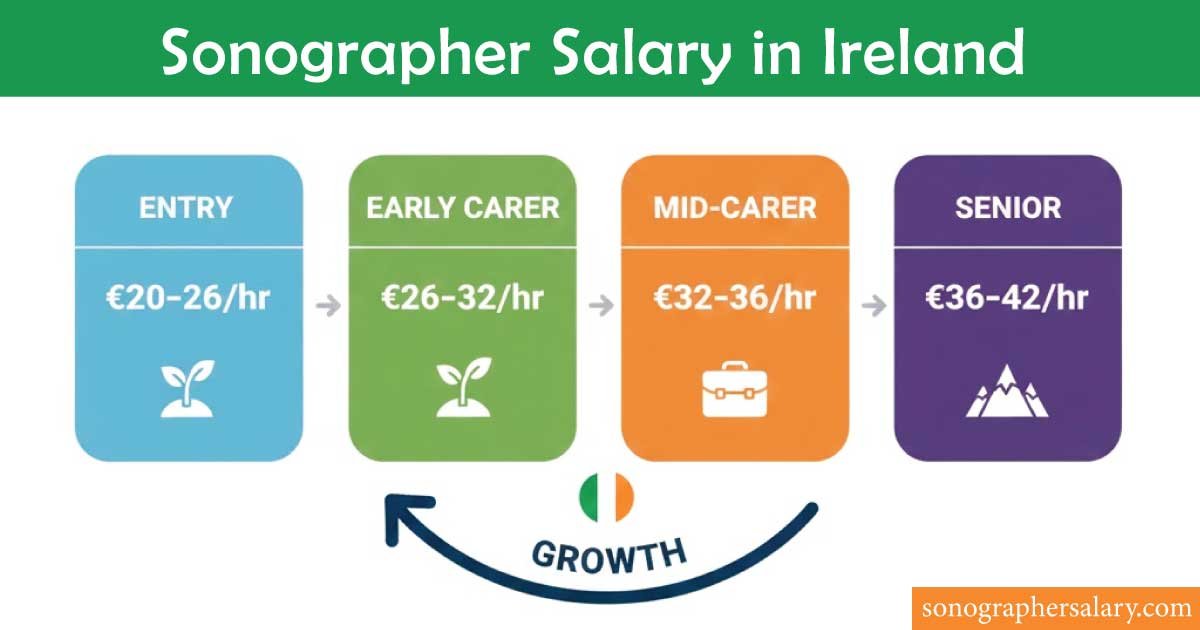
| Entry (0–2 yrs) | €20 – €26 | €3,500 – €4,200 | €42,000 – €50,400 |
| Early Career (3–5 yrs) | €26 – €32 | €4,200 – €5,200 | €50,400 – €62,400 |
| Mid-Career (6–9 yrs) | €32 – €36 | €5,200 – €5,800 | €62,400 – €69,600 |
| Senior (10+ yrs) | €36 – €42 | €5,800 – €6,800 | €69,600 – €81,600 |
Most sonographers in Ireland see measurable salary growth within the first five years, especially as they take on more complex diagnostic responsibilities.
Also Read:
Salary by Work Setting
Chart– Salary by Work Setting
| Work Setting | Hourly | Monthly | Yearly |
|---|---|---|---|
| Public Hospital (HSE) | €28 | €4,700 | €56,400 |
| Private Hospital | €30 | €5,000 | €60,000 |
| Imaging/Diagnostic Center | €32 | €5,300 | €63,600 |
| Women’s Health Clinic | €34 | €5,600 | €67,200 |
Public hospitals may offer more stable benefits and structured pay scales, while private facilities may offer higher base pay and performance bonuses.
Also Read:
Salary by Sonography Specialty
Chart– Salary by Specialty
| Specialty | Hourly | Annual |
|---|---|---|
| General Sonography | €30 | €60,000 |
| OB/GYN Imaging | €32 | €64,000 |
| Cardiac Sonography | €34 | €68,000 |
| Vascular Imaging | €35 | €70,000 |
| Advanced/High-Risk Imaging | €36+ | €72,000+ |
Specialized sonographers are often entrusted with more complex exams and may lead imaging teams, which results in broader demand and higher pay.
Also Read:
Working Hours & Overtime in Ireland
The typical workweek for sonographers in Ireland is around 37.5 to 40 hours. Hospitals and private imaging clinics may operate extended hours — including evenings and weekends — to accommodate patient needs.
Overtime and shift differentials (extra pay for unsociable hours) can boost overall income, especially if evening or weekend work is part of your schedule.
Benefits Beyond Base Salary
In Ireland, many employers enhance sonographers’ compensation with benefits such as paid annual leave, pension contributions, health insurance, professional development support, flexible working hours, and performance bonuses. These perks complement base salary and improve overall job satisfaction and financial stability.
Annual leave (holiday pay)
Pension contributions
Health insurance or allowances
Paid sick leave
Professional development support
Public hospital roles often come with stronger pension contributions and structured career progression, while private facilities may provide greater flexibility and performance bonuses.
How to Increase Your Sonographer Earnings in Ireland
Growing your income as a sonographer in Ireland requires strategic planning and skill development. By enhancing your expertise, seeking leadership roles, working flexible shifts, and targeting high-demand locations, you can maximize your earning potential while advancing your career. These steps help you earn more while building professional growth and long-term stability.
1. Gain Specialty Skills
Specializing in areas such as cardiac, vascular, or musculoskeletal sonography can significantly increase your earning potential. Employers value advanced skills that allow you to perform complex diagnostic procedures. Additional training and certifications in these specialties not only boost your resume but also make you eligible for higher-paying positions within hospitals, clinics, or specialized imaging centers.
2. Seek Advanced Roles
Taking on senior, supervisory, or training responsibilities can directly increase your salary. Roles such as lead sonographer or quality assurance coordinator involve mentoring, overseeing procedures, and ensuring department standards are met. These positions often come with higher pay, performance bonuses, and the opportunity to influence department practices, while also enhancing your leadership experience.
3. Work Flexible Shifts
Working evenings, nights, weekends, or overtime can substantially boost your income. Many healthcare facilities offer higher pay rates for off-peak shifts or on-call duties. By choosing shifts strategically, you can supplement your base salary without changing roles or locations, providing a practical way to increase overall earnings while gaining more clinical experience.
4. Continue Professional Development
Ongoing professional development is key to advancing your career and salary. Attending workshops, obtaining certifications, and completing advanced courses demonstrate commitment to excellence and expertise. Employers often reward continuous learning with promotions, salary increases, or access to specialized roles. Staying updated on the latest imaging techniques ensures long-term career growth and marketability.
5. Move to High-Demand Locations
Location can impact earnings significantly. Larger Irish cities like Dublin, Cork, or Galway often offer slightly higher salaries due to greater demand and higher living costs. Working in busy hospitals or specialized imaging centers in these areas may provide additional benefits or bonuses. Evaluating job opportunities by location helps optimize income while balancing lifestyle considerations.
Regional Variations within Ireland
Salaries can vary somewhat by location:
| Region | Trend |
|---|---|
| Dublin | Higher pay due to cost of living and hospital demand |
| Cork/Limerick | Competitive but slightly lower than Dublin |
| Midlands/West | Strong demand, lower cost of living |
In general, urban centers pay more but also have higher living expenses, while regional areas may offer a better work-life balance.
Job Outlook for Sonographers in Ireland
The outlook for diagnostic medical sonography remains positive. Healthcare demand continues to grow due to population aging, preventive care emphasis, and expanding use of imaging in chronic disease management.
Sonographers are well positioned for stable careers, with opportunities to advance into leadership, education, or specialist clinical roles.
Final Thoughts
In 2026, sonographer salaries in Ireland remain competitive, offering clear opportunities for career growth. Whether you are an entry-level professional or an experienced specialist, hourly pay reflects your expertise, monthly earnings support a comfortable lifestyle, and yearly income demonstrates long-term professional value. By developing specialized skills, working flexible shifts, and focusing on in-demand areas, sonographers can enhance both their financial rewards and career advancement, ensuring continued growth and stability within the Irish healthcare system.

Zak is a dedicated medical and career writer specializing in sonography, healthcare education, and professional development. Through SonographerSalary.com, he shares in-depth insights on sonographer salaries, education pathways, and career tips to help readers build successful futures in medical imaging. His content combines accuracy with practical, easy-to-understand guidance, empowering students and professionals to make confident, informed career decisions.