
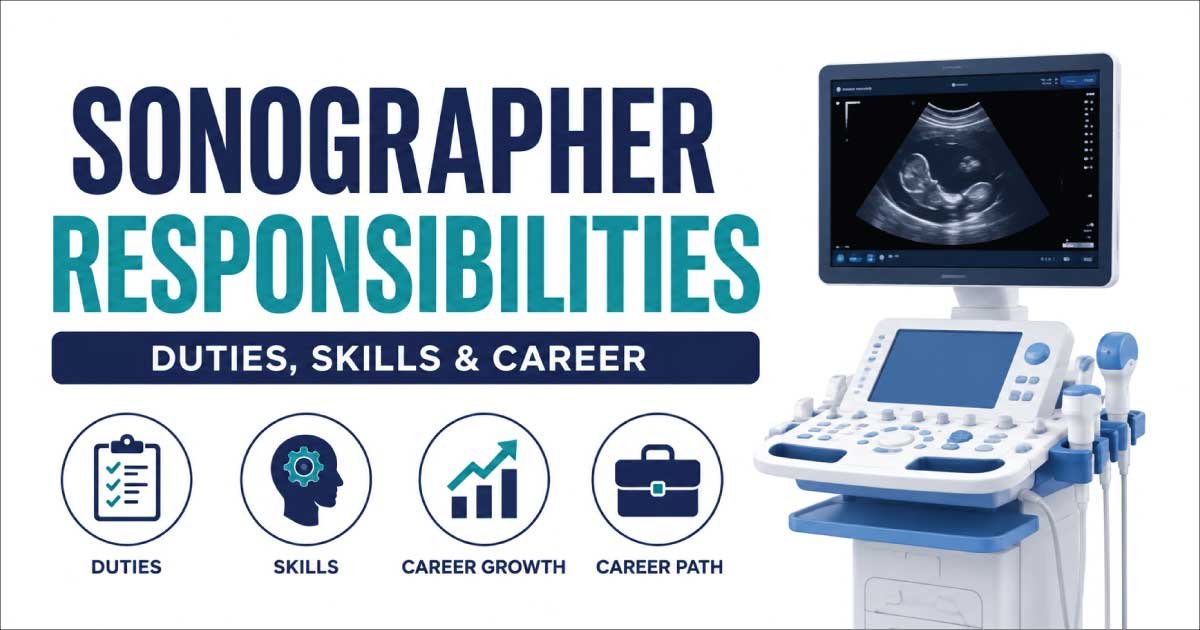
A career as a sonographer is both rewarding and essential to modern healthcare. Sonographers are responsible for performing ultrasound examinations that help physicians diagnose illnesses, monitor pregnancies, and evaluate the health of internal organs and blood vessels. Their work combines advanced medical technology with compassionate patient care, making them valuable members of the healthcare team.
If you’re considering a career in diagnostic medical imaging, understanding the responsibilities of a sonographer is an important first step. From preparing patients and operating ultrasound equipment to documenting results and maintaining professional standards, sonographers perform a wide range of duties every day.
This guide explains the key responsibilities, essential skills, educational requirements, salary expectations, and career opportunities available in this growing healthcare profession.
Who Is a Sonographer?
A sonographer, also known as a diagnostic medical sonographer or ultrasound technician, is a trained healthcare professional who uses high-frequency sound waves to create detailed images of the body’s internal structures.
These images help physicians diagnose and monitor conditions affecting organs, muscles, blood vessels, the heart, and developing babies during pregnancy. Since ultrasound does not use radiation, it is considered one of the safest diagnostic imaging methods available.
Sonographers work closely with physicians, nurses, radiologists, and other healthcare professionals to provide accurate imaging that supports patient care.
Primary Responsibilities of a Sonographer
The primary responsibility of a sonographer is to perform high-quality ultrasound examinations while ensuring patient comfort and safety.
Their daily responsibilities include:
- Preparing patients for ultrasound procedures
- Reviewing physician requests and medical histories
- Explaining examination procedures
- Operating ultrasound equipment
- Capturing accurate diagnostic images
- Measuring organs and anatomical structures
- Recognizing abnormal findings
- Recording examination results
- Maintaining patient records
- Cleaning and maintaining ultrasound equipment
- Following infection control and safety protocols
These responsibilities require both technical expertise and excellent communication skills.
Daily Duties of a Sonographer
Although responsibilities vary depending on the employer and specialty, most sonographers perform similar tasks throughout the day.
Preparing Patients
Before each examination, sonographers:
- Verify patient information
- Review medical history
- Explain the procedure
- Answer patient questions
- Position patients correctly
Helping patients feel comfortable is an important part of delivering quality healthcare.
Performing Ultrasound Examinations
Performing ultrasound examinations is one of the primary duties of an ultrasound technician. During each procedure, sonographers operate specialized ultrasound equipment to examine different organs, tissues, and body systems. They carefully adjust imaging settings, probe angles, and patient positioning to produce clear, high-resolution diagnostic images that physicians can accurately interpret for diagnosis and treatment planning.
Areas Commonly Examined
Examinations may include:
- Abdomen
- Pelvis
- Heart
- Blood vessels
- Thyroid
- Muscles
- Pregnancy scans
Every ultrasound examination requires patience, technical expertise, and close attention to detail. Sonographers must understand anatomy, recognize normal structures, and use precise scanning techniques to ensure every image provides reliable medical information for healthcare providers.
Capturing High-Quality Images
Producing high-quality ultrasound images is one of the most critical responsibilities of a sonographer. Clear, detailed images help physicians identify medical conditions accurately while reducing the need for repeat examinations. Sonographers continuously adjust equipment settings throughout the procedure to capture the best possible diagnostic views.
Techniques for Producing Quality Images
This includes:
- Adjusting equipment settings
- Selecting appropriate transducers
- Measuring anatomical structures
- Recording image sequences
- Labeling images correctly
High-quality imaging directly supports accurate diagnoses and effective patient care. By following proper imaging protocols and maintaining consistency throughout every examination, sonographers provide physicians with dependable visual information needed to make informed medical decisions.
Observing Abnormal Findings
Although ultrasound technicians do not diagnose diseases, they play an important role in identifying unusual findings during imaging procedures. Their education and clinical training enable them to recognize abnormalities that may require further evaluation by the supervising physician or radiologist.
Common Abnormal Findings
These may include:
- Cysts
- Tumors
- Fluid collections
- Organ enlargement
- Blood flow abnormalities
- Pregnancy complications
Whenever abnormal findings are observed, sonographers carefully document their observations and capture additional images if necessary. Accurate documentation helps physicians review the examination thoroughly and determine the most appropriate diagnosis, follow-up testing, or treatment plan.
Maintaining Medical Records
Maintaining complete and accurate medical records is an essential responsibility for every sonographer. Proper documentation ensures continuity of patient care, supports physician decision-making, and creates a reliable medical history that can be referenced during future examinations or treatments.
Information Recorded During Examinations
Sonographers record:
- Patient information
- Examination details
- Measurements
- Technical observations
- Image annotations
Accurate recordkeeping improves communication among healthcare professionals and helps maintain compliance with hospital policies and healthcare regulations. Well-organized documentation also contributes to better patient outcomes by ensuring physicians have complete and reliable examination data.
Maintaining Equipment
Ultrasound equipment must be kept in excellent working condition to ensure accurate diagnostic imaging and patient safety. Sonographers are responsible for performing routine maintenance tasks, following cleaning procedures, and identifying technical issues before they affect examination quality or disrupt patient care.
Maintaining Ultrasound Equipment
Sonographers are responsible for:
- Cleaning probes
- Performing equipment checks
- Reporting technical issues
- Following infection prevention guidelines
Regular equipment maintenance extends the lifespan of ultrasound machines while ensuring reliable performance during every examination. Following proper cleaning and inspection protocols also helps prevent infections and ensures patients receive safe, high-quality healthcare services.
Also Read:
Essential Skills for Sonographers
A successful sonographer combines advanced technical knowledge with excellent communication, critical thinking, and compassionate patient care. These professional skills help ensure accurate imaging, improve patient comfort, and support physicians in making informed medical decisions throughout the diagnostic process.
1. Communication Skills
Patients often feel nervous or uncertain before undergoing an ultrasound examination. Sonographers must communicate clearly, explain each step of the procedure, and create a calm environment that helps patients feel comfortable throughout the imaging process while working effectively with the healthcare team.
Sonographers should:
- Explain procedures clearly
- Answer questions patiently
- Provide reassurance
- Communicate professionally with healthcare teams
Strong communication builds trust, improves patient satisfaction, and enhances teamwork between sonographers, physicians, nurses, and other healthcare professionals. Clear communication also helps ensure examinations are completed efficiently and accurately.
2. Attention to Detail
Attention to detail is one of the most important qualities for an ultrasound technician. Even minor mistakes in image quality, measurements, or patient positioning can impact diagnostic accuracy, making careful observation and precision essential throughout every examination.
Successful sonographers carefully monitor:
- Image quality
- Measurements
- Patient positioning
- Equipment settings
Maintaining accuracy during each scan helps physicians make reliable diagnoses and reduces the likelihood of repeat examinations. Careful attention to every detail contributes to better patient care and improved clinical outcomes.
3. Technical Skills
Modern ultrasound technology continues to evolve, requiring sonographers to develop strong technical skills and remain updated with new imaging techniques, software, and equipment. Technical expertise allows professionals to perform efficient examinations while producing high-quality diagnostic images.
Modern ultrasound systems require knowledge of:
- Imaging software
- Ultrasound physics
- Probe selection
- Image optimization
- Equipment troubleshooting
Continuous education and hands-on experience help sonographers stay current with technological advancements. Developing strong technical abilities improves diagnostic accuracy, workplace efficiency, and long-term career growth within the healthcare industry.
4. Critical Thinking
Every patient has different medical conditions and imaging requirements, making critical thinking an essential skill for sonographers. They must evaluate each situation, adapt scanning techniques, and respond effectively to unexpected findings during diagnostic procedures.
Sonographers must:
- Adjust scanning techniques
- Solve imaging challenges
- Identify potential abnormalities
- Adapt to physician requests
Strong problem-solving skills help sonographers overcome technical challenges while ensuring physicians receive the diagnostic information needed for accurate medical evaluations and treatment planning.
5. Compassion and Empathy
Sonographers regularly work with patients who may be experiencing pain, illness, pregnancy-related concerns, or emotional stress. Demonstrating compassion, patience, and empathy helps patients feel respected, comfortable, and supported throughout the examination process.
Showing genuine care creates a positive healthcare experience and strengthens patient trust. Compassionate interactions also encourage better cooperation during imaging procedures, allowing sonographers to perform more accurate and efficient examinations.
6. Physical Endurance
The role of a sonographer involves long hours of standing, repetitive scanning movements, and assisting patients with mobility. Maintaining physical endurance allows professionals to perform their duties safely while delivering consistent, high-quality patient care throughout the workday.
Daily activities include:
- Standing for extended periods
- Assisting patients
- Moving equipment
- Performing repetitive scanning movements
Using proper body mechanics and ergonomic scanning techniques helps reduce physical strain and lowers the risk of work-related injuries. Maintaining good physical health enables sonographers to enjoy long and successful careers.
Also Read:
Educational Requirements
Becoming a sonographer requires completing an accredited diagnostic medical sonography program that provides both classroom instruction and hands-on clinical training. These programs teach anatomy, ultrasound physics, patient care, imaging techniques, and medical ethics, preparing graduates for successful careers in diagnostic healthcare.
Educational Pathways
Educational options include:
- Associate Degree
- Typically completed in two years
- Most common pathway
- Prepares students for entry-level positions
- Bachelor’s Degree
- Usually requires four years
- Offers broader education
- Supports leadership and management opportunities
Both degree options provide students with the knowledge and practical experience needed to perform ultrasound examinations safely and accurately. The best choice depends on career goals, available time, and future advancement opportunities.
Certificate Programs
Certificate programs are designed for healthcare professionals who already possess a related medical degree or clinical background. These accelerated programs focus primarily on diagnostic sonography skills and typically require less time than traditional degree programs.
Programs generally take between 12 and 18 months to complete.
Graduates receive specialized ultrasound training while building on their existing healthcare knowledge. Certificate programs offer an efficient pathway for experienced medical professionals seeking to transition into diagnostic medical sonography.
Certification and Professional Development
Professional certification demonstrates a sonographer’s knowledge, technical skills, and commitment to high standards of patient care. Although certification requirements vary by employer and location, many healthcare organizations prefer or require certified ultrasound professionals during the hiring process.
Certified sonographers often benefit from:
- Better job prospects
- Higher earning potential
- Increased professional credibility
- Greater career flexibility
Continuing education plays an important role in maintaining professional certifications and keeping pace with new ultrasound technologies, imaging techniques, and healthcare regulations. Lifelong learning helps sonographers remain competitive throughout their careers.
Types of Sonographers
One of the greatest advantages of becoming a sonographer is the opportunity to specialize in different areas of diagnostic imaging. Each specialty focuses on specific organs, body systems, or patient populations and offers unique responsibilities and career opportunities.
1. Obstetric and Gynecologic Sonographer
Obstetric and gynecologic sonographers specialize in women’s reproductive health and pregnancy imaging. They perform ultrasounds that monitor fetal growth, assess pregnancy development, and evaluate reproductive organs to help physicians provide quality prenatal and gynecological care.
Responsibilities include:
- Monitoring fetal development
- Examining reproductive organs
- Assessing pregnancy health
These professionals play a vital role in supporting expectant parents and healthcare providers by producing detailed images that assist in monitoring healthy pregnancies and identifying potential complications early.
2. Cardiac Sonographer
Cardiac sonographers, also known as echocardiographers, specialize in imaging the heart. They perform echocardiograms that help physicians evaluate heart structure, function, and blood flow while assisting in the diagnosis of various cardiovascular conditions.
Performs echocardiograms to evaluate:
- Heart valves
- Blood circulation
- Cardiac function
Their work is essential for detecting heart abnormalities, monitoring treatment progress, and supporting cardiologists in developing effective care plans for patients with heart disease.
3. Vascular Sonographer
Vascular sonographers focus on examining the body’s arteries and veins using specialized ultrasound technology. Their imaging studies help physicians diagnose circulatory disorders and evaluate blood flow throughout different parts of the body.
Examines arteries and veins to identify:
- Blood clots
- Blockages
- Poor circulation
- Vascular disease
By producing detailed vascular images, these professionals assist healthcare providers in detecting conditions early and recommending appropriate medical or surgical treatments.
4. Abdominal Sonographer
Abdominal sonographers examine internal organs located within the abdominal cavity using ultrasound imaging. Their work helps physicians diagnose diseases, monitor organ function, and investigate symptoms such as pain, swelling, or digestive problems.
Focuses on imaging:
- Liver
- Gallbladder
- Kidneys
- Pancreas
- Spleen
Detailed abdominal imaging provides valuable diagnostic information that supports early detection and effective treatment of many common medical conditions affecting abdominal organs.
5. Musculoskeletal Sonographer
Musculoskeletal sonographers specialize in evaluating muscles, tendons, ligaments, joints, and other soft tissues. Their examinations help diagnose injuries, inflammation, and movement-related disorders affecting patients of all ages.
Specializes in evaluating:
- Tendons
- Muscles
- Ligaments
- Joints
- Sports injuries
This specialty is widely used in sports medicine, orthopedics, and rehabilitation to monitor healing, guide treatments, and improve patient recovery following injuries.
Also Read:
Sonographer Salary
One of the biggest reasons people choose a sonography career is its excellent earning potential. Salaries vary depending on education, certifications, experience, geographic location, employer type, and chosen specialty, with experienced professionals often earning significantly higher incomes.
Salary varies based on factors such as:
- Education
- Experience
- Geographic location
- Certifications
- Employer type
- Specialty area
Experienced sonographers working in hospitals, specialty clinics, or travel positions often receive higher salaries than entry-level professionals. Continuing education and advanced certifications can further increase earning potential and create opportunities for career advancement.
Career Opportunities
Qualified sonographers enjoy diverse employment opportunities across many healthcare settings. Their diagnostic imaging skills are needed in hospitals, outpatient facilities, specialty clinics, and mobile imaging services, creating strong job demand and long-term career stability.
Common employers include:
- Hospitals
- Imaging centers
- Physician offices
- Women’s health clinics
- Outpatient care centers
- Emergency departments
- Mobile imaging companies
- Diagnostic laboratories
Some professionals also pursue travel sonography, accepting temporary assignments in different cities or states. Travel positions often provide competitive salaries, housing benefits, and valuable experience working in a variety of healthcare environments.
Career Advancement
With experience, continuing education, and specialized certifications, sonographers can move beyond entry-level clinical positions into leadership, education, management, or technical support roles. Career advancement often brings increased responsibilities, higher salaries, and expanded professional opportunities.
Potential career paths include:
- Lead Sonographer
- Ultrasound Supervisor
- Imaging Department Manager
- Clinical Instructor
- Applications Specialist
- Medical Equipment Trainer
- Healthcare Administrator
- Program Director
Developing leadership skills and earning advanced certifications can significantly improve promotion opportunities. Many experienced sonographers transition into supervisory or educational positions while continuing to contribute to patient care and professional development.
Advantages of a Sonographer Career
Sonography continues to attract new healthcare professionals because it offers an excellent balance of meaningful patient interaction, strong earning potential, career stability, and opportunities for specialization. It is considered one of the fastest-growing healthcare professions worldwide.
Benefits include:
- Strong employment demand
- Competitive salary
- Short educational pathway
- Multiple specialty options
- Meaningful patient interaction
- Safe, non-invasive imaging technology
- Excellent work-life balance in many settings
- Long-term career stability
These advantages make sonography an appealing career choice for individuals seeking financial security, professional growth, and the opportunity to make a positive impact on patients’ lives every day.
Challenges of the Profession
Like every healthcare profession, sonography presents challenges that require physical stamina, emotional resilience, and continuous learning. Successfully managing these challenges helps professionals deliver high-quality patient care while maintaining long-term career satisfaction.
Common challenges include:
- Physically demanding work
- Busy patient schedules
- Repetitive movements
- Emotional situations involving difficult diagnoses
- Keeping up with new imaging technology
Despite these challenges, many sonographers report high levels of job satisfaction because they directly contribute to accurate diagnoses, improved patient outcomes, and compassionate healthcare services.
Is Sonography the Right Career for You?
Choosing a healthcare career requires careful consideration of your interests, strengths, and long-term goals. Sonography is an excellent option for individuals who enjoy science, technology, patient care, and working in a dynamic medical environment.
You may be well-suited for this profession if you:
- Enjoy science and healthcare
- Like helping people
- Have strong communication skills
- Pay close attention to detail
- Enjoy using medical technology
- Can work well under pressure
- Want a stable and rewarding healthcare career
A career in sonography combines technical expertise with meaningful patient interaction while offering excellent job stability, competitive salaries, and opportunities for lifelong professional growth. It is an ideal choice for those seeking a rewarding future in healthcare.
Conclusion
Understanding sonographer responsibilities is essential for anyone considering a career in diagnostic medical imaging. From preparing patients and performing ultrasound examinations to maintaining equipment and supporting physicians with high-quality diagnostic images, sonographers play a vital role in modern healthcare.
With competitive salaries, growing job demand, diverse specialization opportunities, and clear paths for career advancement, sonography is an excellent profession for individuals who enjoy technology, patient care, and continuous learning. By developing strong technical skills, earning professional certifications, and gaining clinical experience, you can build a successful and fulfilling career as a diagnostic medical sonographer.

Zak is a dedicated medical and career writer specializing in sonography, healthcare education, and professional development. Through SonographerSalary.com, he shares in-depth insights on sonographer salaries, education pathways, and career tips to help readers build successful futures in medical imaging. His content combines accuracy with practical, easy-to-understand guidance, empowering students and professionals to make confident, informed career decisions.