
Norway is widely known for its beautiful landscapes, high living standards, and one of the world’s strongest healthcare systems. For medical professionals — particularly sonographers — Norway offers solid pay, workplace protections, and a great work–life balance. Whether you are considering relocation, planning your career, or just curious about earning potential, this guide breaks down everything you need to know about sonographer salaries in Norway.
What Is a Sonographer?
A sonographer is a healthcare professional trained to perform ultrasound imaging — capturing live pictures of internal organs, blood flow, muscles, and even unborn babies. These images help doctors diagnose conditions, monitor pregnancy health, and guide procedures.
In Norway, sonographers are often called ultrasound technologists or medical imaging specialists. They work closely with radiologists, obstetricians, cardiologists, and other medical teams.
Norway’s Healthcare Landscape
Norway’s healthcare system is heavily subsidized by the government and focused on quality patient care. This structure affects how healthcare workers, including sonographers, are trained, employed, and paid.
Here’s what you should know:
✔ Most jobs are in the public sector
✔ Salaries are regulated by agreements between unions and employers
✔ Benefits (pensjon) and leave policies are strong compared to many countries
With that in mind, let’s explore income expectations in detail.
Average Sonographer Salary in Norway
Norway offers competitive pay for sonographers. Salaries are typically quoted as annual gross income and paid in Norwegian kroner (NOK).
Income Overview
| Salary Type | Amount (NOK) |
|---|---|
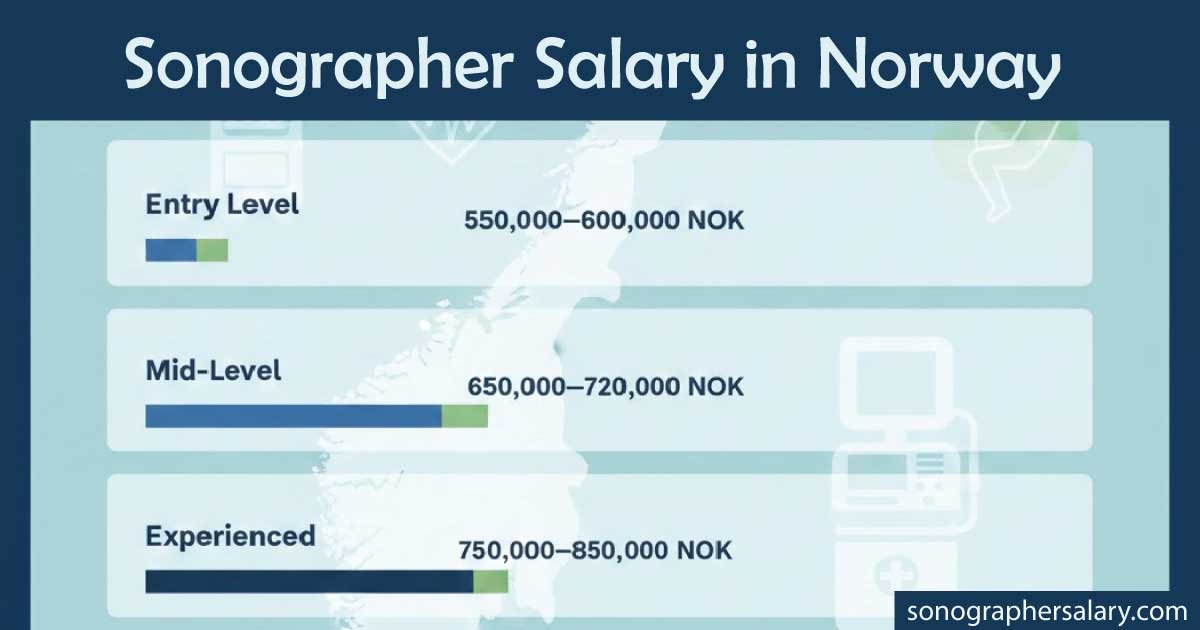
| Entry Average | 550,000 – 600,000 |
| Mid-Range Average | 650,000 – 720,000 |
| Experienced Average | 750,000 – 850,000 |
| Senior / Manager | 900,000 – 1,000,000+ |
These figures represent what most sonographers earn before tax. Actual take-home income depends on where you live, tax brackets, and personal deductions.
Salary by Experience Level
Experience is a major factor in income progression for sonographers. Norway’s structured pay system rewards longevity and skill development.
Experience-Based Salary Table
| Years of Experience | Monthly Salary (NOK) | Annual Salary (NOK) |
|---|---|---|
| 0–2 Years | 40,000 – 45,000 | 480,000 – 540,000 |
| 3–5 Years | 50,000 – 55,000 | 600,000 – 660,000 |
| 6–10 Years | 60,000 – 65,000 | 720,000 – 780,000 |
| 10–15 Years | 70,000 – 75,000 | 840,000 – 900,000 |
| 15+ Years | 80,000 – 85,000 | 960,000 – 1,020,000 |
💡 Most sonographers begin on the lower end but see the biggest salary jump after 5–7 years of hands-on experience.
City & Regional Differences
Where you work in Norway impacts how much you earn. Larger urban areas often pay more, partly to match higher cost of living.
Regional Salary Comparison
| Location | Approx. Monthly Salary (NOK) |
|---|---|
| Oslo | 65,000 – 75,000 |
| Bergen | 60,000 – 70,000 |
| Stavanger | 60,000 – 68,000 |
| Trondheim | 58,000 – 65,000 |
| Smaller Towns | 50,000 – 60,000 |
Salaries in smaller regions often reflect lower living expenses, which can balance out income differences.
Public vs. Private Sector Roles
Sonographers in Norway can work in:
Public hospitals
Private clinics
Specialized imaging centers
Contract/consulting roles
Sector Comparison
| Sector | Typical Salary | Benefits |
|---|---|---|
| Public Sector | Slightly Higher | Pension, long leave, union support |
| Private Sector | Slightly Lower | Flexible hours, performance bonus |
Public hospitals tend to offer more structured pay increases and stronger long-term benefits, while private clinics sometimes offer bonuses or short-term incentives.
Education and Its Impact on Salary
Education matters — especially if you choose advanced or specialized training.
Salary by Education Pathway
| Education Level | Expected Monthly Salary (NOK) |
|---|---|
| Diploma / Basic Training | 45,000 – 55,000 |
| Bachelor’s Degree | 55,000 – 65,000 |
| Specialized Ultrasound Certificates | 65,000 – 75,000 |
| Advanced Clinical Training | 75,000 – 85,000 |
Higher education means deeper expertise and often access to specialist roles (e.g., cardiac ultrasound, fetal medicine), which tend to pay better.
Also Read:
Typical Work Schedule and Lifestyle
Most sonographers in Norway work a full-time schedule (37–40 hours). Overtime exists but is usually compensated fairly. One of the best parts of working in Norway is the strong balance between pay and life outside work:
- Generous paid vacation (often 5–6 weeks / year)
- Paid sick leave
- Strong parental leave benefits
- Pension contributions from the employer
This makes Norway especially attractive for professionals planning long-term careers and families.
Gender Pay Considerations
Norway is known for striving toward pay equity. In sonography roles, gender differences in salary are usually small.
| Gender | Estimated Annual Salary (NOK) |
|---|---|
| Women | 650,000 – 780,000 |
| Men | 670,000 – 800,000 |
While some variation exists, it’s often tied more to experience and specialization than gender.
Tips to Maximize Your Salary in Norway
Norway offers strong earning potential for healthcare professionals, but maximizing your salary requires smart career planning. From education choices to workplace location and leadership opportunities, several proven strategies can help you increase your income steadily while building long-term job security in Norway’s well-funded healthcare system.
🧠 Pursue Advanced Training
Advanced training and specialization play a major role in higher salaries across Norway’s healthcare sector. Sonographers with skills in vascular, cardiac, musculoskeletal, or obstetric imaging are in greater demand. Employers are willing to pay more for professionals who can handle complex cases and advanced diagnostic equipment.
🏙 Target Urban Hospitals
Urban hospitals in cities like Oslo, Bergen, and Trondheim usually offer higher salaries than rural facilities. These hospitals manage larger patient volumes, use advanced imaging technologies, and receive stronger government funding. Working in a major city often comes with better pay, career growth, and professional development opportunities.
📈 Gain Experience
Experience significantly impacts salary growth in Norway. While entry-level pay is competitive, the largest increases usually occur after 7–10 years in the profession. With time, you gain clinical confidence, efficiency, and specialization, making you more valuable to employers and eligible for higher-paying roles.
💼 Consider Leadership Roles
Moving into leadership or senior technical positions can noticeably boost your income. Roles such as lead sonographer, department supervisor, or training coordinator often include salary premiums. These positions reward experience, responsibility, and decision-making skills while offering long-term career stability and professional recognition.
Also Read:
Why Sonography Is a Good Career in Norway
Choosing sonography in Norway is not just about money, it’s about lifestyle, security, and meaning.
Here’s what sets the career apart:
✔ High demand for trained imaging professionals
✔ Structured salary growth over time
✔ Supportive work culture
✔ Excellent public benefits
✔ Strong focus on patient-centered care
These factors make sonography appealing not only financially, but also professionally and personally.
Comparing Norway with Other Countries
While some countries pay slightly higher base salaries, Norway offers:
- Lower income inequality
- Greater job stability
- More generous social protections
- Better balance between work and family life
The overall quality of life often compensates for any differences in raw income numbers, especially if you value security, freedom, and long-term well-being.
Also Read:
Final Thoughts
Overall, a sonographer salary in Norway is strong, steady, and rewarding. Experience, education, and location all influence how much you earn but even entry level roles start at comfortable pay scales for most professionals.
Whether you plan to train in Norway or move there from abroad, sonography offers a clear path to financial stability, professional growth, and a high quality of life.
Sweden and Norway share many similarities in healthcare values, but Norway’s unique economic system and employment protections make it especially appealing for those seeking both income and balance.

Zak is a dedicated medical and career writer specializing in sonography, healthcare education, and professional development. Through SonographerSalary.com, he shares in-depth insights on sonographer salaries, education pathways, and career tips to help readers build successful futures in medical imaging. His content combines accuracy with practical, easy-to-understand guidance, empowering students and professionals to make confident, informed career decisions.