
Diagnostic medical sonography has become an essential part of modern healthcare in Saudi Arabia. With rapid expansion in hospitals, diagnostic centers, and women’s health facilities, the demand for qualified sonographers continues to grow in 2026. The profession offers competitive pay, strong job security, and attractive benefit packages—especially for experienced and specialized professionals.
This guide provides a clear, realistic, and detailed overview of sonographer salaries in Saudi Arabia, covering hourly, monthly, and yearly earnings, key salary drivers, and ways to increase your income in the Saudi healthcare market.
What Does a Sonographer Do in Saudi Arabia?
A sonographer is a healthcare professional trained to use ultrasound machines to create diagnostic images of the body. These images help physicians detect medical conditions, monitor pregnancies, evaluate blood flow, and assess organs such as the heart, liver, kidneys, and reproductive system.
In Saudi Arabia, sonographers commonly work in:
Government hospitals and medical cities
Private hospitals and diagnostic centers
Specialized women’s and maternity clinics
Cardiology and vascular imaging units
Because ultrasound is non-invasive, safe, and cost-effective, it is widely used across Saudi healthcare facilities, keeping demand for skilled sonographers consistently high.
Overview of Sonographer Salary in Saudi Arabia (2026)
Sonographer salaries in Saudi Arabia are paid in Saudi Riyals (SAR). One major financial advantage is that income is generally tax-free, meaning your take-home pay closely matches your gross salary.
In 2026, most full-time sonographers in Saudi Arabia earn a comfortable middle-to-high income, especially when benefits such as housing and healthcare coverage are included.
General Salary Expectations
Hourly wage: Competitive professional rates
Monthly income: Strong earning potential compared to many allied health roles
Annual salary: Attractive total packages, especially for experienced staff
Salary Breakdown Table (Hourly, Monthly, Yearly) – Saudi Arabia (2026)
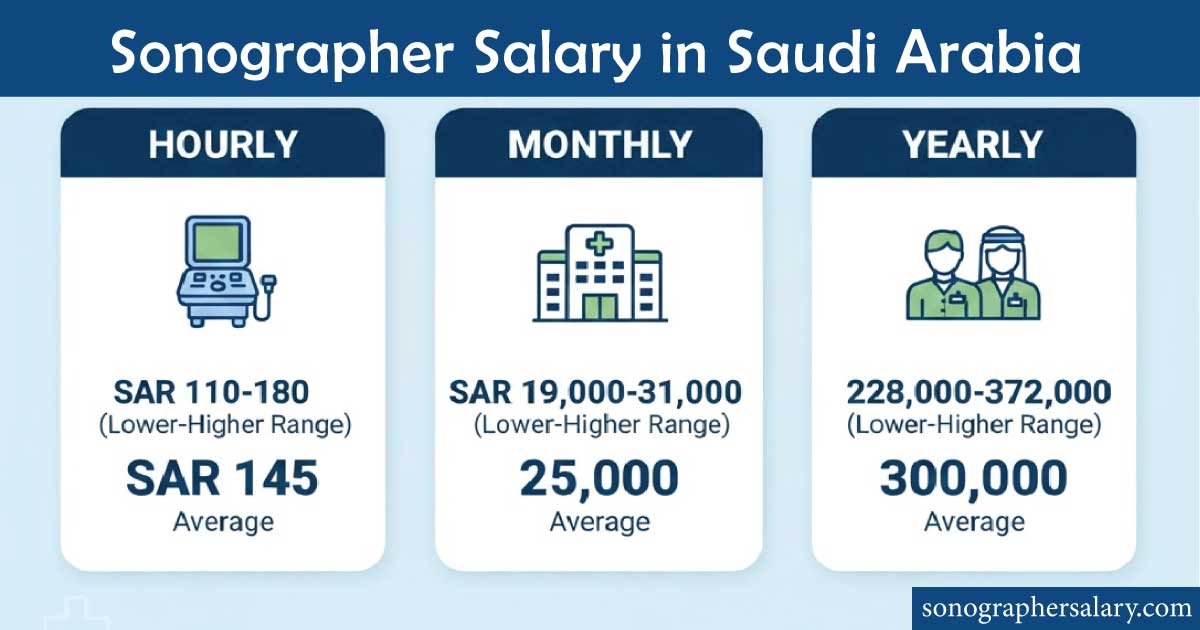
The table below provides a clear overview of typical sonographer earnings in Saudi Arabia for 2026. It outlines hourly, monthly, and yearly pay ranges for full-time roles, reflecting standard positions in hospitals and clinics. These figures represent average industry compensation and do not include exceptional executive or consultant-level salaries, which may be significantly higher.
| Pay Type | Lower Range | Average | Higher Range |
|---|---|---|---|
| Hourly | SAR 110/hr | SAR 140/hr | SAR 170/hr |
| Monthly | SAR 17,000 | SAR 23,000 | SAR 28,000 |
| Yearly | SAR 204,000 | SAR 276,000 | SAR 336,000 |
This table reflects typical full-time sonographer earnings across Saudi Arabia, excluding rare executive or consultant-level roles.
Sonographer Salary by Experience Level
Experience is a key factor affecting sonographer salaries. As professionals gain clinical confidence, improve diagnostic accuracy, and increase efficiency, their value to employers grows. This often leads to higher pay, better benefits, and access to advanced roles, making experience a crucial driver of long-term career and income growth.
Table Chart– Salary by Experience (2026)
| Experience Level | Hourly | Monthly | Yearly |
|---|---|---|---|
| Entry-Level (0–2 yrs) | SAR 95 – 115 | SAR 15,000 – 18,000 | SAR 180,000 – 216,000 |
| Early Career (3–5 yrs) | SAR 115 – 135 | SAR 18,000 – 22,000 | SAR 216,000 – 264,000 |
| Mid-Career (6–9 yrs) | SAR 135 – 160 | SAR 22,000 – 26,000 | SAR 264,000 – 312,000 |
| Senior (10+ yrs) | SAR 160 – 190 | SAR 26,000 – 32,000 | SAR 312,000 – 384,000 |
Most sonographers experience significant salary growth between years 3 and 7, especially if they handle complex cases independently.
Salary by Work Setting
Where you work in Saudi Arabia greatly impacts your sonographer earnings. Government hospitals focus on job stability, structured pay, and benefits, while private hospitals and specialized clinics often provide higher base salaries, performance bonuses, and additional incentives to attract skilled professionals.
Table Chart– Salary by Workplace Type
| Work Setting | Hourly | Monthly | Yearly |
|---|---|---|---|
| Government Hospitals | SAR 130 | SAR 21,500 | SAR 258,000 |
| Private Hospitals | SAR 140 | SAR 23,000 | SAR 276,000 |
| Diagnostic Imaging Centers | SAR 150 | SAR 25,000 | SAR 300,000 |
| Specialty Clinics | SAR 155 | SAR 26,000 | SAR 312,000 |
Private and specialty centers often pay more due to higher patient volume and performance expectations.
Salary by Sonography Specialization
Specialization is a highly effective way to boost income in Saudi Arabia’s healthcare system. Sonographers with expertise in areas like cardiac, vascular, or obstetric imaging are in higher demand, allowing them to command premium salaries, access advanced roles, and receive additional incentives from hospitals and private clinics.
Table Chart – Salary by Specialty
| Specialty | Hourly | Yearly |
|---|---|---|
| General Sonography | SAR 135 | SAR 270,000 |
| OB/GYN Sonography | SAR 145 | SAR 290,000 |
| Vascular Sonography | SAR 150 | SAR 300,000 |
| Cardiac (Echocardiography) | SAR 155 | SAR 310,000 |
| High-Risk / Advanced Imaging | SAR 165+ | SAR 330,000+ |
Cardiac and vascular sonographers earn more due to the technical complexity and critical nature of examinations.
City & Regional Salary Differences
Major cities in Saudi Arabia typically offer higher sonographer salaries. Larger hospitals, advanced medical facilities, and increased patient demand in urban centers create more opportunities for competitive pay, performance bonuses, and career advancement compared to smaller towns or rural healthcare settings.
| City/Region | Salary Trend |
|---|---|
| Riyadh | Highest pay, largest hospitals |
| Jeddah | Strong private sector salaries |
| Dammam / Eastern Province | Competitive industrial healthcare |
| Smaller Cities | Slightly lower pay, lower living costs |
Although urban salaries are higher, smaller cities may offer better work-life balance and lower expenses.
Benefits & Allowances (A Major Advantage)
Sonographer compensation in Saudi Arabia frequently includes additional benefits that enhance overall earnings. These may consist of housing allowances, transportation, health insurance, annual bonuses, and paid leave, all of which contribute to a more attractive total compensation package beyond the base salary.
Common benefits include:
Free or subsidized housing
Medical insurance
Paid annual leave
Return airfare or travel allowance
End-of-service gratuity
Paid sick leave
Because there is no personal income tax, these benefits make Saudi Arabia financially attractive for both local and expatriate sonographers.
Work Hours & Overtime
Most sonographers in Saudi Arabia work 40–48 hours per week. Hospitals may require evening or weekend shifts, on-call duties, or flexible scheduling to accommodate patient needs, which can also include overtime opportunities that increase overall earnings and provide additional compensation.
Rotating shifts
Evening or weekend coverage
On-call availability
Overtime and night shifts often come with additional pay, increasing total monthly earnings.
Also Read:
How to Increase Your Sonographer Salary in Saudi Arabia
Increasing your sonographer salary in Saudi Arabia requires a strategic approach that combines skill development, career choices, and professional growth. By enhancing expertise, exploring high-paying sectors, and taking on leadership or flexible roles, you can maximize both income and long-term career opportunities.
1. Gain Advanced Skills:
Acquiring specialized skills in cardiac, vascular, or high-risk obstetric imaging significantly boosts your value to employers. Advanced training not only improves diagnostic accuracy but also positions you for higher-paying roles, specialist responsibilities, and career advancement in competitive healthcare settings.
2. Move to Private or Specialty Facilities:
Transitioning to private hospitals, international clinics, or specialty imaging centers often offers better compensation than public institutions. These facilities may provide higher base salaries, performance incentives, and faster career progression for sonographers with proven skills and reliability.
3. Build Experience:
Experience is a major driver of salary growth. As sonographers gain years of practical expertise, clinical confidence, and efficiency, they earn greater trust, take on more complex cases, and qualify for higher pay grades and advanced responsibilities.
4. Be Flexible with Shifts:
Working evenings, weekends, or on-call shifts can significantly increase monthly earnings. Hospitals and clinics value flexibility, often offering shift differentials and overtime pay, making adaptable schedules a practical way to boost total income.
5. Step into Leadership:
Pursuing senior or lead sonographer positions provides higher salaries, management responsibilities, and departmental authority. Leadership roles also open opportunities for additional allowances, performance bonuses, and long-term career growth within both public and private healthcare institutions.
Also Read:
Career Outlook for Sonographers in Saudi Arabia
Saudi Arabia is investing heavily in healthcare infrastructure under its long-term development plans, with diagnostic imaging as a major focus. This sustained emphasis ensures strong, ongoing demand for skilled sonographers, creating stable career opportunities, competitive salaries, and growth potential well beyond 2026.
The profession offers:
Long-term stability
Strong income potential
Career advancement opportunities
International work experience
Final Thoughts

Zak is a dedicated medical and career writer specializing in sonography, healthcare education, and professional development. Through SonographerSalary.com, he shares in-depth insights on sonographer salaries, education pathways, and career tips to help readers build successful futures in medical imaging. His content combines accuracy with practical, easy-to-understand guidance, empowering students and professionals to make confident, informed career decisions.