
If you are considering a career in medical imaging, sonography is one of the most promising paths in healthcare. Sonographers, also known as ultrasound technicians, use high-frequency sound waves to produce images of internal organs, tissues, and blood flow. These images help doctors diagnose and monitor a wide range of conditions, from pregnancies to cardiovascular diseases.
One of the most crucial factors for anyone considering this career is understanding the salary structure for sonographers in the United Kingdom. This guide provides a comprehensive breakdown of hourly, monthly, and yearly salaries, along with factors that influence pay, career growth opportunities, and tips to maximize your earning potential.
What Does a Sonographer Do?
A diagnostic medical sonographer is responsible for creating detailed images of the human body using ultrasound technology. The role requires precision, strong technical knowledge, and excellent patient interaction skills.
Key responsibilities include:
Performing routine and specialized ultrasound scans.
Analyzing and interpreting images to assist doctors in diagnosis.
Maintaining and calibrating ultrasound equipment.
Documenting findings and reporting abnormalities.
In the UK, sonographers may work in various settings, including hospitals, clinics, private practices, and even mobile imaging units. Some specialize in obstetrics and gynecology, cardiology, musculoskeletal imaging, or vascular sonography.
Average Sonographer Salary in the United Kingdom
The salary of a sonographer in the UK varies depending on experience, location, and area of specialization. Generally, the NHS (National Health Service) and private sector offer different pay scales.
1. Hourly Pay
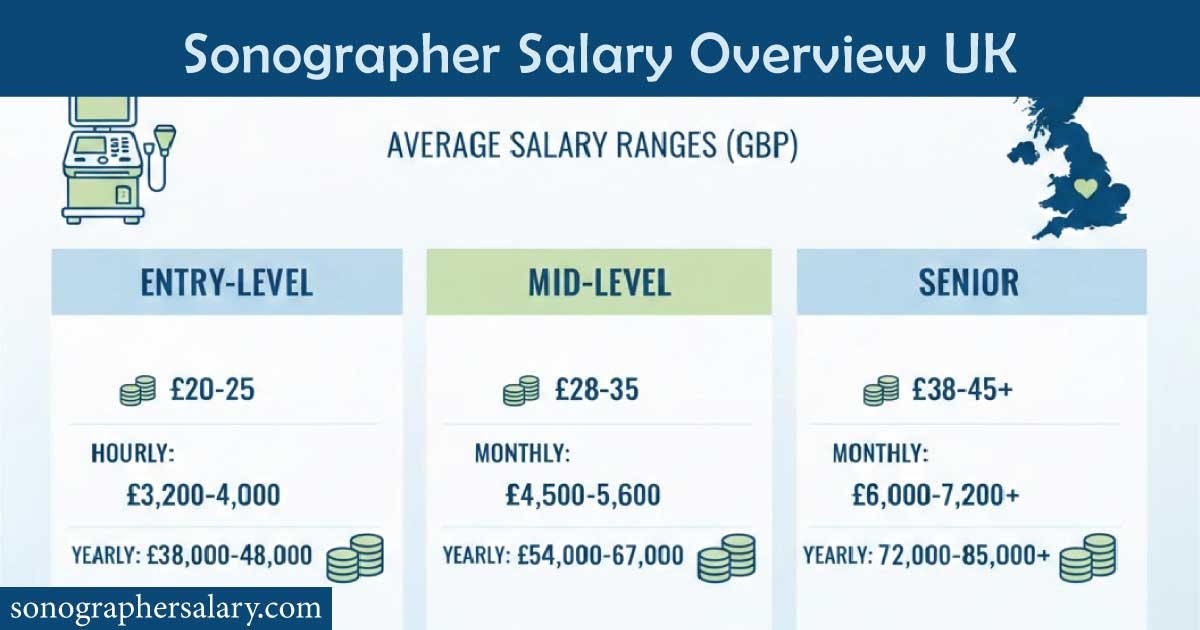
For entry-level sonographers, the hourly rate typically ranges from £18 to £22 per hour. With experience, especially after achieving professional accreditation, the rate can rise to £28–£35 per hour in advanced roles or private clinics.
Factors affecting hourly rates:
Experience: Senior sonographers earn significantly more than juniors.
Specialization: Obstetric, vascular, or cardiac sonographers often command higher pay.
Location: Urban areas like London or Manchester may offer higher hourly rates due to increased demand and cost of living.
2. Monthly Salary
Sonographers in the UK usually work full-time, which is around 37–40 hours per week. Based on the hourly rates mentioned:
Entry-level: £3,200–£3,800 per month
Mid-level (3–5 years experience): £4,000–£4,800 per month
Senior-level: £5,000–£6,000+ per month
Monthly pay can also include overtime or additional allowances for unsocial hours, such as nights, weekends, or on-call shifts.
3. Annual Salary
The annual salary of a sonographer in the UK varies between the NHS and private sector:
NHS Salary: £30,000–£46,000 per year for standard roles. Senior positions with advanced skills or management responsibilities can earn up to £55,000 per year.
Private Sector: £35,000–£60,000 per year, depending on specialization and experience. Some highly specialized sonographers, particularly in London or private diagnostic centers, may earn £65,000+ annually.
Factors That Influence Sonographer Pay
Several key factors affect how much a sonographer earns in the UK.
1. Experience and Expertise
As with many healthcare professions, experience directly impacts pay. An entry-level sonographer may earn closer to the starting NHS band, while someone with several years of specialized experience can command a higher salary.
2. Location
London & Southeast England: Due to high living costs and strong demand, salaries here are generally higher.
Northern England & Wales: Salaries may be slightly lower, but cost of living is also reduced.
3. Specialization
Certain sonography fields are more lucrative:
Cardiac Sonography: £35,000–£55,000 per year
Vascular Sonography: £34,000–£50,000 per year
Obstetrics & Gynecology: £30,000–£50,000 per year
4. Type of Employer
NHS: Offers stable pay with structured career progression, pensions, and benefits.
Private Clinics: Often pay higher salaries for specialized roles but may offer fewer benefits.
5. Qualifications and Accreditation
Sonographers with higher qualifications such as a postgraduate diploma or HCPC registration (Health and Care Professions Council) can demand higher salaries.
Career Progression and Opportunities
The sonography field in the UK offers excellent opportunities for career growth. Experienced sonographers can progress into:
Senior or Lead Sonographer: Managing a team and overseeing clinical operations.
Specialist Sonographer: Focused roles in cardiac, musculoskeletal, or fetal medicine imaging.
Sonography Educator or Lecturer: Training the next generation of sonographers.
Clinical Consultant or Research Roles: Involving advanced diagnostic procedures and innovation in medical imaging.
By specializing or gaining leadership experience, a sonographer can increase their annual salary substantially. For instance, a senior cardiac sonographer in London can earn £65,000–£70,000 per year.
Sonographer Salary in Comparison to Other Healthcare Roles
Understanding how sonographer pay compares to other healthcare professionals helps contextualize the earning potential:
| Role | Average Salary (UK) | Notes |
|---|---|---|
| Sonographer | £30,000–£55,000 | Varies by specialization and experience |
| Radiographer | £28,000–£50,000 | Similar skillset, often overlapping responsibilities |
| Nurse | £28,000–£45,000 | Pay varies by seniority and specialization |
| Physiotherapist | £27,000–£45,000 | Depends on NHS banding or private sector |
| Medical Laboratory Scientist | £28,000–£50,000 | Lab-based roles, less patient interaction |
From this table, it’s clear that sonographers earn competitive salaries with opportunities for higher pay in specialized roles.
Benefits and Perks for Sonographers
Beyond salary, working as a sonographer in the UK comes with a wide range of valuable benefits and perks that enhance both professional and personal life. These advantages make the career more rewarding and stable, especially for those committed to long-term growth in healthcare.
1. Pension Scheme
The NHS provides one of the most generous pension schemes in the UK healthcare sector, allowing sonographers to save for retirement with employer contributions. This ensures financial security in the long term, making it an attractive option for those planning a stable and secure future.
2. Paid Annual Leave
Sonographers typically receive between 27 and 33 days of paid annual leave, in addition to public holidays. This generous vacation allowance helps maintain a healthy work-life balance, reduces burnout, and provides ample time to rest, recharge, and attend to personal commitments.
3. Professional Development
Continuous learning is encouraged, with access to training courses, workshops, and conferences. Sonographers can enhance their skills, gain new certifications, and stay updated with the latest advancements in medical imaging, which in turn improves career prospects and salary potential.
4. Flexible Working Options
The sonography profession offers flexible schedules, including part-time, full-time, or shift-based work. Many NHS hospitals and private clinics provide adaptable hours, allowing sonographers to balance personal life, family commitments, or further education without compromising their professional responsibilities.
5. Job Security
Healthcare roles in the UK are highly stable due to strong demand for skilled sonographers. This ensures long-term employment opportunities, even during economic fluctuations. Job security, combined with competitive salaries and benefits, makes sonography a reliable and rewarding career choice.
Private clinics may offer slightly higher salaries, but NHS roles provide long-term security, comprehensive benefits, and structured career development, making them appealing for those who prioritize stability and professional growth in the healthcare sector.
How to Increase Your Sonographer Salary in the UK
If you want to maximize your earning potential as a sonographer in the UK, there are several effective strategies. Focusing on specialization, advanced qualifications, strategic location, private sector opportunities, and building a strong professional reputation can significantly boost your salary over time.
1. Gain Specialized Skills
Specializing in high-demand areas such as cardiac, vascular, or musculoskeletal sonography can dramatically increase your earning potential. Employers often pay more for advanced skills, and these specializations make you a highly sought-after professional in both NHS and private healthcare settings.
2. Pursue Advanced Qualifications
Earning postgraduate degrees, professional certifications, or obtaining HCPC registration can open doors to senior and specialist roles. Advanced qualifications not only enhance your expertise but also position you for higher pay, promotions, and leadership opportunities within the healthcare sector.
3. Work in High-Demand Areas
Location plays a significant role in salary. Cities such as London, Birmingham, and Manchester typically offer higher pay due to increased demand and living costs. Working in these regions can provide better financial rewards and exposure to more complex and varied cases.
4. Seek Private Sector Opportunities
While NHS roles provide stability and benefits, private clinics often offer higher salaries for specialized skills. Exploring private sector opportunities can increase income, provide flexible working conditions, and allow sonographers to gain experience in advanced diagnostic procedures.
5. Build Experience and Reputation
A strong professional track record and years of experience enhance your value as a sonographer. Demonstrating reliability, skill, and leadership can help you negotiate higher pay, secure senior roles, and gain recognition in both NHS and private healthcare settings.
Sonographer Job Outlook in the UK
The demand for sonographers in the UK continues to grow. Factors driving this demand include:
- Aging population requiring more diagnostic imaging
- Increased use of prenatal and cardiovascular imaging
- Expansion of private healthcare services
According to the UK’s Health Education England, the sonography workforce is expected to grow, making it a stable and rewarding career. Those entering the field now can expect strong job security and competitive salaries.
Conclusion
Becoming a sonographer in the United Kingdom is not only a fulfilling healthcare career but also a financially rewarding one. With an average salary range of £30,000–£55,000 annually, plus opportunities for higher earnings in specialized or senior roles, this profession offers stability and growth.
Understanding the salary structure—hourly, monthly, and yearly—can help aspiring sonographers make informed career decisions. By gaining experience, pursuing specialized training, and exploring both NHS and private opportunities, you can maximize your earning potential while making a meaningful impact in patients’ lives.
If you are passionate about medical imaging and patient care, sonography in the UK presents a promising path with competitive pay, excellent benefits, and opportunities to advance professionally.
Also Read: Discover the complete guide to Sonographer Salary in the USA , including hourly, monthly, and yearly pay. Learn how experience, specialization, and location impact earnings, plus tips to boost your salary. Whether you’re starting your sonography career or planning growth, this post provides all the insights you need. Read the full article to maximize your earning potential!
FAQs:
Are sonographers in demand in the UK?
Yes, sonographers are highly in demand across the UK due to an aging population, increasing use of prenatal and cardiovascular imaging, and expansion of private healthcare services. NHS and private clinics actively seek skilled sonographers, making this a stable and rewarding healthcare career with strong job security.
Is a sonographer a doctor in the UK?
No, a sonographer is not a doctor. They are healthcare professionals trained to perform and interpret ultrasound scans. While they assist doctors in diagnosing conditions, they do not prescribe treatment or perform surgery. Sonographers work alongside medical teams to provide essential diagnostic imaging support.
What qualifications do I need to be a sonographer in the UK?
To become a sonographer in the UK, you typically need a degree in medical imaging or diagnostic radiography, postgraduate training in sonography, and HCPC registration. Additional certifications in specialties like obstetrics, cardiac, or vascular sonography enhance career prospects and increase earning potential in the field.
Is it hard to become a sonographer in the UK?
Becoming a sonographer in the UK requires dedication, formal education, and practical experience. The training is rigorous due to the technical skills, patient care, and interpretation knowledge required. While challenging, it is achievable with commitment, structured learning, and clinical placements, leading to a rewarding and stable career.
What is the vacancy rate for a sonographer in the UK?
Sonographer vacancy rates in the UK are relatively high, particularly in NHS hospitals. A shortage of qualified professionals in specialties like obstetrics, cardiac, and vascular imaging creates strong demand. This makes sonography a career with excellent job prospects, competitive salaries, and opportunities across both public and private sectors.
What type of sonography is most in demand?
High-demand sonography specializations in the UK include cardiac, vascular, obstetrics & gynecology, and musculoskeletal imaging. Cardiac and vascular sonographers are particularly sought after due to aging populations and increasing cardiovascular diagnoses, while obstetric sonographers remain essential for prenatal care in hospitals and private clinics.

Zak is a dedicated medical and career writer specializing in sonography, healthcare education, and professional development. Through SonographerSalary.com, he shares in-depth insights on sonographer salaries, education pathways, and career tips to help readers build successful futures in medical imaging. His content combines accuracy with practical, easy-to-understand guidance, empowering students and professionals to make confident, informed career decisions.