
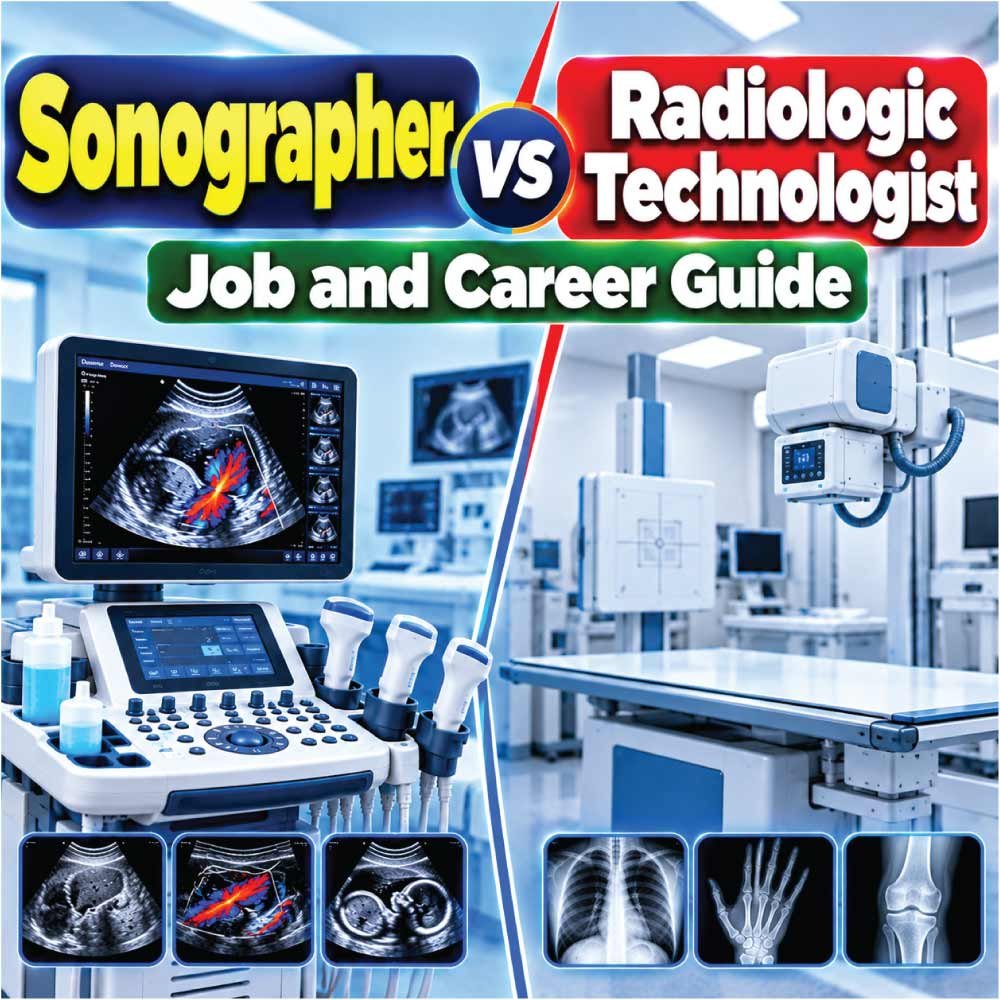
Choosing a career in medical imaging can be exciting, but it can also be confusing when two professions appear to have so much in common. Sonographers and radiologic technologists both work with patients, medical imaging equipment, and healthcare teams, yet their daily responsibilities, technologies, training, and work environments can be quite different.
The choice between these careers often comes down to the type of imaging you enjoy, how closely you want to work with patients, the healthcare settings you prefer, and the kind of education you are prepared to complete.
A sonographer primarily uses high-frequency sound waves to create images of structures inside the body. A radiologic technologist, sometimes called a radiographer or X-ray technologist, primarily uses X-rays and other imaging technologies to produce diagnostic images.
Neither profession is simply an easier version of the other. Both require technical knowledge, patient-care skills, attention to detail, and the ability to work accurately in a clinical environment.
What Is a Sonographer?
A sonographer is a healthcare professional who operates an ultrasound machine to produce images of organs, tissues, blood vessels, and developing fetuses. The profession is also commonly associated with diagnostic medical sonography.
During an examination, the sonographer positions the patient, selects an appropriate transducer, applies ultrasound gel, and moves the transducer across the area being examined. They adjust equipment settings and capture images that can help a physician or other qualified healthcare provider evaluate the patient’s condition.
Sonographers do more than simply take pictures. They must understand anatomy, recognize normal structures, obtain technically adequate images, and document relevant findings according to their workplace procedures.
Common sonography specialties include:
- Abdominal sonography
- Obstetric and gynecologic sonography
- Vascular sonography
- Cardiac or echocardiographic imaging
- Breast sonography
- Pediatric sonography
- Musculoskeletal ultrasound
The exact scope of practice and professional requirements can vary depending on the location and specialty.
What Is a Radiologic Technologist?
A radiologic technologist is a medical imaging professional who performs diagnostic imaging procedures using X-ray equipment and, depending on their training and credentials, may work with other imaging modalities.
Radiologic technologists are responsible for preparing patients, positioning them correctly, operating imaging equipment, following radiation-safety procedures, and producing images that meet the requirements of the examination.
Radiography is commonly used to examine areas such as:
- Bones and joints
- The chest and lungs
- The abdomen
- The spine
- Certain soft-tissue structures
Some radiologic technologists pursue additional education or credentials in areas such as computed tomography (CT), magnetic resonance imaging (MRI), mammography, or interventional procedures. The available pathways depend on the healthcare system and credentialing requirements where they work.
This means the term radiologic technologist can describe a professional whose career develops into several different imaging specialties.
Sonographer vs Radiologic Technologist: Main Difference
The biggest difference is the technology used to create diagnostic images.
Sonographers use ultrasound, which creates images through high-frequency sound waves. Radiologic technologists working in conventional radiography use X-rays, a form of ionizing radiation.
The two professionals also interact with imaging equipment differently. Sonographers frequently manipulate a handheld transducer directly on the patient’s body while simultaneously observing the resulting images. Radiologic technologists generally position the patient and operate an X-ray system to acquire images from specific angles.
| Feature | Sonographer | Radiologic Technologist |
|---|---|---|
| Primary imaging technology | Ultrasound | X-ray in conventional radiography |
| Main energy source | Sound waves | Ionizing radiation |
| Patient contact | Often extensive | Often significant |
| Equipment interaction | Handheld transducer plus ultrasound system | X-ray equipment and imaging systems |
| Common examinations | Abdomen, vascular, obstetric, cardiac | Chest, bones, joints, abdomen |
| Image acquisition | Real-time scanning | Individual or series of radiographic images |
| Radiation exposure from primary modality | No ionizing radiation | Uses ionizing radiation |
| Possible specialization | Vascular, cardiac, OB/GYN, breast, abdominal | CT, MRI, mammography, radiography and others |
| Physical demands | Positioning and sustained scanning | Positioning, transfers, and equipment-related tasks |
| Patient communication | Frequently continuous during scanning | Important before and during examinations |
The table describes general professional differences. Actual duties can vary according to specialty, employer, location, and credentialing requirements.
How Ultrasound Imaging Differs From X-Ray Imaging
Understanding the underlying technology can make the career distinction much clearer.
How Sonography Works
An ultrasound transducer sends high-frequency sound waves into the body. These waves interact with tissues and return echoes to the transducer. The ultrasound system processes those echoes and creates an image.
Because the sonographer is scanning in real time, the examination can involve continuous adjustments. The professional may change the angle of the transducer, modify imaging settings, or ask the patient to change position.
This makes hand-eye coordination and spatial awareness particularly important.
How Radiography Works
In conventional radiography, X-rays pass through the body and are detected to create an image. Different tissues absorb or attenuate X-rays differently, allowing structures such as bones to appear with varying levels of contrast.
Radiologic technologists must carefully select positioning and technical factors appropriate for the examination. They also follow radiation-protection principles to minimize unnecessary exposure.
The two professions therefore require different technical approaches even though both ultimately contribute medical images to the diagnostic process.
What Does a Sonographer Do During a Typical Day?
A sonographer’s day can vary considerably depending on their specialty and workplace.
A typical examination may begin with reviewing the requested procedure and preparing the patient. The sonographer explains what will happen, positions the patient, and prepares the ultrasound equipment.
During scanning, they acquire the required views and measurements. They may need to adapt the examination when anatomy, patient positioning, or image quality makes a standard approach difficult.
Afterward, images and measurements are documented according to departmental procedures.
A sonographer may spend much of the day:
- Performing ultrasound examinations
- Communicating directly with patients
- Positioning patients
- Operating ultrasound systems
- Capturing and labeling images
- Taking measurements
- Reviewing image quality
- Maintaining appropriate documentation
- Cleaning and preparing equipment between examinations
- Communicating with physicians and other healthcare professionals
The combination of technical scanning and direct patient interaction is one of the defining characteristics of sonography.
What Does a Radiologic Technologist Do During a Typical Day?
Radiologic technologists also have a patient-focused role, but their workflow is usually centered around radiographic examinations.
They may receive an imaging request, confirm the appropriate procedure, explain the examination, and position the patient. They then operate the imaging system and obtain the necessary views.
Patient positioning can be especially important because even a technically functioning X-ray system cannot compensate for poor positioning or inappropriate image acquisition.
Daily responsibilities can include:
- Preparing patients for examinations
- Verifying examination information
- Positioning patients
- Operating radiographic equipment
- Selecting appropriate technical factors
- Applying radiation-safety practices
- Evaluating images for technical quality
- Documenting examinations
- Cleaning and preparing equipment
- Working with radiologists and other healthcare professionals
In hospitals, radiologic technologists may also encounter patients with injuries, limited mobility, or urgent imaging needs.
Education and Training Requirements
Both careers require specialized education, but the exact pathway varies by country, state, employer, specialty, and professional credential.
Aspiring sonographers commonly complete an accredited diagnostic medical sonography program. Coursework can include anatomy, physiology, patient care, ultrasound physics, instrumentation, pathology, and scanning techniques.
Clinical education is particularly important because students need supervised experience performing examinations and using ultrasound equipment.
Radiologic technology programs generally include subjects such as:
- Anatomy and physiology
- Radiation protection
- Radiographic positioning
- Patient care
- Radiographic procedures
- Image production
- Equipment operation
- Radiation physics
- Clinical practice
Students also spend substantial time in clinical environments developing practical skills.
| Training Area | Sonography | Radiologic Technology |
|---|---|---|
| Anatomy | Essential | Essential |
| Patient care | Essential | Essential |
| Imaging physics | Ultrasound physics | Radiation and imaging physics |
| Equipment operation | Ultrasound systems | Radiographic systems |
| Positioning | Important | Very important |
| Clinical practice | Core component | Core component |
| Radiation safety | Relevant to healthcare, but ultrasound itself uses no ionizing radiation | Core responsibility for X-ray-based work |
| Specialty training | Often built around a sonography specialty | Can lead to additional imaging specialties |
Before enrolling, students should check the education, accreditation, licensing, and certification rules that apply to their intended place of employment.
Also Read:
Certification and Professional Credentials
Professional credentials can play an important role in both careers.
Sonographers may pursue specialty-specific credentials demonstrating competency in areas such as abdominal, vascular, obstetric and gynecologic, or cardiac sonography.
Radiologic technologists may pursue credentials in radiography and, with additional training, other imaging specialties.
Credentialing systems differ by country and professional organization. Some employers require particular credentials, while others may have additional requirements based on local regulations.
For this reason, prospective students should investigate requirements before choosing a program, rather than assuming that one qualification will automatically be accepted everywhere.
Work Environment and Patient Interaction
Both careers can involve hospitals, outpatient imaging centers, physician offices, specialty clinics, and other healthcare facilities.
The nature of patient interaction can differ, however.
Sonographers often remain physically close to the patient throughout the examination. They may spend considerable time communicating with patients while manipulating the transducer and monitoring images.
Radiologic technologists also interact closely with patients, especially during positioning and preparation. However, some parts of the imaging process involve the technologist operating equipment from a designated control area.
Emergency and hospital-based radiography can involve rapid changes in workload. A technologist might work with patients in emergency departments, inpatient units, operating rooms, or imaging departments.
Sonographers can also work in fast-paced clinical environments, particularly in hospitals and high-volume imaging practices.
Also Read:
Physical Demands of Each Career
Neither profession should be considered physically effortless.
Sonographers may spend long periods standing and may repeatedly hold or manipulate a transducer while maintaining awkward arm, shoulder, wrist, or upper-body positions. Repetitive scanning movements can make ergonomics an important part of the job.
Radiologic technologists may also spend much of the workday standing. Their duties can involve positioning patients, assisting with transfers, moving equipment, and working in different areas of a hospital.
The physical demands depend heavily on specialty and workplace.
Before choosing either career, students can benefit from considering whether they are comfortable with:
- Standing for extended periods
- Repositioning patients
- Working in close physical proximity to patients
- Performing repetitive technical movements
- Working in busy clinical settings
- Maintaining concentration while under time pressure
Which Career Requires More Patient Communication?
There is no universal answer because communication varies by workplace and specialty.
However, sonography often involves continuous patient interaction during image acquisition. The sonographer may need to explain breathing instructions, repositioning, or other parts of the examination while simultaneously scanning.
Radiologic technologists also need strong communication skills. They explain procedures, provide positioning instructions, respond to patient concerns, and help patients remain still when necessary.
In both careers, communication is not simply a social skill. Clear instructions can directly affect patient cooperation and image quality.
Also Read:
Career Specializations to Consider
One important difference between these careers is how specialization can develop over time.
Sonography Specialties
A sonographer may focus on a particular area of diagnostic imaging, depending on available training and credentials.
Examples include:
- Abdominal sonography: Imaging abdominal organs and related structures.
- Obstetric and gynecologic sonography: Imaging reproductive and pregnancy-related anatomy.
- Vascular sonography: Evaluating blood vessels and blood flow.
- Cardiac sonography: Producing ultrasound images of the heart.
- Breast sonography: Imaging breast tissue as part of appropriate clinical evaluation.
- Pediatric sonography: Performing examinations for children and infants.
Specialization can influence the type of patients encountered and the examinations performed.
Radiologic Technology Specialties
Radiologic technologists can also develop into specialized areas.
Possible pathways include:
- Conventional radiography
- Computed tomography
- Magnetic resonance imaging
- Mammography
- Interventional imaging
- Other specialized imaging services
Not every workplace offers every pathway, so career development opportunities depend on location, employer, training, and credentialing.
Sonographer vs Radiologic Technologist: Career Factors
Rather than asking which profession is universally better, it is more useful to compare the factors that matter when choosing a healthcare career.
| Career Factor | Sonographer | Radiologic Technologist |
|---|---|---|
| Direct patient interaction | Frequently high | Frequently high |
| Real-time image acquisition | Central to the role | Less central in conventional radiography |
| Ultrasound physics | Central | Not central to conventional radiography |
| X-ray physics | Not central | Central to radiography |
| Ionizing radiation | Not used by ultrasound imaging | Used in conventional X-ray imaging |
| Potential specialty options | Multiple ultrasound specialties | Multiple imaging specialties |
| Hands-on scanning | Major part of work | Less prominent in conventional radiography |
| Patient positioning | Important | Important |
| Clinical decision-making support | Image acquisition and documentation | Image acquisition and documentation |
| Physical ergonomics | Particularly important during scanning | Important during positioning and patient movement |
This comparison is intentionally descriptive. Individual experiences can differ significantly between employers and specialties.
Skills That Help Sonographers Succeed
Technical knowledge is only one part of being an effective sonographer.
Important skills include:
- Strong understanding of anatomy
- Hand-eye coordination
- Spatial awareness
- Attention to detail
- Patient communication
- Manual dexterity
- Ability to adapt scanning techniques
- Comfortable use of technology
- Professional judgment within the role’s scope
- Ability to remain focused during lengthy examinations
A sonographer needs to obtain useful images while working directly with the patient, which requires both technical precision and interpersonal awareness.
Skills That Help Radiologic Technologists Succeed
Radiologic technologists also need a combination of technical and interpersonal abilities.
Useful skills include:
- Knowledge of anatomy
- Accurate patient positioning
- Understanding of radiation protection
- Equipment operation
- Technical problem-solving
- Attention to detail
- Patient communication
- Safe patient handling
- Ability to work efficiently
- Adaptability in busy clinical environments
Radiologic technology can be particularly appealing to people who enjoy combining patient care with equipment-based technical work.
Sonographer vs Radiologic Technologist: How to Choose
The decision becomes easier when you focus on the actual work rather than the job title.
Sonography may appeal to someone who enjoys real-time scanning, close patient interaction, anatomy, and hands-on use of an ultrasound transducer.
Radiologic technology may appeal to someone who is interested in X-ray imaging, precise positioning, radiation science, and the possibility of progressing into additional imaging modalities.
Consider asking yourself:
- Do I enjoy working directly with patients?
- Am I comfortable with repetitive physical movements?
- Do I prefer real-time scanning or radiographic image acquisition?
- Am I interested in ultrasound physics or radiation physics?
- Would I like to specialize in a particular imaging area?
- Do I prefer a hospital environment or outpatient setting?
- What education and credentialing requirements apply where I want to work?
- What opportunities are available in my local healthcare system?
Talking with professionals in both fields and observing their work, where possible, can provide useful insight that a job description alone cannot provide.
Sonography and Radiologic Technology Are Both Imaging Careers
The distinction between these professions ultimately comes down to more than the equipment sitting in the imaging room.
A sonographer uses ultrasound technology to acquire real-time images and often spends much of the examination physically scanning the patient. A radiologic technologist uses X-ray-based equipment in conventional radiography and may later specialize in other imaging technologies.
Both careers require education, clinical training, technical competence, patient-care skills, and attention to safety.
For someone comparing the two, the most useful approach is to look at the technology, daily responsibilities, physical demands, patient interaction, training pathway, and available specialties. Those factors provide a much clearer picture of what each profession actually involves than salary or job title alone.
Ultimately, the right career depends on the type of medical imaging work you want to perform and the professional environment in which you want to build your career.
Final Thoughts
A sonographer vs radiologic technologist comparison reveals two related but distinct healthcare professions.
Sonographers specialize in ultrasound-based imaging and often perform highly hands-on, real-time examinations. Radiologic technologists commonly work with X-ray imaging and can develop into additional imaging specialties through further training.
Neither career follows exactly the same path. Education, certification, scope of practice, and employment requirements vary by location, so researching local requirements is an essential step before enrolling in a program.
For prospective students, the strongest starting point is not simply asking which profession sounds more attractive. Instead, examine the actual work involved and decide which combination of technology, patient care, clinical environment, physical activity, and specialization opportunities fits your professional goals.

Zak is a dedicated medical and career writer specializing in sonography, healthcare education, and professional development. Through SonographerSalary.com, he shares in-depth insights on sonographer salaries, education pathways, and career tips to help readers build successful futures in medical imaging. His content combines accuracy with practical, easy-to-understand guidance, empowering students and professionals to make confident, informed career decisions.