
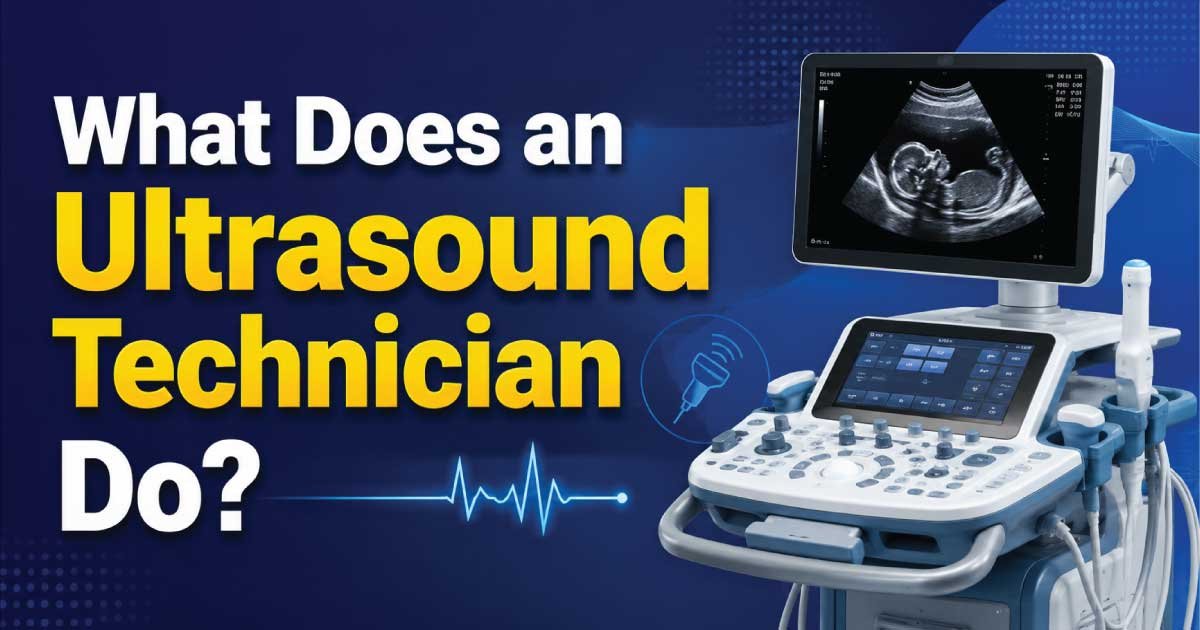
Ultrasound technology plays a crucial role in modern healthcare. From confirming pregnancies to diagnosing internal conditions, ultrasound imaging helps doctors see inside the human body safely and effectively. Behind every ultrasound image is a trained professional known as an ultrasound technician. But what exactly does an ultrasound technician do on a daily basis? What skills are required, and what does this career look like in the long term?
This in-depth guide explores the responsibilities, work environment, education, skills, and career outlook of ultrasound technicians, giving you a clear picture of this vital healthcare profession.
Table of Contents
ToggleUnderstanding the Role of an Ultrasound Technician
An ultrasound technician, also known as a diagnostic medical sonographer, is a trained healthcare professional who operates advanced imaging equipment to produce detailed images of organs, soft tissues, and blood flow. These images support physicians in diagnosing, evaluating, and monitoring a wide range of medical conditions accurately.
Working Environment and Scope of Practice
Ultrasound technicians collaborate closely with patients and healthcare teams, balancing technical precision with compassionate care. Beyond pregnancy imaging, ultrasound technology supports multiple specialties, including cardiology, oncology, and vascular medicine, making the role diverse, dynamic, and essential in modern clinical settings.
Primary Responsibilities of an Ultrasound Technician
Although specific duties vary by healthcare setting, employer, and specialty area, ultrasound technicians generally share a common set of core responsibilities. These tasks combine patient interaction, technical skill, and clinical accuracy to ensure high-quality imaging that supports physicians in diagnosis and ongoing patient care.
1. Preparing Patients for Procedures
Ultrasound technicians begin by preparing patients for examinations, clearly explaining procedures and addressing concerns. This responsibility includes proper patient positioning, applying ultrasound gel, maintaining comfort, and ensuring privacy, safety, and professionalism throughout the entire imaging process.
2. Operating Ultrasound Equipment
Technicians skillfully operate sophisticated ultrasound machines to obtain precise diagnostic images. This involves selecting appropriate probes and carefully adjusting settings such as depth, frequency, and focus to match the anatomy and clinical purpose of each examination.
3. Capturing and Analyzing Images
During examinations, ultrasound technicians capture detailed images and video clips of internal structures. While they do not provide diagnoses, they must distinguish between normal and abnormal anatomy to ensure accurate imaging and reliable documentation for physician evaluation.
4. Maintaining Patient Records
Accurate recordkeeping is essential in this role. Ultrasound technicians document patient information, exam details, and imaging results, ensuring all data and images are correctly stored in electronic medical systems for secure access and physician review.
5. Collaborating with Physicians
Ultrasound technicians work closely with physicians, radiologists, and specialists after completing scans. They share technical observations, clarify imaging details, and support medical teams by providing high-quality visuals that contribute to informed diagnosis and treatment decisions.
6. Maintaining Equipment
In addition to patient care, technicians are responsible for routine equipment maintenance. This includes cleaning transducers, performing basic troubleshooting, and ensuring machines are properly calibrated, which helps maintain image accuracy, prolong equipment life, and protect patient safety.
Types of Ultrasound Specializations
Ultrasound technology covers a wide range of medical applications, allowing technicians to focus on specific areas of the body or patient care. Specializing helps professionals develop deeper expertise, work in targeted clinical settings, and support physicians with highly detailed imaging tailored to particular diagnostic needs.
Obstetric and Gynecologic Sonography
This specialization concentrates on imaging related to pregnancy, fetal growth, and the female reproductive system. Technicians monitor fetal development, assess maternal health, and assist physicians in identifying potential complications, making it one of the most recognized and impactful ultrasound specialties.
Abdominal Sonography
Abdominal sonographers focus on imaging major organs within the abdominal cavity. Their work helps evaluate organ size, structure, and function, supporting physicians in diagnosing conditions affecting digestion, metabolism, and internal organ health through noninvasive imaging techniques.
Cardiac Sonography (Echocardiography)
Cardiac sonographers specialize in imaging the heart and surrounding structures. They assess heart chambers, valves, and blood flow, providing essential information that helps physicians evaluate cardiac performance, detect abnormalities, and manage heart-related diseases effectively.
Vascular Sonography
Vascular ultrasound technicians examine arteries and veins throughout the body. Their imaging helps identify circulation problems such as blockages, narrowing, or blood clots, playing a critical role in preventing serious conditions like strokes and cardiovascular complications.
Musculoskeletal Sonography
This emerging specialty focuses on imaging muscles, joints, tendons, and ligaments. Commonly used in sports medicine and orthopedics, it helps evaluate injuries, inflammation, and soft tissue conditions, offering real-time imaging without radiation exposure.
Where Do Ultrasound Technicians Work?
Ultrasound technicians are employed across a wide range of healthcare environments, allowing them to serve diverse patient populations and medical needs. These work settings influence daily responsibilities, patient interaction levels, schedules, and the types of examinations performed using ultrasound imaging technology.
- Hospitals
- Diagnostic imaging centers
- Physicians’ offices
- Outpatient clinics
- Emergency rooms
- Mobile imaging services
Most technicians work full-time, and schedules may include evenings, weekends, or on-call shifts, especially in hospitals. The job often involves standing for long periods and assisting patients with limited mobility.
Skills Required to Be an Ultrasound Technician
Becoming a successful ultrasound technician requires a well-rounded combination of technical knowledge, patient-focused communication, physical ability, and analytical thinking. These skills allow technicians to produce accurate diagnostic images while maintaining patient comfort, safety, and professionalism in fast-paced clinical environments.
Technical Skills
Strong technical skills are essential for operating ultrasound equipment and capturing precise diagnostic images. A solid understanding of human anatomy and physiology, combined with attention to detail, ensures image quality that physicians rely on for accurate clinical assessment.
- Understanding of anatomy and physiology
- Proficiency with ultrasound equipment
- Attention to detail when capturing images
Communication Skills
Effective communication helps ultrasound technicians guide patients through procedures and work efficiently with healthcare teams. Clear explanations, empathy, and professionalism build patient trust while ensuring accurate information sharing with physicians and medical staff.
- Ability to explain procedures clearly
- Empathy and professionalism when working with patients
- Strong collaboration with medical teams
Physical Stamina
The role of an ultrasound technician is physically demanding and requires endurance throughout long shifts. Physical stamina supports safe patient handling, precise scanning techniques, and consistent performance during examinations that may require extended standing and controlled movements.
- Ability to stand for long periods
- Capability to assist patients with positioning
- Good hand-eye coordination
Critical Thinking
Critical thinking allows ultrasound technicians to adapt scanning techniques and recognize unusual findings. This skill supports accurate image capture, helps identify when additional views are needed, and ensures thorough documentation for physician interpretation.
- Recognizing abnormal findings
- Adapting scanning techniques based on patient needs
Education and Training Requirements
Formal education and clinical training are essential for building the knowledge and hands-on experience required in ultrasound technology. These programs prepare students to understand medical concepts, operate imaging equipment, and apply ethical standards in real-world healthcare settings.
Educational Pathways
Most ultrasound technicians complete structured educational programs that combine classroom learning with clinical practice. These pathways vary in length and depth but all focus on developing core competencies required for professional sonography practice.
- Associate degree in diagnostic medical sonography (typically 2 years)
- Bachelor’s degree in sonography or a related field
- Certificate programs (for those with prior healthcare education)
Programs include classroom instruction in anatomy, physics, and medical ethics, along with hands-on clinical experience.
Certification and Licensing
Professional certification validates an ultrasound technician’s skills and knowledge. While licensing requirements vary by region, certification is often preferred by employers and reflects a commitment to quality patient care, professional standards, and continued competency in the field.
A Day in the Life of an Ultrasound Technician
A typical day for an ultrasound technician involves a balance of patient care, technical responsibilities, and documentation. Daily routines often include reviewing schedules, preparing equipment, performing multiple scans, recording findings, and maintaining imaging tools, with each patient case offering unique clinical challenges and learning opportunities.
A typical workday may include reviewing patient schedules, preparing exam rooms, performing multiple ultrasound exams, documenting results, and maintaining equipment. Each patient presents a unique case, making the job dynamic and intellectually engaging.
Some days may involve routine scans, while others require handling urgent or complex cases. Emotional intelligence is important, as technicians often work with anxious, ill, or expectant patients.
Read More:
Career Outlook and Salary Potential
Ultrasound technology is widely regarded as a stable and rewarding healthcare career path. Strong demand, advancing imaging technology, and expanding clinical applications contribute to positive job prospects, competitive compensation, and long-term career growth for trained and certified ultrasound technicians.
Job Demand
Demand for ultrasound technicians continues to grow as medical imaging plays a greater role in diagnosis and preventive care. An aging population, increased chronic conditions, and advances in noninvasive imaging technologies all contribute to strong and sustained employment opportunities.
Salary Expectations
Ultrasound technician salaries vary depending on location, experience, and area of specialization. Professionals with advanced certifications or specialized expertise often earn higher wages, and many positions include benefits such as healthcare coverage, paid time off, and retirement plans.
Read More:
Advantages and Challenges of the Career
Pursuing a career as an ultrasound technician offers a mix of professional rewards and practical difficulties. Understanding both sides of the profession helps individuals set realistic expectations, evaluate long-term satisfaction, and determine whether this healthcare role aligns with their personal strengths, lifestyle preferences, and career goals.
Advantages
The advantages of being an ultrasound technician reflect both professional fulfillment and career stability. Many technicians value the ability to contribute directly to patient care, develop specialized skills, and work with advanced, non-invasive medical technology in a growing healthcare field.
- Meaningful patient interaction
- Strong job stability
- Opportunities for specialization
- Non-invasive, radiation-free technology
Challenges
Despite its benefits, the career also presents challenges that require resilience and adaptability. Physical demands, emotional situations, and nontraditional work schedules can be part of the role, especially in high-acuity or hospital-based healthcare environments.
- Physical demands
- Emotional stress in difficult cases
- Irregular work hours in some settings
Understanding both the rewards and challenges helps prospective technicians make informed career decisions.
Is Becoming an Ultrasound Technician Right for You?
Choosing a career as an ultrasound technician depends on personal interests, work style, and long-term goals. This profession is well suited for individuals who enjoy combining healthcare and technology, value patient interaction, and are comfortable working in clinical environments that require precision, empathy, and ongoing learning.
If you enjoy healthcare, technology, and helping people, a career as an ultrasound technician can be deeply rewarding. It suits individuals who are detail-oriented, compassionate, and interested in continuous learning.
This profession offers the opportunity to make a real difference in patients’ lives while working in a respected and growing field of medicine.
Read More:
Conclusion
Ultrasound technicians are essential members of the healthcare team. Their expertise allows doctors to diagnose conditions accurately and patients to receive timely care. From operating advanced imaging equipment to providing compassionate patient support, ultrasound technicians blend science, technology, and human connection every day.
Whether you are considering this career path or simply want to understand the role better, one thing is clear: ultrasound technicians play a vital role in modern medicine, helping turn sound waves into life-changing insights.

Zak is a dedicated medical and career writer specializing in sonography, healthcare education, and professional development. Through SonographerSalary.com, he shares in-depth insights on sonographer salaries, education pathways, and career tips to help readers build successful futures in medical imaging. His content combines accuracy with practical, easy-to-understand guidance, empowering students and professionals to make confident, informed career decisions.