
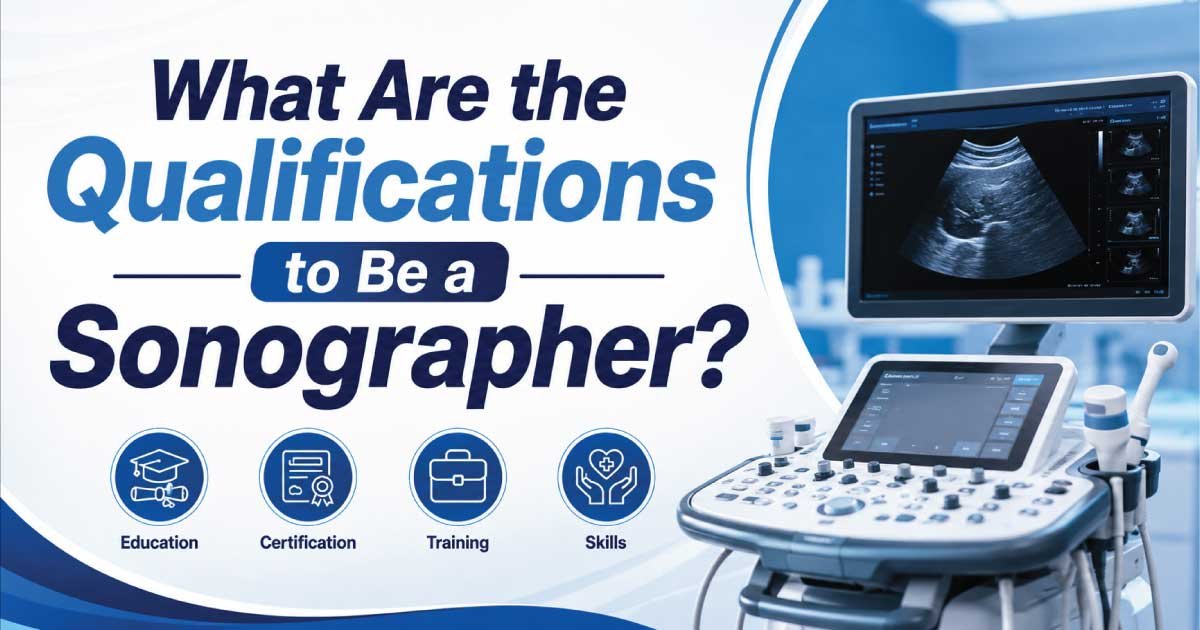
Diagnostic medical sonography—often shortened to sonography—is a fast-growing healthcare field that blends patient care, anatomy knowledge, and advanced imaging technology. Sonographers (also called ultrasound technologists) play a vital role in diagnosing and monitoring medical conditions by producing images of organs, tissues, and blood flow using high-frequency sound waves.
If you’re considering this career, one of the first questions you’ll ask is: What qualifications do I need to become a sonographer? The answer includes education, clinical training, certification, and a set of technical and personal skills. This in-depth guide walks you through every requirement so you can confidently plan your path into the profession.
Understanding the Role of a Sonographer
Before discussing qualifications, it’s important to understand what sonographers actually do. A sonographer operates ultrasound equipment to capture diagnostic images. These images are then interpreted by physicians to diagnose illnesses or monitor pregnancies, heart conditions, vascular disorders, and more.
Depending on their specialty, sonographers may work in hospitals, outpatient imaging centers, physicians’ offices, or mobile imaging services. Their role requires not only technical proficiency but also strong patient interaction, attention to detail, and adherence to safety standards.
Educational Qualifications to Become a Sonographer
High School Diploma or Equivalent
The journey into sonography begins with a high school diploma or GED, which builds the foundation for advanced study. At this stage, students are encouraged to focus on science and math subjects that support future medical learning. Strong communication skills and basic computer literacy also become increasingly important for later training.
- Biology and anatomy
- Physics
- Mathematics
- Health sciences
Strong communication skills and computer literacy are also helpful, as modern sonography relies heavily on digital imaging systems.
Postsecondary Sonography Education
To become a qualified sonographer, individuals must complete a structured postsecondary program in diagnostic medical sonography or a closely related healthcare field. These programs are offered by colleges, universities, and specialized medical training institutes with both academic and clinical components.
Common Educational Pathways
Associate Degree in Diagnostic Medical Sonography
This pathway is the most widely chosen entry route into the profession and provides a balance of classroom instruction and hands-on clinical experience. It prepares students for entry-level roles in hospitals and diagnostic centers.
- Duration: Typically 18 months to 2 years
- Most common entry-level qualification
- Combines classroom learning with hands-on clinical training
Bachelor’s Degree in Sonography or Medical Imaging
This option offers more advanced academic preparation, including deeper study of imaging technologies, healthcare management, and research methodologies. It is often preferred for those aiming at leadership or teaching positions.
- Duration: About 4 years
- Offers deeper study in advanced imaging, management, and research
- Often preferred for leadership or teaching roles
Postgraduate Certificate Programs
These programs are designed for individuals who already work in healthcare, such as radiologic technologists or nurses, and want to specialize in sonography. They provide focused training in a shorter timeframe.
- Designed for individuals already working in healthcare (e.g., radiologic technologists or nurses)
- Duration: 12–18 months
Regardless of the pathway, most employers prefer graduates from programs accredited by the Commission on Accreditation of Allied Health Education Programs (CAAHEP) or an equivalent accrediting body. Accreditation ensures that training meets professional standards and prepares students for certification exams.
Clinical Training and Internships
Clinical training is a vital component of sonography education, allowing students to apply theoretical knowledge in real healthcare environments. During supervised rotations, they gain practical exposure to patient care and diagnostic imaging procedures under professional guidance.
- Operate ultrasound machines
- Work directly with patients
- Apply anatomy and pathology knowledge
- Learn professional and ethical standards
Clinical hours are mandatory and are often a requirement for certification eligibility.
Certification and Licensing Requirements
Professional Certification
Although certification requirements vary by country and employer, professional certification is widely considered essential in most healthcare systems, particularly in the United States where it strongly influences hiring decisions and career advancement opportunities in sonography.
The most widely recognized credentialing organization is the American Registry for Diagnostic Medical Sonography (ARDMS).
Common ARDMS Credentials Include:
- Registered Diagnostic Medical Sonographer (RDMS)
- Registered Diagnostic Cardiac Sonographer (RDCS)
- Registered Vascular Technologist (RVT)
To earn certification, candidates must:
- Complete an accredited education program
- Pass a physics exam (Sonography Principles & Instrumentation)
- Pass a specialty exam (e.g., abdomen, OB/GYN, vascular)
Certification demonstrates professional competence and significantly improves job prospects and earning potential.
State Licensure (Where Applicable)
Licensing requirements for sonographers vary depending on the country or region, with some U.S. states and several international healthcare systems requiring formal licensure to ensure minimum professional standards. In areas where it is enforced, compliance is mandatory for legal practice.
- Proof of education
- Certification exam results
- Background checks or continuing education
Even in states without licensure laws, employers often require certification as a condition of employment.
Specialization Qualifications in Sonography
Many sonographers choose to specialize in a specific area of medical imaging, which often requires additional clinical training, focused coursework, or advanced certification. Specialization helps professionals build deeper expertise in targeted fields and improves long-term career growth opportunities.
Common Sonography Specialties
- Obstetric and Gynecologic Sonography (OB/GYN)
- Abdominal Sonography
- Cardiac Sonography (Echocardiography)
- Vascular Sonography
- Musculoskeletal Sonography
- Pediatric Sonography
Specialization enhances clinical expertise, creates access to higher-paying positions, and may require earning additional credentials from recognized certifying organizations in diagnostic imaging.
Skills and Personal Qualifications
Academic and technical education alone are not enough for success in sonography. Employers also value a strong combination of soft skills, physical capability, and professional behavior that supports safe, accurate, and compassionate patient care.
Technical Skills
Sonographers must demonstrate strong technical competence to produce accurate diagnostic images and support physicians in medical decision-making. These skills are developed through education, clinical training, and ongoing professional practice.
- Operating ultrasound equipment
- Adjusting imaging settings for accuracy
- Recognizing normal vs. abnormal anatomy
- Maintaining imaging records and patient data
Technology evolves quickly in medical imaging, so adaptability and continuous learning are essential for maintaining professional competence.
Physical and Stamina Requirements
Sonography is a physically demanding healthcare profession that requires both strength and endurance during daily clinical duties. Professionals must often work in fast-paced environments while maintaining precision and patient comfort.
- Standing for long periods
- Assisting and positioning patients
- Performing repetitive scanning motions
Good hand–eye coordination and physical endurance are important qualifications that are often underestimated by those considering entry into the field.
Final Thoughts
Becoming a sonographer requires dedication, education, and hands-on training—but the rewards are substantial. The essential qualifications include:
- A high school diploma or equivalent
- Completion of an accredited sonography program
- Supervised clinical training
- Professional certification and, where required, licensure
- Strong technical, physical, and interpersonal skills
For those passionate about healthcare, technology, and patient care, sonography offers a fulfilling career with strong demand and diverse specialization options. By understanding and meeting these qualifications, you can confidently take the first steps toward becoming a skilled and respected diagnostic medical sonographer.

Zak is a dedicated medical and career writer specializing in sonography, healthcare education, and professional development. Through SonographerSalary.com, he shares in-depth insights on sonographer salaries, education pathways, and career tips to help readers build successful futures in medical imaging. His content combines accuracy with practical, easy-to-understand guidance, empowering students and professionals to make confident, informed career decisions.