
If you have ever had an ultrasound — whether during pregnancy, for abdominal pain, or for a heart issue — then you’ve already met one of the most important people in modern healthcare: a sonographer. But what many people do not realize is that sonographers do far more than simply move a probe across the skin and take pictures. Their work is technical, detailed, emotionally connected, and plays a life-changing role in diagnosing medical conditions.
So what does a sonographer actually do?
Let’s break it down in a natural, human, and deeply detailed way — giving you a full picture of this career, whether you’re just curious or considering entering the field yourself.
Understand the Role: Who Exactly Is a Sonographer?
A sonographer — also known as a diagnostic medical sonographer or ultrasound technologist — is a trained healthcare professional who uses high-frequency sound waves to create real-time images inside the human body. These images help doctors detect disease, monitor pregnancy, guide treatments, and make accurate diagnoses.
While the physician makes the final interpretation, it’s the sonographer who captures the images, decides which angles matter, identifies suspicious findings, and ensures the study is complete.
Think of them as the person who “sees” inside the body before anyone else does.
Daily Responsibilities: What a Sonographer Does Every Day
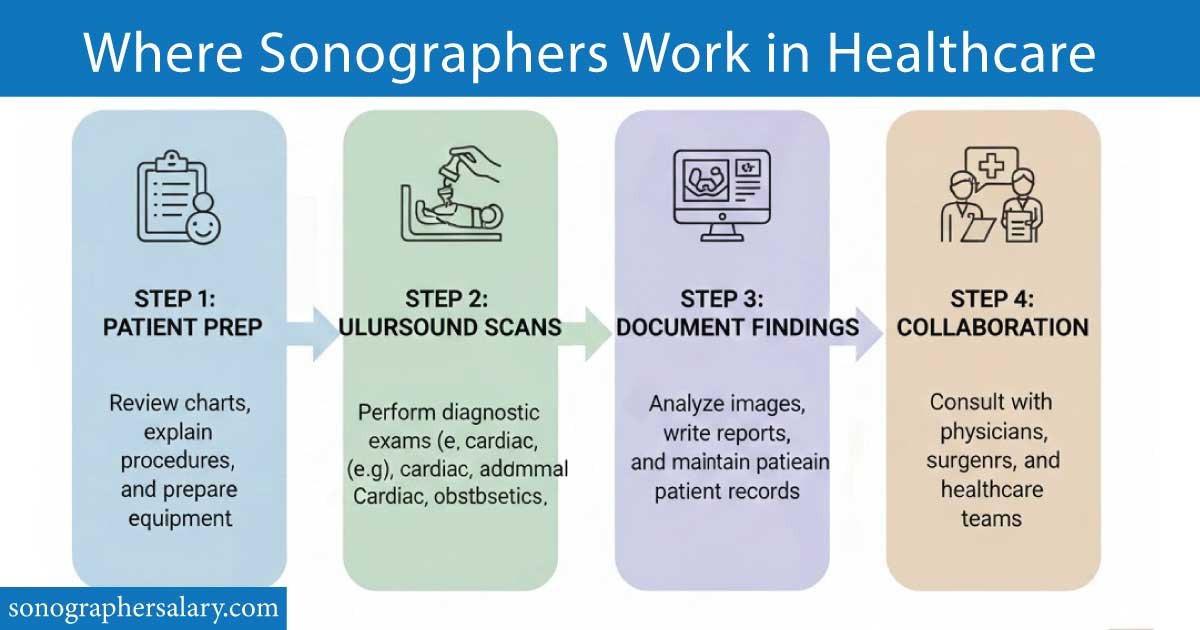
Healthcare settings vary hospitals, clinics, OB/GYN offices, heart and vascular centers but the sonographer’s core responsibilities remain the same. These include:
1. Preparing Patients for Their Ultrasound Exam
Sonographers are often the first clinical touchpoint for a patient entering the imaging department. They:
Verify the patient’s medical history
Ask about symptoms and previous surgeries
Explain the procedure
Position the patient correctly
Ensure comfort and privacy
Many patients arrive anxious, especially when dealing with pain, pregnancy complications, or unknown issues. Sonographers use communication skills to calm and guide them through the process.
2. Performing the Ultrasound Scan
This is the heart of the job. Using an ultrasound transducer, the sonographer:
Moves the probe strategically
Adjusts depth, gain, and Doppler settings
Captures images in multiple planes
Evaluates tissue, organs, blood flow, and pathology
Documents all necessary measurements
Sonography is not just waving the probe around, it’s a skill that requires anatomical knowledge, experience, and instinct.
The sonographer must know:
What normal anatomy looks like
What abnormal findings look like
Which angles are required
Which structures should be included
How to optimize image quality
A poor scan can lead to a missed diagnosis. A good scan can save a life.
3. Identifying Abnormalities and Critical Findings
Although sonographers don’t diagnose (that’s the doctor’s job), they recognize abnormalities during the exam.
For example, they may detect:
Gallstones
Tumors or masses
Blockages in blood vessels
Ectopic pregnancy
Fetal abnormalities
Heart defects
Kidney disease
Liver issues
Blood clots (DVT)
When something serious appears, the sonographer must act quickly, alerting radiologists or physicians.
This requires not just technical skill — but judgment, responsibility, and emotional strength.
4. Communicating with Radiologists, OB/GYNs, or Cardiologists
After completing a scan, the sonographer:
Documents findings
Reviews images
Highlights areas of concern
Ensures the study is complete
Doctors rely heavily on sonographers to perform comprehensive exams. A radiologist or OB/GYN can only interpret what appears on the screen — so the sonographer must capture everything correctly.
Think of it like photography:
If the photographer doesn’t take the right shots, even the best editor can’t fix it.
5. Writing Preliminary Technical Reports
Most departments require sonographers to write a preliminary impression, noting:
Organ appearances
Measurements
Abnormal structures
Blood flow patterns
Areas needing further evaluation
Again, this is not an official diagnosis but it guides the doctor’s final report.
6. Maintaining and Troubleshooting Ultrasound Equipment
Ultrasound machines are advanced devices that require care. Sonographers:
Adjust machine presets
Clean and disinfect probes
Monitor image quality
Troubleshoot settings
Report technical issues
This ensures safe, accurate imaging for every patient.
7. Guiding Patients Emotionally Through Their Exam
Ultrasound is often associated with pregnancy, but many scans involve:
Pain
Trauma
Cancer detection
Blood clots
Liver disease
Cardiac emergencies
Sonographers develop strong emotional resilience. They support patients through frightening moments while remaining professional.
Sometimes they see heartbreaking findings — but cannot reveal them directly.
This is one of the toughest parts of the job.
💡 Access Ultimate Guide: Sonographer Salary in Australia 2026: Hourly, Monthly & Yearly
Types of Sonographers: Specialties Within the Field
Sonography is far more than a single role in healthcare — it’s a dynamic field with multiple specialized career paths. Each specialty focuses on different parts of the body or types of patients, and each requires unique skills, knowledge, and training. Understanding the specialties within sonography helps aspiring professionals choose the path that best aligns with their interests, strengths, and career goals.
1. Abdominal Sonographer
Abdominal sonographers focus on imaging the organs within the abdominal cavity. Their primary responsibility is to capture high-quality ultrasound images of organs such as the liver, kidneys, gallbladder, pancreas, spleen, aorta, and bladder. Using these images, they assist physicians in diagnosing conditions like gallstones, liver disease, tumors, abdominal pain, and aneurysms.
This specialty requires a deep understanding of anatomy and pathology to accurately identify abnormalities. Abdominal sonographers often work closely with patients who may be experiencing discomfort, which means they also need strong patient care and communication skills. Because abdominal ultrasound is one of the most common diagnostic tools, specialists in this field enjoy steady demand and frequent opportunities to expand their expertise into related areas like vascular imaging or interventional procedures.
2. OB/GYN Sonographer
OB/GYN sonography is one of the most recognized and emotionally rewarding specialties. These sonographers work closely with pregnant women, performing scans that monitor fetal growth, detect abnormalities, and track the health of both mother and baby. Common procedures include early pregnancy scans, anatomy scans, growth scans, high-risk pregnancy studies, and gynecologic ultrasounds.
This specialty is unique because sonographers often witness highly personal and emotional moments, such as seeing a baby for the first time on ultrasound. While this is rewarding, it also requires excellent empathy, patience, and communication skills. OB/GYN sonographers must be proficient in measuring fetal growth, assessing amniotic fluid levels, and identifying complications such as ectopic pregnancies or growth restrictions. Their work directly influences prenatal care and patient reassurance, making them a vital part of maternal healthcare teams.
3. Cardiac Sonographer (Echocardiographer)
Cardiac sonographers, also known as echocardiographers, specialize in imaging the heart. Using ultrasound technology, they assess heart function, evaluate valve performance, measure blood flow, and identify congenital or acquired heart defects. They play a critical role in diagnosing conditions such as heart failure, cardiomyopathy, valve abnormalities, and congenital heart defects.
This specialty demands a strong foundation in cardiovascular physiology, anatomy, and pathology. Cardiac sonographers must interpret complex images in real-time and often collaborate closely with cardiologists to guide treatment decisions. Because heart conditions can be life-threatening, these professionals need excellent attention to detail, critical thinking, and the ability to stay calm under pressure. Many cardiac sonographers also gain certification in advanced echocardiography techniques to improve career prospects and salary potential.
4. Vascular Sonographer
Vascular sonographers evaluate blood flow in arteries and veins to detect conditions that could lead to severe complications, such as stroke, deep vein thrombosis (DVT), aneurysms, or peripheral artery disease. They use specialized ultrasound techniques, such as Doppler imaging, to visualize blood flow and measure the speed and direction of circulation.
This specialty is crucial in emergency and preventative care. Vascular sonographers often work with patients at high risk for cardiovascular events, helping physicians detect early signs of blockages or clot formation. Because their findings can guide life-saving interventions, these professionals require strong technical skills, precision, and the ability to communicate findings clearly. Vascular sonography is also a high-demand specialty, often offering higher salaries and opportunities in specialized clinics and hospitals.
5. Musculoskeletal Sonographer (MSK)
Musculoskeletal (MSK) sonographers focus on imaging muscles, tendons, ligaments, joints, and soft tissues. They commonly evaluate conditions such as rotator cuff tears, tendonitis, sports injuries, and nerve entrapments. This specialty is increasingly important in sports medicine, orthopedics, and rehabilitation clinics.
MSK sonographers must have strong anatomical knowledge and technical skills to capture images of complex musculoskeletal structures. They also need physical stamina, as scanning joints and muscles can require precise probe placement and long periods of standing. This specialty is expanding rapidly due to the growing demand for noninvasive imaging in sports and orthopedic medicine.
6. Pediatric Sonographer
Pediatric sonographers work with newborns, infants, and children, requiring a combination of technical skill and exceptional patience. Pediatric imaging can involve general abdominal scans, echocardiography for congenital heart defects, or specialized imaging of pediatric organs.
Working with children presents unique challenges: patients may be anxious, uncooperative, or medically fragile. Pediatric sonographers must be skilled in patient comfort, distraction techniques, and gentle handling, all while capturing accurate diagnostic images. This specialty is emotionally rewarding and highly valued in pediatric hospitals and specialty clinics.
💡 Access Ultimate Guide: Sonographer Salary in Canada 2026: Hourly, Monthly & Yearly
Skills Required for Sonographers
Across all specialties, sonographers need a combination of technical expertise, physical ability, and interpersonal skills:
Technical Skills: Knowledge of anatomy, pathology, and ultrasound physics; ability to optimize images; accurate measurements.
Physical Skills: Steady hand-eye coordination, stamina for long scans, and the ability to position patients safely.
Soft Skills: Compassion, patience, clear communication, critical thinking, multitasking, and emotional resilience, particularly during high-stress situations.
Sonographers must adapt quickly to new cases, maintain focus under pressure, and provide reassurance to patients who may be anxious or in pain.
Where Do Sonographers Work?
Sonographers can find employment in a variety of healthcare settings:
1. Hospitals
Hospitals employ sonographers in emergency, inpatient, and outpatient departments. Sonographers perform urgent scans, assist in complex cases, and collaborate with multidisciplinary teams. The fast-paced environment requires adaptability, technical skill, and the ability to provide accurate imaging under pressure.
2. Outpatient Imaging Centers
Outpatient centers offer a more structured schedule for sonographers. They handle routine diagnostic imaging, preventive screenings, and follow-up scans. Sonographers can develop long-term patient relationships while working in a less stressful environment than hospitals, with consistent hours and predictable workflow.
3. OB/GYN Clinics
OB/GYN clinics focus on maternal and reproductive health imaging. Sonographers perform pregnancy ultrasounds, monitor fetal development, and detect gynecological conditions. This setting requires empathy, patience, and communication skills to support expectant mothers through emotionally significant moments.
4. Cardiac and Vascular Centers
These centers specialize in heart and blood vessel imaging. Sonographers evaluate cardiovascular health, detect blockages, and assist in diagnosing heart disease. Accuracy, attention to detail, and knowledge of complex anatomy are essential in this fast-paced environment.
5. Pediatric Hospitals
Pediatric hospitals provide imaging for newborns, infants, and children. Sonographers must adapt techniques for smaller bodies, ensure comfort, and communicate with parents. Patience, specialized skills, and gentle handling are critical for obtaining accurate pediatric diagnostic images.
6. Specialty Medical Practices
Specialty practices include orthopedics, sports medicine, and rehabilitation clinics. Sonographers perform musculoskeletal scans, assist with injury diagnosis, and support treatment planning. This setting often emphasizes precision, collaboration, and applying imaging to guide recovery and therapy.
7. Mobile Ultrasound Services
Mobile sonography provides imaging at clinics, nursing homes, or remote locations. Sonographers travel with portable equipment, adapting to different environments. Flexibility, technical versatility, and patient interaction skills are essential for delivering high-quality images on the go.
8. Travel Sonography Assignments
Travel sonographers take temporary assignments nationwide, often with higher pay, housing, and benefits. They work in diverse healthcare settings, gaining varied experience. Adaptability, independence, and excellent technical and communication skills are crucial for success in this role.
Travel sonographers, in particular, are in high demand and can command higher salaries due to the flexibility and critical need for their services in different regions.
In summary, sonography is a versatile, high-demand career with multiple specialties catering to different patient populations and medical needs. Whether you are drawn to abdominal imaging, maternal care, cardiac diagnostics, vascular assessments, musculoskeletal evaluation, or pediatric imaging, there is a path that matches your interests and skills. Success in this field requires a combination of technical knowledge, physical endurance, and emotional intelligence, all of which contribute to a meaningful and rewarding healthcare career.
💡 Access Ultimate Guide: Sonographer Salary in USA 2026: Hourly, Monthly & Yearly
A Closer Look: A Day in the Life of a Sonographer
To truly understand the role of a sonographer, it helps to step into their shoes and imagine a full day inside a busy ultrasound department. Sonography is a profession that blends technology, medical knowledge, and patient care, and no two days are ever the same. From routine exams to urgent emergency scans, a sonographer’s day requires precision, compassion, and adaptability.
Morning: Starting the Day
The day usually begins by reviewing your schedule of patients. These can range from individuals experiencing abdominal pain to expectant mothers coming in for routine prenatal scans, cardiac patients requiring echocardiography, and sometimes emergency cases that have been added last-minute. Reviewing each patient’s history allows the sonographer to plan their approach, anticipate potential challenges, and ensure they have all necessary equipment and supplies ready.
The first patient arrives — perhaps someone experiencing abdominal discomfort. After greeting them warmly, you ease their concerns by explaining the procedure and what to expect. Lighting is adjusted to improve visibility of the screen, and you carefully position the patient. As the ultrasound begins, your trained eye scans the liver, gallbladder, kidneys, and surrounding structures. Suddenly, you notice a small abnormality in the gallbladder. You document your findings thoroughly, capturing high-quality images for the physician to review. This is a typical example of how a sonographer’s skill can make a critical difference in early detection of disease.
Midday: Emotional and Rewarding Moments
Midday often brings a very different type of patient — perhaps a pregnant mother here for an anatomy scan. This part of the day requires a softer touch, patience, and the ability to make the patient feel comfortable. As you conduct the scan, you point out the baby’s heartbeat, tiny hands, feet, and facial features. These moments are not only technically important but also deeply emotional for patients and sonographers alike. For the sonographer, witnessing the joy and relief of parents seeing their child can be one of the most rewarding aspects of the job.
These scans require meticulous measurements and careful documentation. You record fetal growth, assess amniotic fluid levels, and note any abnormalities. This information guides obstetricians in monitoring pregnancy health and planning for safe delivery. A sonographer’s work here is crucial, ensuring that every detail is captured accurately and communicated effectively.
Afternoon: Fast-Paced and Critical Cases
Afternoons can be unpredictable. A trauma patient from the emergency department may require a FAST (Focused Assessment with Sonography for Trauma) exam. In these cases, every second counts. You perform a rapid scan to assess for internal bleeding, quickly identifying any abnormalities that could determine immediate treatment decisions. The ability to work calmly under pressure, while maintaining precision, is a hallmark of an experienced sonographer.
Soon after, another patient may come in for a vascular exam, such as a Doppler study to rule out deep vein thrombosis (DVT). Using your expertise, you detect signs of a blood clot. Immediate communication with the physician ensures the patient receives prompt treatment, potentially preventing life-threatening complications like a pulmonary embolism. These scenarios highlight the critical role sonographers play in preventing stroke, heart disease, and other serious conditions.
End of Shift: Wrapping Up
As the day winds down, sonographers complete essential administrative tasks. Images are carefully uploaded to the patient’s electronic medical record, reports are written with detailed notes, and the ultrasound equipment is cleaned and prepped for the next day. The department is organized and ready for incoming patients, ensuring smooth operations and continuity of care.
Every day in sonography is different. Some moments are exciting, some are emotional, but all are meaningful. Sonographers are central to the diagnostic process, often detecting issues before physicians even enter the room. Their work enables early diagnosis, faster treatment, and safer patient outcomes.
💡 Access Ultimate Guide: Sonographer Starting Salary for New Graduates
Why Sonographers Are So Important in Healthcare
Sonographers are sometimes referred to as the “eyes of the physician.” Their role goes far beyond simply taking pictures. High-quality ultrasound imaging allows doctors to make informed decisions quickly and accurately. Some key contributions of sonographers include:
Early detection of life-threatening conditions: From gallstones to heart defects, sonographers identify abnormalities before symptoms become severe.
Accurate diagnosis: Clear, precise imaging is essential for proper treatment planning.
Faster treatment: Immediate identification of problems enables timely interventions, saving lives.
Safe monitoring of pregnancies: Sonographers track fetal development, detect complications, and provide reassurance to parents.
Prevention of stroke and heart disease: Vascular sonographers play a vital role in identifying blood clots or blockages early.
Without sonographers, physicians would lack the critical visual information necessary to diagnose and treat patients effectively. Their expertise directly impacts patient care, making them indispensable in modern healthcare.
How Long Does It Take to Become a Sonographer?
The path to becoming a sonographer is shorter than many other healthcare careers but still requires dedication, training, and certification. On average, it takes 2–4 years, depending on your chosen educational pathway:
Associate Degree: Typically 2 years, combining classroom learning and clinical training.
Bachelor’s Degree: A more comprehensive 4-year program, providing advanced knowledge and leadership opportunities.
Certificate Program: Usually 1 year, designed for those already in healthcare seeking specialization.
After completing education, aspiring sonographers must pass certification exams, such as ARDMS (American Registry for Diagnostic Medical Sonography) or CCI (Cardiovascular Credentialing International). Certification validates skills, ensures professional credibility, and is often required for employment.
Is Being a Sonographer Hard?
Sonography is challenging but highly rewarding. The difficulty comes from the combination of technical, physical, and emotional demands:
Difficult Aspects:
Understanding ultrasound physics and machine operation
Physically demanding scanning sessions
Managing emotionally heavy cases, including trauma or high-risk pregnancies
On-call shifts in some hospitals or emergency settings
Rewarding Aspects:
Competitive salary and strong job security
Daily opportunity to help patients and save lives
Exciting and varied work environment
Clear career growth and specialization opportunities
Most sonographers find that, with experience, technical skills become second nature. Confidence grows, workflow becomes smoother, and the emotional demands are easier to manage. Many report that the rewarding nature of the work outweighs the challenges, especially when they witness the positive impact they have on patients’ lives.
💡 Access Ultimate Guide: Diagnostic Medical Sonography Requirements: Full Guide
Final Thoughts: The True Answer to “What Does a Sonographer Do?”
A sonographer is far more than a technician; they are patient advocates, skilled imaging experts, and front-line detectors of disease. They provide comfort during vulnerable moments, guide critical medical decisions, and support physicians with precise diagnostic information. From revealing hidden conditions to monitoring pregnancies and assisting in emergencies, sonographers play a vital role in healthcare. When asked, “What does a sonographer do?” the answer is clear: they are the eyes, the support, and the lifesavers of modern medicine.
FAQs:
What are the main duties of a sonographer?
Sonographers operate ultrasound equipment to create images of organs, tissues, and blood flow. They analyze scans, detect abnormalities, document findings, and communicate results to physicians. Duties include preparing patients, maintaining equipment, ensuring safety, and providing compassionate care during procedures in hospitals, clinics, or specialty imaging centers.
Is becoming a sonographer hard?
Becoming a sonographer is challenging because it combines anatomy, ultrasound physics, and patient care. Students learn to operate complex imaging equipment and interpret medical images accurately. Hands-on training and clinical rotations can be demanding, but with practice and guidance, most students master the skills, making it a rewarding healthcare career.
Which sonographer gets paid the most?
Cardiac, vascular, and travel sonographers usually earn the highest salaries. Cardiac sonographers specializing in echocardiography or vascular imaging often reach $120,000–$170,000+ annually. Travel sonographers can earn more with added benefits like housing stipends and flexible assignments. Experience, certification, and location also influence pay.
What’s the difference between a sonographer and an ultrasound technician?
The terms are often used interchangeably, but sonographer typically implies advanced training and diagnostic responsibilities, while ultrasound technician may refer to entry-level roles focusing on operating equipment. Sonographers interpret images, work closely with physicians, and may specialize in areas like cardiac or vascular imaging.
Is a sonographer a doctor?
No, a sonographer is not a doctor. They are allied health professionals trained to perform and interpret ultrasound scans. While they detect abnormalities and provide diagnostic images, they do not prescribe treatment or make final medical decisions; those responsibilities remain with physicians.
Do sonographers make more than nurses?
Sonographers often earn higher starting salaries than registered nurses, especially in specialized areas like cardiac or vascular imaging. While nurses have broad responsibilities and job flexibility, sonography offers higher earning potential with less schooling. However, overall income depends on location, specialty, and experience for both professions.

Zak is a dedicated medical and career writer specializing in sonography, healthcare education, and professional development. Through SonographerSalary.com, he shares in-depth insights on sonographer salaries, education pathways, and career tips to help readers build successful futures in medical imaging. His content combines accuracy with practical, easy-to-understand guidance, empowering students and professionals to make confident, informed career decisions.