
When people think about medical careers, roles like doctors and nurses often come to mind first. However, behind nearly every diagnosis involving imaging, there is a highly trained professional working with advanced technology to capture crucial visual information. One such professional is the diagnostic medical sonographer, commonly referred to as a sonographer or ultrasound technician. While the job is known for its importance and patient interaction, many prospective students and career-changers ask an essential question: What is the sonographer work environment really like?
The answer is multifaceted. Sonographers work in a variety of clinical settings, use specialized equipment, interact closely with patients and healthcare teams, and face both physical and emotional demands. This article explores the sonographer work environment in detail, covering physical settings, daily routines, teamwork, work schedules, stress factors, safety considerations, and overall job satisfaction.
Overview of the Sonographer’s Role
Before examining the work environment itself, it’s important to understand what sonographers do. Sonographers operate ultrasound imaging equipment to create images of organs, tissues, and blood flow inside the body. These images assist physicians in diagnosing and monitoring a wide range of medical conditions.
Key responsibilities of sonographers include:
- Operating and adjusting ultrasound equipment to obtain diagnostic-quality images
- Examining organs, soft tissues, and blood flow
- Monitoring conditions such as pregnancy complications, heart disease, tumors, and vascular disorders
- Explaining procedures and ensuring patient comfort
- Reviewing image quality and identifying abnormalities for physician review
- Maintaining accurate patient records and imaging documentation
Sonographers often specialize in specific areas of practice, which can influence both their daily tasks and work environment.
Common areas of specialization include:
- Abdominal sonography
- Obstetrics and gynecology (OB/GYN)
- Cardiac sonography (echocardiography)
- Vascular sonography
- Musculoskeletal or pediatric imaging
Regardless of specialty, the sonographer’s work environment is shaped by the clinical nature of healthcare, the need for precision, and close interaction with patients.
Common Work Settings for Sonographers
Hospitals
Hospitals are one of the most common work environments for sonographers. In this setting, they may work across multiple departments depending on institutional needs.
Typical hospital work areas include:
- Radiology or imaging departments
- Maternity and labor & delivery units
- Emergency departments
- Intensive care units (ICUs)
Characteristics of hospital environments:
- Fast-paced and often high-pressure
- Exposure to urgent and critical cases
- Wide variety of patient ages and conditions
- Shift work, including nights, weekends, or on-call hours
Hospital sonographers must demonstrate adaptability, emotional resilience, and strong communication skills due to the unpredictable nature of patient needs.
Diagnostic Imaging Centers
Outpatient diagnostic imaging centers offer a more structured and predictable work environment compared to hospitals.
Key features of imaging centers:
- Scheduled appointments rather than emergency cases
- Consistent patient flow throughout the day
- Fewer high-acuity or unstable patients
- Regular business hours in many facilities
Why some sonographers prefer this setting:
- Quieter and less stressful atmosphere
- Better work-life balance
- Greater consistency in daily routines
These centers primarily focus on routine diagnostic exams, which allows sonographers to concentrate on image quality and patient interaction without frequent interruptions.
Physician Offices and Clinics
Some sonographers work directly within physician offices or specialty clinics, such as OB/GYN practices or cardiology clinics.
Common characteristics of this setting:
- Smaller, more personal work environment
- Long-term relationships with repeat patients
- Close collaboration with physicians
- Predictable schedules in many practices
Additional responsibilities may include:
- Preparing patients for exams
- Assisting with administrative or clinical tasks
- Coordinating follow-up imaging appointments
While typically less hectic than hospitals, these roles often require multitasking and a high level of professionalism.
Mobile and Specialized Settings
Certain sonographers work in nontraditional or specialized environments that require greater independence.
Examples include:
- Mobile imaging units serving nursing homes or rural clinics
- Home-based diagnostic imaging services
- Research laboratories
- Educational or training institutions
Key demands of these roles:
- Ability to work independently with minimal supervision
- Comfort traveling between locations
- Strong time management and organizational skills
- Consistent adherence to professional and safety standards
These positions appeal to sonographers who value flexibility, autonomy, and variety in their work environments.
Physical Work Environment
Examination Rooms
Sonographers typically work in dimly lit examination rooms to allow clear visibility of ultrasound monitors and imaging details. These rooms are designed for both patient comfort and technical accuracy.
Key characteristics of examination rooms include:
- Controlled lighting to reduce screen glare
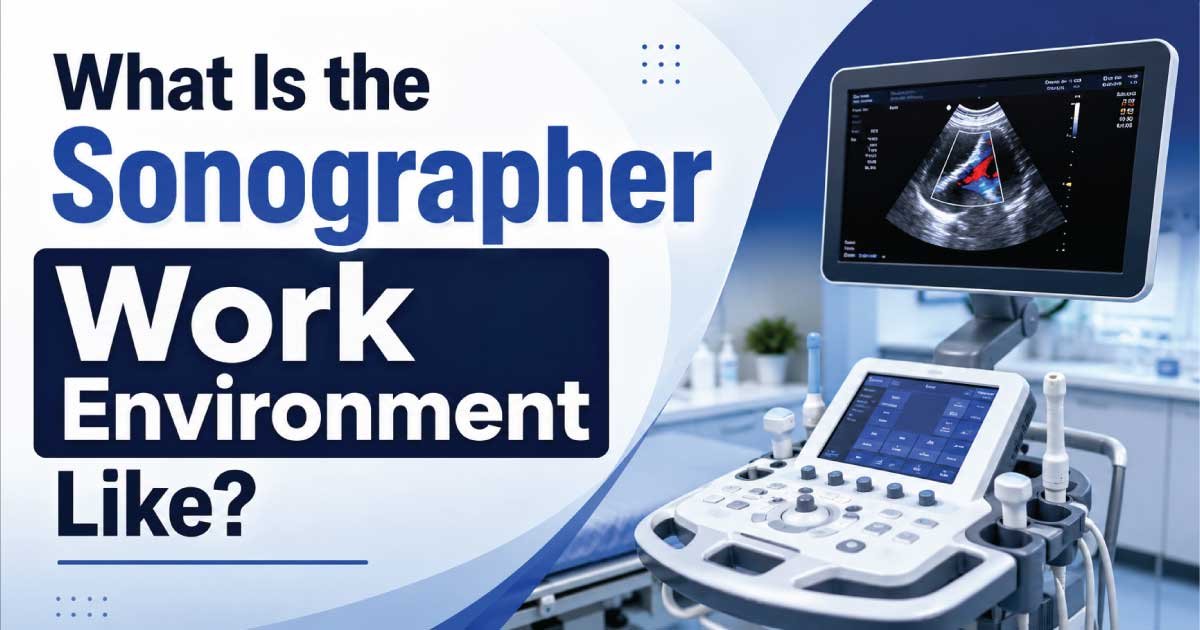
- Ultrasound machines positioned beside examination tables
- Clean, clinical, and temperature-controlled environments
- Limited space that may require careful positioning of equipment and patients
Physical demands in this setting:
- Standing for extended periods during examinations
- Reaching, bending, or twisting to obtain optimal imaging angles
- Maintaining static or awkward postures during complex scans
Over time, these physical demands make proper body mechanics and ergonomic awareness essential for long-term career health.
Equipment and Technology
Ultrasound machines are central to the sonographer’s daily work environment. These systems combine advanced imaging technology with user-operated controls that require precision and adaptability.
Core components sonographers work with include:
- High-resolution monitors
- Control panels and keyboards
- Handheld transducers
- Image storage and reporting software
Technology-related expectations:
- Ability to learn new software updates and imaging platforms
- Adaptation to evolving ultrasound techniques and protocols
- Attention to detail when adjusting imaging parameters
Although ultrasound imaging does not involve ionizing radiation, ergonomic risks are common.
Ergonomic considerations include:
- Preventing repetitive strain injuries
- Proper workstation and equipment setup
- Regular use of ergonomic scanning techniques
- Awareness of shoulder, wrist, neck, and back strain
Interaction with Patients
One of the defining aspects of the sonographer’s work environment is constant patient interaction. Sonographers play a critical role in patient comfort, communication, and emotional support.
Patient-focused responsibilities include:
- Explaining procedures in clear, reassuring language
- Positioning patients safely and respectfully
- Monitoring patient comfort during exams
- Responding calmly to questions or anxiety
Emotional considerations of patient interaction:
- Sharing joyful moments, such as prenatal imaging
- Supporting patients experiencing pain, fear, or serious illness
- Maintaining professionalism when outcomes are uncertain
Sonographers work with a highly diverse patient population.
Patient diversity factors include:
- All age groups, from infants to elderly patients
- Wide range of body types and mobility levels
- Cultural, linguistic, and emotional differences
- Varied medical histories and conditions
Adaptability, empathy, and cultural sensitivity are essential skills in this environment.
Collaboration with Healthcare Teams
Sonographers rarely work in isolation. Their role requires close collaboration with physicians and other healthcare professionals to ensure accurate diagnosis and patient safety.
Common collaborators include:
- Radiologists
- Cardiologists
- Obstetricians and gynecologists
- Nurses and allied health professionals
Key collaboration responsibilities:
- Communicating exam findings and concerns clearly
- Ensuring images meet diagnostic quality standards
- Following established imaging protocols
- Participating in multidisciplinary patient care
Professional guidelines and certifications—such as those established by the American Registry for Diagnostic Medical Sonography (ARDMS)—help shape workplace expectations.
These standards support:
- Consistency in imaging practices
- High levels of diagnostic accuracy
- Patient safety and ethical care
- Professional accountability across work environments
Work Schedules and Hours
Full-Time and Part-Time Options
Sonographers may work full-time or part-time depending on the type of facility, staffing needs, and personal preferences.
Common scheduling patterns include:
- Full-time positions with consistent weekly hours
- Part-time roles for improved work-life balance
- Per-diem or contract work in some facilities
Scheduling differences by setting:
- Outpatient imaging centers often offer weekday, daytime hours
- Physician offices typically follow standard business schedules
- Hospitals may require variable shifts, including evenings and weekends
This range of options allows sonographers to choose work environments that best align with their lifestyle and family responsibilities.
Shift Work and On-Call Duties
In hospital environments, sonographers may be required to participate in shift work or on-call rotations.
What this may involve:
- Overnight or rotating shifts
- Weekend or holiday coverage
- Being on call to respond to emergency imaging needs
- Performing urgent exams for trauma or critical patients
Pros and challenges of shift work:
- Increased variety and clinical experience
- Potential for higher pay during off-hours
- Less predictable schedules
- Possible impact on sleep patterns and work-life balance
Flexibility is a defining characteristic of the profession, and many sonographers appreciate the ability to select work settings that suit their personal priorities.
Physical and Ergonomic Demands
The sonographer work environment is physically demanding in ways that are not always obvious to those outside the profession.
Physical demands commonly include:
- Standing or walking for much of the workday
- Holding transducers steady for extended periods
- Applying sustained pressure during examinations
- Assisting with patient positioning and transfers
Common ergonomic risks:
- Shoulder and neck strain
- Wrist and hand fatigue
- Lower back discomfort
- Repetitive motion injuries
Many employers emphasize ergonomic awareness.
Workplace injury-prevention strategies include:
- Adjustable examination tables and monitors
- Ergonomic transducers and seating
- Training in proper scanning posture
- Encouragement of breaks and stretching
Despite these measures, sonographers must remain mindful of body mechanics throughout each exam.
Read More:
Emotional and Mental Aspects of the Environment
Emotional Challenges
Sonographers often encounter emotionally complex medical situations.
Examples include:
- Serious or life-altering diagnoses
- Pregnancy complications or fetal loss
- Patients experiencing pain, anxiety, or fear
While sonographers typically do not deliver final diagnostic results, they may recognize concerning findings during examinations.
Emotional demands of the role:
- Maintaining composure in difficult situations
- Offering compassionate, supportive care
- Managing emotional boundaries professionally
Developing emotional resilience is essential for long-term success in the field.
Focus and Attention to Detail
Sonography requires sustained concentration and precision.
Mental demands include:
- Capturing high-quality diagnostic images
- Identifying subtle abnormalities
- Following detailed scanning protocols
- Accurately documenting findings
A calm, organized work environment supports diagnostic accuracy and patient safety.
Safety and Hygiene Considerations
Healthcare settings prioritize cleanliness and infection control, and sonography departments adhere to strict safety standards.
Key safety and hygiene practices include:
- Cleaning and disinfecting transducers and equipment
- Using protective barriers and gloves when appropriate
- Following patient identification and safety protocols
- Maintaining sterile technique when required
Ultrasound is considered a safe imaging modality.
Safety advantages of ultrasound include:
- No exposure to ionizing radiation
- Low long-term occupational health risk
- Suitability for repeated use across patient populations
These factors contribute to a work environment that balances technical demands with a strong emphasis on patient and practitioner safety.
Read More:
Career Satisfaction and Work Environment Outlook
Many sonographers report high levels of career satisfaction, driven by the balance of technical skill, patient interaction, and meaningful healthcare impact. The profession offers a unique blend of hands-on clinical work and advanced technology.
Common reasons for high job satisfaction include:
- Direct contribution to patient diagnosis and care
- Regular interaction with patients and healthcare teams
- Use of sophisticated and evolving medical technology
- A strong sense of purpose in daily work
- Opportunities to specialize in areas of personal interest
The wide range of work environments also plays a major role in satisfaction.
Environmental factors that support career fulfillment:
- Choice between fast-paced hospital settings and calmer outpatient clinics
- Flexibility in scheduling and employment type
- Ability to transition between settings over the course of a career
- Opportunities for independence or team-based collaboration
Professional organizations help reinforce positive and sustainable work environments. Groups such as the Society of Diagnostic Medical Sonography (SDMS) support the profession through advocacy, education, and the promotion of workplace standards.
Support provided by professional organizations includes:
- Continuing education and professional development resources
- Advocacy for safe workloads and ergonomic practices
- Research and guidance on workplace health and safety
- Networking opportunities and career support
Looking ahead, the outlook for the sonographer work environment remains strong.
Future trends influencing the profession include:
- Continued demand for noninvasive diagnostic imaging
- Advancements in ultrasound technology and image quality
- Expanded use of ultrasound in new clinical applications
- Ongoing emphasis on patient-centered care
With sustained demand and ongoing innovation, the sonographer work environment is expected to remain dynamic, adaptable, and professionally rewarding for years to come.
Read More:
Final Thoughts
The sonographer work environment is diverse, challenging, and deeply connected to patient care. It combines advanced medical technology with human interaction, requiring both technical expertise and emotional intelligence. Whether working in a bustling hospital or a quiet outpatient clinic, sonographers play a vital role in modern healthcare.
For individuals considering this career, understanding the work environment is crucial. It is not just about operating machines—it is about adaptability, teamwork, physical endurance, and compassion. For those who thrive in clinical settings and enjoy meaningful, hands-on work, the sonographer work environment can be both fulfilling and sustainable over the long term.

Zak is a dedicated medical and career writer specializing in sonography, healthcare education, and professional development. Through SonographerSalary.com, he shares in-depth insights on sonographer salaries, education pathways, and career tips to help readers build successful futures in medical imaging. His content combines accuracy with practical, easy-to-understand guidance, empowering students and professionals to make confident, informed career decisions.