In the ever-evolving world of healthcare, diagnostic imaging has become a cornerstone of patient care. From detecting early-stage illnesses to guiding surgical procedures, imaging technologies like X-rays, CT scans, MRIs, and ultrasound play a critical role in medical diagnosis. For students interested in entering this dynamic field, online diagnostic imaging courses offer a flexible and accessible path to gain the knowledge and skills needed to succeed.
Online courses provide a unique opportunity to balance education with personal or professional commitments. Students can learn theory at their own pace while also gaining practical experience through virtual simulations or local clinical placements. As the demand for imaging professionals continues to rise, pursuing online diagnostic imaging education has become a smart and timely choice.
Why Diagnostic Imaging Education Matters
Diagnostic imaging professionals are essential members of the healthcare team. They work alongside physicians, surgeons, and other healthcare providers to create accurate imaging reports that inform critical decisions. By completing online diagnostic imaging courses, students gain foundational knowledge in anatomy, imaging modalities, radiation safety, and patient care protocols.
Investing in this education equips students with practical skills, enhances employability, and opens doors to specialized careers such as MRI technologist, CT technologist, or ultrasound technician. The flexibility of online learning also allows students to acquire these skills without relocating or disrupting their daily lives.
Understanding the Types of Diagnostic Imaging Courses
Online diagnostic imaging courses vary widely depending on the level of education and specialization. Entry-level courses introduce students to basic imaging modalities, while advanced courses focus on specialized techniques and technologies.
Certificate programs typically take six months to a year to complete and are ideal for students seeking foundational knowledge or career entry. Associate degree programs, lasting approximately two years, provide a deeper understanding of anatomy, patient care, and imaging technology. Bachelor’s programs, often designed as degree completion or advanced training, cater to professionals seeking leadership roles or specialization.
| Program Type | Duration | Focus Area | Outcome |
|---|---|---|---|
| Certificate | 6–12 months | Basic imaging modalities, safety | Entry-level certification |
| Associate Degree | 18–24 months | Anatomy, imaging techniques, patient care | Eligibility for certification exams |
| Bachelor’s Degree | 24–36 months | Advanced imaging, leadership, research | Career advancement & specialization |
📌 Learn How Education Level Affects Sonographer Salary in the USA: a complete guide for aspiring and current sonographers! Discover how associate, bachelor’s, and advanced degrees impact earnings and career growth. Get detailed insights and tips—read the full guide now!
Accreditation: A Key Consideration
Accreditation is critical when choosing online diagnostic imaging courses. Accredited programs meet national standards for curriculum quality, faculty expertise, and clinical training. Accreditation ensures eligibility for certification exams and enhances employment opportunities.
In the USA, accreditation often comes from organizations such as the Joint Review Committee on Education in Radiologic Technology (JRCERT) or other recognized bodies. Before enrolling, students should confirm the program’s accreditation to ensure their education will be recognized by employers and certifying agencies.
Choose Your Specialty
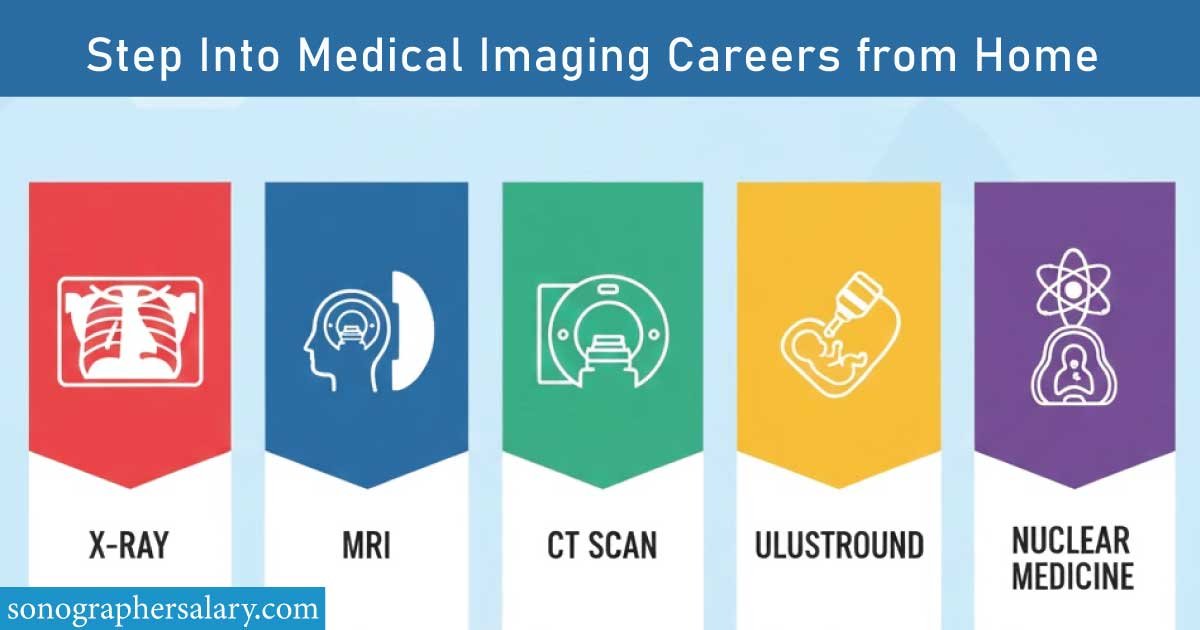
Diagnostic imaging encompasses several specialties, including radiography, computed tomography (CT), magnetic resonance imaging (MRI), nuclear medicine, and ultrasound. Choosing a specialty early helps students focus their education and clinical experiences.
For example, students interested in non-invasive imaging may gravitate toward MRI or ultrasound courses, while those fascinated by imaging physics might explore nuclear medicine or CT programs. Early specialization also helps in mapping out certification requirements and career pathways.
Meet Prerequisites
Online diagnostic imaging courses usually have prerequisites. Entry-level programs may require a high school diploma or GED, while advanced programs may require prior healthcare coursework or clinical experience. Prerequisites often include courses in biology, anatomy, chemistry, or mathematics.
Meeting prerequisites is essential for understanding complex imaging concepts, such as radiation physics or cross-sectional anatomy, which form the foundation of diagnostic imaging education.
Enroll and Complete Online Coursework
Once prerequisites are met, students can begin their online coursework. Courses typically include lectures, video tutorials, virtual simulations, and interactive modules. Students learn about imaging physics, patient positioning, equipment operation, and radiation safety.
Engaging actively with online materials is crucial. Participating in discussion forums, completing assignments on time, and using virtual labs or simulation tools can significantly enhance comprehension and skill acquisition.
| Course Module | Duration | Focus Area |
|---|---|---|
| Anatomy & Physiology | 8 weeks | Human body systems relevant to imaging |
| Medical Terminology | 4 weeks | Understanding clinical language |
| Radiation Physics | 6 weeks | Principles of radiation and safety |
| Imaging Techniques | 8 weeks | Equipment operation and patient positioning |
| Patient Care & Ethics | 4 weeks | Handling patients and professional responsibilities |
📌 Explore Diagnostic Medical Sonography Requirements: a complete guide for aspiring sonographers and healthcare students! Learn about necessary education, certifications, clinical training, and skills to build a successful sonography career. Get detailed insights and expert tips—read the full guide now!
Clinical Training
Hands-on experience is critical for diagnostic imaging students. Online programs often arrange local clinical placements where students can practice under supervision in hospitals, imaging centers, or clinics.
During clinical rotations, students perform imaging procedures, interact with patients, and learn workflow management. Most programs require 1,000–1,500 clinical hours across various modalities to prepare students for certification exams.
| Clinical Area | Required Hours |
|---|---|
| Radiography | 300–400 |
| MRI | 150–250 |
| CT | 100–200 |
| Ultrasound | 200–300 |
| Nuclear Medicine | 50–100 |
Prepare for Certification
Certification is a critical step in becoming a professional diagnostic imaging technologist. Organizations such as the American Registry of Radiologic Technologists (ARRT) offer certification exams in multiple imaging specialties.
Students should document all clinical experiences meticulously, review exam outlines, and practice with sample questions. Certification validates competency, increases employability, and ensures adherence to professional standards.
Career Pathways and Opportunities
Graduates of online diagnostic imaging courses can pursue diverse roles in hospitals, clinics, outpatient centers, and specialty imaging facilities. Entry-level positions often focus on general radiography, while advanced roles include MRI technologist, CT technologist, or nuclear medicine technologist.
With additional certifications, imaging professionals may advance to supervisory or management positions, engage in research, or specialize in interventional imaging techniques.
Practical Tips for Students
Success in online diagnostic imaging courses requires discipline and strategy. Students should create a structured study schedule, actively participate in online discussions, and take full advantage of virtual labs. Maintaining clear communication with clinical supervisors and documenting procedures accurately ensures a smooth path to certification.
Additionally, students can enhance their learning by: integrating case studies into daily study routines, practicing patient communication skills, and seeking mentorship from experienced technologists.
Common Mistakes to Avoid
Students often make mistakes that can delay completion or affect competency. A frequent error is underestimating the time required for clinical rotations, which can conflict with online coursework. Another mistake is ignoring accreditation; non-accredited programs may hinder certification eligibility.
Failing to maintain meticulous clinical records or neglecting exam preparation are also common pitfalls. Planning ahead and staying organized can prevent these issues.
Comparing Top Online Diagnostic Imaging Programs
| College / Program | Program Type | Online Flexibility | Clinical Placement Support | Estimated Tuition |
|---|---|---|---|---|
| North American Imaging Institute | Certificate | High | Local hospitals/clinics | $8,500–$12,000 |
| Eastern Radiologic College | Associate Degree | Moderate | In-house clinical coordination | $10,000–$15,000 |
| Western Imaging Academy | Certificate | High | Partner imaging centers | $9,000–$13,000 |
| Central Diagnostic College | Bachelor’s Degree | Moderate | Regional clinical sites | $15,000–$25,000 |
📌 Explore the Ultrasound Tech: Complete Guide to Career Success! Learn about education, training, certifications, and career opportunities for aspiring ultrasound technicians. Get expert tips, salary insights, and step-by-step guidance—read the full guide now!
Cost and Financial Considerations
Tuition for online diagnostic imaging programs ranges from $8,000 to $25,000 depending on program type and duration. Additional costs include textbooks, lab fees, uniforms, and certification exams.
Financial aid, scholarships, and employer reimbursement programs can significantly reduce out-of-pocket expenses. Prospective students should carefully explore all funding options to maximize affordability.
Advancing Your Career After Graduation
Completing an online diagnostic imaging course is just the beginning. Continuing education, advanced certifications, and specialization in areas like interventional imaging, vascular studies, or nuclear medicine can enhance earning potential and career advancement. Joining professional associations provides networking opportunities, access to conferences, and the latest industry updates.
Conclusion
Online diagnostic imaging courses for students provide a flexible, accessible, and high-quality pathway into an essential healthcare field. By choosing an accredited program, completing online coursework and clinical rotations, and preparing diligently for certification, students can launch successful careers as imaging professionals.
These programs offer the flexibility to balance work, life, and education while equipping students with the skills needed to make a meaningful impact in patient care. With dedication, organization, and focus, aspiring imaging technologists can achieve their professional goals and enjoy a fulfilling career in diagnostic imaging.
📌 Discover Ultrasound Tech Programs: Complete Guide! Learn about course options, certifications, clinical training, and career paths for aspiring ultrasound technicians. Get expert insights and practical tips to succeed—read the full guide now!
FAQs:
What is a diagnostic imaging study?
A diagnostic imaging study is a medical test that uses technology like X-rays, ultrasound, MRI, or CT scans to see inside the body. These images help doctors diagnose diseases, injuries, or abnormalities without surgery. Imaging studies guide treatment decisions and are essential in modern healthcare for accurate, safe patient evaluation.
What is a diagnostic imaging degree?
A diagnostic imaging degree trains students to operate medical imaging equipment and understand anatomy, patient care, and radiation safety. Students learn skills for roles like radiographer, MRI technologist, or sonographer. The program combines classroom instruction with clinical practice to prepare graduates for certification and hospital or clinic employment.
What qualifications do you need to be a diagnostic radiographer?
To become a diagnostic radiographer, you need formal training through a degree or accredited certification program. Requirements include knowledge of anatomy, imaging physics, and patient care. Many countries also require passing a professional licensing exam. Clinical hours are essential so students can safely operate imaging machines and handle real patient scenarios.
What is a diagnostic radiography course?
A diagnostic radiography course teaches students how to perform X-rays, CT scans, MRI scans, and other imaging procedures. It covers anatomy, physics, equipment handling, safety protocols, and patient communication. The program includes hands-on clinical training so students learn to capture accurate medical images used for diagnosis and treatment planning.
Is diagnostic radiography a good career?
Yes, diagnostic radiography is a strong career choice with high demand, stable salaries, and opportunities for specialization. Radiographers work in hospitals, clinics, and imaging centers, often enjoying predictable schedules and meaningful patient interaction. As technology grows, imaging careers continue to expand, offering long-term job security and professional development.
What is the highest paying imaging job?
The highest-paying imaging job is typically radiation therapist or MRI technologist, depending on location and experience. These roles require advanced technical skills and safety knowledge, leading to higher salaries. Professionals can increase income further by specializing, working night shifts, or gaining experience in high-demand hospital departments.

Zak is a dedicated medical and career writer specializing in sonography, healthcare education, and professional development. Through SonographerSalary.com, he shares in-depth insights on sonographer salaries, education pathways, and career tips to help readers build successful futures in medical imaging. His content combines accuracy with practical, easy-to-understand guidance, empowering students and professionals to make confident, informed career decisions.