
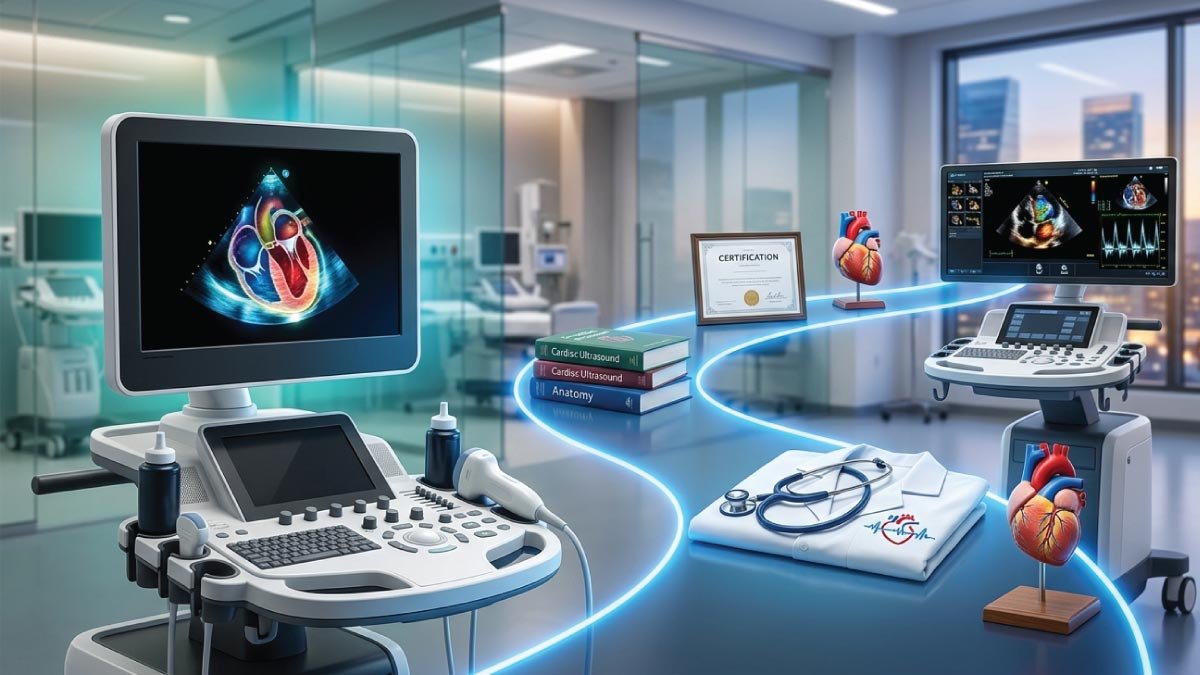
A career as a cardiac sonographer is one of the most respected and in-demand roles in modern healthcare. If you are interested in medicine, technology, and patient care but do not necessarily want to go to medical school, this career path offers a strong balance of clinical work, technical skill, and job stability.
In this guide, we will walk through the cardiac sonographer career path step by step, including education, skills, certifications, job responsibilities, salary expectations, and long-term growth opportunities.
Whether you are a student planning your future or someone considering a career change, this article will help you understand exactly what it takes to enter and succeed in this field.
What Is a Cardiac Sonographer?
A cardiac sonographer is a specialized healthcare professional trained to perform heart imaging using ultrasound technology. They work closely with cardiologists to capture detailed images of the heart’s structure and function. Their role is essential in detecting heart diseases early and supporting accurate medical diagnosis and treatment planning in clinical settings.
A cardiac sonographer, also known as an echocardiographer, is a specialized healthcare professional who uses ultrasound equipment to create images of the heart. These images help doctors diagnose and monitor heart conditions such as:
- Heart valve disease
- Congenital heart defects
- Heart failure
- Cardiomyopathy
- Blood flow abnormalities
Unlike general sonographers, cardiac sonographers focus specifically on the heart and cardiovascular system. Their work plays a critical role in early diagnosis and treatment planning.
They use a procedure called echocardiography, which is safe, non-invasive, and highly detailed.
Why Choose a Career as a Cardiac Sonographer?
Before exploring the step-by-step career path, it’s important to understand why becoming a cardiac sonographer is such a strong and rewarding choice in the healthcare field. This profession combines medical technology, patient care, and diagnostic responsibility in a very meaningful way.
1. High Demand in Healthcare
Cardiac sonographers are in high demand because heart-related diseases continue to rise globally. Hospitals, emergency units, and cardiology departments rely heavily on echocardiography for accurate diagnosis. This ensures strong job stability, multiple employment opportunities, and long-term career growth in both public and private healthcare sectors.
2. Strong Salary Potential
This career offers attractive earning potential compared to many other allied health professions. With experience, certifications, and specialization in cardiac imaging, sonographers can significantly increase their income. Those working in advanced hospitals or internationally often enjoy even higher salaries, making it a financially rewarding healthcare path.
3. Shorter Education Path
Unlike becoming a doctor or cardiologist, cardiac sonography requires much less time in formal education. Most programs can be completed within 2–4 years, depending on the level of training. This allows individuals to enter the workforce faster while still working in a highly respected medical role.
4. Meaningful Patient Impact
Cardiac sonographers play a crucial role in detecting serious heart conditions early. The images they produce help doctors diagnose life-threatening diseases such as heart failure or valve disorders. This direct involvement in patient care makes the profession emotionally fulfilling and highly important in saving lives.
Step 1: High School Preparation
The journey to becoming a cardiac sonographer often begins during high school, where students can start building a strong academic base for future medical studies. Although there is no strict requirement, choosing science-focused subjects helps develop essential knowledge needed for sonography programs and healthcare-related education later on.
Recommended subjects:
- Biology
- Physics
- Mathematics
- Health sciences
Helpful activities:
- Join science clubs
- Volunteer in hospitals or clinics
- Take basic anatomy or medical courses if available
Building early interest in healthcare can make later studies easier and more engaging by improving understanding of human anatomy, science concepts, and patient care fundamentals.
Step 2: Complete an Accredited Education Program
After finishing high school, the next important step is enrolling in an accredited diagnostic medical sonography program. This formal education provides the technical knowledge and clinical skills required to become a professional cardiac sonographer and prepares students for certification exams and real-world medical environments.
There are typically three educational paths:
1. Associate Degree (Most Common)
- Duration: 2 years
- Focus: Core sonography training + clinical practice
- Best for: Fast entry into the workforce
2. Bachelor’s Degree
- Duration: 4 years
- Includes: Advanced training, leadership, and broader medical education
- Best for: Career advancement and higher-level positions
3. Certificate Program (For Allied Health Professionals)
- Duration: 12–18 months
- For individuals already in healthcare (e.g., nurses or radiologic technologists)
Key subjects you will study:
- Cardiac anatomy and physiology
- Ultrasound physics
- Patient care techniques
- Medical ethics
- Echocardiography procedures
- Pathology of the heart
Clinical training is also a major part of the program. Students work in real hospitals under supervision to gain hands-on experience.
Step 3: Clinical Training and Hands-On Experience
Clinical training is one of the most important stages in the cardiac sonographer career path because it connects classroom learning with real patient care. During this phase, students gain practical experience in hospitals and diagnostic centers while working under the guidance of experienced sonographers and cardiologists.
During this phase, students learn how to:
- Operate ultrasound machines
- Position patients correctly
- Capture clear cardiac images
- Identify abnormalities
- Work with doctors and cardiologists
This real-world experience is essential because cardiac imaging requires precision, patience, and strong attention to detail. Even small mistakes can affect diagnosis accuracy and patient outcomes.
Most accredited programs require hundreds of clinical hours before graduation, ensuring students are fully prepared for entry-level professional work.
Step 4: Obtain Certification
After completing your education in cardiac sonography, obtaining certification becomes a crucial next step. While not always mandatory in every region, most employers strongly prefer or require certified professionals because it ensures a standardized level of skill, knowledge, and clinical competence in handling cardiac imaging procedures.
The most recognized certifications include:
1. RDCS (Registered Diagnostic Cardiac Sonographer)
Offered by ARDMS (American Registry for Diagnostic Medical Sonography), this is one of the most respected credentials in the field. It validates expertise in cardiac ultrasound and demonstrates strong clinical and theoretical knowledge.
2. RCS (Registered Cardiac Sonographer)
Offered by CCI (Cardiovascular Credentialing International), another widely accepted certification. It focuses specifically on cardiovascular imaging skills and is highly valued in hospitals and cardiac care centers.
Why certification matters:
- Increases job opportunities
- Improves salary potential
- Demonstrates professional competence
- Builds trust with employers and patients
To earn certification, you must pass an exam and meet clinical experience requirements, which confirm your readiness for real-world practice.
Step 5: Entry-Level Job as a Cardiac Sonographer
After obtaining certification, you can begin working as an entry-level cardiac sonographer. This stage marks the transition from student to professional, where you start applying your knowledge in real clinical environments while continuing to build experience and confidence in patient care and imaging procedures.
After certification, you can begin working as an entry-level cardiac sonographer in settings such as:
- Hospitals
- Cardiology clinics
- Diagnostic imaging centers
- Emergency departments
Typical responsibilities include:
- Performing echocardiograms
- Preparing patients for procedures
- Operating ultrasound equipment
- Documenting findings
- Assisting cardiologists with diagnosis
At this stage, you are still learning and developing speed, accuracy, and confidence while adapting to fast-paced medical environments.
Also Read:
Step 6: Gaining Experience and Skill Development
Experience plays a major role in shaping a successful cardiac sonography career. As you continue working, your technical abilities improve significantly, allowing you to handle more complex cases and work more efficiently under pressure in different clinical situations.
Experience is extremely important in this field. As you gain more practice, your skills become more refined.
Skills you develop over time:
- Advanced image interpretation
- Faster scanning techniques
- Better patient communication
- Understanding complex heart conditions
Experienced sonographers are often trusted with more difficult cases, including critically ill patients, which further strengthens their clinical judgment and confidence.
Step 7: Specialization Opportunities
Once you gain solid experience in general cardiac sonography, you can choose to specialize in advanced areas of the field. Specialization helps you focus on specific patient groups or imaging techniques, making you more skilled, valuable, and competitive in the healthcare industry.
Once you are established, you can choose to specialize further within cardiac sonography.
Common specializations:
1. Pediatric Cardiac Sonography
Focuses on diagnosing heart conditions in infants and children, requiring extra care, precision, and understanding of congenital heart issues.
2. Transesophageal Echocardiography (TEE)
Involves imaging the heart using a probe inserted into the esophagus for clearer and more detailed images, often used in complex cases.
3. Stress Echocardiography
Used to evaluate heart function during physical stress or exercise, helping detect hidden cardiovascular problems.
4. Advanced Cardiac Imaging
Focuses on complex and high-risk cardiac cases, often involving critically ill patients and advanced diagnostic techniques.
Specialization often leads to higher salaries and more advanced job roles, along with greater professional recognition.
Also Read:
Step 8: Career Advancement Opportunities
Cardiac sonography offers strong long-term growth rather than being a fixed role. With experience, additional certifications, and leadership skills, professionals can move into higher positions, specialize in advanced imaging, or shift into education and healthcare technology roles, making this a flexible and evolving career path.
1. Senior Cardiac Sonographer
With several years of experience, a cardiac sonographer can become a senior-level professional. In this role, you handle more complex cardiac cases, mentor junior staff, and ensure high-quality imaging standards. Senior sonographers are often trusted with difficult diagnoses and play a key role in patient care decisions.
2. Lead Technologist or Supervisor
A lead technologist or supervisor manages the entire sonography department. This position involves scheduling, quality control, and supervising other sonographers. You also help maintain equipment standards and ensure smooth workflow in clinical settings, making it a key leadership role within hospitals and diagnostic centers.
3. Educator or Instructor
Experienced cardiac sonographers can transition into teaching roles in colleges or training institutes. As an instructor, you guide new students in ultrasound techniques, anatomy, and patient care. This career path is ideal for those who enjoy mentoring others and contributing to the next generation of healthcare professionals.
4. Sales or Equipment Specialist
Some professionals move into the medical imaging industry, working with ultrasound equipment companies. In this role, you demonstrate machines, train hospital staff, and provide technical support. It combines clinical knowledge with business skills and offers opportunities to work closely with advanced medical technology.
5. Further Education
Cardiac sonographers can also pursue higher education to expand their career options. Degrees in healthcare administration, cardiology, or advanced imaging can lead to management or specialized clinical roles. Continuing education helps professionals stay updated with medical advancements and opens doors to higher-level positions.
Final Thoughts
The cardiac sonographer career path is a structured but rewarding journey that combines education, hands-on training, certification, and continuous skill development. It is ideal for individuals who are interested in healthcare, enjoy working with technology, and want a meaningful career helping patients.
From high school preparation to advanced specialization, each step builds toward a profession that is both financially stable and personally fulfilling.
If you are looking for a healthcare career that does not require medical school but still offers strong growth and impact, cardiac sonography is one of the best options available today.
Also Read:

Zak is a dedicated medical and career writer specializing in sonography, healthcare education, and professional development. Through SonographerSalary.com, he shares in-depth insights on sonographer salaries, education pathways, and career tips to help readers build successful futures in medical imaging. His content combines accuracy with practical, easy-to-understand guidance, empowering students and professionals to make confident, informed career decisions.