
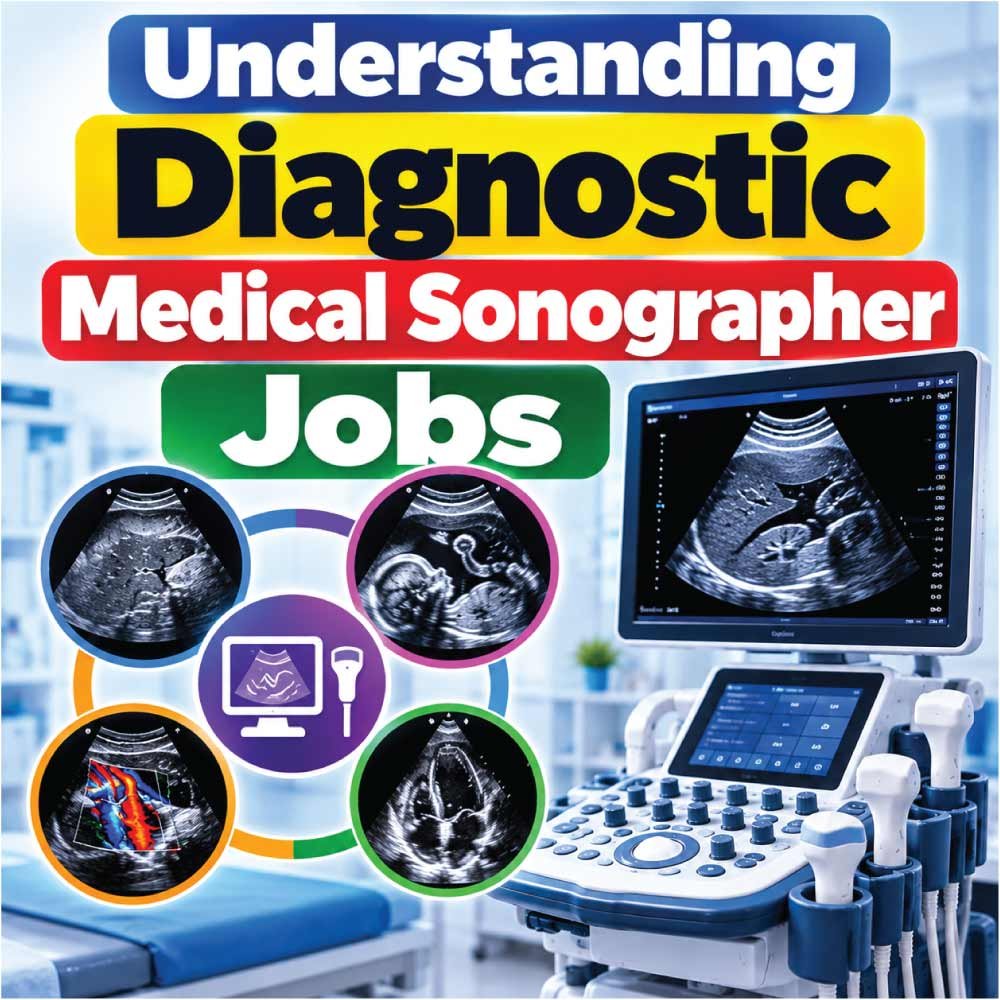
Diagnostic medical sonographers use ultrasound technology to create images of structures inside the body. Physicians and other healthcare professionals use these images to evaluate organs, blood vessels, tissues, and developing pregnancies.
A career in diagnostic medical sonography combines healthcare, technology, patient interaction, and hands-on clinical work. Sonographers operate specialized ultrasound equipment, position patients, obtain diagnostic images, document findings, and work closely with physicians who interpret the examinations.
The job can look different depending on the specialty and workplace. Some sonographers perform general abdominal and pelvic examinations, while others focus on areas such as obstetrics and gynecology, cardiovascular imaging, breast ultrasound, or musculoskeletal studies.
For people researching diagnostic medical sonographer jobs, it is useful to understand more than the job title. Education requirements, certification, specialization, work settings, daily responsibilities, schedules, and advancement opportunities can all influence what the career looks like.
What Does a Diagnostic Medical Sonographer Do?
A diagnostic medical sonographer performs ultrasound examinations using high-frequency sound waves. Unlike X-ray imaging, diagnostic ultrasound does not use ionizing radiation.
During an examination, the sonographer selects an appropriate transducer, applies ultrasound gel, positions the patient, adjusts equipment settings, and captures images according to the examination protocol.
The work requires both technical knowledge and communication skills. A sonographer may need to explain the procedure, answer routine questions, maintain patient comfort, and obtain images while following clinical requirements.
Typical responsibilities include:
- Reviewing the examination request and relevant patient information
- Preparing and checking ultrasound equipment
- Explaining the procedure to the patient
- Positioning patients appropriately
- Selecting and operating ultrasound transducers
- Adjusting depth, gain, focus, Doppler settings, and other controls
- Obtaining diagnostic-quality images
- Recording measurements and required observations
- Documenting the examination in the appropriate system
- Recognizing images or findings that require additional documentation or immediate attention according to workplace protocols
- Cleaning and disinfecting equipment between examinations
- Communicating with physicians and other healthcare professionals
A sonographer does not generally make the final medical diagnosis. Their role is to perform the examination and produce technically appropriate images and documentation for interpretation by the qualified healthcare professional responsible for diagnosis.
Where Do Diagnostic Medical Sonographers Work?
Diagnostic medical sonographers can work in several healthcare environments. The workplace can affect the pace of the job, patient population, schedule, and types of examinations performed.
Hospitals and Medical Centers
Hospitals employ sonographers in diagnostic imaging departments, emergency services, inpatient units, women’s health departments, and cardiovascular services.
Hospital-based work may involve a broad range of examinations. Depending on the department, sonographers may also encounter urgent examinations and patients who are unable to move easily.
Outpatient Imaging Centers
Outpatient imaging facilities often provide scheduled examinations for patients who are not admitted to a hospital.
The workflow can be more predictable than some hospital environments, although appointment volume may still make the workday busy.
Physician Offices and Specialty Clinics
Some sonographers work in clinics associated with specialties such as obstetrics and gynecology, vascular medicine, cardiology, or other medical services.
These positions may offer a more specialized range of examinations and a consistent patient population.
Mobile and Specialized Services
Some ultrasound professionals work in mobile imaging services or specialized healthcare environments. These positions can involve traveling between facilities or working with particular patient groups.
Common Diagnostic Medical Sonographer Specialties
One of the most important aspects of sonography is specialization. The training and clinical experience needed can vary depending on the type of ultrasound performed.
| Specialty | Common Examination Focus | Typical Clinical Area |
|---|---|---|
| General sonography | Abdomen, pelvis, superficial structures | Diagnostic imaging |
| Obstetric sonography | Pregnancy and fetal development | Obstetrics |
| Gynecologic sonography | Female reproductive system | Women’s health |
| Vascular sonography | Arteries and veins | Vascular medicine |
| Cardiac sonography | Heart structure and function | Cardiology |
| Breast sonography | Breast tissue and abnormalities | Breast imaging |
| Musculoskeletal sonography | Muscles, tendons, ligaments, joints | Orthopedics and sports medicine |
| Pediatric sonography | Ultrasound examinations for children | Pediatrics |
Some professionals develop expertise in more than one area. The available specialties depend on the employer, local healthcare system, educational opportunities, and professional credentials.
What Is a Typical Day Like for a Sonographer?
There is no single routine that applies to every diagnostic medical sonographer. A day in an outpatient imaging center may differ considerably from a day in a hospital.
A typical scheduled examination may begin with reviewing the patient’s information and examination request. The sonographer then introduces themselves, confirms relevant information, explains what will happen, and prepares the patient.
The examination itself requires continuous attention. The sonographer moves the transducer over the required anatomical area while adjusting equipment settings and capturing appropriate views.
Some examinations require patients to change position, hold their breath, or follow other instructions. Communication therefore remains important throughout the procedure.
After the examination, images and measurements are reviewed for technical completeness. The sonographer completes documentation and prepares the study for interpretation.
Depending on the workplace, the day may include:
- Multiple scheduled examinations
- Portable examinations
- Inpatient studies
- Emergency requests
- Equipment checks
- Patient documentation
- Communication with radiologists, cardiologists, or other clinicians
The physical side of the job should also be considered. Sonographers may spend significant periods standing and may repeatedly position equipment, patients, and their own bodies during examinations.
Skills Employers Look for in Sonographers
Technical knowledge is essential, but successful sonography also depends on interpersonal and organizational abilities.
Technical Skills
Sonographers need to understand anatomy, physiology, pathology, ultrasound physics, image optimization, and examination protocols.
They also need practical equipment skills. Small changes in transducer position, patient positioning, depth, gain, or Doppler settings can affect image quality.
Communication Skills
Patients may be anxious, uncomfortable, or unfamiliar with ultrasound examinations. A calm and clear explanation can make the procedure easier for both the patient and the sonographer.
Communication with healthcare colleagues is equally important because imaging examinations are part of a larger diagnostic process.
Attention to Detail
Ultrasound imaging requires careful observation and consistent image acquisition. Measurements, labels, patient information, and documentation need to be accurate.
Physical and Ergonomic Awareness
The profession involves repetitive movements and positioning. Learning appropriate ergonomic techniques can help professionals manage the physical demands of scanning.
Professional Judgment
Sonographers work within established clinical protocols and professional standards. They need to recognize when an examination requires additional images or when an unexpected situation should be escalated according to workplace procedures.
Education Requirements for Diagnostic Medical Sonographer Jobs
Education requirements vary by country, employer, specialty, and professional credentialing system.
In the United States, prospective sonographers commonly complete an accredited educational program in diagnostic medical sonography or a related specialty. Programs may be available through community colleges, universities, hospitals, and other educational institutions.
Training generally combines classroom education with supervised clinical experience.
Common areas of study include:
- Human anatomy
- Physiology
- Medical terminology
- Ultrasound physics
- Patient care
- Pathophysiology
- Sonographic procedures
- Image evaluation
- Professional ethics
- Clinical practice
Clinical education is particularly important because students need hands-on experience using ultrasound equipment and interacting with patients.
The appropriate educational pathway should therefore be checked against the requirements of the specific country, employer, and specialty being pursued.
Certification and Credentials
Certification can be an important part of qualifying for diagnostic medical sonographer jobs, particularly in healthcare systems where employers or professional organizations recognize specialty credentials.
In the United States, organizations such as the American Registry for Diagnostic Medical Sonography (ARDMS) offer professional credentials in areas of sonography.
Other credentialing organizations and specialty pathways may apply depending on the profession and examination area.
Requirements can involve a combination of education, clinical experience, examinations, and other eligibility criteria. Because credentialing rules can change, candidates should check the current requirements of the relevant professional organization before choosing an educational program.
Certification should also be distinguished from licensure. These are not necessarily the same thing, and legal requirements vary by jurisdiction.
How to Find Diagnostic Medical Sonographer Jobs
Finding a suitable position involves more than searching for the exact phrase “diagnostic medical sonographer.”
Healthcare employers may use different job titles depending on the specialty and organization.
Useful search terms include:
- Diagnostic medical sonographer
- Ultrasound technologist
- Ultrasound technician
- General sonographer
- Vascular sonographer
- Cardiac sonographer
- Echocardiography technologist
- Obstetric sonographer
- Registered sonographer
- Sonography technologist
Job seekers can search hospital career pages, outpatient imaging organizations, healthcare recruitment platforms, professional associations, and general employment websites.
When comparing listings, look beyond the title. Pay attention to the required credential, specialty, clinical experience, shift, employment status, and responsibilities.
Also Read:
How to Read a Sonographer Job Description
A job description can reveal whether a position is appropriate for your education and experience.
Check the Required Credentials
Look for statements concerning certification, registration, licensure, or eligibility for certification.
Some employers may require an existing credential, while others may accept candidates who are eligible to obtain one.
Check the Specialty
A position advertised as a diagnostic medical sonographer may require experience in a particular examination area.
For example, a vascular position can have different expectations from a general ultrasound position.
Check the Schedule
Schedules may include regular daytime hours, evenings, weekends, holidays, on-call periods, or rotating shifts.
This is especially relevant for hospital-based positions.
Check the Clinical Expectations
Read the responsibilities carefully. Look for the examinations you will perform, the patient populations served, equipment used, documentation systems, and expected level of independence.
Also Read:
Entry-Level Sonographer Jobs
New graduates commonly begin by applying for positions where their education and clinical training match the employer’s requirements.
An entry-level position can provide an opportunity to develop speed, confidence, communication skills, and familiarity with real-world workflows.
During the early stage of a career, it is normal for practical experience to continue developing after graduation. Clinical placement experience can help demonstrate familiarity with examination protocols, but working independently introduces additional responsibilities.
A strong entry-level application should clearly present:
- Education and graduation information
- Clinical training
- Relevant credentials
- Examination specialties
- Equipment experience, when appropriate
- Clinical competencies
- Patient-care experience
- Professional references, when requested
Experienced Sonographer Career Opportunities
With experience, sonographers may pursue more specialized clinical positions or roles involving greater responsibility.
Possible career directions include:
- Advanced specialty sonography
- Vascular imaging
- Cardiac imaging
- Women’s health imaging
- Pediatric imaging
- Lead sonographer positions
- Clinical education
- Applications specialist roles
- Department management
- Quality and compliance responsibilities
Career development is not necessarily a straight ladder. Some professionals prefer advanced clinical specialization, while others eventually move toward education, management, equipment applications, or related healthcare roles.
Also Read:
What Employers May Consider During Hiring
Hiring criteria vary between organizations, but employers commonly evaluate a combination of credentials, education, clinical experience, technical ability, and professional behavior.
A candidate may strengthen their application by demonstrating:
- Appropriate education for the position
- Required or preferred professional credentials
- Relevant clinical experience
- Strong patient communication
- Reliable documentation practices
- Knowledge of ultrasound equipment
- Ability to work as part of a healthcare team
- Commitment to patient safety and professional standards
For experienced applicants, specialty-specific experience can be particularly relevant.
Sonographer Job Search: A Practical Comparison
The right position depends on personal circumstances and professional goals rather than a single universal job type.
| Job Setting | Patient Flow | Schedule Considerations | Potential Focus |
|---|---|---|---|
| Hospital | Often varied | May include shifts/on-call | Broad or specialized imaging |
| Outpatient center | Usually scheduled | Often more predictable | Routine diagnostic studies |
| Specialty clinic | Specialty-dependent | Often scheduled | Focused examinations |
| Mobile service | Varies | May involve travel | Imaging across facilities |
| Teaching/clinical setting | Varies | Depends on institution | Education and clinical practice |
These are general patterns rather than guarantees. Individual employers can have very different working conditions.
How to Prepare for a Sonographer Interview
An interview for a diagnostic medical sonographer position may cover technical knowledge, patient care, clinical situations, teamwork, and professional judgment.
Before the interview, review the employer’s job description and identify the examination types mentioned in the posting.
Be prepared to discuss your clinical training and explain how you approach patient communication, image acquisition, documentation, and challenging examinations.
You may also be asked situational questions. For example, an interviewer could ask how you would respond if a patient is uncomfortable, if an examination is technically difficult, or if you encounter an unexpected finding.
The strongest answers generally explain the process rather than simply giving a one-sentence response. Emphasize following established protocols, maintaining patient safety, producing appropriate images, documenting correctly, and communicating with the appropriate healthcare professional.
Salary, Benefits, and Employment Conditions
Compensation for diagnostic medical sonographers varies substantially by location, specialty, experience, employer, credentials, and work schedule.
For that reason, a single salary figure does not accurately describe every sonography job.
When comparing employment offers, consider the complete compensation package rather than base pay alone. Depending on the employer, this can include:
- Health insurance
- Retirement benefits
- Paid leave
- Continuing education support
- Certification assistance
- Shift differentials
- Overtime opportunities
- Professional development
- Tuition-related benefits
Work schedule also has practical value. A position with a different schedule may affect commuting, family responsibilities, continuing education, and overall work-life arrangements.
Challenges of Working as a Sonographer
Sonography can be rewarding, but it also has demanding aspects.
Physical workload is one important consideration. Repetitive scanning movements, awkward postures, patient positioning, and prolonged standing can place stress on the body.
Emotional demands can also occur. Sonographers may work with patients who are experiencing pain, uncertainty, or serious medical concerns.
Workload varies by employer. A busy department may require examinations to be completed efficiently while maintaining image quality and patient care.
Understanding these realities before entering the profession can help prospective students make informed career plans.
How to Build a Long-Term Sonography Career
A sonographer’s professional development does not necessarily end after completing an initial qualification.
Continuing education, specialty training, professional credentials, and clinical experience can all contribute to career development.
Keeping skills current is particularly important because ultrasound equipment and imaging techniques continue to evolve.
A practical long-term approach can include:
- Building a strong foundation in anatomy and ultrasound physics
- Developing excellent scanning technique
- Learning from experienced colleagues
- Maintaining required credentials
- Completing relevant continuing education
- Exploring specialty areas
- Developing ergonomic habits
- Keeping professional documentation current
- Monitoring opportunities for advancement
The goal is not simply to collect credentials. Strong clinical fundamentals and consistent patient-centered practice remain central to the profession.
Frequently Asked Questions About Diagnostic Medical Sonographer Jobs
Are diagnostic medical sonographers doctors?
No. Diagnostic medical sonographers are specialized healthcare professionals who perform ultrasound examinations. Physicians and other appropriately qualified professionals interpret the studies and make diagnoses within their scope of practice.
Is sonography the same as ultrasound?
The terms are closely related. Ultrasound refers to the imaging technology and examination, while sonography describes the process and professional field of producing diagnostic ultrasound images.
Can sonographers specialize?
Yes. Professionals can work in areas such as general, vascular, cardiac, obstetric, gynecologic, breast, pediatric, and musculoskeletal sonography, depending on their training and available positions.
Do sonographers work in hospitals only?
No. Sonographers also work in outpatient imaging centers, specialty clinics, physician offices, mobile services, and other healthcare environments.
What is most important when applying for a sonographer job?
The requirements depend on the position, but relevant education, required credentials, clinical competence, communication skills, and specialty experience can all be important.
Are diagnostic medical sonographer jobs physically demanding?
They can be. Scanning frequently involves standing, reaching, positioning patients, and maintaining specific body positions. Ergonomic technique and appropriate workplace practices are therefore important.
Final Thoughts on Diagnostic Medical Sonographer Jobs
Diagnostic medical sonographer jobs combine medical knowledge, technology, patient care, and hands-on clinical work. The profession offers multiple specialty directions, from general ultrasound and obstetrics to vascular and cardiac imaging.
For prospective sonographers, the most useful first step is to identify the type of imaging that interests them and then investigate the education, clinical training, certification, and employment requirements for that pathway.
When evaluating individual jobs, consider the complete picture: specialty, schedule, patient population, workplace, credentials, responsibilities, compensation, and opportunities for professional development.
With the appropriate training and continued development of technical and interpersonal skills, sonography can provide a diverse professional path within diagnostic healthcare.

Zak is a dedicated medical and career writer specializing in sonography, healthcare education, and professional development. Through SonographerSalary.com, he shares in-depth insights on sonographer salaries, education pathways, and career tips to help readers build successful futures in medical imaging. His content combines accuracy with practical, easy-to-understand guidance, empowering students and professionals to make confident, informed career decisions.