
Computed Tomography (CT) scan technologists play a crucial role in modern healthcare. They operate CT scanners to produce detailed images of patients’ internal organs, helping physicians diagnose illnesses, plan treatments, and monitor progress. This career is not only fulfilling but also financially rewarding. In this article, we’ll break down the CT scan technologist salary, factors that influence pay, career progression, and real-world insights from professionals in the field.
What is a CT Scan Technologist?
A CT scan technologist, also called a CT technician, is a skilled medical imaging professional who operates CT scanners. They prepare patients, capture high-quality diagnostic images, ensure safety protocols, and collaborate with radiologists. Their role combines technical expertise, attention to detail, and patient care to support accurate medical diagnoses.
Preparing patients for CT scans
Operating sophisticated imaging equipment
Ensuring image quality meets diagnostic standards
Maintaining patient safety and comfort
Collaborating with radiologists and other healthcare professionals
This role requires a combination of technical skills, attention to detail, and excellent patient care. CT technologists often work in hospitals, outpatient imaging centers, or specialty clinics.
Average CT Scan Technologist Salary in the U.S.
The salary of a CT scan technologist varies based on location, experience, education, and employer type. On average, entry-level technologists earn $55,000–$65,000 annually, mid-career professionals make $65,000–$80,000, and experienced or supervisory technologists can earn $80,000–$95,000 or more. Hourly wages typically range from $25 to $45 per hour.
Entry-level CT technologists: $55,000 – $65,000 per year
Mid-career CT technologists: $65,000 – $80,000 per year
Experienced CT technologists or supervisors: $80,000 – $95,000+ per year
Hourly wage: Typically ranges from $25 to $45 per hour, depending on experience and location.
It’s important to note that salaries in metropolitan areas are generally higher due to cost of living adjustments and higher demand for skilled professionals.
Also Read:
Factors Affecting CT Scan Technologist Salary
Several factors influence how much a CT scan technologist can earn:
1. Education and Certification
Education plays a vital role in salary potential. Most CT technologists hold an associate’s degree in radiologic technology, while some have a bachelor’s degree. Additional certifications in CT scanning, MRI, or other imaging modalities can increase salary potential.
Certification benefits:
Credentialing through the American Registry of Radiologic Technologists (ARRT)
Demonstrates advanced knowledge and competence
Leads to higher pay and better job opportunities
2. Experience
Experience is one of the most significant factors. Entry-level technologists earn less, while professionals with 5–10 years of experience can command higher salaries. Experienced CT technologists may also take on supervisory roles or train new staff, further increasing earning potential.
3. Location
Location is a critical determinant of salary. For example:
California, New York, and Massachusetts: higher salaries ($80,000–$95,000+)
Midwestern and Southern states: slightly lower salaries ($60,000–$75,000)
Urban hospitals or specialty centers often pay more than rural facilities.
CT Scan Technologist Salary by State
Here’s a snapshot of average annual salaries for CT scan technologists in various U.S. states:
| State | Average Annual Salary |
|---|---|
| California | $92,000 |
| New York | $88,000 |
| Texas | $76,000 |
| Florida | $74,000 |
| Illinois | $78,000 |
| Ohio | $72,000 |
| Pennsylvania | $75,000 |
These numbers highlight how location significantly impacts earning potential. States with larger hospitals, advanced healthcare systems, and higher living costs generally offer better salaries.
Benefits and Perks Beyond Salary
Many CT scan technologists receive benefits that significantly enhance total compensation. Common perks include:
Health, dental, and vision insurance
Paid time off and holidays
Retirement plans (401k or pension)
Continuing education reimbursement
Flexible schedules and shift differentials
Some employers also offer performance bonuses or educational incentives, especially for technologists who take on additional certifications or specialized responsibilities.
Also Read:
Career Growth and Advancement
The field of CT scanning is rapidly evolving, offering numerous career growth opportunities. Technologists can advance from entry-level roles to supervisory positions, specialize in areas like pediatric or cardiac imaging, or move into management and education. Continuous learning and certifications open doors to higher salaries and expanded responsibilities.
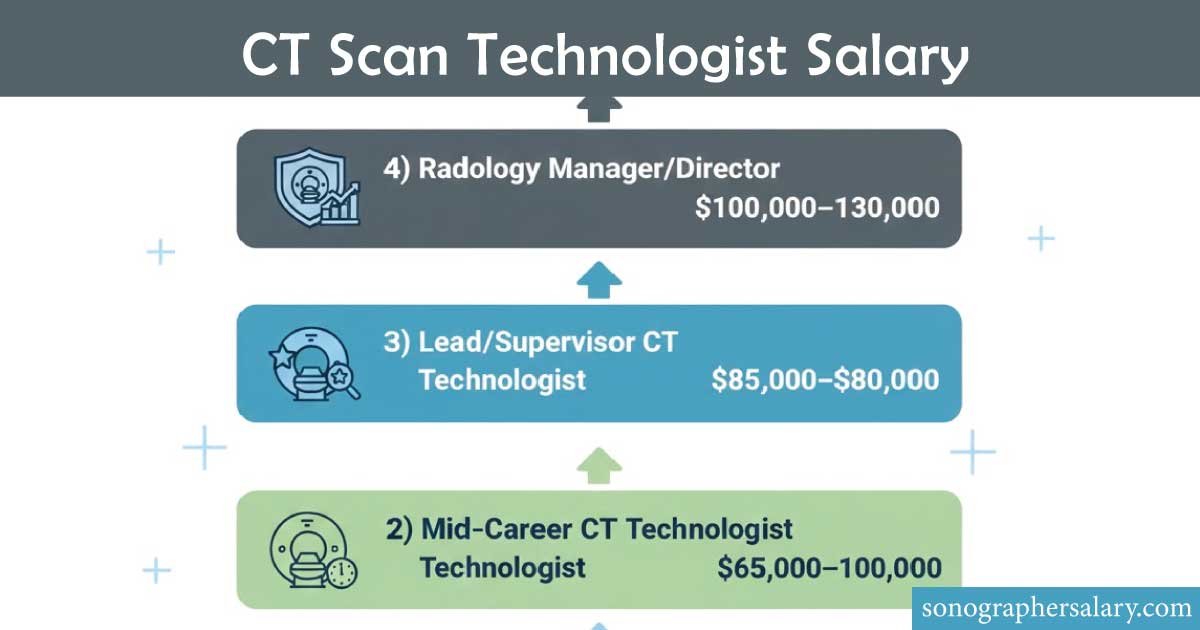
Lead CT Technologist / Supervisor
-
- Oversee other technologists, manage schedules, and ensure quality control.
- Potential salary: $85,000–$100,000+
Radiology Manager / Department Director
-
- Manage an entire imaging department in a hospital.
- Salary: $100,000–$130,000+
Specialty Imaging Technologist
-
- Focus on advanced procedures like cardiac CT or pediatric imaging.
- Higher pay due to specialization.
Educator / Trainer
-
- Teach aspiring CT technologists in colleges or clinical programs.
- Salary depends on institution but can be lucrative with experience.
Also Read:
CT Scan Technologist Earnings Example
Consider Sarah, a CT technologist in Chicago with 6 years of experience. She earns $78,000 per year, plus benefits and occasional overtime. She recently earned ARRT certification in advanced CT imaging, which increased her salary potential and qualified her for promotions.
Another example is James, working in a rural hospital in Texas. His salary is $70,000, slightly lower than the national average, but he enjoys flexible scheduling and a close-knit work environment. These examples show how location, experience, and certifications shape real-world earnings.
Tips to Maximize Your CT Scan Technologist Salary
Boosting your CT scan technologist salary requires a combination of education, experience, and strategic skill development. By pursuing certifications, gaining experience in high-demand areas, developing leadership skills, continuing education, and cross-training in multiple imaging modalities, you can significantly enhance both earning potential and career growth.
1. Pursue Advanced Certifications:
Obtaining certifications in CT, MRI, or nuclear medicine increases your expertise and marketability. These credentials demonstrate advanced skills to employers, making you eligible for higher-paying positions, specialized roles, and promotions. Certification is a key step toward maximizing your salary in a competitive medical imaging field.
2. Gain Experience in High-Demand Areas
Working in urban hospitals, specialty clinics, or regions with high demand for CT technologists often results in higher pay. Experience in these settings can increase both your salary and career opportunities while exposing you to advanced imaging technology and complex patient cases.
3. Develop Leadership Skills
Supervisory and team management roles allow technologists to earn higher salaries. Leadership skills such as training new staff, managing schedules, and ensuring quality control make you more valuable to employers and open the door to promotions within imaging departments.
4. Continue Education
Pursuing a bachelor’s degree or advanced courses in radiologic science can boost earning potential. Higher education enhances knowledge, allows for specialization, and makes you eligible for leadership positions, ultimately leading to better salary prospects and long-term career growth in medical imaging.
5. Cross-Train in Multiple Modalities
Versatility in multiple imaging modalities—CT, MRI, and ultrasound—makes you more employable and increases salary potential. Employers value technologists who can adapt to different imaging needs, handle diverse patient cases, and fill multiple roles within a department, leading to higher pay and job security.
Also Read:
CT Scan Technologist Salary vs. Other Imaging Careers
Comparing CT scan technologists with other imaging careers provides perspective:
| Profession | Average Salary |
|---|---|
| CT Scan Technologist | $70,000–$95,000 |
| MRI Technologist | $70,000–$100,000 |
| Ultrasound Technician | $65,000–$85,000 |
| X-Ray Technologist | $55,000–$75,000 |
CT scan technologists earn a competitive salary, often slightly higher than X-ray or ultrasound technicians, due to specialized training and equipment expertise.
Challenges of Being a CT Scan Technologist
While CT scan technologist salaries are appealing, the job comes with challenges, including long hours, physical demands, handling critically ill patients, maintaining safety protocols, and working nights, weekends, or holidays.
Physical Demands: Standing for long periods and moving patients.
Stressful Cases: Handling emergency scans or critically ill patients.
Radiation Exposure: Although safety measures reduce risk, technologists must remain vigilant.
Shift Work: Nights, weekends, and holidays are often required.
Despite these challenges, most CT technologists find the work rewarding due to its impact on patient care.
Future Outlook and Salary Trends
The demand for CT scan technologists is projected to grow due to an aging population, increased need for diagnostic imaging, rising chronic illnesses, and advancements in medical imaging technology, creating more job opportunities.
Aging population requiring diagnostic imaging
Increased prevalence of chronic illnesses
Advancements in imaging technology
According to the Bureau of Labor Statistics (BLS), employment of radiologic and CT technologists is projected to grow 6–9% over the next decade, slightly faster than the average for all occupations. This growth can translate into higher salaries, better benefits, and more job opportunities.
Conclusion
A career as a CT scan technologist offers a competitive salary, career growth, and the satisfaction of making a meaningful impact in healthcare. Salaries range from $55,000 for entry-level positions to over $95,000 for experienced professionals, with location, experience, education, and certification influencing earnings.
With the right training, certifications, and dedication, CT technologists can enjoy a rewarding and financially stable career while contributing to patients’ health and well-being. If you’re interested in medical imaging and technology, this is a profession worth considering.
FAQs:
Q1: How can advanced certifications boost a CT scan technologist’s salary?
Obtaining certifications in CT, MRI, or nuclear medicine increases expertise and marketability. These credentials show employers your advanced skills, making you eligible for higher-paying positions, specialized roles, and promotions. Certifications are crucial for career advancement and maximizing salary in the competitive medical imaging field.
Q2: Why is experience in high-demand areas important for salary?
Working in urban hospitals, specialty clinics, or regions with high demand often results in higher pay. Such experience exposes technologists to advanced imaging technology, complex patient cases, and greater responsibilities. Employers value this expertise, which can increase both salary and opportunities for professional growth.
Q3: How do leadership skills affect a CT technologist’s earnings?
Leadership skills, such as supervising staff, managing schedules, and ensuring quality control, allow CT technologists to take on supervisory or managerial roles. These roles typically offer higher salaries and open pathways to promotions, making leadership development a key factor in boosting career earnings and long-term growth.
Q4: Can continuing education improve a CT scan technologist’s salary?
Yes. Pursuing a bachelor’s degree or advanced courses in radiologic science enhances knowledge, allows for specialization, and qualifies technologists for leadership positions. Continuing education demonstrates commitment and skill, leading to higher salary potential and expanded career opportunities in medical imaging.
Q5: Why is cross-training in multiple modalities beneficial?
Technologists skilled in multiple modalities, such as CT, MRI, and ultrasound, are more versatile and valuable. Employers prefer professionals who can handle diverse imaging needs, increasing employability, job security, and salary potential. Cross-training also opens opportunities in specialized departments with higher pay.
Q6: What is the overall strategy to maximize a CT scan technologist’s salary?
Maximizing salary requires combining advanced certifications, experience in high-demand areas, leadership development, continuing education, and cross-training. A strategic approach enhances expertise, employability, and responsibilities, ultimately leading to higher pay, career growth, and long-term professional success in the medical imaging field.

Zak is a dedicated medical and career writer specializing in sonography, healthcare education, and professional development. Through SonographerSalary.com, he shares in-depth insights on sonographer salaries, education pathways, and career tips to help readers build successful futures in medical imaging. His content combines accuracy with practical, easy-to-understand guidance, empowering students and professionals to make confident, informed career decisions.