
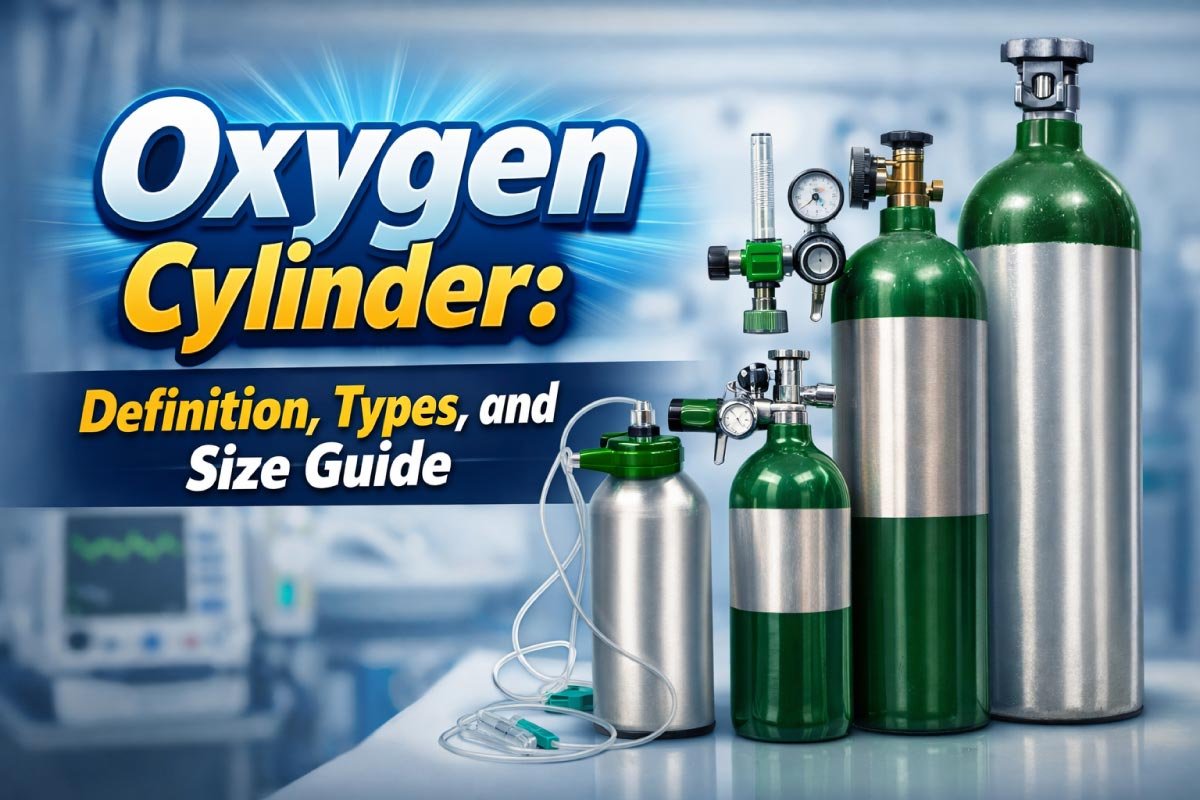
Oxygen cylinders are indispensable tools in medical, industrial, and emergency settings. From hospitals to home care, these pressurized vessels store oxygen and deliver it safely to patients or for industrial applications. Understanding their types, sizes, and usage guidelines is crucial for ensuring safety, efficiency, and convenience. This guide will cover the definition, types of oxygen cylinders, and a detailed size guide, complete with tables for easy reference.
What is an Oxygen Cylinder?
An oxygen cylinder is a high-pressure container designed to store oxygen gas for medical, industrial, or laboratory use. Typically made of steel or aluminum, these cylinders can store oxygen in either compressed gas form or as a liquid oxygen form.
They are equipped with valves and regulators to control the flow of oxygen safely.

Oxygen cylinders are widely used in:
-
Medical Settings: Hospitals, emergency ambulances, home oxygen therapy.
-
Industrial Applications: Welding, metal cutting, glass manufacturing.
-
Aviation & Space: Providing supplemental oxygen for pilots and astronauts.
-
Diving & Rescue: Scuba diving or high-altitude rescue operations.
The primary benefit of oxygen cylinders is that they provide a portable and reliable source of oxygen, especially in emergencies where natural oxygen supply is insufficient.
Oxygen Cylinder – Definition
An oxygen cylinder is a portable or fixed medical device used to store and supply compressed medical-grade oxygen to patients who need additional oxygen to breathe properly. It is commonly used in hospitals, ambulances, clinics, and home care settings to support patients with respiratory conditions, trauma, or low blood oxygen levels.
The cylinder is usually made of steel or aluminum and contains oxygen under high pressure. It is fitted with a regulator and valve that control the flow of oxygen delivered to the patient through devices such as an oxygen mask or nasal cannula.
Oxygen cylinders play a vital role in emergency care, surgery, chronic lung disease management, and situations where a continuous oxygen supply is essential.
Types of Oxygen Cylinders
Oxygen cylinders are essential in medical, industrial, and emergency applications. They differ in size, material, pressure rating, and purpose. Selecting the right type ensures safety, efficiency, and compliance with regulations.
Understanding each type helps users—from hospitals to home care patients—choose a cylinder that meets their specific oxygen requirements without compromising convenience or performance.
1. Medical Oxygen Cylinders
Medical oxygen cylinders are designed for patient use, providing high-purity oxygen (typically 99%) for conditions like COPD, pneumonia, or COVID-19. They are lightweight, portable, and equipped with regulators and flow meters for accurate oxygen delivery.
Color-coded according to regulations, these cylinders are convenient for home or emergency use but require careful handling due to high pressure.
2. Industrial Oxygen Cylinders
Industrial oxygen cylinders supply oxygen for welding, metal cutting, and chemical processes. They are made of robust steel or aluminum to withstand high pressure and frequent handling.
While less focused on purity than medical cylinders, industrial variants prioritize durability and capacity. They are generally larger, heavier, and stored with strict safety measures to prevent accidents.
3. Portable Oxygen Cylinders
Portable oxygen cylinders are compact, lightweight, and ideal for home or mobile use. They provide convenient oxygen delivery for patients on the go, often paired with nasal cannulas or portable concentrators.
Smaller in size, they offer limited oxygen supply and require regular refilling. Their portability is balanced with the need for careful storage and handling.
4. Composite Oxygen Cylinders
Composite oxygen cylinders are constructed from materials like carbon fiber over aluminum, reducing weight while maintaining high pressure tolerance. These cylinders are ideal for portable medical applications, emergency responders, and outdoor activities.
Their lightweight design makes them easier to transport than traditional steel cylinders, though they are often more expensive and require specialized inspection procedures.
5. Cryogenic Oxygen Cylinders (Liquid Oxygen Tanks)
Cryogenic oxygen cylinders store oxygen in liquid form at extremely low temperatures, allowing large volumes in relatively small containers. Commonly used in hospitals and industrial facilities, they provide a continuous oxygen supply for patients or processes.
Handling requires expertise due to the risks of extremely cold temperatures and rapid gas expansion during warming.
6. High-Pressure Oxygen Cylinders
High-pressure oxygen cylinders are designed to store oxygen at pressures up to 2,000–3,000 psi. These cylinders are commonly used in industrial and medical settings where a compact, high-capacity supply is needed.
While they maximize oxygen storage, they require strict adherence to safety protocols, including secure storage, handling, and regular inspections to prevent accidents.
7. Oxygen Cylinder for Aviation and Diving
Specialized oxygen cylinders are used in aviation and diving to support breathing at high altitudes or underwater. Aviation cylinders supply supplemental oxygen in aircraft cabins, while diving cylinders provide breathable gas underwater.
These cylinders are engineered for safety, pressure resistance, and compactness, and must meet stringent regulations to ensure reliable performance in extreme environments.
8. Industrial Oxygen Cylinders
Industrial oxygen cylinders are essential tools in various industrial processes, providing a reliable source of oxygen for applications like welding, cutting, and chemical reactions. Designed for high-pressure storage and heavy-duty use, these cylinders prioritize durability and capacity over medical-grade purity, making them ideal for demanding work environments.
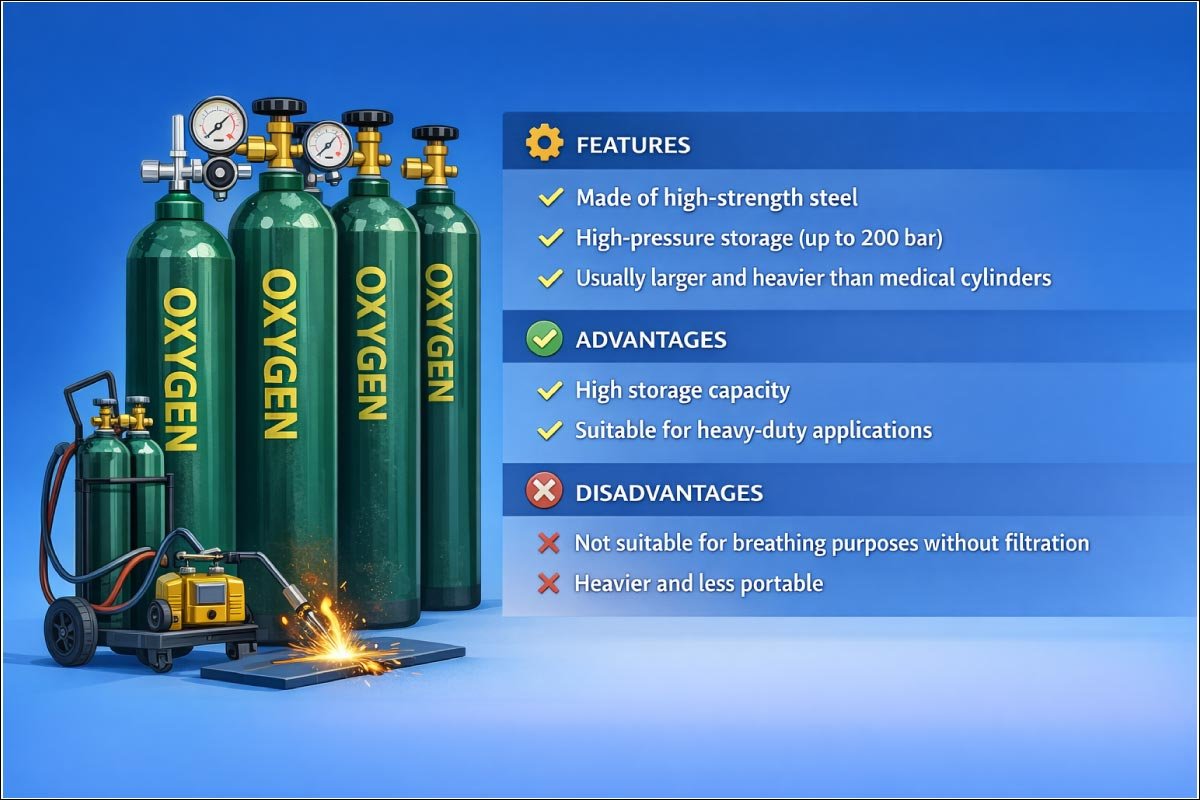
Features:
-
Made of high-strength steel
-
High-pressure storage (up to 200 bar)
-
Usually larger and heavier than medical cylinders
Advantages:
-
High storage capacity
-
Suitable for heavy-duty applications
Disadvantages:
-
Not suitable for breathing purposes without filtration
-
Heavier and less portable
9. Liquid Oxygen Cylinders
Liquid oxygen cylinders store oxygen in its extremely cold, liquid form, offering a high-capacity and long-lasting supply. Widely used in hospitals and industrial settings, these cylinders require careful handling due to cryogenic temperatures.
Their design ensures continuous oxygen delivery over extended periods, making them indispensable for critical and large-scale applications.
Features:
-
Insulated containers to maintain cryogenic temperatures
-
Can supply oxygen for days without refilling
-
Requires careful handling and protective equipment
Advantages:
-
High oxygen capacity
-
Long-lasting supply for hospitals or industrial plants
Disadvantages:
-
Expensive
-
Requires specialized training to handle safely
10. Portable Oxygen Cylinders
Portable oxygen cylinders are compact, lightweight solutions designed for mobility and ease of use. Ideal for home therapy, travel, or emergency situations, they allow patients or users to maintain oxygen support wherever needed.
Despite their smaller size, these cylinders provide reliable oxygen delivery in a convenient, easy-to-handle format.
Features:
-
Sizes vary from 0.5 L to 10 L
-
Compatible with oxygen concentrators or masks
-
Easy to carry
Advantages:
-
Convenient for travel and outdoor use
-
Easy to store and handle
Disadvantages:
-
Limited oxygen capacity
-
Frequent refilling required
Oxygen Cylinder Size Guide
Choosing the right oxygen cylinder size is crucial for effective therapy, portability, and safety. Cylinders vary in volume, pressure, and duration, making selection dependent on patient needs and usage context.
This guide outlines common medical oxygen cylinder sizes, their capacity, typical use, and approximate duration at standard flow rates.
Common Oxygen Cylinder Sizes (Medical Use)
| Cylinder Size | Volume (Liters) | Full Pressure (Bar/PSI) | Duration at 2 L/min | Typical Use |
|---|---|---|---|---|
| A | 3 L | 137 Bar / 2000 PSI | 30 min | Emergency, portable |
| B | 4 L | 137 Bar / 2000 PSI | 40 min | Home oxygen, travel |
| C | 7 L | 137 Bar / 2000 PSI | 70 min | Ambulatory patients |
| D | 10 L | 137 Bar / 2000 PSI | 120 min | Hospital bedside |
| E | 15 L | 137 Bar / 2000 PSI | 180 min | Medium-term hospital use |
| F | 20 L | 137 Bar / 2000 PSI | 240 min | Intensive care |
| G/H | 40–50 L | 137 Bar / 2000 PSI | 480–600 min | Long-term or high-flow oxygen |
Note: Duration is approximate and depends on the oxygen flow rate and patient requirements.
Industrial Oxygen Cylinder Sizes
Industrial oxygen cylinders are designed for high-pressure storage and extended use rather than portability. Available in various volumes, they cater to applications from small-scale laboratory work to heavy-duty industrial operations.
This guide details common industrial cylinder sizes, their capacity, pressure ratings, and typical uses in different industrial settings.
| Cylinder Size | Volume (Liters) | Full Pressure (Bar/PSI) | Typical Applications |
|---|---|---|---|
| 2 | 2 L | 150 Bar / 2175 PSI | Small-scale welding |
| 5 | 5 L | 150 Bar / 2175 PSI | Laboratory experiments |
| 10 | 10 L | 150 Bar / 2175 PSI | Welding & cutting |
| 20 | 20 L | 150 Bar / 2175 PSI | Industrial plants |
| 40 | 40 L | 150 Bar / 2175 PSI | Heavy industrial use |
Industrial cylinders prioritize storage capacity and pressure over portability.
Also Read:
Glucometer: Definition, Types, Size Guide and Materials
How to Choose the Right Oxygen Cylinder
Selecting the correct oxygen cylinder is crucial for safety, efficiency, and convenience. Factors like the intended purpose, duration of use, flow rate, portability, and regulatory compliance all play a role in making the right choice.
Understanding these elements ensures optimal oxygen delivery, prevents wastage, and aligns with medical or industrial safety standards.
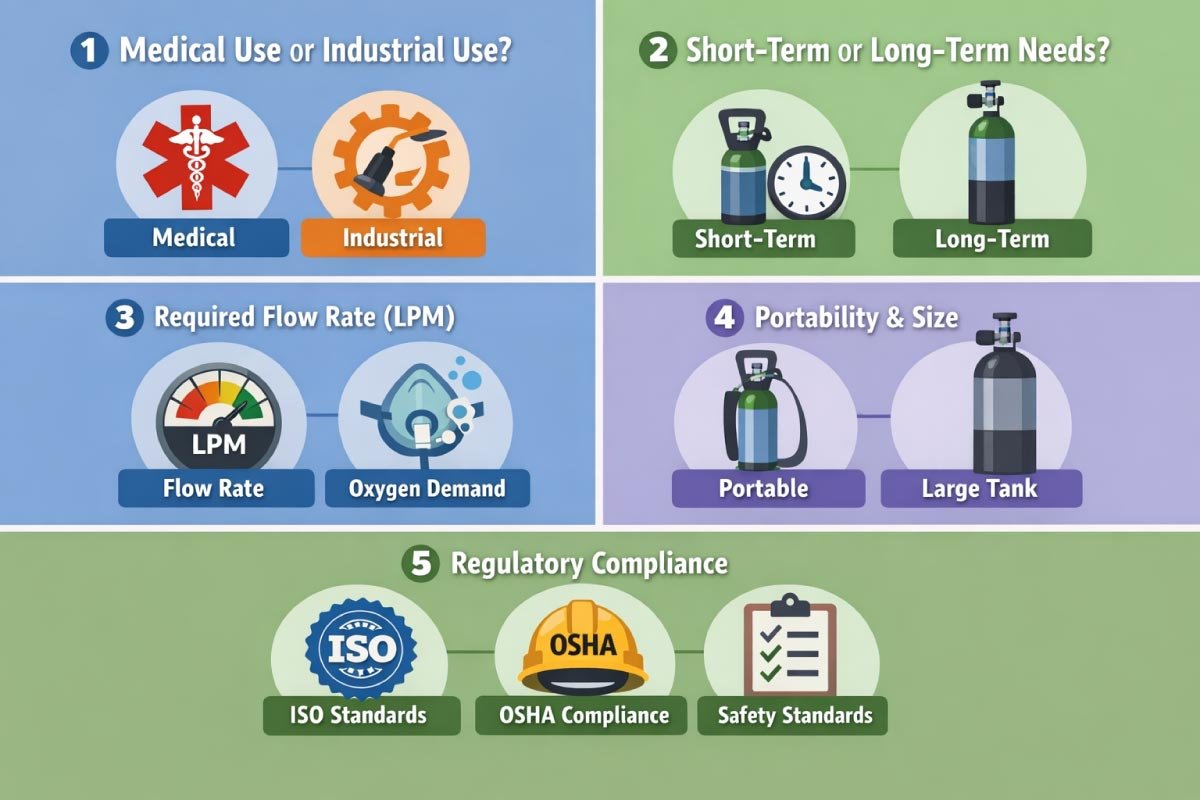
1. Determining the Purpose of the Cylinder
The first step is identifying whether the cylinder is for medical or industrial use. Medical oxygen supports respiratory therapy and emergencies, while industrial cylinders supply oxygen for welding, cutting, or chemical processes.
Choosing the wrong type can lead to ineffective performance or safety hazards, so matching the cylinder to its intended application is essential.
2. Considering Usage Duration
Oxygen cylinders vary based on short-term or long-term usage. Short-term needs, such as emergency oxygen, require smaller, portable cylinders, whereas long-term therapy or industrial processes may require larger, refillable tanks.
Estimating daily consumption helps prevent interruptions and ensures that the cylinder size aligns with how long oxygen is needed without frequent refills.
3. Calculating Required Flow Rate
Flow rate is measured in liters per minute (LPM) and determines how quickly oxygen is consumed. Higher flow rates deplete cylinders faster, so it’s crucial to calculate oxygen needs accurately.
For medical patients, doctors prescribe the LPM based on condition, while industrial applications must match equipment requirements to ensure consistent performance without wasting oxygen or compromising safety.
4. Evaluating Portability and Size
Portability depends on the cylinder’s weight, material, and design. Lightweight cylinders are ideal for home use or travel, allowing patients or workers to move freely.
Conversely, larger cylinders offer extended oxygen supply but are heavy and fixed in one place, making them more suitable for hospitals, clinics, or industrial facilities where mobility is less important than capacity.
5. Ensuring Regulatory Compliance
Oxygen cylinders must comply with strict safety and quality standards. Medical cylinders adhere to ISO regulations, such as ISO 32 and ISO 7864, guaranteeing purity and safe use. Industrial cylinders follow OSHA, DOT, or local standards to prevent accidents.
Compliance ensures reliability, prevents legal issues, and protects users from the risks of leaks, contamination, or pressure hazards.
Also Read:
Ultrasound Transducer Frequency Chart: 2026 Guide
Recommended Oxygen Cylinder Size by Usage
Selecting the right oxygen cylinder depends on both the setting and required flow rate. Home, hospital, intensive care, industrial, and emergency applications each have specific cylinder recommendations.
This guide provides an overview of suitable cylinder sizes, typical flow rates, and approximate duration to ensure safe and efficient oxygen delivery.
| Usage Type | Recommended Cylinder | Flow Rate (L/min) | Duration |
|---|---|---|---|
| Home Oxygen Therapy | B or C | 1–3 | 40–70 min |
| Hospital Bedside | D or E | 2–5 | 2–3 hrs |
| Intensive Care Unit | F | 5–10 | 4 hrs |
| Industrial Welding | 10–20 L Cylinder | Continuous | Varies |
| Emergency Transport | A | 1–2 | 30 min |
Also Read:
Safety Considerations
Oxygen cylinders store gas under high pressure and can be hazardous if mishandled. Proper safety practices are essential to prevent accidents, fires, or equipment damage.
Following strict storage, handling, and usage protocols ensures that cylinders remain safe for both medical and industrial applications, protecting users and surrounding environments.

-
Always store upright and secure to prevent tipping
-
Keep away from heat sources and open flames
-
Use appropriate regulators and flow meters
-
Never attempt to refill a medical cylinder without proper equipment
Also Read:
Ultrasound Machine Sizes: Complete Guide 2026
Common Oxygen Cylinder Safety Guidelines
Proper handling and storage of oxygen cylinders are critical for safety and longevity. From correct storage and temperature control to careful valve operation and regular inspections, following established safety measures prevents accidents and ensures reliable performance.
This guide outlines essential precautions for both medical and industrial cylinder use.
| Safety Measure | Description |
|---|---|
| Storage | Upright, ventilated area, away from flammable materials |
| Handling | Use cylinder trolleys or carts; avoid dropping |
| Temperature | Keep below 50°C / 122°F |
| Valve Operation | Open slowly; never lubricate with oil/grease |
| Inspection | Check for rust, dents, or leaks before use |
Adhering to safety protocols ensures long-term functionality and prevents accidents.
Also Read:
How to Find the Best Ultrasound Tech School: 2026 Guide
Conclusion
Oxygen cylinders are vital in medical, industrial, and emergency settings. Understanding their types, sizes, and proper usage helps maximize efficiency and safety. Medical cylinders are essential for life-saving oxygen therapy, while industrial cylinders support heavy-duty applications. Choosing the right size—based on flow rate and duration—ensures uninterrupted oxygen supply.
Whether for home use, hospital care, or industrial processes, proper handling, regular inspection, and adherence to safety standards are critical. With the right knowledge, oxygen cylinders can be a reliable and lifesaving tool.
FAQs:
What are the different types of oxygen cylinders?
Different types of oxygen cylinders are classified based on size, material, and usage. Common options include portable cylinders for mobility, stationary cylinders for home care, and large-capacity units for hospitals. Each type is designed to meet specific oxygen delivery needs safely and efficiently.
How does oxygen cylinder identification work?
Oxygen cylinder identification is done using standardized color codes, labels, and markings. These details indicate gas type, pressure rating, manufacturing date, and safety certifications. Proper identification helps prevent misuse, ensures correct medical application, and improves safety during storage, transport, and clinical use.
What are the main types of oxygen cylinders used in healthcare?
Types of oxygen cylinders used in healthcare include steel and aluminum cylinders available in various sizes. Selection depends on patient demand, flow requirements, and treatment duration. Medical facilities rely on specific cylinder types to ensure consistent oxygen supply during therapy and emergency care.
What safety standards should oxygen cylinders follow?
Oxygen cylinders should be stored upright, secured properly, and kept away from heat or flammable materials. Regular inspections, pressure checks, and valve maintenance are essential. Following safety guidelines reduces leakage risks and ensures reliable oxygen delivery in both home and clinical settings.
What is the definition of an oxygen cylinder?
An oxygen cylinder is a pressurized container designed to store and deliver medical-grade oxygen. It supplies supplemental oxygen to patients with breathing difficulties. These cylinders are widely used in hospitals, ambulances, and home care to support respiratory health and emergency treatment.
What are the common uses of an oxygen cylinder?
Oxygen cylinder uses include respiratory therapy, emergency medical care, surgical procedures, and home oxygen support. They help patients with lung diseases, heart conditions, or low oxygen levels breathe comfortably and maintain healthy blood oxygen saturation during treatment or recovery.
What are the main oxygen cylinder parts and their functions?
Oxygen cylinder parts and functions include the tank for storage, valve for flow control, regulator for pressure adjustment, and flowmeter for accurate delivery. Each component works together to ensure safe oxygen release, controlled flow rates, and reliable patient support.
How are oxygen cylinder size and capacity determined?
Oxygen cylinder size and capacity depend on physical dimensions and internal pressure ratings. Larger cylinders hold more oxygen and last longer, while smaller options offer portability. Choosing the right size ensures uninterrupted oxygen therapy based on patient flow requirements and usage duration.
What does an oxygen cylinder sizes chart show?
An oxygen cylinder sizes chart compares different cylinder models by volume, pressure, and expected usage time. It helps users quickly identify suitable options for home care, transport, or hospital use by matching oxygen demand with available cylinder capacity.
What information is included in an oxygen size chart?
An oxygen size chart provides measurements such as cylinder height, diameter, weight, and oxygen volume. This information supports proper selection, storage planning, and transport decisions, ensuring the cylinder fits the intended medical environment and patient mobility needs.
What is an oxygen liters per minute chart used for?
An oxygen liters per minute chart helps calculate oxygen consumption based on prescribed flow rates. It allows caregivers and patients to estimate how long a cylinder will last, improving treatment planning and reducing the risk of unexpected oxygen depletion.
How does an oxygen tank duration chart help users?
An oxygen tank duration chart estimates how long oxygen supply lasts at different flow settings. It is essential for emergency preparedness, travel planning, and continuous therapy, ensuring patients maintain adequate oxygen levels without interruption during treatment periods.
What is an oxygen E cylinder duration chart?
An oxygen E cylinder duration chart specifically calculates usage time for E-size cylinders. It considers pressure levels and flow rates to provide accurate duration estimates, making it especially useful in hospitals, ambulances, and short-term oxygen therapy scenarios.
What does a portable oxygen cylinder size chart explain?
A portable oxygen cylinder size chart outlines compact cylinder options designed for mobility. It includes weight, capacity, and expected duration, helping active patients choose lightweight solutions that support daily movement while still meeting prescribed oxygen needs.
What is shown in a medical oxygen tank sizes chart?
A medical oxygen tank sizes chart lists standardized cylinder sizes used in healthcare settings. It helps professionals select appropriate tanks for patient rooms, emergency units, or transport, ensuring oxygen availability aligns with clinical demand and safety protocols.
What is the purpose of a cylinder sizing chart?
A cylinder sizing chart compares different oxygen cylinder dimensions, capacities, and usage times. It simplifies decision-making for patients and healthcare providers by matching oxygen supply options with therapy duration, space availability, and mobility requirements.

Zak is a dedicated medical and career writer specializing in sonography, healthcare education, and professional development. Through SonographerSalary.com, he shares in-depth insights on sonographer salaries, education pathways, and career tips to help readers build successful futures in medical imaging. His content combines accuracy with practical, easy-to-understand guidance, empowering students and professionals to make confident, informed career decisions.