
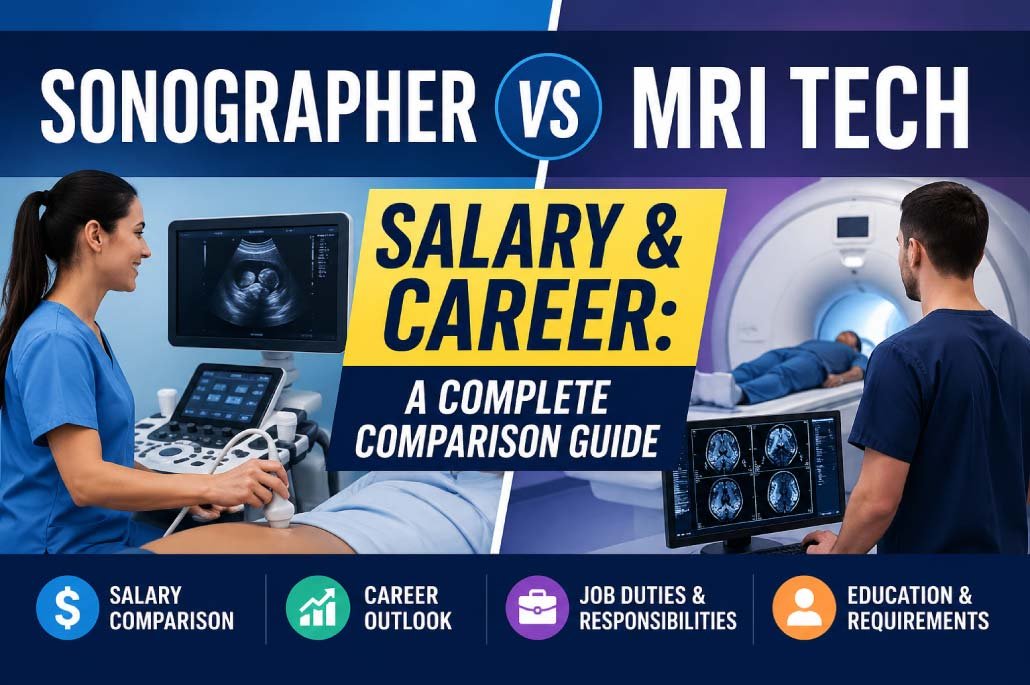
Choosing a career in medical imaging is an excellent decision for those interested in healthcare without becoming a doctor or nurse. Two of the most popular and rewarding paths in this field are becoming a Diagnostic Medical Sonographer or an MRI Technologist. Both careers play a crucial role in diagnosing diseases and helping physicians make accurate treatment decisions.
However, when it comes to salary, career growth, job responsibilities, and lifestyle, there are important differences. This detailed guide will help you understand everything you need to know about Sonographer vs MRI Tech salary and career, so you can make an informed choice.
What is a Sonographer?
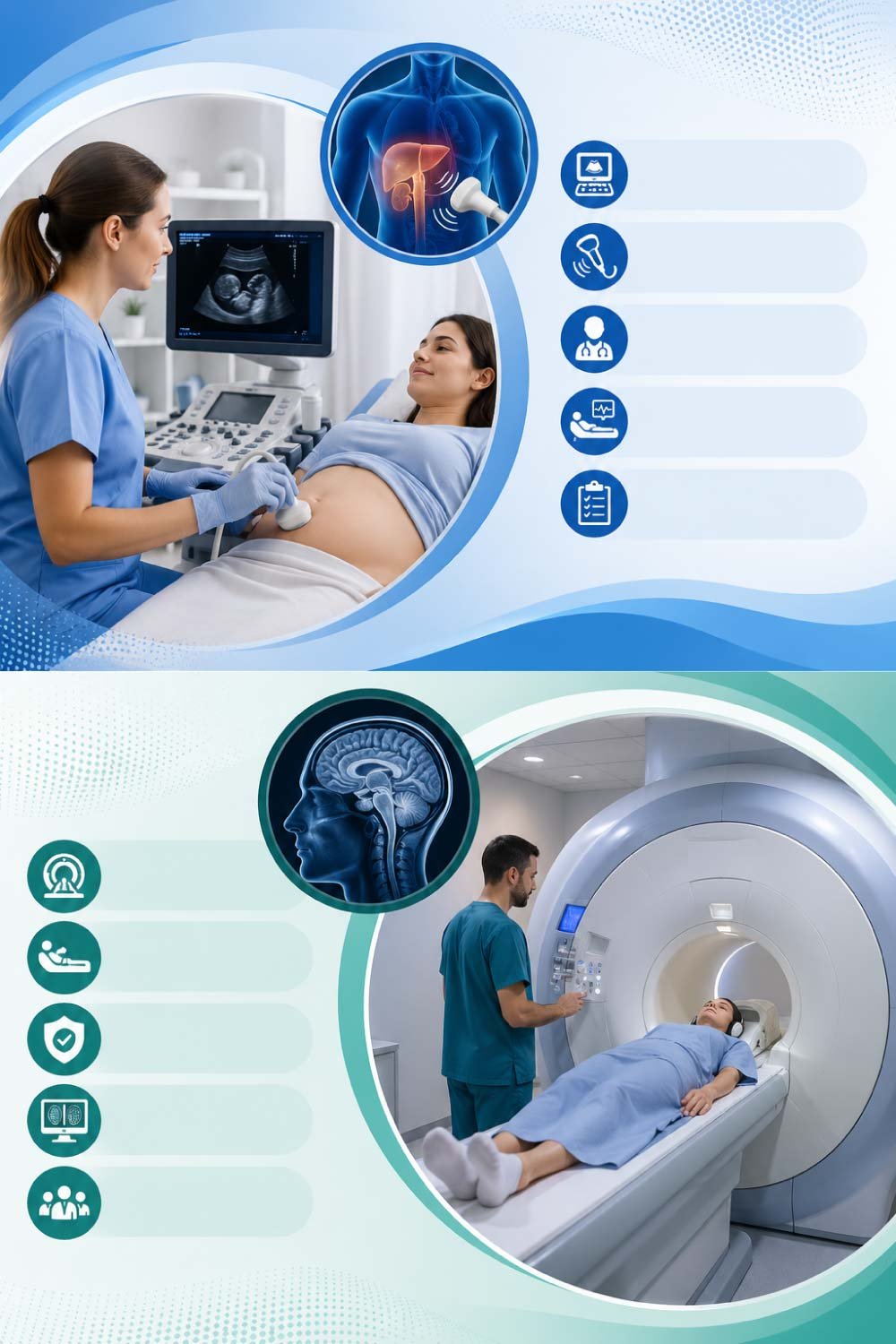
A sonographer is a specialized healthcare professional who plays an important role in modern diagnostic medicine. They work closely with physicians to capture internal body images using advanced ultrasound technology, helping in early detection and monitoring of various medical conditions.
A Diagnostic Medical Sonographer uses ultrasound technology to create images of the body’s internal organs. These images help doctors diagnose conditions related to pregnancy, abdominal organs, heart function, and blood flow.
Sonographers use high-frequency sound waves, which makes this method safe and non-invasive. It is especially well-known for prenatal imaging, where sonographers monitor fetal development.
Key Responsibilities:
- Operate ultrasound equipment
- Capture images of organs and tissues
- Assist doctors in diagnosis
- Monitor patient health during procedures
- Maintain equipment and records
What is an MRI Technologist?
An MRI technologist is a highly trained medical imaging specialist responsible for operating advanced MRI equipment. Their work is essential in producing detailed images that help doctors diagnose complex conditions affecting soft tissues, nerves, and internal organs.
An MRI Technologist operates Magnetic Resonance Imaging (MRI) machines to produce highly detailed images of the body. MRI scans are particularly useful for examining soft tissues such as the brain, spinal cord, joints, and muscles.
MRI technology uses strong magnetic fields and radio waves instead of radiation, making it a safe and advanced imaging method.
Key Responsibilities:
- Operate MRI machines
- Prepare patients for scanning procedures
- Ensure safety protocols (especially due to magnets)
- Analyze image quality
- Work closely with radiologists
Sonographer vs MRI Tech Salary Comparison
Salary comparison is a key factor when deciding between healthcare imaging careers. Both sonographers and MRI technologists earn strong incomes, but differences exist based on specialization, demand, and technical complexity of the equipment used in each field.
Salary is one of the most important factors when choosing a career. Both professions offer competitive pay, but MRI technologists typically earn slightly more on average.
Average Salary (2025 Data)
MRI Technologist: Around $87,500 median annual salary
Sonographer: Around $83,400 median annual salary
Other estimates show:
MRI Tech: ~$78,500 median
Sonographer: ~$77,000 median
Salary Range
Career Entry-Level Mid-Level Experienced
MRI Technologist $60,000 $75,000–$90,000 $100,000+
Sonographer $58,000 $70,000–$85,000 $95,000+
Key Insight:
MRI technologists usually earn slightly higher salaries due to:
- More complex technology
- Specialized training
- Higher demand in hospital settings
However, experienced sonographers with specialized skills (like cardiac imaging) can earn nearly the same or even more.
Education and Training Requirements
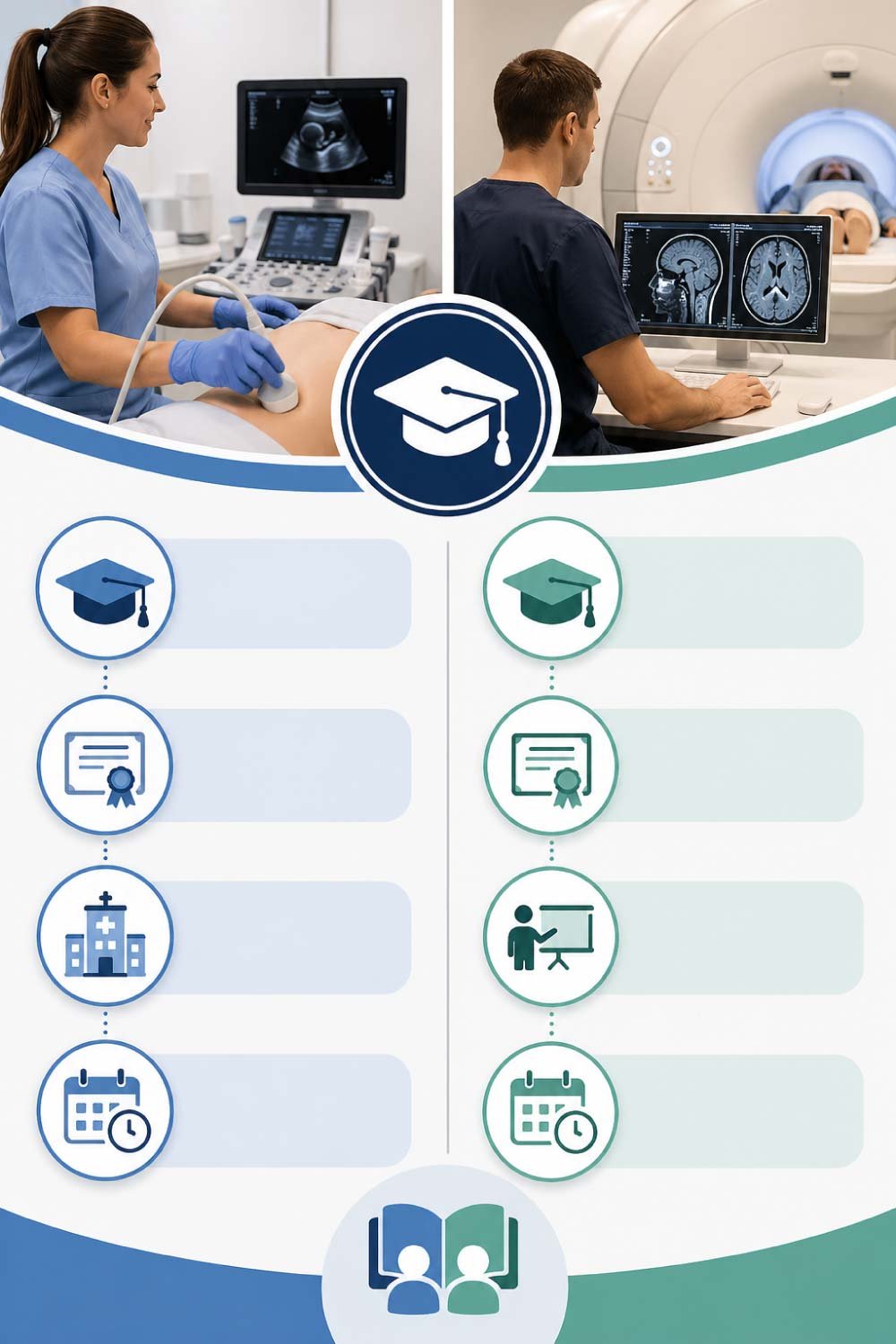
Education and training are essential foundations for both sonographers and MRI technologists. Each career requires specialized academic preparation combined with clinical experience to ensure professionals can safely and accurately perform diagnostic imaging procedures.
Sonographer Education:
Associate or Bachelor’s degree (2–4 years)
Certification (ARDMS)
Clinical training required
MRI Technologist Education:
Associate degree in radiologic technology
MRI certification (ARRT)
Additional specialized training
Both careers require 2–4 years of education, but MRI techs may need extra certification depending on their pathway.
Work Environment and Lifestyle
Work environment and lifestyle play an important role in choosing between these two careers. While both professionals work in medical imaging settings, their schedules, workplace settings, and work-life balance can vary significantly.
Sonographer Work Environment:
Hospitals
Clinics
OB/GYN offices
Diagnostic labs
Sonographers often work regular daytime hours, especially in outpatient settings.
MRI Tech Work Environment:
Hospitals
Imaging centers
Emergency departments
MRI technologists are more likely to work:
Night shifts
Weekends
On-call rotations
Lifestyle Comparison:
Sonographer → Better work-life balance
MRI Tech → Higher pay but less predictable schedule
Job Demand and Career Outlook
Job demand for both sonographers and MRI technologists continues to grow as healthcare systems increasingly rely on advanced imaging for accurate diagnosis. These careers are considered stable and future-proof due to technological advancements and rising medical needs worldwide.
Both careers are in high demand due to the increasing need for diagnostic imaging.
Sonographers: Projected growth around 10%
MRI Technologists: Projected growth around 6%
Why Demand is Growing:
- Aging population
- Increase in chronic diseases
- Preference for non-invasive imaging
Key Insight:
Sonography is growing faster, but MRI remains highly specialized and valuable.
Also Read:
Career Growth Opportunities
Career advancement is an important factor for long-term job satisfaction. Both sonographers and MRI technologists have clear but slightly different growth paths depending on specialization, experience, and leadership opportunities in healthcare institutions.
Sonographer Career Growth:
- Cardiac Sonographer
- Vascular Sonographer
- OB/GYN Specialist
- Lead Sonographer
- Educator or instructor
MRI Technologist Career Growth:
- MRI Specialist (Neuro, Cardiac)
- Lead MRI Technologist
- Imaging Manager
- Radiology Administrator
- Equipment Specialist or trainer
Key Difference:
MRI techs have more opportunities in advanced imaging and leadership roles
Sonographers can specialize but have a slightly narrower career ladder
Skills Required for Each Career
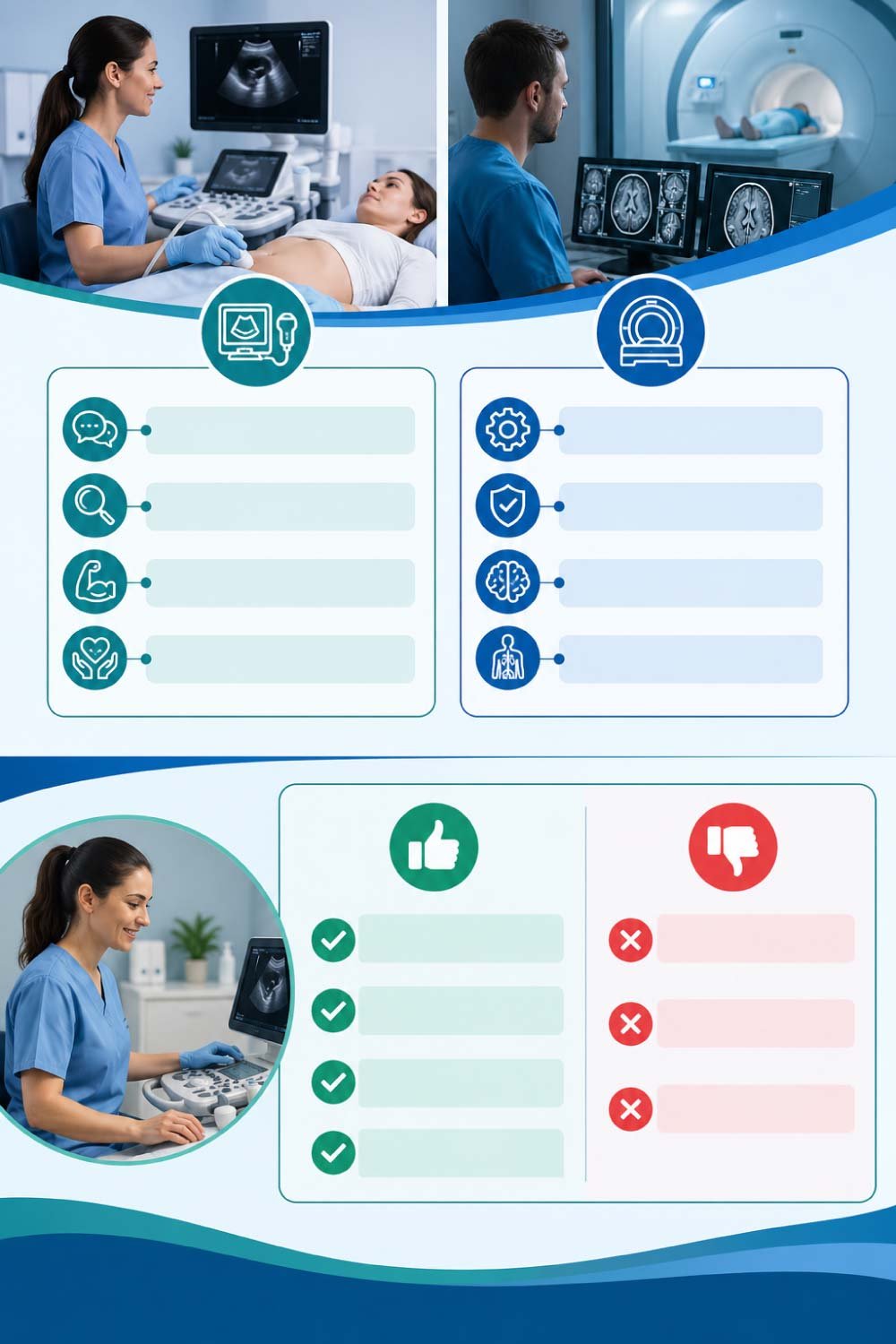
Both careers require a strong combination of technical knowledge and patient care skills. However, sonographers focus more on real-time imaging and patient interaction, while MRI technologists rely heavily on technical precision and safety awareness.
Sonographer Skills:
- Strong communication
- Attention to detail
- Physical stamina (long scanning sessions)
- Patient care skills
MRI Tech Skills:
- Technical expertise
- Safety awareness
- Problem-solving ability
- Knowledge of anatomy
Also Read:
Pros and Cons of Sonographer Career
Every career has strengths and limitations, and sonography offers a balanced mix of stability and patient-focused work. However, it also comes with physical demands and limited advancement compared to more technical imaging fields.
Pros:
- Better work-life balance
- Less stressful environment
- High demand
- Flexible work settings
Cons:
- Physically demanding (repetitive motion)
- Slightly lower salary
- Limited advancement compared to MRI
Pros and Cons of MRI Technologist Career
MRI technology offers higher earning potential and advanced technical exposure. However, it also requires handling complex equipment, shift work, and strict safety protocols, which can make the job more demanding.
Pros:
- Higher salary potential
- Advanced technology exposure
- Strong career growth
- High demand in hospitals
Cons:
- Irregular work hours
- Requires strict safety protocols
- Can be stressful with critical cases
- Longer training path in some cases
Which Career is Better?
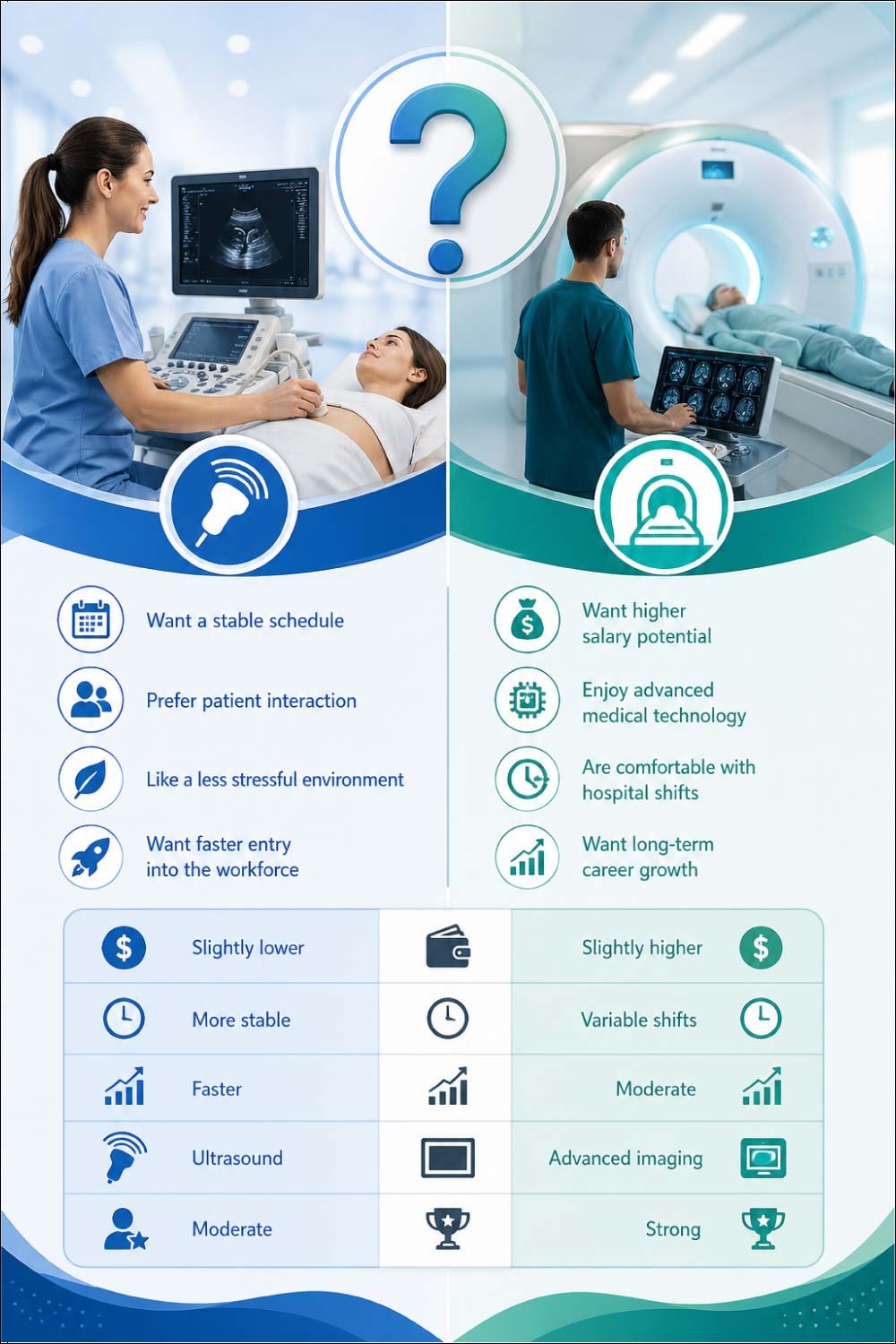
Choosing between sonography and MRI technology depends entirely on personal goals, lifestyle preferences, and long-term career expectations. Both are respected healthcare careers with strong job security.
The answer depends on your personal goals and preferences.
Choose Sonography if you:
- Want a stable schedule
- Prefer patient interaction
- Like a less stressful environment
- Want faster entry into the workforce
Choose MRI Technology if you:
- Want higher salary potential
- Enjoy advanced medical technology
- Are comfortable with hospital shifts
- Want long-term career growth
| Factor | Sonographer | MRI Technologist |
|---|---|---|
| Salary | Slightly lower | Slightly higher |
| Work Hours | More stable | Variable shifts |
| Job Growth | Faster | Moderate |
| Technology | Ultrasound | Advanced imaging |
| Career Growth | Moderate | Strong |
Final Thoughts
Both sonographers and MRI technologists play vital roles in modern healthcare. They are essential in diagnosing diseases early and improving patient outcomes. While MRI technologists tend to earn slightly higher salaries, sonographers often enjoy better work-life balance.
If your priority is income and advanced technology, MRI technology may be the better choice. But if you value flexibility and patient interaction, sonography is an excellent career path.
Ultimately, both professions offer:
- Job stability
- Competitive salaries
- Opportunities to grow
- Meaningful work in healthcare
Also Read:

Zak is a dedicated medical and career writer specializing in sonography, healthcare education, and professional development. Through SonographerSalary.com, he shares in-depth insights on sonographer salaries, education pathways, and career tips to help readers build successful futures in medical imaging. His content combines accuracy with practical, easy-to-understand guidance, empowering students and professionals to make confident, informed career decisions.