
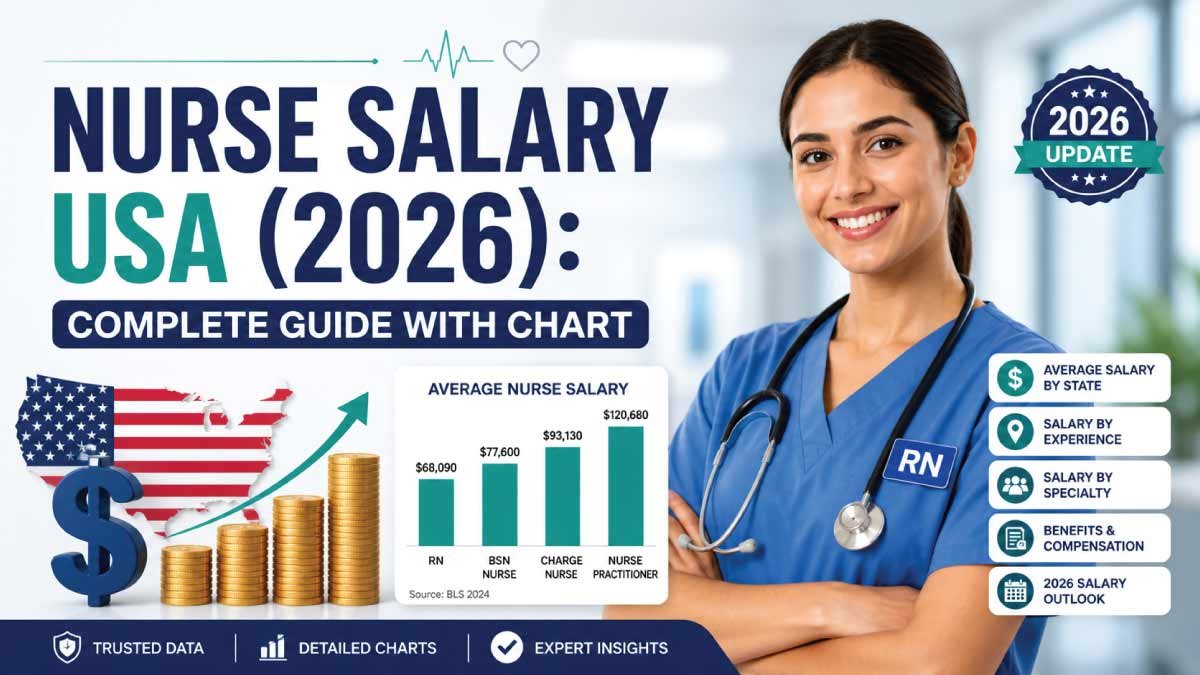
Nursing is one of the most respected and in-demand careers in the United States. It offers a strong combination of job security, career growth, and competitive pay. But if you’re considering becoming a nurse—or already in the field, you are probably asking one key question:
How much do nurses earn in the USA?
The answer isn’t simple because nursing salaries vary based on experience, specialization, location, and education level. Some nurses earn a modest starting income, while others make well over six figures annually.
In this detailed guide, you will learn everything about nurse salaries in the United States, including average pay, highest-paying specialties, and how to increase your income.
Average Nurse Salary in the USA
Nursing is one of the most stable and in-demand healthcare careers in the United States. Salaries vary depending on experience, location, and specialization, but overall, nursing offers a strong income with excellent job security and growth opportunities across hospitals, clinics, and community healthcare settings.
- Average Salary (Registered Nurse – RN): $75,000 – $95,000 per year
- Hourly Rate: $35 – $45 per hour
- Entry-Level Salary: $55,000 – $70,000
- Experienced Nurses: $90,000 – $120,000+
These numbers can vary depending on where you work and your level of experience.
Nurse Salary by Experience Level
Experience is one of the biggest factors affecting nursing income. As nurses gain hands-on skills, certifications, and confidence in patient care, their earning potential increases significantly over time.
1. Entry-Level Nurses (0–2 Years)
Newly graduated nurses usually begin their careers in hospitals or clinics where they focus on learning practical skills and building clinical experience. Salaries are lower at this stage, but growth happens quickly with time and exposure.
- Salary Range: $55,000 – $70,000
- Hourly Rate: $28 – $34
Reality:
Your first job is more about gaining skills than earning high pay.
2. Mid-Level Nurses (3–7 Years)
After a few years of experience, nurses become more confident and skilled in handling patients independently. Many also begin pursuing certifications or specialty areas, which helps increase both responsibility and salary.
- Salary Range: $70,000 – $90,000
- Hourly Rate: $35 – $42
Growth point:
Many nurses begin specializing at this stage.
3. Experienced Nurses (8+ Years)
Highly experienced nurses often take on leadership roles, advanced clinical responsibilities, or specialized positions. Their deep knowledge and expertise make them valuable in high-demand healthcare environments.
- Salary Range: $90,000 – $120,000+
- Hourly Rate: $45 – $60
Bonus:
Leadership roles and certifications boost income further.
Highest Paying Nursing Specialties
Not all nursing roles pay the same. Choosing a specialty can significantly increase your earning potential. Specialized nurses often work in critical care, anesthesia, or advanced practice roles where skills are highly valued.
1. Nurse Anesthetist (CRNA)
Certified Registered Nurse Anesthetists are among the highest-paid nursing professionals in the United States. They play a critical role in surgeries by administering anesthesia and monitoring patients closely during procedures.
- Salary: $160,000 – $220,000+
- Role: Administer anesthesia during surgeries
This is one of the highest-paying nursing careers in the USA.
2. Nurse Practitioner (NP)
Nurse practitioners have advanced training that allows them to diagnose conditions, prescribe medication, and provide primary care services. They often work independently or alongside physicians in clinics and hospitals.
- Salary: $100,000 – $140,000
- Role: Diagnose conditions, prescribe medications
Advantage:
More independence compared to regular RNs.
3. Travel Nurse
Travel nurses work on short-term contracts across different states or healthcare facilities. Their flexibility and willingness to fill urgent staffing shortages make them highly valuable in the healthcare system.
- Salary: $90,000 – $150,000+
- Role: Work short-term contracts across different states
Why it pays more:
Hospitals pay extra for flexibility and urgent staffing needs.
4. ICU Nurse
ICU nurses work in intensive care units where patients are critically ill and require constant monitoring. The job is demanding and high-stress, but it also offers higher pay compared to general nursing roles.
- Salary: $80,000 – $120,000
- Role: Care for critically ill patients
High stress but higher pay compared to general nursing.
5. Pediatric Nurse
Pediatric nurses specialize in caring for infants, children, and adolescents. They work in children’s hospitals, pediatric clinics, and family care centers, providing both medical care and emotional support.
- Salary: $75,000 – $110,000
- Role: Treat infants and children
Demand is steady, especially in children’s hospitals.
Also Read:
Nurse Salary by State (USA)
Nursing salaries in the United States vary significantly from one state to another. This difference is mainly due to cost of living, local demand for healthcare workers, and state-level healthcare funding. Some states offer much higher pay to attract qualified nurses.
Highest Paying States for Nurses
Certain states consistently offer higher-than-average nursing salaries because of higher living expenses and strong demand in hospitals and healthcare systems.
- California: $110,000 – $140,000
- New York: $95,000 – $120,000
- Texas: $75,000 – $95,000
- Florida: $70,000 – $90,000
Important:
Higher salary often comes with higher living costs.
Nurse Salary by Work Setting
Where a nurse works also has a major impact on income. Different healthcare environments offer different levels of responsibility, stress, and pay. Some settings provide higher salaries due to patient intensity or specialized care requirements.
1. Hospitals
Hospitals are the most common workplace for nurses and often offer competitive salaries along with steady job opportunities. They involve fast-paced environments where nurses handle a wide range of medical cases.
- Salary: $75,000 – $110,000
- Most common workplace
2. Private Clinics
Private clinics typically provide a more relaxed working environment compared to hospitals. Nurses here may handle routine patient care, follow-ups, and basic treatments, but salaries are slightly lower.
- Salary: $65,000 – $90,000
- Lower stress but slightly lower pay
3. Outpatient Care Centers
Outpatient care centers focus on patients who do not require overnight stays. These facilities often offer more structured schedules and predictable work hours, making them attractive for work-life balance.
- Salary: $80,000 – $100,000
- More predictable schedules
4. Home Healthcare
Home healthcare nurses provide medical care to patients in their homes. This role offers flexibility and independence, and it is becoming increasingly popular as demand for at-home care continues to rise.
- Salary: $70,000 – $95,000
- Flexible work environment
Different Types of Nurses and Their Salaries
Here’s a quick breakdown of common nursing roles:
| Nurse Type | Average Salary |
|---|---|
| Registered Nurse (RN) | $75k – $95k |
| Licensed Practical Nurse (LPN) | $50k – $65k |
| Nurse Practitioner (NP) | $100k – $140k |
| Nurse Anesthetist (CRNA) | $160k – $220k |
| Travel Nurse | $90k – $150k |
Also Read:
How to Increase Your Nurse Salary
If you want to earn more as a nurse, there are several practical strategies that can significantly boost your income over time. Most of these methods focus on improving skills, gaining experience, and choosing higher-paying roles within the healthcare system.
1. Get Advanced Education
Higher education is one of the fastest ways to increase your nursing salary. Moving from an RN to a BSN or MSN opens doors to leadership roles, better job positions, and higher-paying specialties in hospitals and healthcare facilities.
- Move from RN to BSN or MSN
- Higher degrees unlock higher-paying roles
2. Choose a Specialty
Specializing in high-demand fields can greatly increase your earning potential. Critical care areas require advanced skills, which hospitals are willing to pay more for due to the complexity of patient care.
- ICU, ER, and anesthesia pay more
- Specialized skills = higher demand
3. Gain Experience
Experience plays a major role in salary growth. As nurses spend more years in the field, they become more skilled, confident, and valuable to employers, which naturally leads to higher pay.
- More years = higher salary
- Senior nurses earn significantly more
4. Work Overtime or Night Shifts
Taking extra shifts is a simple way to increase monthly income. Many hospitals offer higher pay rates for overtime and night shifts because they require more flexibility and commitment.
- Extra shifts increase total income
- Night shifts often pay more
5. Become a Travel Nurse
Travel nursing is one of the most popular ways to earn higher pay quickly. Nurses work short-term contracts in different locations, often receiving additional benefits and higher hourly wages due to urgent staffing needs.
- Higher pay with flexibility
- Great for maximizing earnings quickly
Also Read:
Nurse Salary vs Other Medical Careers
Nursing offers a strong balance between education length, responsibility, and income when compared to other healthcare professions. While it may not reach doctor-level salaries, it provides excellent earning potential with much shorter study requirements.
- Nurses earn more than medical assistants
- Similar income to sonographers in some cases
- Less than doctors but with shorter education time
Conclusion:
Nursing offers one of the best salary-to-education ratios in healthcare.
Is Nursing a Good Career in 2026?
Yes, nursing continues to be one of the most stable and in-demand careers in the USA. With ongoing healthcare needs and an aging population, the profession remains highly secure and financially rewarding.
Key Benefits:
- High job demand
- Strong salary growth
- Career flexibility
- Opportunities for specialization
Healthcare is constantly evolving, and nurses remain at the center of patient care.
Future Salary Trends for Nurses
Nursing salaries are expected to increase steadily in the coming years. Demand for healthcare professionals is rising, and specialized nursing roles are becoming more valuable across hospitals and clinics.
Reasons:
- Aging population
- Shortage of healthcare workers
- Increased healthcare spending
- Expansion of advanced nursing roles
Nurse practitioners and specialized nurses will see the highest salary growth.
Also Read:
Challenges That Affect Nurse Salaries
While nursing is a rewarding career, it also comes with challenges that can impact both workload and income. Understanding these challenges helps prepare for the demands of the profession.
- Long working hours
- Emotional and physical stress
- Shift work (night/weekends)
However, many nurses find the financial rewards and job stability worth it.
Final Thoughts
Nursing is more than just a job, it is a long-term career that offers stability, respect, and meaningful impact on people’s lives. With the right education, experience, and specialization, nurses can significantly increase their income over time.
In the USA, nurse salaries are strong and continue to grow, especially for those who invest in advanced skills and career development.
Whether you start as a new RN or aim for advanced roles like nurse practitioner or CRNA, the opportunities are wide and rewarding.
If you choose the right path, nursing can provide:
- A stable income
- Career flexibility
- Long-term growth

Zak is a dedicated medical and career writer specializing in sonography, healthcare education, and professional development. Through SonographerSalary.com, he shares in-depth insights on sonographer salaries, education pathways, and career tips to help readers build successful futures in medical imaging. His content combines accuracy with practical, easy-to-understand guidance, empowering students and professionals to make confident, informed career decisions.