
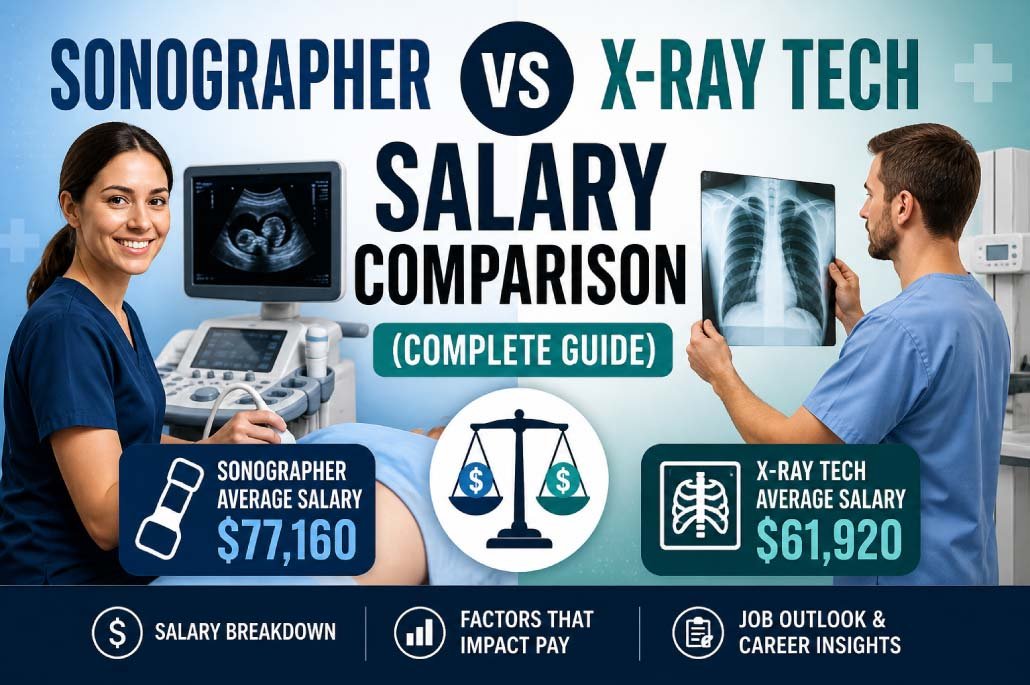
Choosing a career in healthcare is a big decision, especially when you are comparing two popular imaging professions like sonography and X-ray technology. Both careers offer stability, good income, and strong job demand, but when it comes to salary, many students want a clear answer: Which one pays more?
In this detailed guide, we will break down everything you need to know about sonographer vs X-ray tech salary, including earning potential, growth opportunities, and what actually affects your income in both careers.
Understanding the Roles First

Before comparing salaries, it’s important to understand what each professional actually does. Both careers play a critical role in modern healthcare by helping doctors diagnose illnesses using imaging technology. However, their methods, tools, and daily responsibilities differ significantly, which also impacts salary levels.
Sonographer (Ultrasound Technician)
A sonographer uses ultrasound machines to create images of internal organs. These images help doctors diagnose conditions without using radiation. Sonographers often work closely with patients, ensuring comfort while capturing accurate images. Their role requires both technical expertise and strong interpersonal communication skills.
They commonly work in:
- Pregnancy and maternity care
- Heart imaging (echocardiography)
- Abdominal scans
This job requires patience, precision, and strong technical skills.
X-Ray Technician (Radiologic Technologist)
An X-ray tech uses radiation-based imaging to capture images of bones and internal structures. These professionals are often found in hospitals, especially in emergency departments. Their role is essential in quickly diagnosing injuries, particularly in urgent or trauma-related situations.
Their work includes:
- Taking X-ray images
- Positioning patients
- Following strict safety procedures
This role can be more fast-paced, especially in trauma situations.
Salary Comparison (Main Topic)
Now let’s get to the most important part — salary. While both professions offer stable and rewarding income opportunities, there are noticeable differences in earning potential. These differences are influenced by education, specialization, demand, and the complexity of the imaging techniques used.
Average Sonographer Salary
Sonographers are among the higher-paid imaging professionals. Their expertise in non-invasive imaging and growing demand in healthcare contributes to their strong earning potential. Salaries can vary based on experience, location, and specialization.
- Average annual salary: $95,000 to $105,000
- Entry-level salary: $70,000 to $80,000
- Experienced professionals: $110,000+
Highly specialized sonographers, especially in cardiac imaging, can earn even more.
Average X-Ray Tech Salary
X-ray technicians earn solid salaries, but generally less than sonographers. Their role is still essential in healthcare, especially in diagnostic and emergency settings. Earnings can improve with additional certifications and experience.
- Average annual salary: $60,000 to $80,000
- Entry-level salary: $45,000 to $55,000
- Experienced professionals: $80,000 to $95,000
With additional certifications (like MRI or CT), salaries can increase significantly.
Direct Salary Comparison
When comparing salaries directly, sonographers generally earn more than X-ray technicians at almost every career stage. This difference becomes more noticeable with experience and specialization. While both careers offer stable incomes, sonography consistently provides higher average pay and stronger long-term earning potential in most healthcare settings.
- Sonographers earn more at entry level
- Sonographers maintain higher average salaries
- X-ray techs can increase earnings through specialization
Overall, sonographers earn 20% to 30% more in most cases.
Why Sonographers Earn More

This difference in salary is not random. There are clear reasons behind it. Several factors such as skill level, demand, and the nature of the technology used contribute to higher pay for sonographers compared to X-ray technicians.
1. Advanced Skill Requirements
Sonography requires strong technical knowledge and a deep understanding of human anatomy. Professionals must be able to operate complex ultrasound machines while also interpreting images in real time. This combination of technical skill and clinical judgment makes the role more specialized and often contributes to higher salary levels.
2. Non-Invasive Technology
3. Growing Demand
The demand for sonographers is increasing rapidly due to the rise in chronic diseases and the need for safe, accurate diagnostic tools. Hospitals and clinics are using ultrasound more often as a first-choice imaging method because it is quick, affordable, and non-invasive. This growing usage creates strong job opportunities and long-term career stability for sonographers.
Factors That Affect Salary in Both Careers
Your salary is not fixed. It depends on several important factors that influence how much you can earn over time. These include your experience, location, workplace, and additional certifications. Understanding these factors helps you plan your career path and maximize your earning potential.
- Experience Level
Beginners earn less
Experts earn significantly more - Location
Salaries are higher in developed countries and big cities. - Work Setting
Hospitals usually pay more
Clinics may offer lower pay but better hours - Certifications
Extra certifications can boost your income in both fields.
Also Read:
Career Growth and Earning Potential
Both careers offer opportunities for advancement, but the growth paths differ in flexibility and long-term earning potential. Choosing the right path depends on whether you prefer specialization within one field or expanding into multiple imaging technologies.
Sonographer Career Growth
Sonographers can specialize in areas that enhance their expertise and income potential. These specialized roles often require additional training but can lead to higher salaries and professional recognition in specific medical fields.
Sonographers can specialize in areas like:
- Cardiac sonography
- Vascular imaging
However, career growth is somewhat limited compared to other healthcare roles.
X-Ray Tech Career Growth
X-ray techs have a wider range of career advancement options, allowing them to expand their skills into other imaging modalities. This flexibility makes it easier to increase earnings and move into higher-level positions over time.
X-ray techs have more options to grow:
- MRI technologist
- CT technologist
- Radiology supervisor
This flexibility allows X-ray techs to increase their salary over time.
Job Demand and Future Outlook

The demand for both professions remains strong, but growth rates vary due to changes in medical technology and patient care preferences. Understanding future trends can help you choose a career with better long-term stability and opportunities.
- Sonographer Demand
Growing quickly due to non-invasive imaging
Strong future job security - X-Ray Tech Demand
Still in demand but slower growth
Stable career with consistent opportunities
Sonography has a slight advantage in future growth.
Also Read:
Work-Life Balance Comparison
Work-life balance is an important factor when choosing a career. While both jobs are in healthcare, their daily routines and stress levels can differ significantly depending on the work environment and job responsibilities.
- Sonographer
More regular working hours
Less emergency work
Lower stress - X-Ray Tech
Night shifts and emergency duties
Fast-paced environment
Higher stress levels
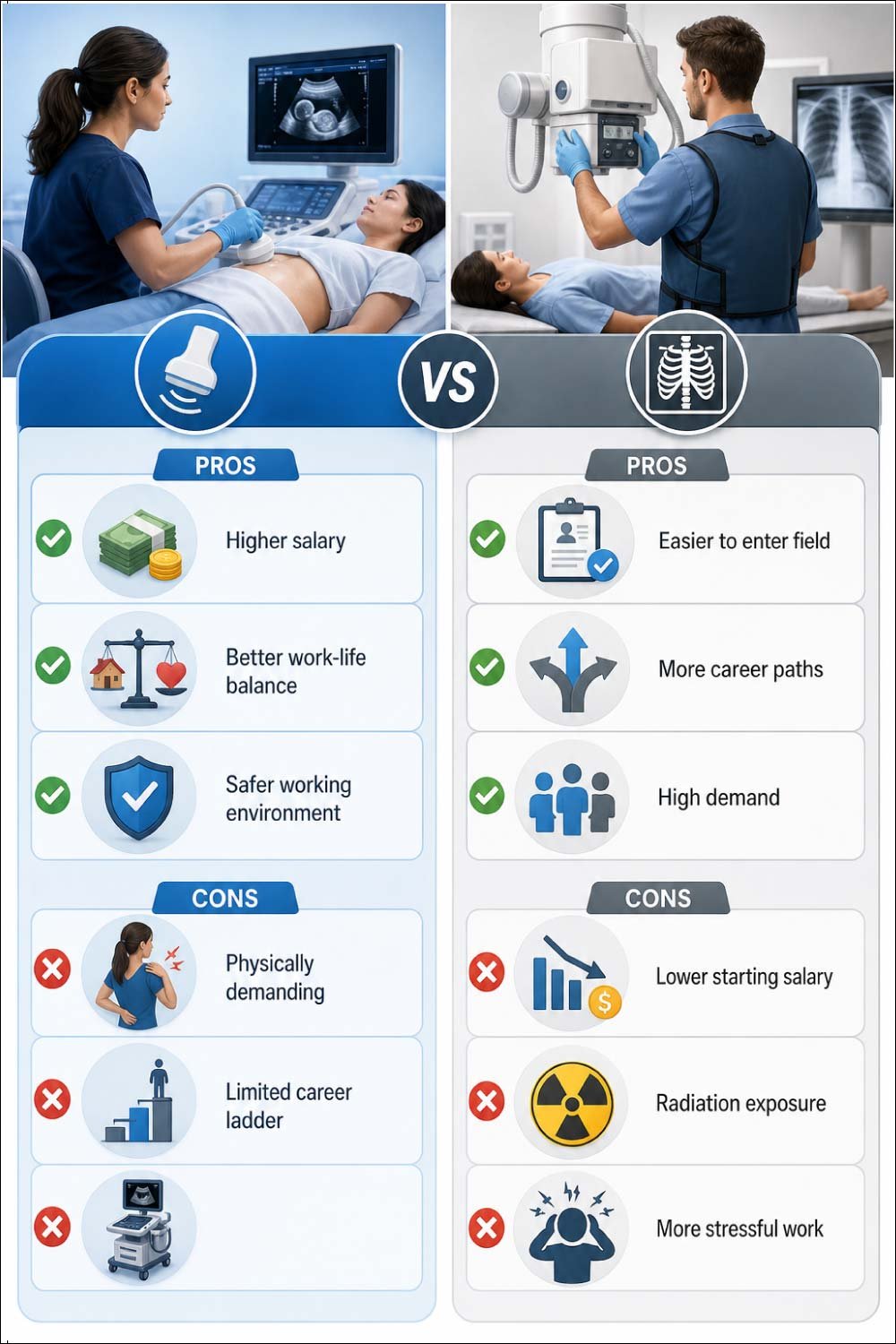
Final Conclusion
When comparing sonographer vs X-ray tech salary, the result is clear:
Sonographers earn more on average
They have better work-life balance
Their demand is growing faster
However, X-ray technology is still a great career with strong opportunities, especially if you plan to advance into specialized fields.

Zak is a dedicated medical and career writer specializing in sonography, healthcare education, and professional development. Through SonographerSalary.com, he shares in-depth insights on sonographer salaries, education pathways, and career tips to help readers build successful futures in medical imaging. His content combines accuracy with practical, easy-to-understand guidance, empowering students and professionals to make confident, informed career decisions.