

Monitoring blood glucose levels is a crucial part of managing diabetes and maintaining overall health. One of the most widely used tools for this purpose is a glucometer. Compact, accurate, and easy to use, glucometers have become essential for both patients and healthcare professionals.
This comprehensive guide explains what a glucometer is, its types, size variations, materials used in manufacturing, and how to choose the right one for your needs.
What Is a Glucometer? (Definition)
A glucometer is a medical device used to measure the concentration of glucose (sugar) in the blood. It provides quick, reliable readings that help individuals—especially people with diabetes—monitor their blood sugar levels at home or on the go.
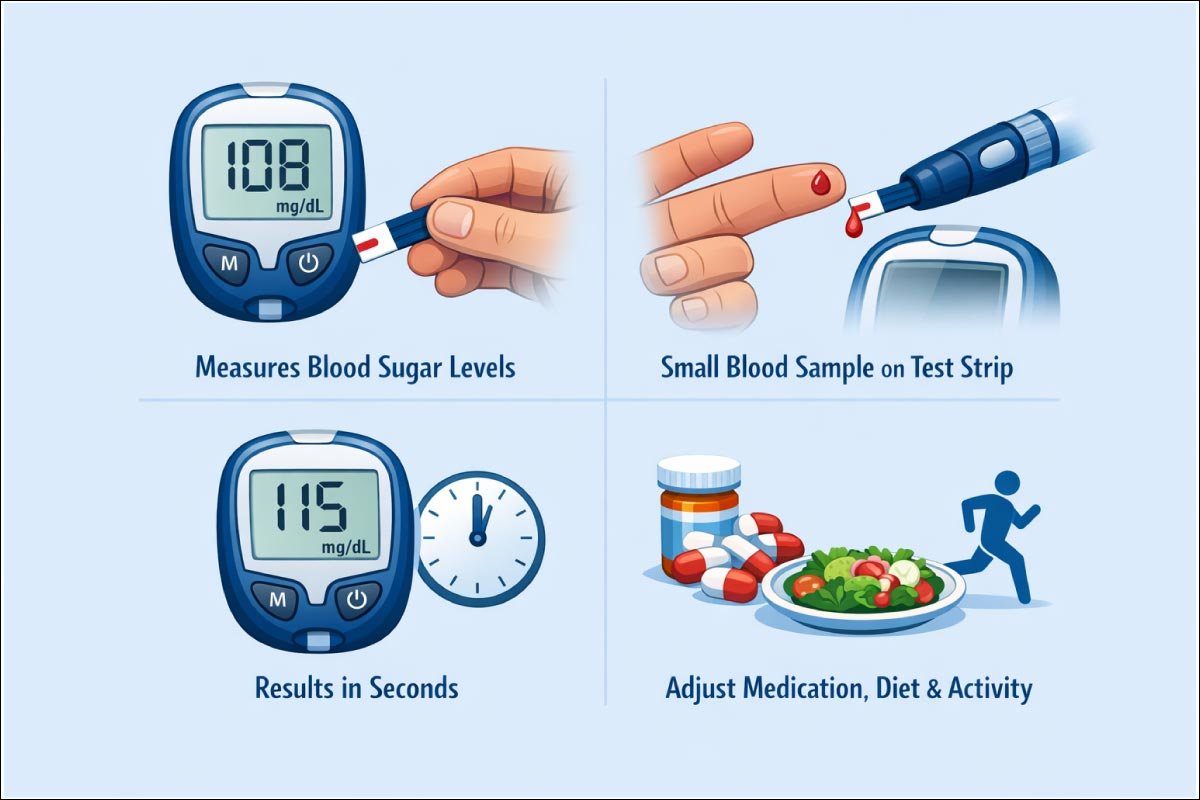
The device typically works by analyzing a small drop of blood, usually obtained from a fingertip, placed on a disposable test strip inserted into the glucometer. Within seconds, the screen displays the blood glucose level, allowing users to take timely action such as adjusting medication, diet, or physical activity.
Basic Components of a Glucometer
This table highlights the essential components of a glucometer and explains their specific functions. Understanding each part helps users operate the device correctly and obtain accurate blood glucose readings. Familiarity with these components is especially important for effective diabetes monitoring and daily health management.
| Component | Function | Description |
|---|---|---|
| Display Screen | Shows results | Digital screen displaying glucose readings |
| Test Strips | Blood analysis | Disposable strips with chemical reagents |
| Lancet | Blood sample | Small needle used for finger pricking |
| Control Buttons | Navigation | Used to operate settings and memory |
| Battery | Power source | Powers the glucometer |
Why Glucometers Are Important
Glucometers play a vital role in daily diabetes care by helping individuals understand how food, activity, stress, and medication affect blood sugar levels. Consistent monitoring supports informed decisions, early detection of problems, and long-term health management, reducing risks while improving confidence and independence for patients, families, and healthcare providers alike.
Benefits include:
-
Real-time glucose tracking
-
Better diabetes control
-
Reduced hospital visits
-
Improved lifestyle planning
Types of Glucometers
Modern glucose monitoring technology offers a wide range of glucometers designed to match different lifestyles, medical needs, and comfort levels. From basic finger-prick devices to advanced sensor-based systems, each type varies in accuracy, convenience, cost, and data features. Understanding these options helps users choose a glucometer that best supports effective diabetes management and daily glucose tracking.
1. Traditional Blood Glucometers
Traditional blood glucometers require a small finger-prick blood sample applied to disposable test strips. They are widely used due to their affordability, reliability, and ease of access. When used correctly, they provide highly accurate readings and are suitable for routine self-monitoring.
2. Continuous Glucose Monitors (CGM)
Continuous glucose monitors use a tiny sensor inserted under the skin to measure glucose levels around the clock. They provide real-time readings, trends, and alerts for high or low sugar levels. CGMs reduce frequent finger pricks and support better long-term glucose control.
3. Non-Invasive Glucometers
Non-invasive glucometers aim to measure blood glucose without needles or blood samples. They use technologies such as infrared light, optical sensors, or electromagnetic waves. While comfort is a major advantage, these devices are still evolving and may have limited availability and variable accuracy.
4. Smart Glucometers
Smart glucometers connect wirelessly to smartphones or tablets via Bluetooth. They automatically log readings, generate charts, and allow data sharing with healthcare providers. These devices are ideal for tech-savvy users who want detailed insights, reminders, and better long-term diabetes management.
5. Strip-Free Glucometers
Strip-free glucometers eliminate the need for traditional test strips by using reusable sensors or cartridges. They reduce ongoing supply costs and are more convenient for frequent testing. However, they may require regular calibration and are often more expensive upfront.
6. Wearable Patch Glucometers
Wearable patch glucometers are lightweight devices worn on the skin for continuous or frequent glucose monitoring. They are discreet and user-friendly, making them suitable for active lifestyles. Many models sync with mobile apps and provide trend data rather than single readings.
7. Hospital-Grade Glucometers
Hospital-grade glucometers are designed for clinical settings and professional use. They offer high precision, fast results, and strict quality controls. These devices often support multiple patient profiles, data integration with medical systems, and are used for diagnosis and inpatient monitoring.
Types of Glucometers Comparison
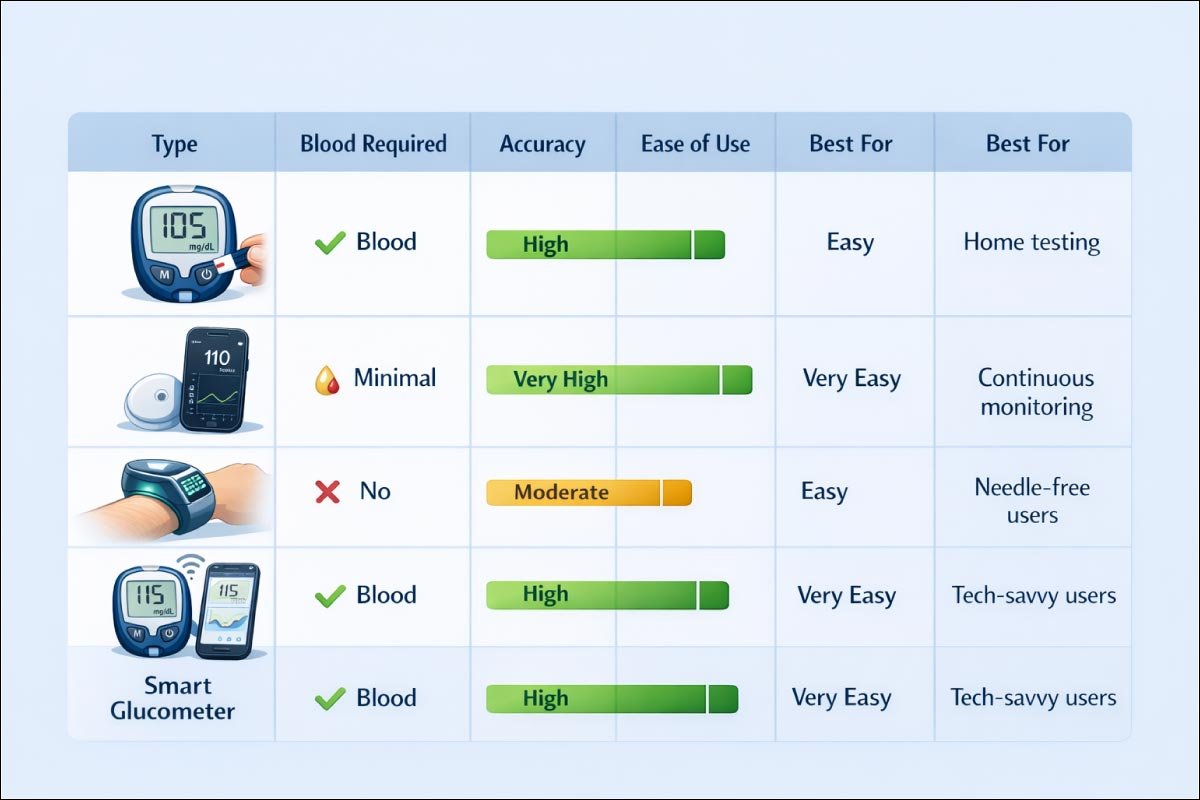
This comparison table outlines the main types of glucometers, highlighting differences in blood requirements, accuracy, and ease of use. It helps users quickly identify which option best suits their lifestyle, comfort level, and monitoring needs, from basic home testing to advanced continuous glucose tracking.
| Type | Blood Required | Accuracy | Ease of Use | Best For |
|---|---|---|---|---|
| Traditional | Yes | High | Easy | Home testing |
| CGM | Minimal | Very High | Very Easy | Continuous monitoring |
| Non-Invasive | No | Moderate | Easy | Needle-free users |
| Smart Glucometer | Yes | High | Very Easy | Tech-savvy users |
Glucometer Size Guide
Glucometer size plays an important role in comfort, convenience, and daily usability. Compact models suit active lifestyles, while larger devices often provide better screen visibility and easier handling. Selecting the right size ensures accurate readings, ease of use, and consistent monitoring, especially for elderly users or those testing multiple times daily.
Small / Compact Glucometers
Small or compact glucometers are designed for maximum portability and convenience. Their lightweight build makes them easy to carry in pockets, purses, or travel kits. These devices are perfect for users who test frequently on the go and prefer discreet, quick blood glucose monitoring without bulky equipment.
Medium-Sized Glucometers
Medium-sized glucometers strike a practical balance between portability and readability. They typically feature clearer displays and comfortable button layouts without becoming bulky. This size is ideal for everyday home use, offering ease of handling, reliable visibility, and convenient storage while still being suitable for occasional travel.
Large / Clinical Glucometers
Large or clinical glucometers are designed for professional settings, offering bigger screens, enhanced accuracy, and advanced features like data storage and connectivity. They are ideal for hospitals, clinics, and care centers where multiple readings are taken daily, providing efficiency, reliability, and ease of use for healthcare professionals.
Also Read:
Glucometer Size Guide
This table provides a size guide for glucometers, detailing their dimensions, weight, and ideal use. It helps users choose a device that fits their lifestyle, whether for travel, home monitoring, or clinical settings, ensuring both convenience and practicality in daily blood glucose management.
| Size Category | Approx. Dimensions (cm) | Weight | Ideal Use |
|---|---|---|---|
| Compact | 7 × 4 × 1.5 | 40–60 g | Travel, daily carry |
| Medium | 9 × 5 × 2 | 70–100 g | Home use |
| Large | 12 × 7 × 3 | 150–200 g | Clinical settings |
Materials Used in Glucometers
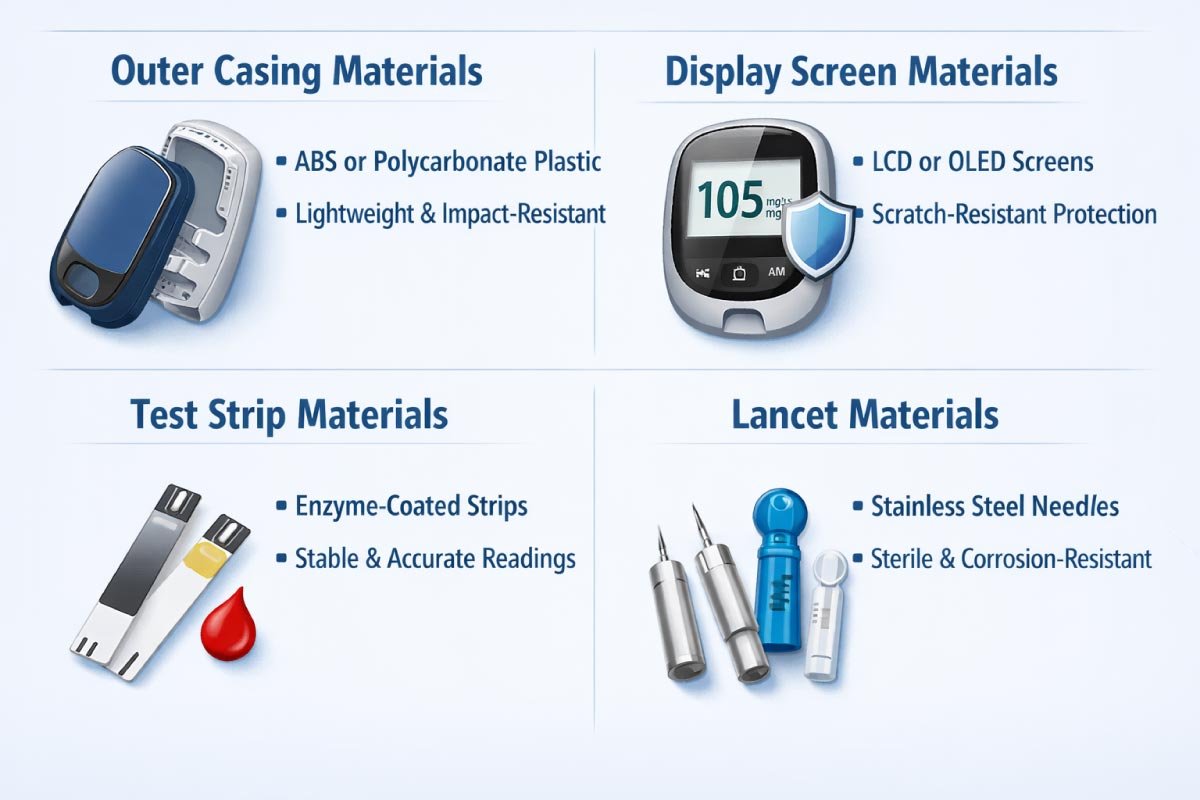
Glucometers are made from materials that ensure durability, safety, and ease of use. High-quality plastics provide lightweight and impact-resistant casing, while medical-grade components maintain accurate readings and hygiene. Choosing devices with reliable materials enhances longevity, performance, and user confidence, making daily glucose monitoring safer and more convenient.
1. Outer Casing Materials
The outer casing of a glucometer is typically made from medical-grade plastics like ABS or polycarbonate. These materials provide a lightweight, durable, and impact-resistant shell, ensuring the device can withstand daily use. High-quality casing also guarantees user safety and contributes to the overall longevity of the glucometer.
2. Display Screen Materials
Glucometer screens are typically made from LCD or OLED technology, providing clear, easy-to-read readings. To ensure longevity, these screens are often protected with scratch-resistant plastic or tempered glass. High-quality display materials improve visibility, reduce glare, and withstand daily wear, making glucose monitoring more accurate and user-friendly.
3. Test Strip Materials
Test strips are essential for accurate glucose measurement and are typically made from layered plastic for stability and flexibility. They contain enzymes, such as glucose oxidase, which react with blood samples to produce reliable readings. High-quality materials ensure precision, minimize errors, and maintain safety during repeated testing.
4. Lancet Materials
Lancets are small, sharp needles used for blood sampling and are usually made from stainless steel. This material ensures precise punctures, maintains sterility, and resists corrosion over time. High-quality lancets provide safety, reduce discomfort, and support consistent, reliable glucose testing for daily monitoring.
Also Read:
Ultrasound Machine Sizes: Complete Guide 2026
Glucometer Materials Breakdown
This table breaks down the materials used in various glucometer components and their purposes. Understanding the construction helps users appreciate the device’s durability, safety, and functionality, from the protective body casing to the precise, sterile lancet used for accurate blood glucose testing.
| Component | Material Used | Purpose |
|---|---|---|
| Body Casing | ABS / Polycarbonate | Durability and safety |
| Screen | LCD / OLED + Glass | Clear readings |
| Test Strips | Plastic + Enzymes | Glucose reaction |
| Lancet | Stainless Steel | Sterile blood sampling |
| Buttons | Silicone / Rubber | Comfortable use |
Accuracy and Calibration
Accuracy is critical in a glucometer. Most modern devices meet international standards, but results can be affected by improper calibration, expired test strips, or environmental conditions like temperature and humidity.
Some glucometers require manual calibration, while others are auto-calibrated, reducing the chance of user error.
Factors Affecting Glucometer Accuracy
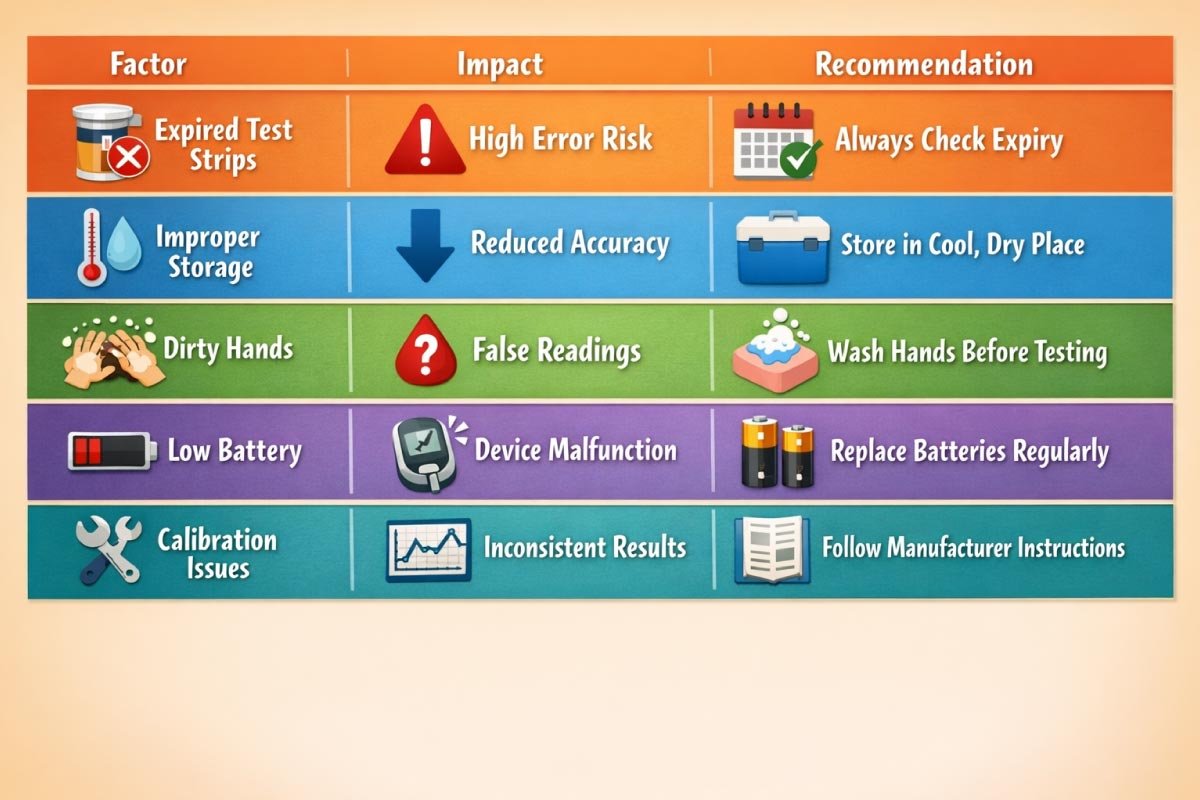
| Factor | Impact | Recommendation |
|---|---|---|
| Expired Test Strips | High error risk | Always check expiry |
| Improper Storage | Reduced accuracy | Store in cool, dry place |
| Dirty Hands | False readings | Wash hands before testing |
| Low Battery | Device malfunction | Replace batteries regularly |
| Calibration Issues | Inconsistent results | Follow manufacturer instructions |
Also Read:
Ultrasound Transducer Size Guide: Complete 2026
How to Choose the Right Glucometer
Selecting the ideal glucometer is essential for effective blood sugar monitoring. Choosing the right device involves balancing accuracy, ease of use, affordability, and additional features. Your lifestyle, age, and health needs play a crucial role in this decision. Understanding the key factors ensures better glucose management and consistent, reliable readings for long-term health.
1. Accuracy and Certification
Accuracy is the most important factor when choosing a glucometer. Ensure the device is clinically tested and certified by relevant health authorities. Certified glucometers provide reliable readings, which are critical for proper diabetes management. Checking user reviews and clinical validations helps confirm consistency, giving confidence that your blood sugar monitoring is precise and trustworthy.
2. Ease of Use and Display Size
A glucometer should be user-friendly, with simple controls and an intuitive interface. Large, clear displays are especially helpful for elderly users or those with vision challenges. Devices with minimal buttons, clear indicators, and straightforward testing procedures reduce errors, making daily monitoring easier and less stressful for people of all ages.
3. Cost of Test Strips
Test strip prices can significantly impact long-term expenses, as frequent testing consumes strips quickly. Consider a glucometer with affordable, widely available strips that fit your budget. High-quality, cost-effective strips ensure regular monitoring without financial strain. Some brands offer subscription or bulk options to reduce recurring costs.
4. Data Storage and Connectivity
Modern glucometers often include memory storage or app connectivity. Devices with data storage allow tracking trends over time, which is valuable for healthcare consultations. Connectivity with smartphones or cloud apps enables easy sharing with doctors, helps in pattern recognition, and provides reminders for regular testing, improving overall diabetes management efficiency.
5. Portability
Portability is crucial for people who travel or have busy lifestyles. Compact, lightweight glucometers fit easily in bags or pockets, allowing testing anytime, anywhere. Some models include protective cases and battery longevity features, making them practical for on-the-go use. Portability ensures you never miss a test, even during trips or outdoor activities.
Maintenance and Care Tips
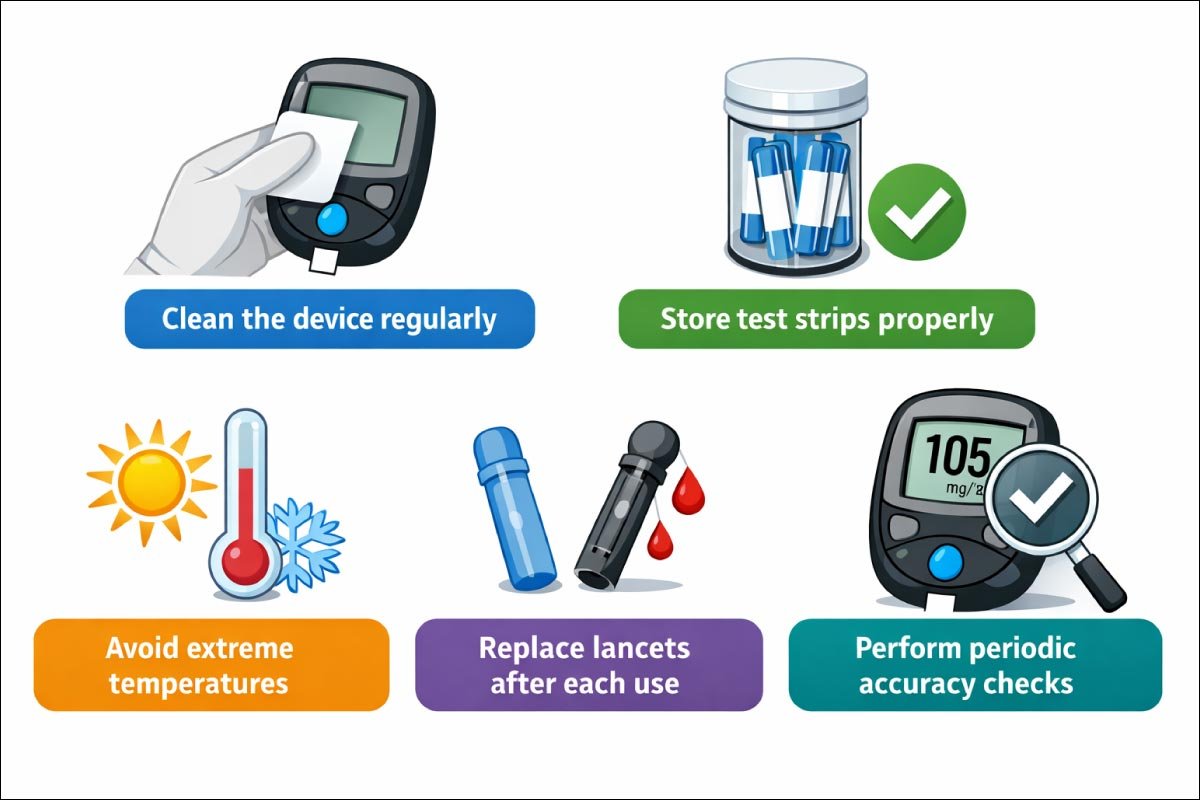
Maintaining your glucometer properly is key to reliable readings and long-term use. Regular cleaning, careful storage, and proper handling prevent damage and ensure accuracy.
Simple routines, such as replacing lancets, protecting test strips, and checking device performance, help users manage diabetes effectively and safely every day.
-
Clean the device regularly
-
Store test strips properly
-
Avoid extreme temperatures
-
Replace lancets after each use
-
Perform periodic accuracy checks
Also Read:
Ultrasound Transducer Frequency Chart: 2026 Guide
Conclusion
A glucometer is more than just a medical device—it’s a daily health companion for millions of people worldwide. Understanding the definition, types, size options, and materials helps users make informed decisions and manage blood glucose levels more effectively.
Whether you need a simple home device or an advanced continuous monitoring system, choosing the right glucometer can significantly improve health outcomes and quality of life.
FAQs:
Which glucose meter is best for home use?
A glucose meter for home use should be accurate, easy to operate, portable, and require a small blood sample. Most home glucometers offer fast readings, memory storage, and simple displays, making them ideal for daily blood sugar monitoring.
What type of glucose meter is used in hospitals?
Glucose meters for hospitals are designed for high accuracy, frequent testing, and multiple patient use. These devices often include advanced calibration, data connectivity, and compliance with medical standards, ensuring reliable blood glucose readings in clinical environments.
Why is a blood glucose levels chart important?
A blood glucose levels chart helps track sugar levels over time and compare results with standard ranges. It supports better decision-making for diet, medication, and lifestyle changes, especially for people managing diabetes or monitoring overall metabolic health.
Which is the best blood glucose meter in 2026?
The best blood glucose meter in 2026 combines high accuracy, fast results, minimal pain, and smart features like app connectivity. Modern meters focus on ease of use, data tracking, and improved testing technology for better diabetes management.
What are the different types of glucometer devices?
Different types of glucometer devices include basic finger-stick meters, advanced digital glucometers, and smart glucometers with mobile app support. Each type varies in features, accuracy levels, and data storage, catering to different monitoring needs.
What are the different types of glucose monitors?
Different types of glucose monitors include traditional blood glucose meters and continuous glucose monitors (CGMs). While standard meters require finger pricks, CGMs track glucose levels throughout the day, offering real-time trends and alerts.
How do different types of glucose meters compare?
Different types of glucose meters vary in accuracy, testing method, cost, and convenience. Basic meters are affordable and simple, while advanced and smart meters provide faster results, memory storage, and digital tracking for long-term glucose management.

Zak is a dedicated medical and career writer specializing in sonography, healthcare education, and professional development. Through SonographerSalary.com, he shares in-depth insights on sonographer salaries, education pathways, and career tips to help readers build successful futures in medical imaging. His content combines accuracy with practical, easy-to-understand guidance, empowering students and professionals to make confident, informed career decisions.