
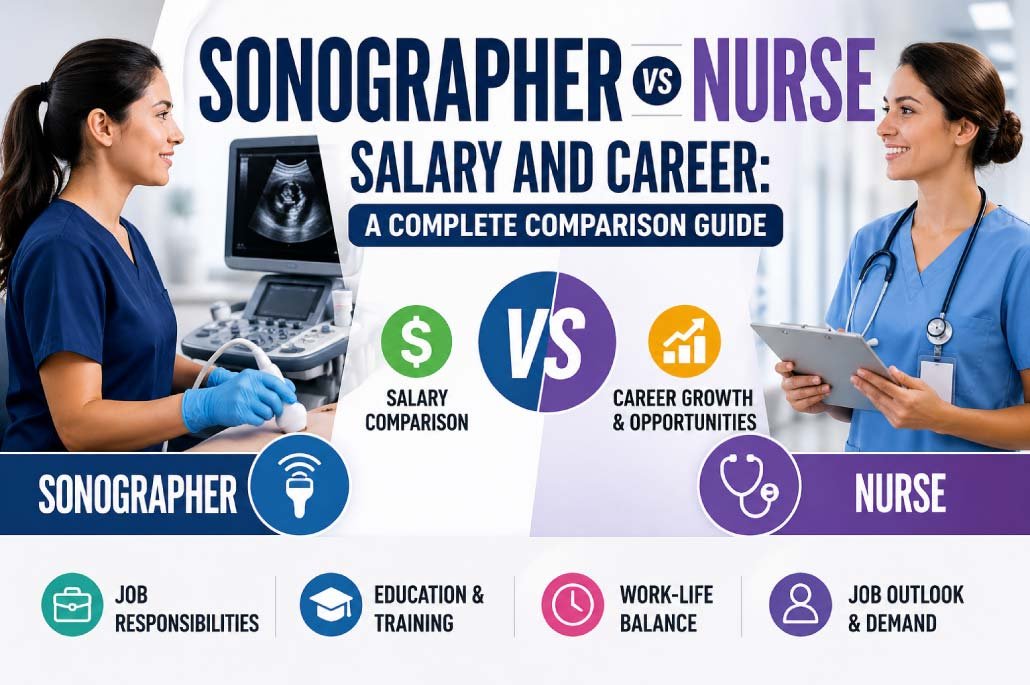
Choosing a career in healthcare is a rewarding decision, but selecting the right path can be challenging. Two popular and respected professions in this field are sonography and nursing. Both roles play a vital part in patient care, offer stable career growth, and come with competitive salaries.
However, they differ significantly in responsibilities, education requirements, work environments, and earning potential.
In this detailed guide, we will compare sonographer vs nurse salary and career to help you make an informed decision based on your interests, goals, and lifestyle.
What is a Sonographer?
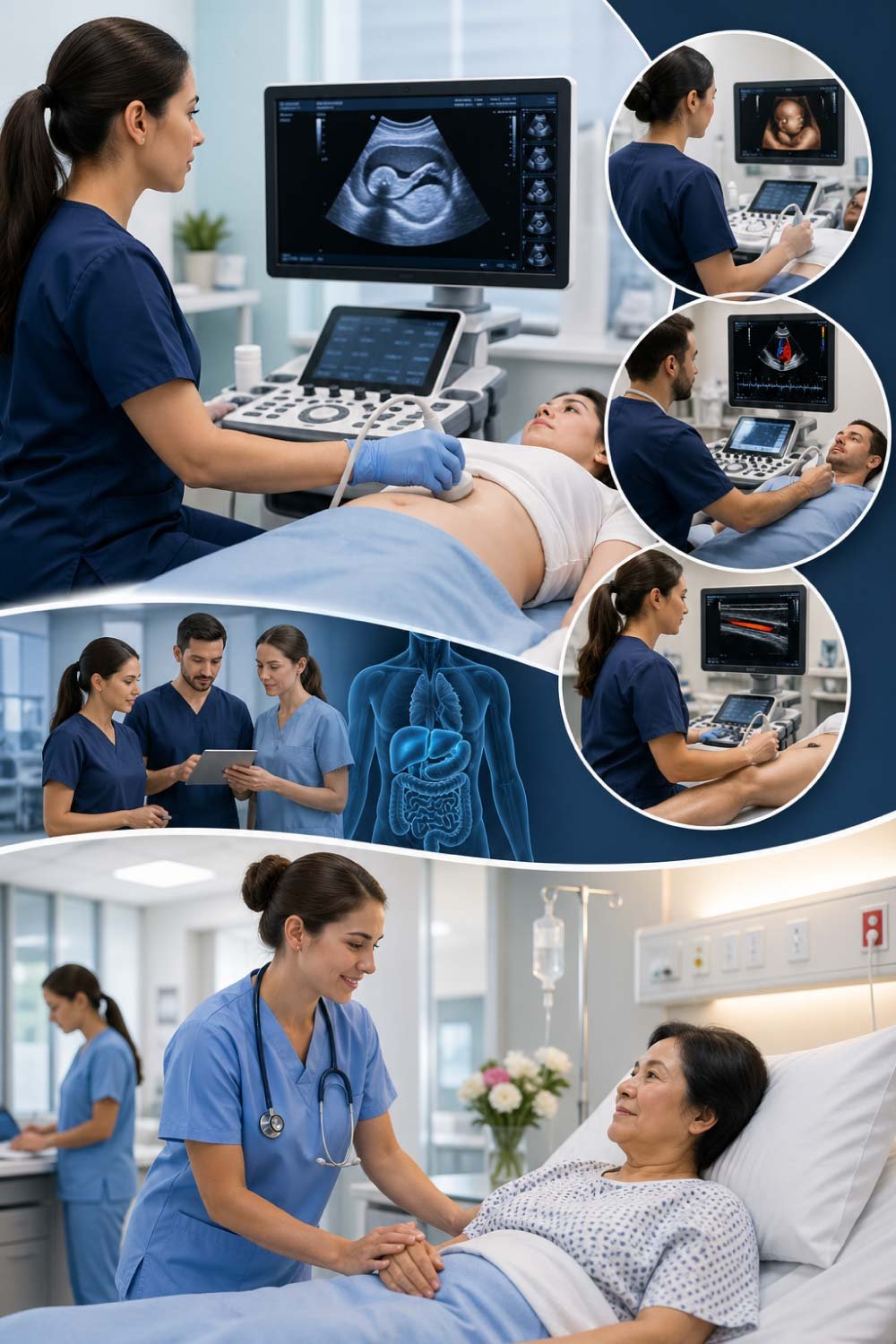
A sonographer, also called a diagnostic medical sonographer, is a trained healthcare professional who uses specialized ultrasound equipment to produce images of internal body structures. These images assist physicians in diagnosing diseases, monitoring pregnancies, and evaluating organ function safely without invasive procedures.
1. Key Responsibilities
Sonographers are responsible for operating ultrasound machines to capture high-quality images of organs and tissues. They prepare patients, explain procedures, ensure comfort, and analyze image quality. Additionally, they assist physicians by providing preliminary findings and maintain accurate records and equipment functionality.
2. Specializations in Sonography
Sonography offers several specialized fields allowing professionals to focus on specific areas. These include abdominal sonography for organs, obstetric and gynecologic sonography for pregnancy, cardiac sonography for heart imaging, and vascular sonography for blood flow and circulatory system analysis.
What is a Nurse?
A nurse is a vital healthcare professional who provides direct patient care, supports recovery, and promotes overall health. Nurses work closely with doctors and other medical staff, ensuring patients receive proper treatment, emotional support, and guidance throughout their healthcare journey.
Key Responsibilities
Nurses monitor patient conditions, administer medications, and assist during medical procedures. They educate patients and families about treatment plans, maintain detailed medical records, and ensure patient safety. Their role also includes emotional support and coordination with healthcare teams for effective care delivery.
Types of Nurses
There are various types of nurses based on education and specialization. Registered Nurses (RNs) provide general care, Licensed Practical Nurses (LPNs) handle basic care tasks, Nurse Practitioners (NPs) offer advanced care, while critical care and pediatric nurses specialize in specific patient groups.
Education and Training Requirements
Both sonographers and nurses require formal education and hands-on clinical training. Programs include theoretical learning and practical experience in healthcare settings. Certification or licensing is often mandatory, ensuring professionals meet industry standards and can provide safe, effective patient care.
Sonographer Education
To become a sonographer, individuals typically complete an Associate’s or Bachelor’s degree in Diagnostic Medical Sonography. They also need certification from recognized organizations and practical clinical training. This combination ensures they are skilled in both operating equipment and interpreting imaging results.
Duration
Sonography education usually takes between 2 to 4 years, depending on the program chosen. Associate degrees take around two years, while bachelor’s programs require four years, including classroom learning and clinical experience for skill development and certification readiness.
Nurse Education
Nursing education offers multiple pathways, including diploma programs, associate degrees, and bachelor’s degrees. Each level provides different career opportunities and responsibilities. Students also gain clinical experience and must pass licensing exams to practice professionally in healthcare settings.
Duration
Nursing education duration varies based on the chosen path. Diploma programs take about one year, associate degrees require two years, and bachelor’s degrees take four years. Advanced roles may require additional education and specialized certifications.
Key Difference
The main difference lies in career scope and specialization. Sonography is a focused field specializing in medical imaging from the beginning, while nursing provides broader opportunities, allowing professionals to work in various specialties and advance into leadership or advanced practice roles.
Salary Comparison: Sonographer vs Nurse
Salary plays a crucial role when choosing a career. Both sonographers and nurses earn competitive incomes, but earnings vary based on experience, specialization, and location. Generally, specialized roles and higher education levels lead to increased earning potential in both professions.
Average Sonographer Salary
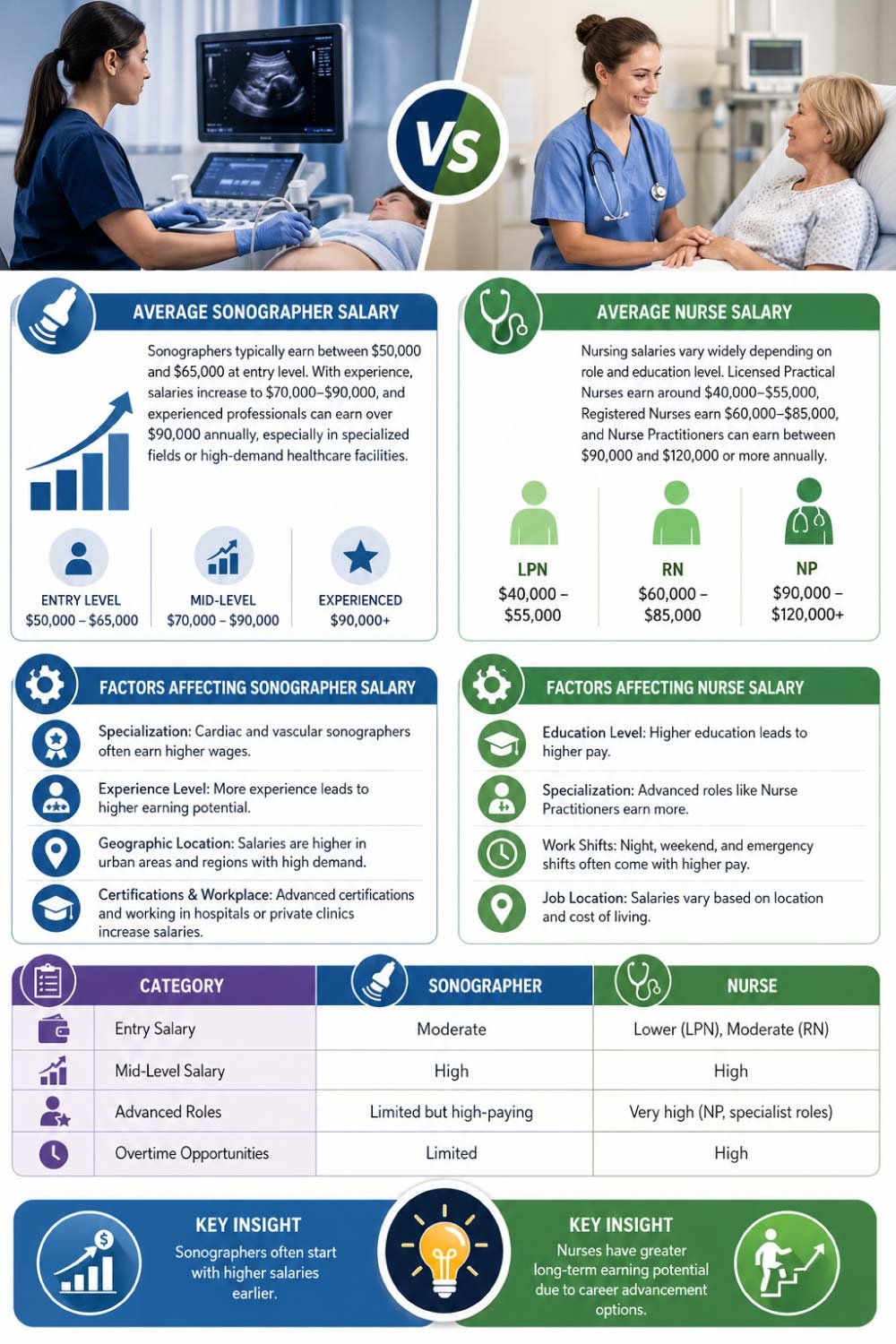
Sonographers typically earn between $50,000 and $65,000 at entry level. With experience, salaries increase to $70,000–$90,000, and experienced professionals can earn over $90,000 annually, especially in specialized fields or high-demand healthcare facilities.
Factors Affecting Sonographer Salary
Several factors influence sonographer salaries, including specialization, experience level, and geographic location. Cardiac and vascular sonographers often earn higher wages. Additionally, working in hospitals or private clinics and having advanced certifications can significantly increase earning potential.
Average Nurse Salary
Nursing salaries vary widely depending on role and education level. Licensed Practical Nurses earn around $40,000–$55,000, Registered Nurses earn $60,000–$85,000, and Nurse Practitioners can earn between $90,000 and $120,000 or more annually.
Factors Affecting Nurse Salary
Nurse salaries depend on education level, specialization, and years of experience. Advanced roles like Nurse Practitioners earn more. Work shifts, especially night or emergency shifts, and job location also significantly impact overall salary and benefits.
Salary Comparison Table
| Category | Sonographer | Nurse |
|---|---|---|
| Entry Salary | Moderate | Lower (LPN), Moderate (RN) |
| Mid-Level Salary | High | High |
| Advanced Roles | Limited but high-paying | Very high (NP, specialist roles) |
| Overtime Opportunities | Limited | High |
Key Insight
- Sonographers often start with higher salaries earlier
- Nurses have greater long-term earning potential due to career advancement options
Job Demand and Career Outlook
Both sonography and nursing offer strong career prospects in the healthcare industry. Demand for skilled professionals continues to rise due to population growth, aging societies, and medical advancements. However, each profession has unique trends, opportunities, and long-term career outlooks to consider.
Sonographer Job Outlook
Sonography is a fast-growing healthcare field driven by the increasing reliance on diagnostic imaging. As medical professionals prefer non-invasive procedures, sonographers play a crucial role in patient diagnosis, making this career stable and promising for future healthcare demands.
Growth Rate
The employment growth rate for sonographers is expected to range between 10% and 15%, which is faster than the average for most occupations. This growth is supported by technological advancements and the need for safer diagnostic methods in modern healthcare systems.
Nurse Job Outlook
Nursing remains one of the most in-demand professions worldwide. Nurses are essential in every healthcare setting, and their role continues to expand. The growing need for patient care ensures steady job availability and long-term career security for nursing professionals.
Reasons for High Demand
The high demand for nurses is mainly due to an aging population, increasing chronic illnesses, and a global shortage of healthcare workers. Additionally, the expansion of hospitals and healthcare services continues to create new job opportunities across various specialties.
Growth Rate
The job growth rate for nurses is projected to be between 6% and 12%, depending on specialization and region. Advanced roles such as nurse practitioners may experience higher demand due to their ability to provide specialized and independent care.
Key Difference
The key difference is that nursing offers a wider range of job opportunities globally due to its versatility. In contrast, sonography is more specialized, resulting in less competition but fewer total job openings compared to the broad nursing field.
Work Environment
Both professions operate in healthcare settings but differ significantly in daily tasks and environments. Sonographers focus on diagnostic imaging in controlled settings, while nurses work in diverse environments, often dealing directly with patient care and emergencies.
Sonographer Work Environment
Sonographers typically work in hospitals, diagnostic laboratories, clinics, and imaging centers. Their work environment is generally structured and technology-focused, allowing them to perform imaging procedures in controlled conditions with minimal interruptions.
Work Style
The work style of sonographers is mainly technical and procedure-based. They perform routine imaging tasks with limited patient interaction compared to nurses. Their role focuses more on operating equipment and capturing accurate diagnostic images efficiently.
Nurse Work Environment
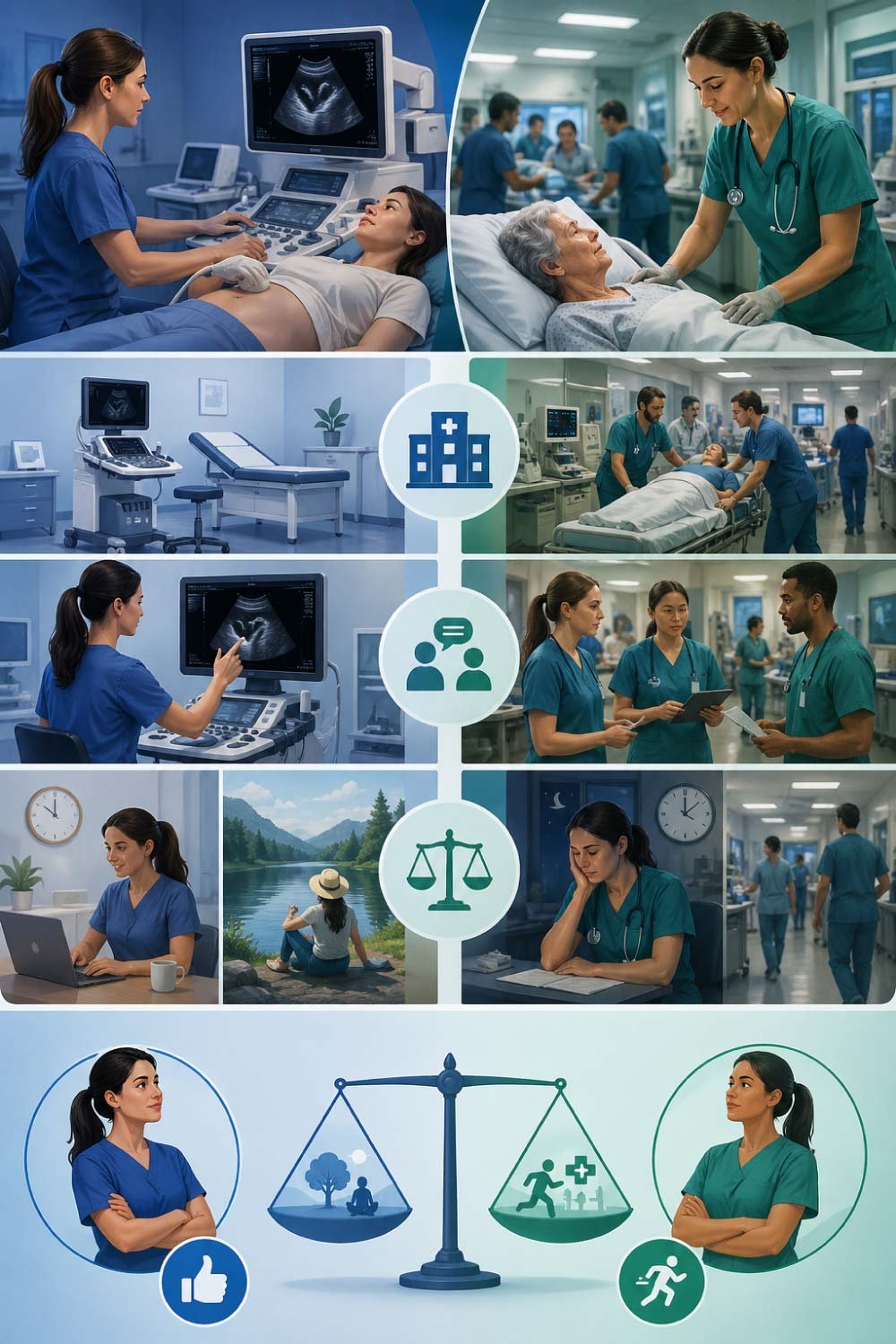
Nurses work in a wide range of settings, including hospitals, clinics, schools, home healthcare, and emergency departments. Their environment is often fast-paced and dynamic, requiring adaptability to different patient needs and medical situations.
Work Style
Nursing involves a highly interactive work style, requiring constant communication with patients, families, and healthcare teams. It is physically demanding and emotionally challenging, as nurses often handle critical situations and provide continuous patient support.
Work-Life Balance
Work-life balance varies significantly between sonographers and nurses. While both careers can be demanding, differences in schedules, stress levels, and job responsibilities impact how professionals manage their personal and professional lives.
Sonographer
Sonographers generally enjoy more predictable working hours with fewer emergency duties. Their schedules are often stable, leading to lower stress levels and a better work-life balance compared to many other healthcare professions.
Nurse
Nurses often work irregular shifts, including nights, weekends, and holidays. The job can be highly stressful due to long hours and critical patient care responsibilities, making work-life balance more challenging compared to technical healthcare roles like sonography.
Conclusion
If you prefer work-life balance, sonography may be better.
If you thrive in fast-paced environments, nursing might suit you.
Career Growth Opportunities
Both sonography and nursing offer career advancement, but the scope differs significantly. Sonography provides specialized growth within imaging fields, while nursing offers a broader range of leadership, administrative, and advanced clinical roles, making it more flexible for long-term career development.
Also Read:
Sonographer Career Growth
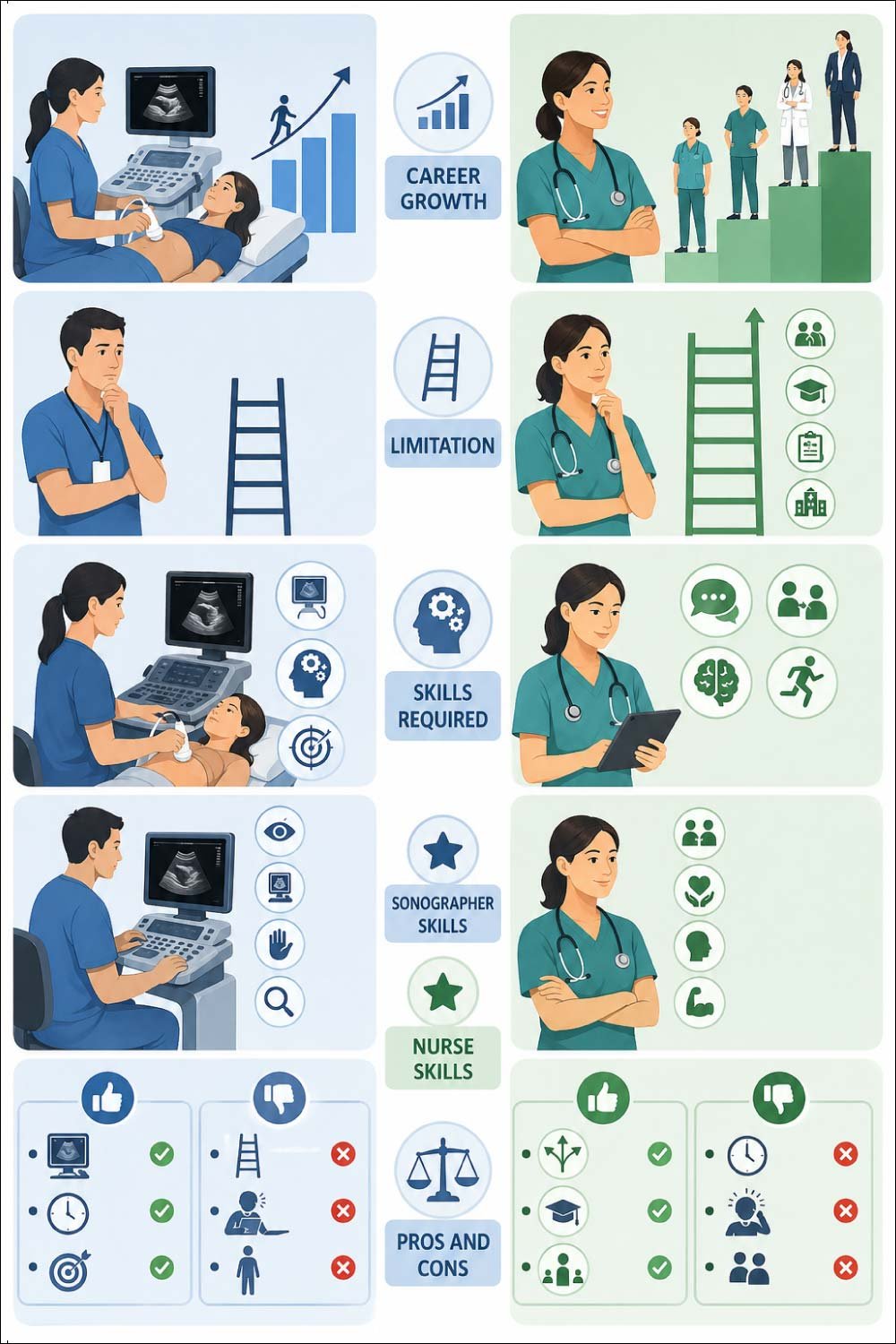
Sonographers can advance into senior roles such as senior sonographer or lead technologist. They may also specialize in areas like cardiac or vascular imaging. Some move into teaching or training roles, sharing expertise with students and new professionals in clinical settings.
Limitation
One limitation of a sonography career is the relatively narrow career ladder. While specialization is possible, there are fewer management or leadership opportunities compared to other healthcare professions, which may limit long-term career diversification and upward mobility.
Nurse Career Growth
Nursing offers extensive career growth opportunities. Nurses can advance to roles such as Nurse Practitioner, Nurse Manager, Clinical Specialist, or Healthcare Administrator. These positions provide higher salaries, increased responsibility, and opportunities to influence patient care and healthcare systems.
Advantage
The major advantage of nursing is its flexibility and wide range of advancement options. Nurses can switch specialties, pursue higher education, and move into leadership or administrative roles, making it one of the most versatile and scalable careers in healthcare.
Also Read:
Skills Required
Both professions require a mix of technical and soft skills. Sonographers rely more on technical expertise and precision, while nurses require strong interpersonal skills. Each career demands dedication, attention to detail, and the ability to work effectively in healthcare environments.
Sonographer Skills
Sonographers need excellent attention to detail to capture accurate images. Strong technical skills are essential for operating equipment. Good hand-eye coordination and analytical thinking help in identifying abnormalities and ensuring high-quality diagnostic results.
Nurse Skills
Nurses must have strong communication skills to interact with patients and medical teams. Emotional intelligence is crucial for patient care, while critical thinking helps in decision-making. Physical stamina is also necessary due to long hours and demanding work conditions.
Pros and Cons
Understanding the advantages and disadvantages of each career helps in making an informed decision. Both professions have rewarding aspects, but they also come with challenges related to workload, stress, career growth, and daily responsibilities.
Sonographer Pros
Sonography offers a high starting salary, making it attractive for new professionals. The job is generally less stressful, with predictable working hours. It is highly specialized, allowing individuals to focus on technical expertise and diagnostic imaging skills.
Sonographer Cons
Despite its benefits, sonography has some drawbacks. Career growth opportunities are limited compared to nursing. The work can become repetitive over time, and there is less patient interaction, which may not suit individuals who enjoy direct patient care.
Nurse Pros
Nursing provides strong job demand and excellent career flexibility. There are many opportunities for advancement into higher roles. Nurses also have a direct impact on patient care, making the profession emotionally rewarding and meaningful.
Nurse Cons
Nursing can be highly stressful due to long working hours and critical responsibilities. Emotional challenges are common, especially in difficult patient situations. The job is also physically demanding, requiring stamina and resilience to handle daily tasks.
Also Read:
Which Career is Better?

Choosing between sonography and nursing depends on personal interests, strengths, and career goals. Both professions offer stability and good income, but the nature of work, stress levels, and growth opportunities differ significantly based on individual preferences.
Choose Sonography If:
Sonography is ideal if you enjoy working with technology and medical imaging. It suits individuals who prefer a stable, structured environment with less stress. It is also a good option for those seeking a quicker path to a well-paying healthcare career.
Choose Nursing If:
Nursing is suitable if you enjoy direct patient care and helping people. It is ideal for individuals who can handle stress and fast-paced environments. Those seeking long-term career growth, flexibility, and leadership opportunities may find nursing more rewarding.
Salary vs Satisfaction: Final Thoughts
Both sonography and nursing are excellent career choices with unique advantages. Sonographers benefit from a stable, lower-stress career with strong early earnings, while nurses enjoy dynamic roles, meaningful patient interaction, and greater long-term career growth and advancement opportunities.
Conclusion
When comparing sonographer vs nurse salary and career, there is no one-size-fits-all answer. If you prioritize higher starting salary and work-life balance, sonography is a great option. However, if you value career advancement, flexibility, and direct patient care, nursing offers a more diverse and rewarding path.
Before making your decision, consider:
- Your interests (technical vs caregiving)
- Your tolerance for stress
- Your long-term career goals
- Educational commitment
Both professions offer stability, respect, and the opportunity to make a meaningful difference in people’s lives. The best choice is the one that aligns with your personal strengths and future ambitions.

Zak is a dedicated medical and career writer specializing in sonography, healthcare education, and professional development. Through SonographerSalary.com, he shares in-depth insights on sonographer salaries, education pathways, and career tips to help readers build successful futures in medical imaging. His content combines accuracy with practical, easy-to-understand guidance, empowering students and professionals to make confident, informed career decisions.