
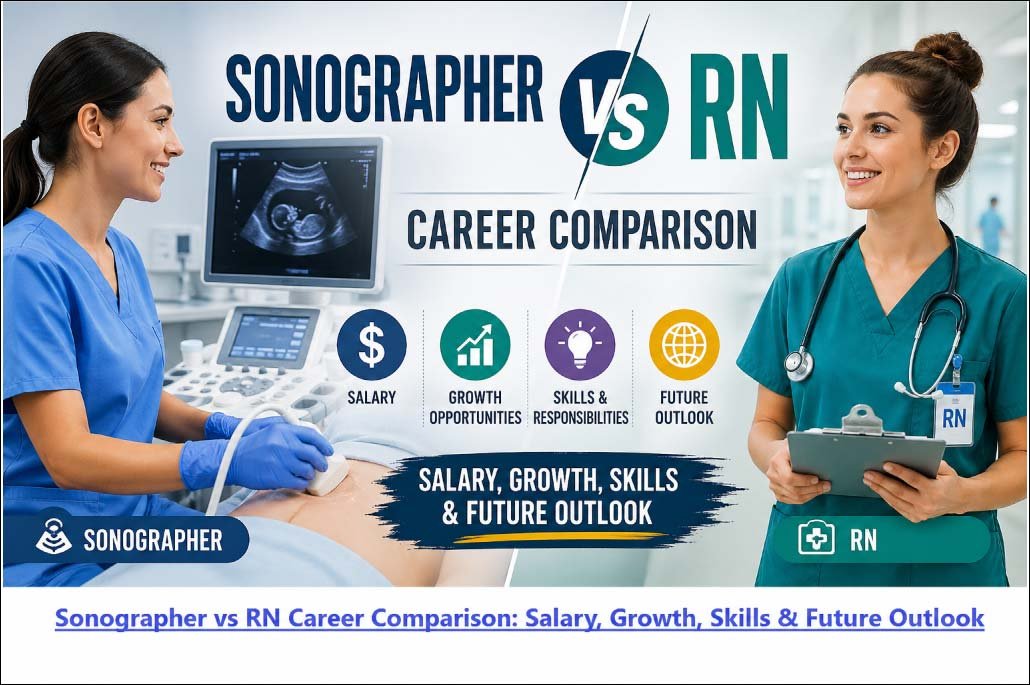
Choosing a healthcare career is a major decision that shapes your professional future, lifestyle, and financial stability. Two popular and rewarding options in the medical field are becoming a Sonographer (Diagnostic Medical Sonographer) or a Registered Nurse (RN). While both careers involve patient care and play vital roles in healthcare systems, they differ significantly in responsibilities, education, career flexibility, and long-term growth.
This detailed comparison will help you understand both paths clearly so you can choose the one that best matches your goals, interests, and personality.
Introduction to Both Careers

Choosing a career in healthcare is a major decision that depends on your interests, skills, and long-term goals. Sonography and nursing are both rewarding professions, but they differ in responsibilities, education, and work style. Understanding these differences helps you choose the right path.
What is a Sonographer?
A sonographer is a healthcare professional who uses specialized imaging equipment to perform ultrasound scans. These scans help doctors diagnose and monitor medical conditions. Sonographers typically work in hospitals, diagnostic labs, or clinics and focus heavily on technical imaging tasks.
What is a Registered Nurse (RN)?
A Registered Nurse provides direct patient care, administers medications, monitors health conditions, and coordinates with doctors and healthcare teams. Nurses work in a wide range of environments including hospitals, clinics, schools, and even patients’ homes.
Education and Training Requirements
Education plays a crucial role in shaping your healthcare career. Both sonographers and registered nurses require formal training, but the structure, duration, and focus of their education differ. Understanding these requirements can help you plan your academic journey effectively.
Sonographer Education
To enter the field of sonography, students must complete specialized training focused on diagnostic imaging. The programs are designed to build technical expertise along with practical clinical skills, allowing graduates to work efficiently in healthcare environments.
- An Associate Degree (2 years) or Bachelor’s Degree (4 years) in Diagnostic Medical Sonography
- Clinical training through internships
- Certification (recommended or required in many regions)
Key Point:
Education is relatively shorter and more specialized compared to nursing.
RN Education
Becoming a registered nurse involves broader education that covers patient care, medical knowledge, and healthcare practices. Nursing programs are more versatile, preparing students for various roles and career advancement opportunities in the medical field.
- Associate Degree in Nursing (ADN) – 2 to 3 years
- Bachelor of Science in Nursing (BSN) – 4 years
After completing your degree:
- You must pass a licensing exam (such as NCLEX in many countries)
Key Point:
Nursing education is broader and offers more long-term flexibility.
Job Responsibilities For Sonographer and RN
The daily tasks of sonographers and registered nurses vary significantly. While both contribute to patient care, their roles differ in terms of interaction, technical involvement, and responsibility levels. Knowing these duties helps you understand what your daily work life may look like.
Sonographer Duties
Sonographers mainly focus on imaging procedures and play a key role in diagnosing medical conditions. Their responsibilities are more technical and require precision, attention to detail, and expertise in operating advanced medical equipment.
- Perform ultrasound examinations
- Prepare patients for imaging procedures
- Analyze images and report findings to physicians
- Maintain imaging equipment
- Specialize in areas like cardiac, vascular, or obstetric sonography
Work Nature:
Highly technical, focused, and less physically demanding compared to nursing.
RN Duties
Registered nurses handle a wide range of responsibilities centered around patient care. Their role is more dynamic and involves direct interaction with patients, families, and healthcare teams, often requiring quick decision-making and strong communication skills.
- Provide direct patient care
- Administer medications and treatments
- Monitor patient conditions
- Assist in surgeries and procedures
- Educate patients and families
- Handle emergencies
Work Nature:
Physically demanding, emotionally intense, and highly interactive.
Work Environment For Sonographer and RN
The work environment is an important factor when choosing a career. Sonographers and nurses operate in different settings and conditions, which can affect your daily routine, stress levels, and overall job satisfaction.
Sonographer Work Settings
Sonographers typically work in controlled and calm environments where they perform diagnostic imaging procedures. Their workplaces are usually equipped with advanced technology and structured workflows.
- Hospitals
- Diagnostic labs
- Imaging centers
- Maternity clinics
Environment Style:
Quiet, controlled, and technology-driven.
RN Work Settings
Registered nurses have more diverse work environments, often dealing with unpredictable situations. Their roles can vary depending on the setting, ranging from hospitals to community-based care, making their work both challenging and versatile.
- Hospitals (ICU, ER, wards)
- Clinics
- Schools
- Community health centers
- Home healthcare
Environment Style:
Fast-paced, unpredictable, and patient-centered.
Salary Comparison For Sonographer and RN
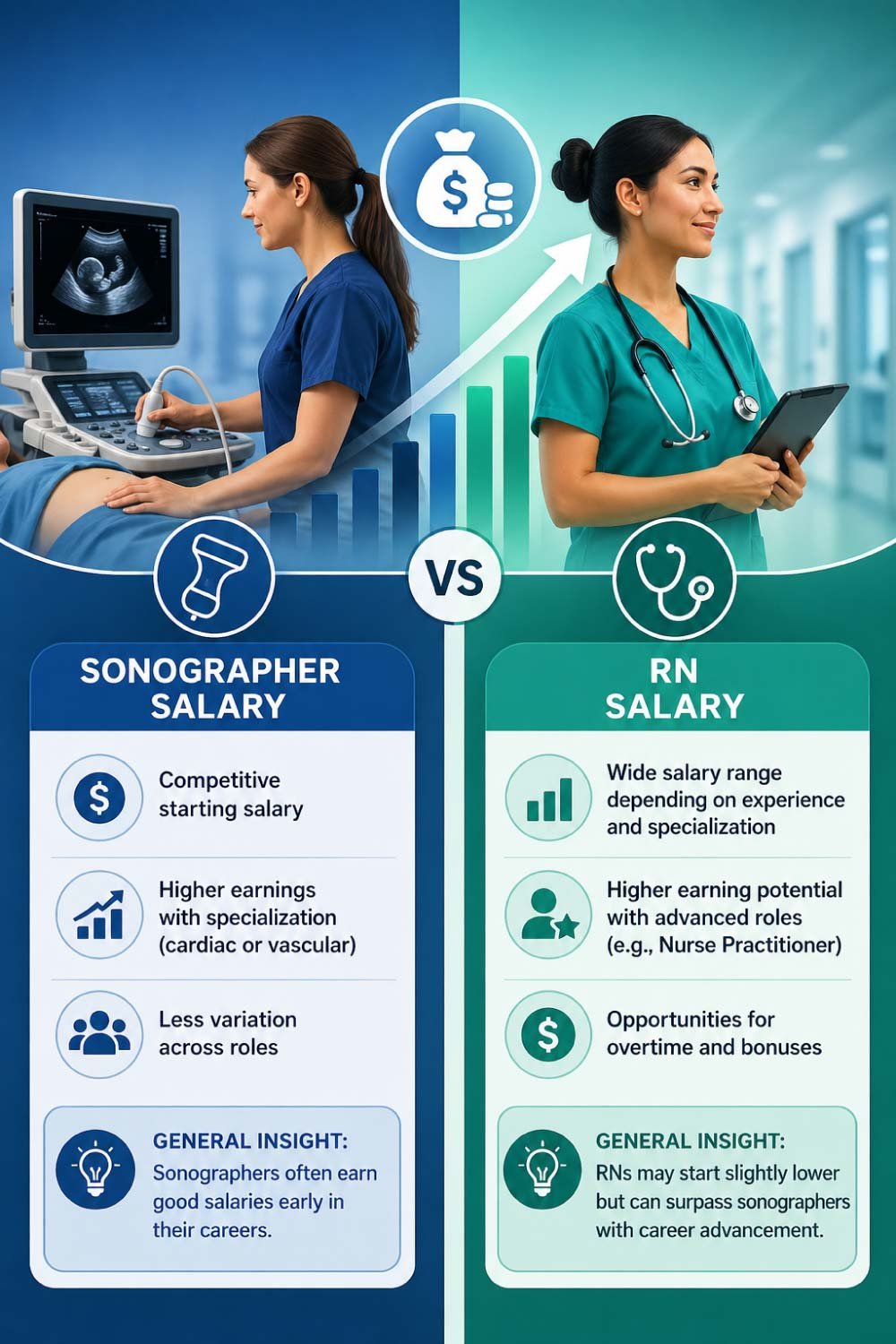
Salary is one of the most important factors when choosing a career. Both sonographers and registered nurses earn competitive incomes, but their earning patterns differ based on specialization, experience, and career growth opportunities. Comparing salaries helps you understand long-term financial potential.
Sonographer Salary
Sonographers typically enjoy a strong starting salary compared to many other healthcare roles. Their earnings are influenced by specialization and experience, but overall salary variation is less dramatic compared to nursing roles.
- Competitive starting salary
- Higher earnings with specialization (cardiac or vascular)
- Less variation across roles
General Insight:
Sonographers often earn good salaries early in their careers.
RN Salary
Registered nurses have a wider salary range that depends on their experience, workplace, and level of specialization. As nurses gain experience or move into advanced roles, their income potential increases significantly.
- Wide salary range depending on experience and specialization
- Higher earning potential with advanced roles (e.g., Nurse Practitioner)
- Opportunities for overtime and bonuses
General Insight:
RNs may start slightly lower but can surpass sonographers with career advancement.
Career Growth and Advancement
Career growth opportunities can shape your long-term professional satisfaction. While both professions offer advancement paths, nursing generally provides more diverse and flexible career options, whereas sonography offers more focused and specialized growth.
Sonographer Career Growth
Sonographers can advance within their field by gaining experience and pursuing specialized areas. Although growth opportunities exist, the career ladder is more structured and limited compared to nursing.
Opportunities include:
- Senior sonographer
- Lead technologist
- Specialized sonographer (cardiac, vascular)
- Teaching or training roles
Limitation:
Career ladder is somewhat limited compared to nursing.
RN Career Growth
Registered nurses have extensive opportunities for advancement across clinical, administrative, and educational roles. This flexibility allows nurses to explore different career paths and leadership positions over time.
Opportunities include:
- Nurse Practitioner (NP)
- Nurse Manager
- Clinical Nurse Specialist
- Healthcare Administrator
- Nurse Educator
Advantage:
Extensive career advancement options and leadership roles.
Skills Required For Sonographer and RN
Both careers require a unique set of skills that align with their responsibilities. Sonographers rely more on technical precision, while nurses depend heavily on interpersonal and critical thinking skills to manage patient care effectively.
Sonographer Skills
Sonographers need strong technical abilities and precision to perform accurate imaging procedures. Their role requires focus, coordination, and the ability to interpret visual data effectively.
- Strong attention to detail
- Technical expertise
- Hand-eye coordination
- Analytical thinking
- Ability to operate imaging equipment
RN Skills
Registered nurses require a balanced combination of technical knowledge and interpersonal skills. Their daily tasks involve patient interaction, decision-making, and handling complex medical situations.
- Excellent communication skills
- Emotional intelligence
- Critical thinking
- Problem-solving abilities
- Physical stamina
Work-Life Balance For Sonographer and RN
Work-life balance is an important consideration when selecting a career. The nature of work schedules and stress levels varies significantly between sonographers and nurses, influencing overall lifestyle and personal time.
Sonographer Lifestyle
Sonographers generally have more stable and predictable work schedules. Their roles involve fewer emergencies, allowing for a more balanced lifestyle compared to many other healthcare professions.
- More predictable schedules
- Fewer emergency situations
- Less overtime
Verdict:
Better work-life balance overall.
RN Lifestyle
Registered nurses often work in demanding environments with long hours and irregular shifts. Their schedules may include nights, weekends, and holidays, making work-life balance more challenging.
- Long shifts (often 12 hours)
- Night shifts and weekends
- High stress levels
Verdict:
More demanding but can be rewarding.
Also Read:
Job Demand and Security
Job stability is a key factor in career selection. Both professions are in demand, but nursing stands out due to its global need and widespread opportunities across different healthcare systems.
Sonographer Demand
The demand for sonographers continues to grow as medical imaging becomes more essential in diagnosis and treatment. This ensures steady employment opportunities in hospitals and diagnostic centers.
- Growing demand due to increased use of imaging technology
- Stable job market
RN Demand
Registered nurses are in extremely high demand worldwide. Many countries face nursing shortages, creating strong job security and numerous employment opportunities.
- Extremely high demand worldwide
- Shortage of nurses in many countries
- Strong job security
Conclusion:
Both careers are stable, but nursing has broader global demand.
Also Read:
Stress Level Comparison
Stress levels can greatly impact job satisfaction and overall well-being. While both professions involve responsibility, the intensity and type of stress experienced differ significantly between sonographers and nurses.
Sonographer Stress
Sonographers typically experience moderate stress levels as their work is more controlled and focused. They are less involved in emergency situations, which helps maintain a more stable work environment.
- Moderate stress
- Less involvement in emergencies
- Focused responsibilities
RN Stress
Registered nurses often face high stress, especially in critical care settings. Their responsibilities include handling emergencies and providing emotional support to patients and families.
- High stress, especially in critical care
- Emotional challenges dealing with patients and families
- Fast decision-making required
Specialization Options
Specialization allows professionals to focus on specific areas of interest and increase their expertise. Both sonographers and nurses can specialize, but the range and flexibility differ between the two fields.
Sonographer Specializations
Sonographers can choose from several focused areas that enhance their technical expertise and career prospects. Specialization often leads to better job opportunities and higher salaries.
- Obstetric and gynecologic sonography
- Cardiac sonography
- Vascular sonography
RN Specializations
Registered nursing offers a wide variety of specialization options, allowing professionals to focus on specific patient populations or medical conditions. These specialties not only enhance expertise but also open doors to higher salaries, leadership roles, and more advanced career opportunities.
- Pediatric nursing
- Critical care (ICU)
- Emergency nursing
- Oncology nursing
- Surgical nursing
Conclusion:
Nursing offers a wider range of specialization options.
Also Read:
Pros and Cons For Sonographer and RN
Every career comes with its own advantages and challenges. Evaluating the pros and cons of sonography and nursing can help you determine which profession aligns better with your personal preferences, strengths, and long-term goals in the healthcare field.
Sonographer Pros
Sonography is an attractive career for those who prefer technical work and a balanced lifestyle. It offers stability and early financial benefits, making it appealing for individuals seeking a focused and less stressful healthcare role.
- Shorter education time
- Good salary early
- Better work-life balance
- Less stressful environment
Sonographer Cons
Despite its benefits, sonography has some limitations. The role can feel repetitive over time, and there may be fewer opportunities for career advancement compared to other healthcare professions like nursing.
- Limited career advancement
- Less interaction with patients
- Repetitive work
RN Pros
Nursing is a highly dynamic and rewarding career that offers numerous opportunities for growth and specialization. It is ideal for individuals who enjoy working closely with patients and want a flexible and evolving career path.
- High job demand
- Diverse career paths
- Opportunities for advancement
- Strong patient interaction
RN Cons
Nursing can be physically and emotionally challenging due to its demanding nature. Long hours, high stress, and constant patient care responsibilities can make it a difficult career for some individuals.
- Physically and emotionally demanding
- Long working hours
- High stress levels
Which Career is Right for You?
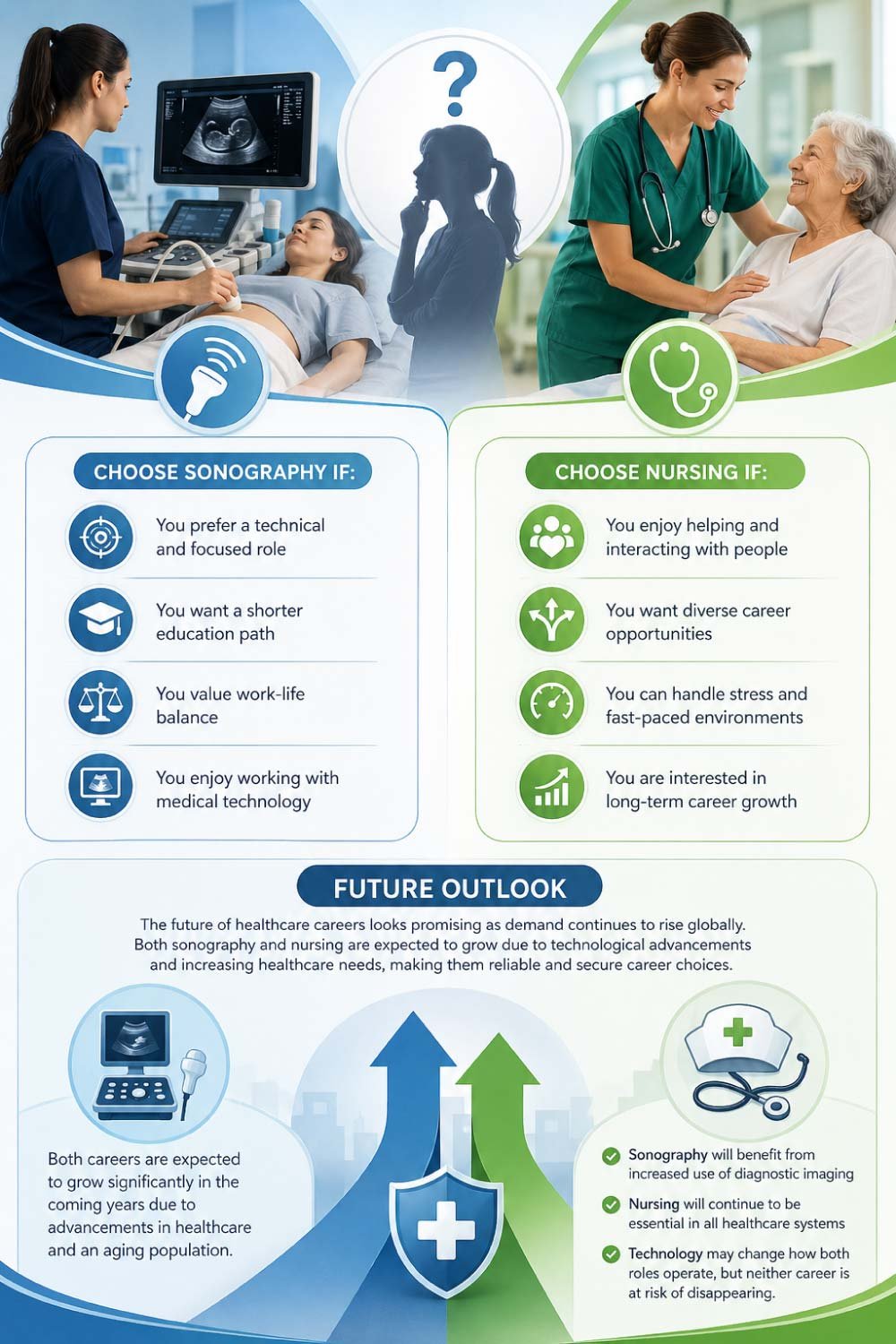
Choosing between sonography and nursing depends on your interests, personality, and career goals. Both professions are rewarding, but they suit different types of individuals based on their preferences for work environment, responsibilities, and long-term growth.
Choose Sonography if:
Sonography is ideal for individuals who prefer working with technology and performing specialized tasks. It suits those who enjoy a structured environment and want a career with less stress and more predictable schedules.
- You prefer a technical and focused role
- You want a shorter education path
- You value work-life balance
- You enjoy working with medical technology
Choose Nursing if:
Nursing is best for individuals who are passionate about patient care and thrive in dynamic environments. It is a great choice for those who want continuous learning and long-term career development opportunities.
- You enjoy helping and interacting with people
- You want diverse career opportunities
- You can handle stress and fast-paced environments
- You are interested in long-term career growth
Also Read:
Future Outlook
The future of healthcare careers looks promising as demand continues to rise globally. Both sonography and nursing are expected to grow due to technological advancements and increasing healthcare needs, making them reliable and secure career choices.
Both careers are expected to grow significantly in the coming years due to advancements in healthcare and an aging population.
- Sonography will benefit from increased use of diagnostic imaging
- Nursing will continue to be essential in all healthcare systems
Technology may change how both roles operate, but neither career is at risk of disappearing.
Final Thoughts
The choice between becoming a Sonographer or a Registered Nurse depends largely on your personality, career goals, and lifestyle preferences.
If you want a stable, technical job with less stress, sonography is an excellent option. However, if you are looking for a dynamic, people-centered career with unlimited growth opportunities, nursing is the better path.
Both professions are respected, meaningful, and financially rewarding. The best decision is the one that aligns with your strengths and long-term vision.

Zak is a dedicated medical and career writer specializing in sonography, healthcare education, and professional development. Through SonographerSalary.com, he shares in-depth insights on sonographer salaries, education pathways, and career tips to help readers build successful futures in medical imaging. His content combines accuracy with practical, easy-to-understand guidance, empowering students and professionals to make confident, informed career decisions.